Dumbbell Incline Hammer Curl
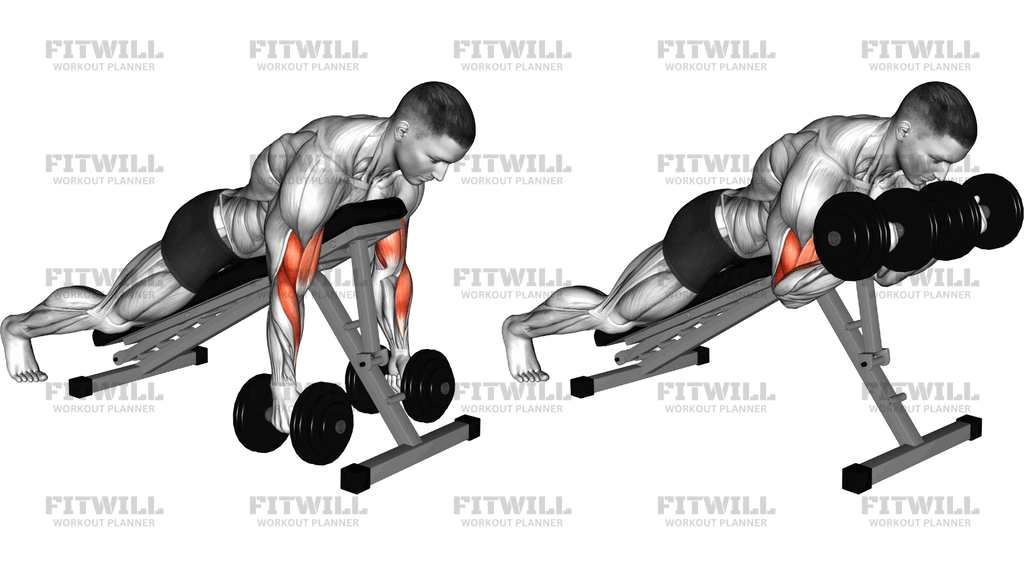
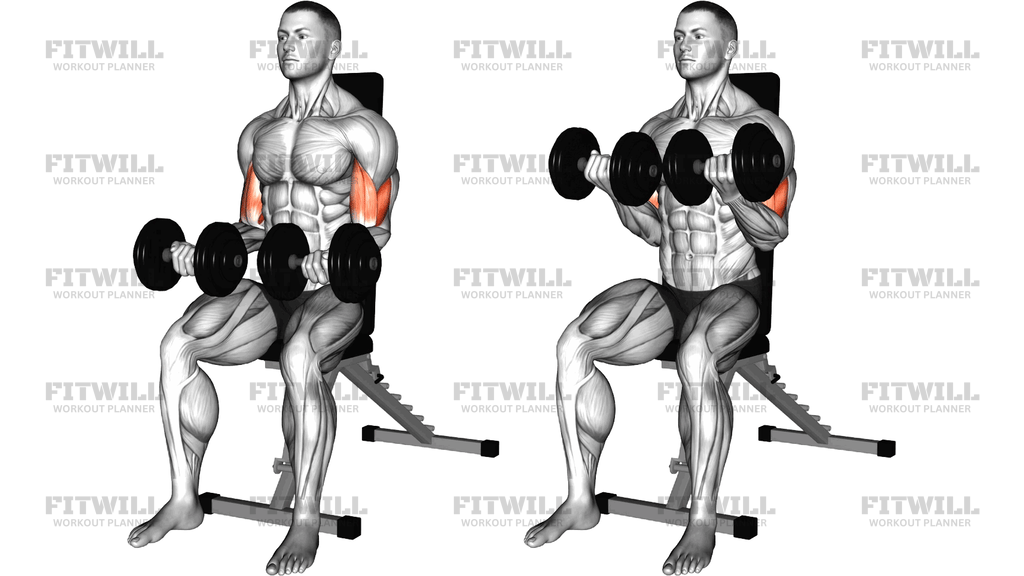
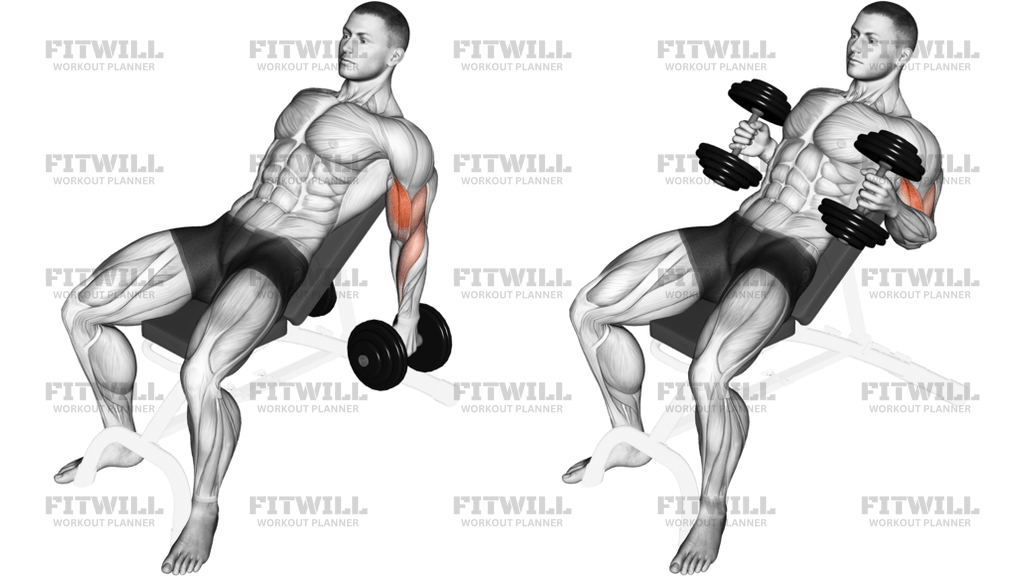
Dumbbell Incline Hammer Curl is a seated incline curl variation that uses a neutral grip to load the biceps, brachialis, brachioradialis, and forearms while the upper arms stay slightly behind the torso. The incline bench changes the starting angle of the shoulder, so the long head of the biceps begins from a deeper stretch and the rep rewards strict elbow flexion more than body English.
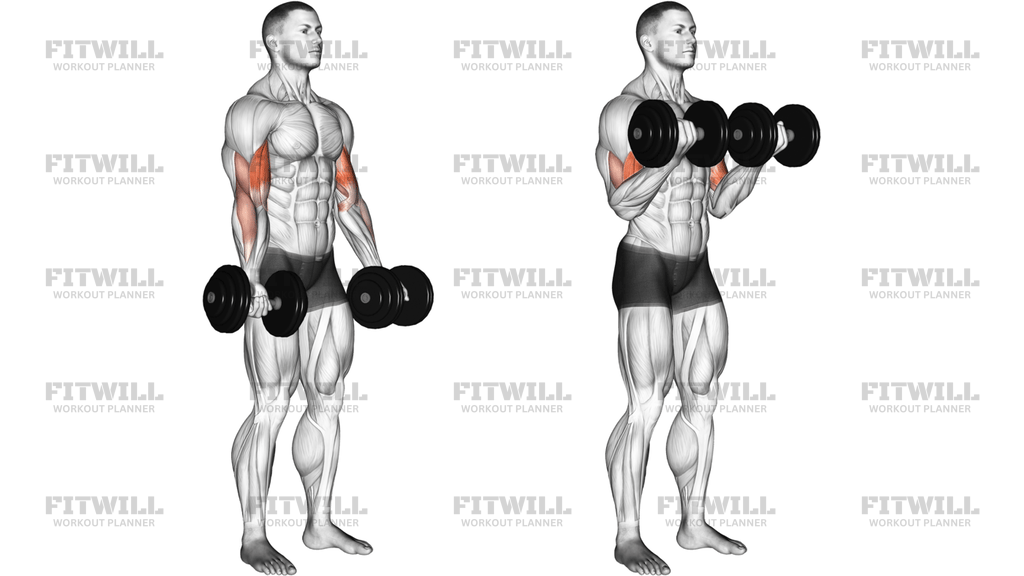
The neutral hand position matters here. With the palms facing each other, the curl shifts some emphasis away from pure supination-based biceps work and toward the brachialis and brachioradialis. That makes the exercise useful when you want thicker upper arms, stronger forearm contribution, and a curl pattern that is usually easier on the wrists than a fully supinated curl.
Set the bench to a moderate incline and sit with your back supported and feet planted. Let the dumbbells hang straight down, then let the upper arms settle just behind the line of the torso without forcing the shoulders forward. From there, every rep should begin from a quiet shoulder position, a neutral wrist, and a stable ribcage so the elbow joint does the work.
Each repetition should travel in the same arc. Curl the dumbbells up by bending the elbows, keep the upper arms mostly still, and stop before the shoulders roll forward or the wrists break back. Lower the weights slowly until the arms are nearly straight again, then reset under control. The goal is a clean stretch at the bottom and a controlled squeeze at the top, not a heave from the torso.
This is a strong accessory movement for arm training days, pulling-focused sessions, or hypertrophy work when standard standing curls become too easy to cheat. Use a load that lets you keep the bench contact, elbow path, and neutral grip consistent from the first rep to the last. If the bench starts to rock, the elbows drift, or the wrists lose their line, the set is too heavy or the tempo is too fast.
[ Workout Log & Planner ]
Put your next workout in Fitwill
Keep your plan and training log ready when you are.


Instructions
- Set an incline bench to a moderate angle and sit with your upper back supported, feet flat, and a dumbbell in each hand.
- Let your arms hang straight down with your palms facing in and your elbows slightly behind your torso.
- Keep your chest tall, ribs down, and wrists stacked so the dumbbells hang in a neutral line.
- Start each rep from a dead stop at the bottom without swinging the shoulders forward.
- Curl both dumbbells upward by bending the elbows while keeping the upper arms mostly fixed in place.
- Keep the palms facing each other through the whole curl instead of turning the wrists hard toward the ceiling.
- Pause briefly near the top when the forearms are close to the shoulders and the elbows are still under control.
- Lower the dumbbells slowly until the arms are nearly straight and the stretch returns to the biceps.
- Reset the shoulders on the bench before the next rep and stop the set if you have to lean back or shrug.
Tips & Tricks
- Use a bench angle that keeps your arms hanging just behind your torso; if the bench is too upright, the stretch and leverage change.
- Keep the wrists neutral so the dumbbell handles stay aligned with the forearms instead of folding back at the top.
- Let the elbows move only as much as needed for a natural curl path; big shoulder motion turns this into a cheat curl.
- Lower the weights slower than you lift them to keep tension on the brachialis and forearms through the bottom half of the rep.
- Choose a load that you can start from a still bottom position without kicking the dumbbells up.
- If one side rises faster, match the pace to the weaker arm so both reps finish with the same elbow height and shoulder position.
- Keep the upper back against the bench and the ribcage from flaring, especially when the last few reps get hard.
- A short pause at the top helps prevent momentum from taking over and makes the neutral-grip squeeze more obvious.
- If your elbows drift far forward, reduce the range slightly and re-center them behind the torso before the next rep.
Frequently Asked Questions
What muscles does Dumbbell Incline Hammer Curl work?
It mainly trains the biceps, brachialis, brachioradialis, and forearms. The incline position also asks the rear shoulder and upper back to stabilize your torso against the bench.
Is Dumbbell Incline Hammer Curl good for beginners?
Yes, as long as you use a light load and keep the bench support, neutral wrist, and elbow path consistent. Beginners often do better here than with standing curls because the bench reduces body swing.
How should my elbows move on the incline bench?
Let them stay slightly behind the torso at the bottom and mostly fixed as you curl. If they race forward, the shoulders are taking over.
Should I turn my palms up at the top?
No, the classic hammer curl keeps the palms facing in. Turning the wrists hard changes the exercise and usually shifts more work toward a standard curl.
What is the biggest mistake in Dumbbell Incline Hammer Curl?
Using momentum from the shoulders or leaning back off the bench to get the dumbbells moving. That usually means the weight is too heavy.
Why use an incline instead of standing?
The incline bench puts the arms behind the body at the start, which increases the stretch and makes it harder to cheat with hip drive or torso lean.
How heavy should I go on the dumbbells?
Heavy enough to challenge the last few reps, but light enough that you can lower them slowly and keep the wrists and elbows in line.
Can I do this if my wrists dislike supinated curls?
Often, yes. The neutral grip is usually more comfortable than a fully turned-up grip, but any sharp wrist or elbow pain means you should stop and adjust.