Dumbbell Standing Zottman Preacher Curl
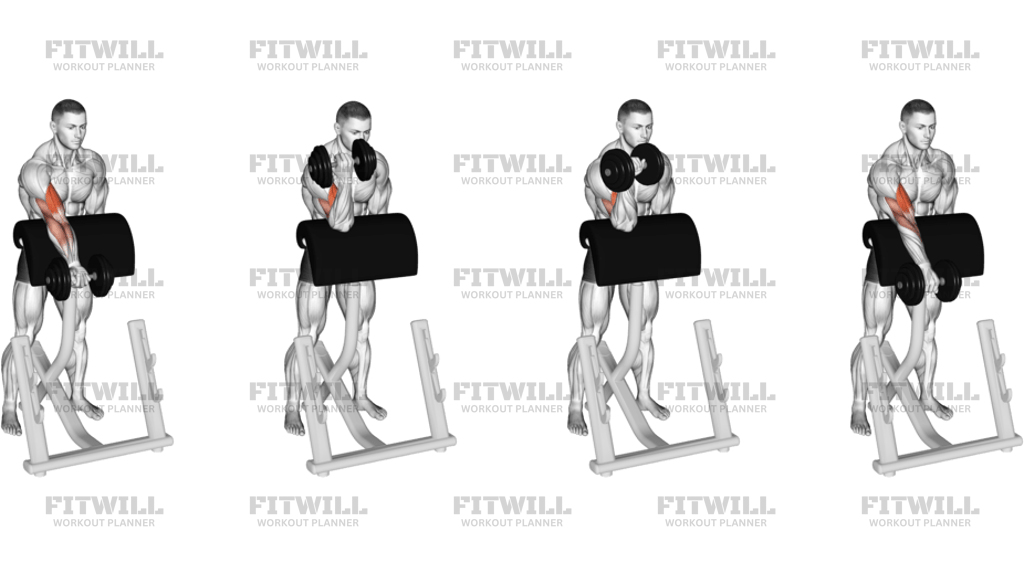
Dumbbell Standing Zottman Preacher Curl is a strict arm-curl variation that combines preacher support with the Zottman rotation pattern. The preacher pad removes most of the hip drive and shoulder swing you can use in a free-standing curl, while the Zottman finish shifts some of the lowering demand toward the forearms. That makes this a focused strength and hypertrophy exercise for the biceps, brachialis, brachioradialis, and forearm flexors.
Because the upper arms stay anchored against the pad, the exercise rewards clean elbow flexion and punishes sloppy setup. The biceps brachii does the main lifting when the dumbbells are curled up with the palms facing up, then the forearms take over more of the work as the palms turn over and the weights are lowered under control. That mix is useful when you want an arm movement that feels strict, localized, and hard to cheat.
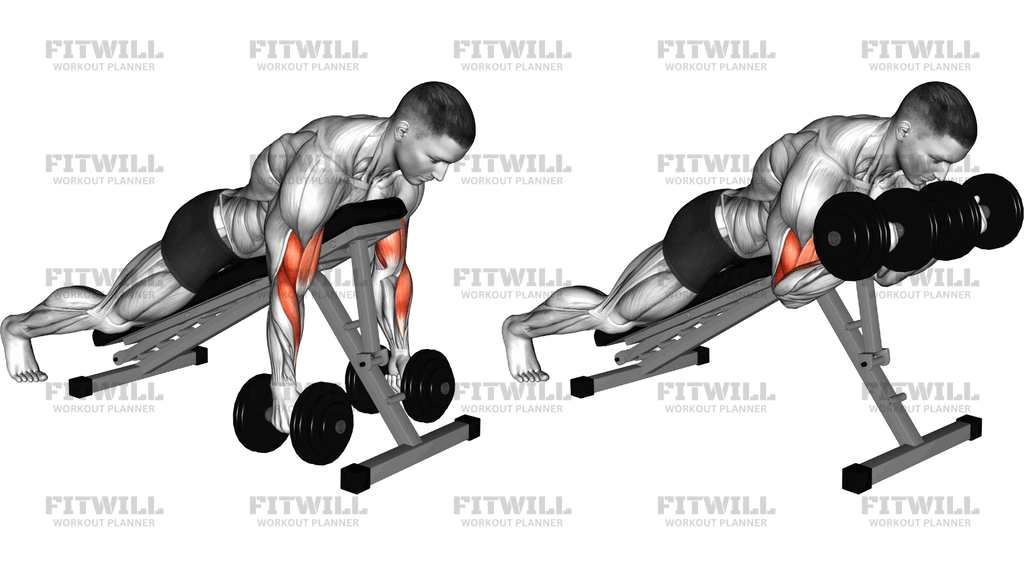
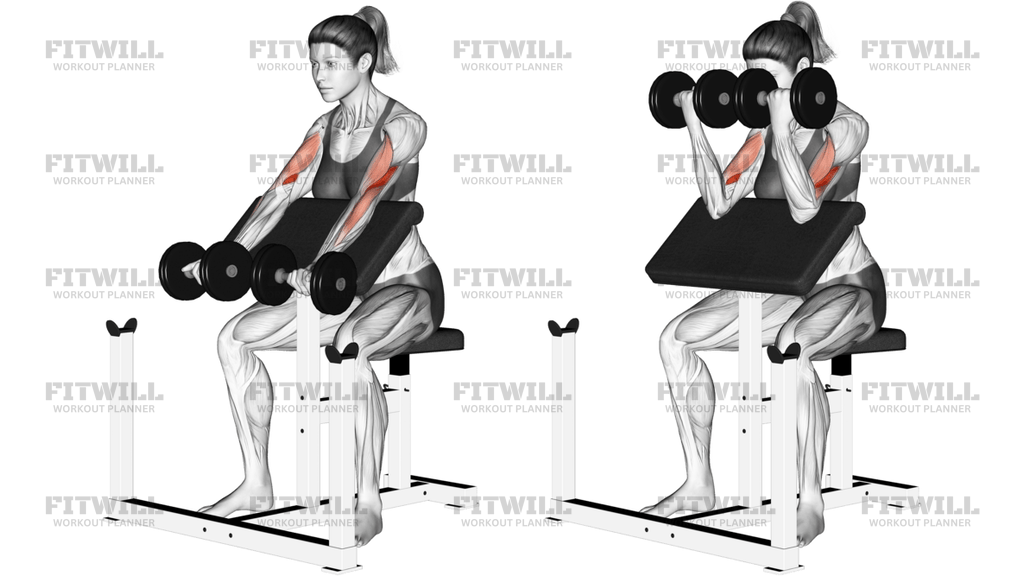
The setup matters more here than in a normal dumbbell curl. Stand facing the preacher bench, bring the chest close to the top edge of the pad, and let the upper arms rest against it so the elbows are supported just in front of the torso. If the pad is too low or you stand too far away, the shoulders will drift forward and the curl becomes unstable. If it is set correctly, the dumbbells hang cleanly under the shoulders and the forearms can move through a smooth arc.
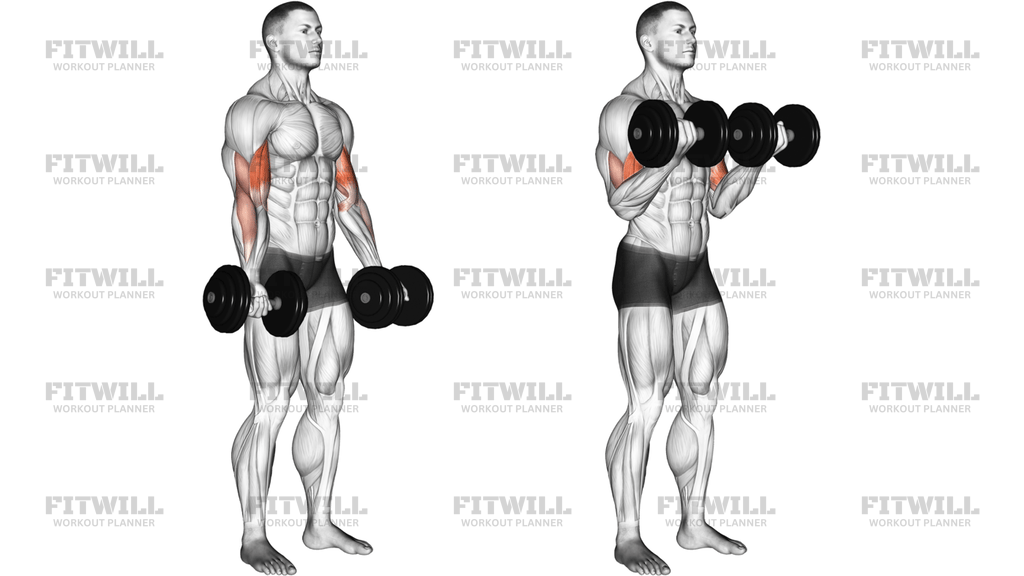
On the way up, curl with a supinated grip and keep the elbows pinned to the pad. At the top, squeeze the biceps, rotate the dumbbells over, and lower them slowly with the palms turned down. The pronated eccentric is the defining part of Dumbbell Standing Zottman Preacher Curl, so the return should be deliberate rather than rushed. Breathing should stay simple: exhale as you curl, inhale as you lower, and reset your chest contact before each rep.
This exercise is most useful as accessory work after your main pulling or pressing lifts, or any time you want strict biceps and forearm tension without body English. Start lighter than you would for a standard standing curl, because the preacher pad and rotation both make the lift more demanding. If your wrists start folding back, your shoulders leave the pad, or you cannot control the pronated lowering phase, reduce the load and shorten the set.
Fitwill
Log Workouts, Track Progress & Build Strength.
Achieve more with Fitwill: explore over 9600 exercises with images and videos, access built-in and custom workouts, perfect for both gym and home sessions, and see real results.
Start your journey. Download today!




Instructions
- Set the preacher pad so its top edge reaches your lower chest, then stand facing the pad with your feet about shoulder-width apart.
- Lean your chest lightly into the pad and rest the backs of your upper arms on it so the dumbbells hang straight down in front of your body.
- Hold the dumbbells with your palms facing up, wrists stacked over your forearms, and let your shoulders stay down instead of reaching forward.
- Curl both dumbbells upward by bending only at the elbows while keeping your upper arms pressed into the pad.
- As the dumbbells near shoulder height, squeeze the biceps and rotate your palms over so the dumbbells finish in a pronated grip.
- Lower the dumbbells slowly with your palms facing down, resisting the descent through the forearms and brachioradialis.
- Stop just short of a hard elbow lockout if that helps you keep tension on the arms, then turn the palms back up at the bottom.
- Keep your torso still, exhale on the curl, inhale on the lowering phase, and reset your chest against the pad before the next rep.
Tips & Tricks
- Use a lighter load than a normal standing curl; the preacher pad makes cheating easy to spot and heavy dumbbells quickly pull the shoulders forward.
- Keep the palms supinated until the dumbbells reach the top, then rotate them over there instead of twisting early on the way up.
- Let the pronated lowering phase take longer than the curl up; that eccentric is where the forearms and brachioradialis do extra work.
- If your elbows slide off the pad, move your feet closer and bring your chest into the top edge of the preacher bench.
- Keep your wrists straight during the top rotation so the dumbbells do not fold them backward under load.
- A shoulder-width stance helps keep the torso from rocking against the pad when the weight gets challenging.
- Do not slam into the bottom position; keep tension on the biceps by turning the palms back up under control.
- End the set as soon as the pronated lowering phase starts to wobble, because that is the first part of the movement that usually breaks down.
Frequently Asked Questions
What muscles does Dumbbell Standing Zottman Preacher Curl work?
It mainly targets the biceps, with extra emphasis on the brachialis, brachioradialis, and forearm flexors during the pronated lowering phase.
Why use a preacher pad for Dumbbell Standing Zottman Preacher Curl?
The pad keeps the upper arms anchored so the curl stays strict and the biceps do the work instead of the torso swinging the dumbbells.
When do I rotate the dumbbells in this exercise?
Curl up with the palms facing up, rotate to palms down at the top, then lower with the palms down before turning them back up at the bottom.
Is Dumbbell Standing Zottman Preacher Curl more of a biceps or forearm exercise?
It is both, but the biceps are the main mover on the curl while the forearms work harder on the controlled pronated descent.
Can beginners do this movement safely?
Yes, but only with light dumbbells and a strict tempo. The rotation and preacher support make it harder than a basic curl, so control matters more than load.
What should I do if my shoulders keep coming off the pad?
Move a little closer to the bench, lower the weight, and keep your chest lightly in contact with the top edge of the preacher pad before each rep.
What is the most common mistake with Dumbbell Standing Zottman Preacher Curl?
Twisting the wrists too early or using momentum to finish the curl. The rep should stay anchored on the pad from start to finish.
How can I make the exercise easier on my wrists?
Keep the wrists stacked over the forearms and rotate smoothly at the top instead of forcing the turn while the dumbbells are still accelerating.