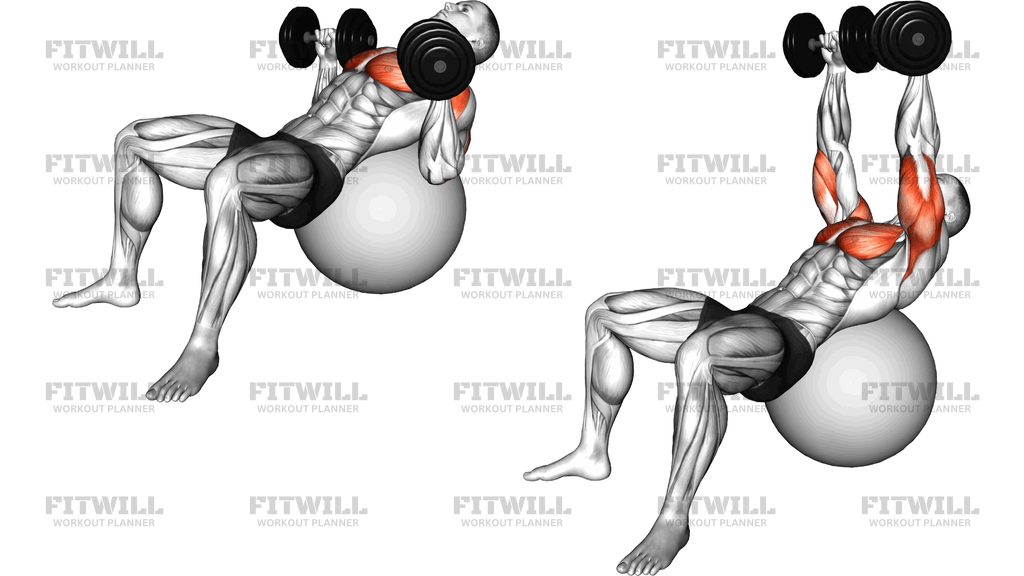
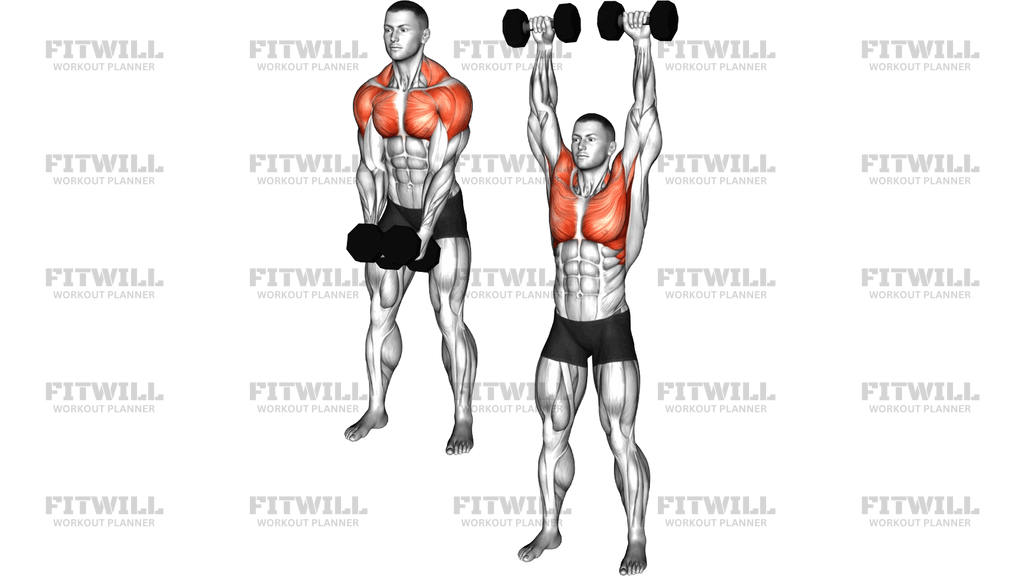
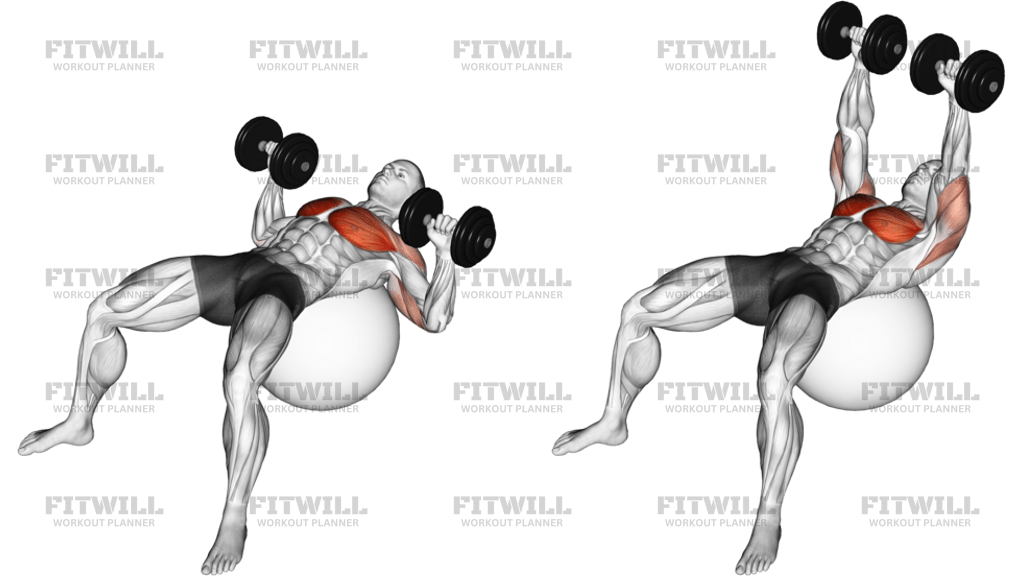
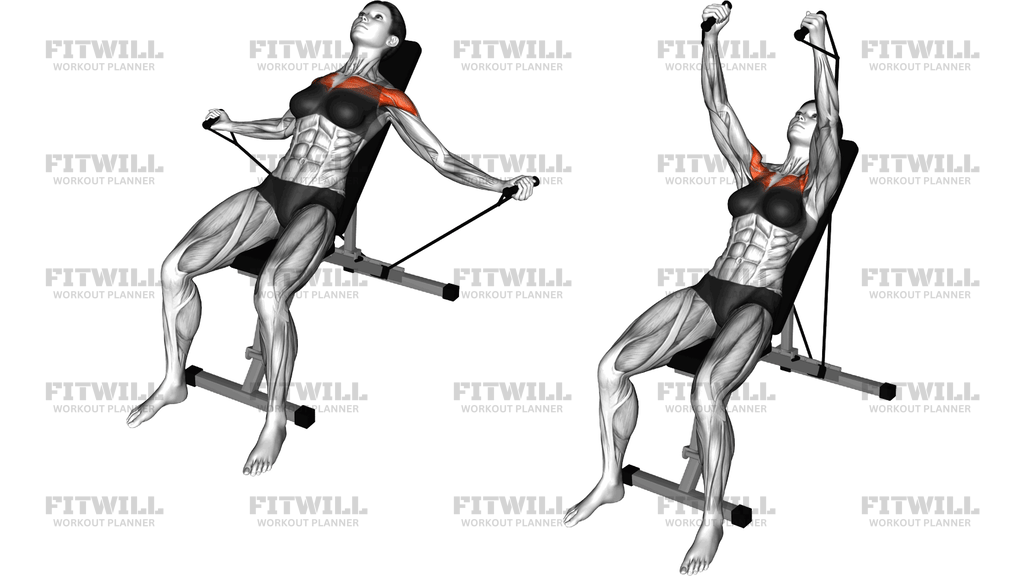
Dumbbell Pullover To Press Bridge
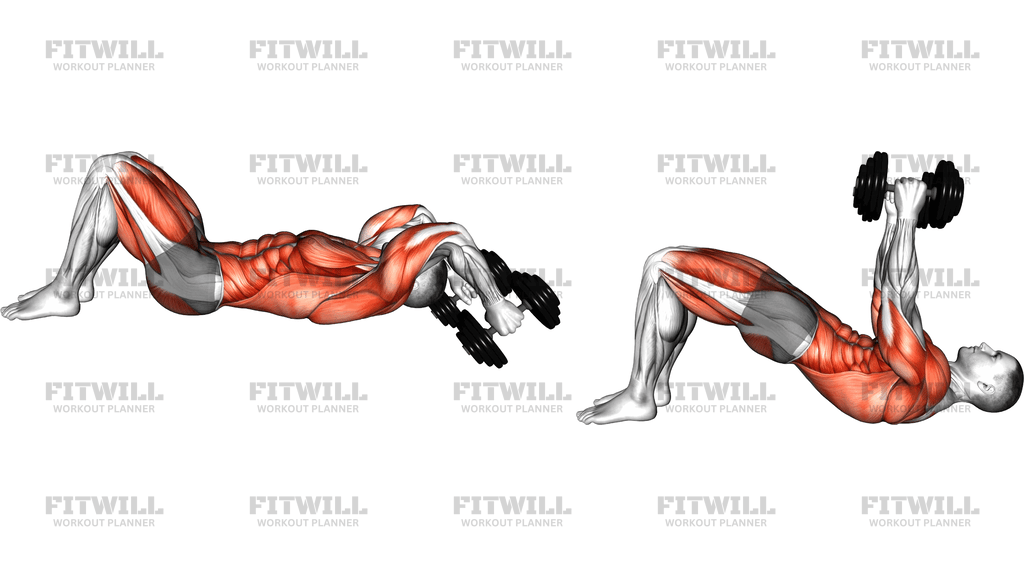
The Dumbbell Pullover To Press Bridge is a compound floor exercise that combines two demanding elements: a glute bridge you must hold isometrically for the entire set, and a pullover-to-press arc performed with a dumbbell in both hands. You lie on your back with your knees bent and feet flat, lift your hips so your body forms a straight line from shoulders to knees, and then sweep the dumbbell back over your head before pressing it straight up toward the ceiling. Every rep challenges your upper body and your bridge position at the same time.
The movement hits the chest and lats through the pullover portion, then shifts emphasis to the chest, front shoulders, and triceps as you press to lockout. Meanwhile, the glutes and entire core work overtime to keep your hips elevated and square while your arms move a load overhead. This is what makes the exercise special: the moment your bridge sags or twists, the weight overhead will let you know immediately, so it doubles as an anti-extension and anti-rotation drill.
Setup matters more here than in a standard floor press because your upper back and head are the only stable contact points once the dumbbell travels behind your head. Lie far enough back from your feet that your shoulders are comfortably on the floor, plant your feet about hip-width apart, and keep your ribs from flaring as your arms go overhead. A controlled pullover path, hugging a slight elbow bend, keeps the shoulder joint in a safe track instead of letting the weight drift wide.
This exercise suits intermediate lifters who already own both a solid glute bridge and a comfortable dumbbell pullover, and it is a smart pick for home training where a single dumbbell and a patch of floor are all you need. It also works well as a finisher on chest or back days, or as part of full-body circuits where you want a strength element that keeps the trunk engaged between heavier lifts.
Keep the load modest at first. The press happens from a slightly disadvantaged position with your hips held high, so a weight that feels easy in a regular bench press can quickly pull your ribs up and dump tension out of the bridge. Exhale on the press, breathe steadily through the pullover, and set your hips down with control between sets rather than collapsing out of the top.
[ Workout Log & Planner ]
Put your next workout in Fitwill
Keep your plan and training log ready when you are.


Instructions
- Sit on the floor with one dumbbell placed vertically beside your chest, then lie back, bend your knees, and plant your feet flat about hip-width apart and close enough that your heels sit under your knees.
- Grip the dumbbell with both hands cupped around one end or around the handle directly above your chest, then squeeze your glutes and drive your hips up until your body forms a straight line from shoulders to knees.
- Brace your abdominals and pull your ribs down so your lower back stays neutral while your hips remain lifted; this bridge position is held for the whole set.
- From the dumbbell above your chest, slowly sweep it back over your face and head in a smooth arc, keeping a slight bend in your elbows, until your upper arms are alongside or just past your ears.
- Pause briefly at the bottom of the pullover, feeling a stretch across the chest and lats, without letting the weight pull your shoulders off the floor or your hips drop.
- Reverse the arc to bring the dumbbell back over your chest, then press it straight up until your arms are extended and the weight sits directly over your shoulders.
- Lower the dumbbell back to the starting position over your chest with control, keeping the hips elevated and facing forward the entire time.
- Exhale as you press the dumbbell to lockout and inhale as you sweep it back over your head.
- Complete your reps, then bend your elbows and set your hips down together before releasing the dumbbell to the floor, never dropping it from overhead.
Tips & Tricks
- The most common failure is the hips sagging as the dumbbell travels behind the head, because the overhead weight lengthens the lever on your trunk. Reset the bridge before every rep rather than grinding through a collapsed position.
- If your lower back arches and your ribs flare at the top of the press, shorten the range slightly and focus on exhaling fully as you press, which helps the abs hold the ribs down.
- Keep the pullover arc tight and close to your body. Letting the dumbbell drift wide increases the lever arm on the shoulders and is the usual reason lifters feel a strain near the armpit.
- Choose a lighter dumbbell than you would use for a floor press. The pullover portion and the held bridge both reduce how much you can press, and the set ends when the bridge fails, not the arms.
- Point your knees straight ahead and keep them hip-width. Knees caving inward as fatigue builds quietly drains tension from the glutes and destabilizes the whole bridge.
- Press slightly toward the ceiling over your shoulder line, not toward your face or your hips, so the shoulder stays stacked and the triceps finish the rep cleanly.
- If your shoulders feel pinched at the bottom of the pullover, stop the arc a few degrees earlier and work that shorter range for a few sessions before extending it.
- On a slippery floor, place a mat or a folded towel under your upper back and head for grip and padding, since your shoulders carry your body weight throughout the set.
Frequently Asked Questions
Which muscles does the Dumbbell Pullover To Press Bridge work?
The pullover portion targets the chest and lats, the press adds the front shoulders and triceps, and the held glute bridge keeps the glutes and deep core working for the entire set. No single muscle dominates; the value is in how they share the load.
Why do I hold a glute bridge during the pullover and press?
Holding the bridge turns a simple arm exercise into a full-body tension drill. Your glutes and abs must resist the pull of the weight overhead, which trains trunk stability under load while the upper body works.
Is the Dumbbell Pullover To Press Bridge suitable for beginners?
It can be, if you first learn a plain glute bridge and a plain dumbbell pullover separately. Once you can hold a bridge for 30 seconds and pullover a light dumbbell smoothly, combine them with a very light weight.
Should I hold the dumbbell by the handle or around one end?
Both work. Holding the inner head of the dumbbell with both hands cupped underneath it is often more comfortable at the bottom of the pullover and keeps the weight from tilting as your wrists angle overhead.
Why do my hips drop when the dumbbell goes behind my head?
The weight overhead lengthens your body's lever and pulls your ribs up, which releases tension from the glutes. Lighten the load, squeeze the glutes harder, and exhale as the arms travel back to keep the bridge intact.
What can I substitute if I do not have a dumbbell?
A single kettlebell held by the horns works well, or a small weighted plate hugged to the chest for a shorter lever. If you have no weight at all, the bridge with an arm-sweep pullover pattern still trains the coordination.
How many reps and sets should I do?
Two to four sets of 8 to 12 reps works well as a finisher, resting about 60 to 90 seconds between sets. If your bridge fails before your arms, reduce the weight so the limit is strength in the press, not endurance in the hips.
Is this exercise safe for the shoulders?
Generally yes when the arc stays controlled and the range matches your shoulder mobility. Stop the pullover at the depth where you keep contact between your upper back and the floor, and never let the weight bounce behind your head.
Should my feet be close to or far from my body?
Place your heels roughly under your knees so you can drive through the mid-foot to lift the hips. Feet too far away make the bridge harder to hold and pull the hamstrings into a weaker position.
How is this different from a regular dumbbell pullover on a bench?
On a bench, your torso is fully supported so you can focus entirely on the arms. Here, the bridge removes that support and forces the glutes and core to stabilize while the pullover and press happen, making it a much more demanding but lighter-load movement.