Dumbbell Press On Exercise Ball
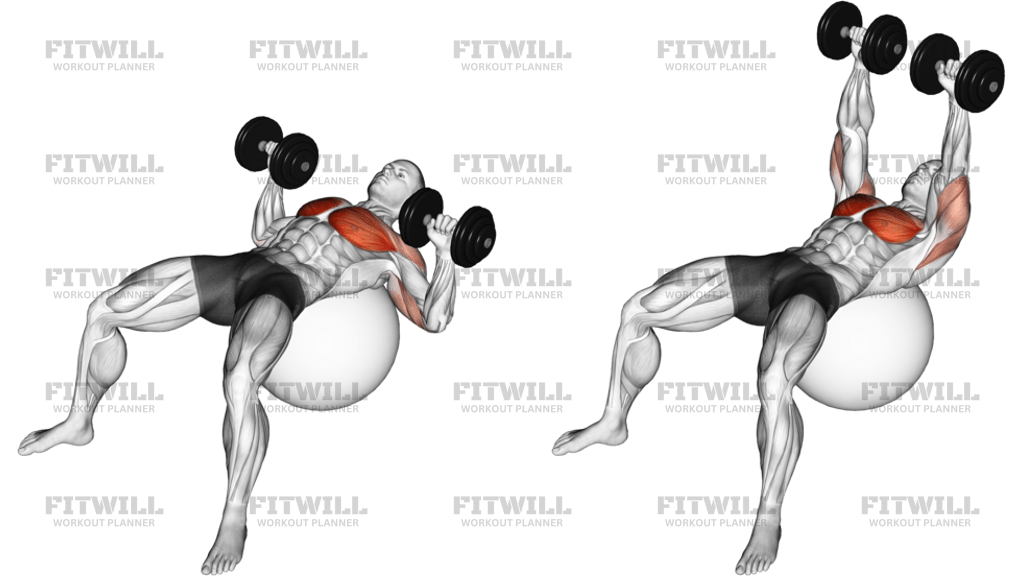
Dumbbell Press On Exercise Ball is a supine dumbbell press performed with the upper back supported on a stability ball and the feet planted on the floor. The chest does the main work, while the shoulders, triceps, and trunk keep the dumbbells moving on a controlled path. Because the torso is balanced on an unstable surface, the quality of the setup matters as much as the pressing strength. A solid foot position, quiet ribcage, and steady shoulder position are what keep the rep clean.
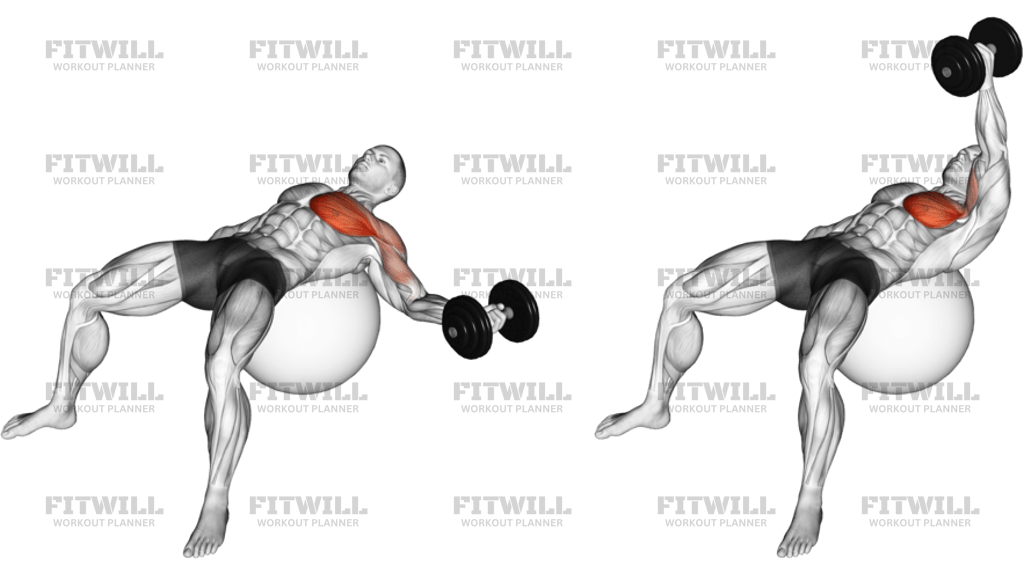
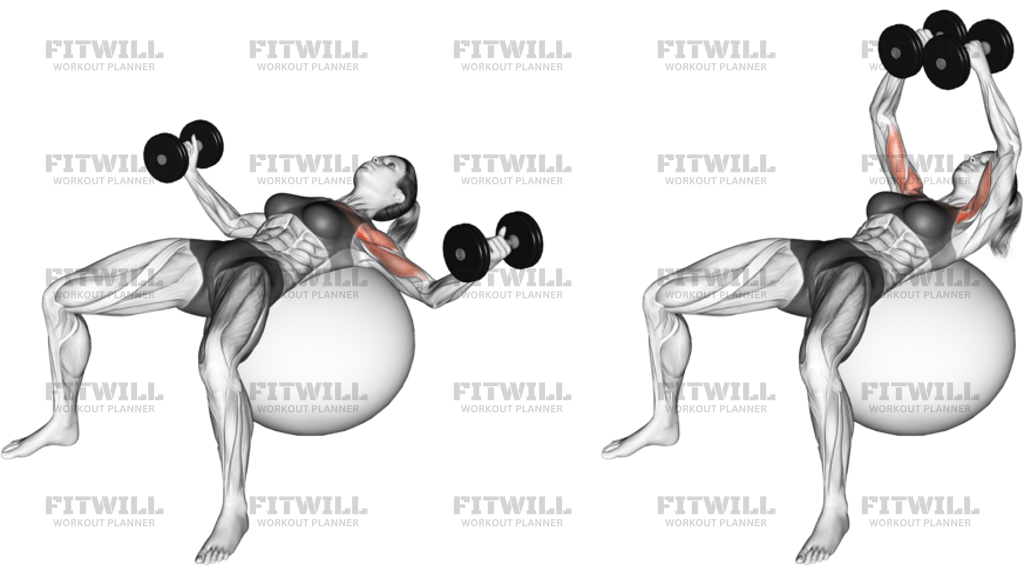
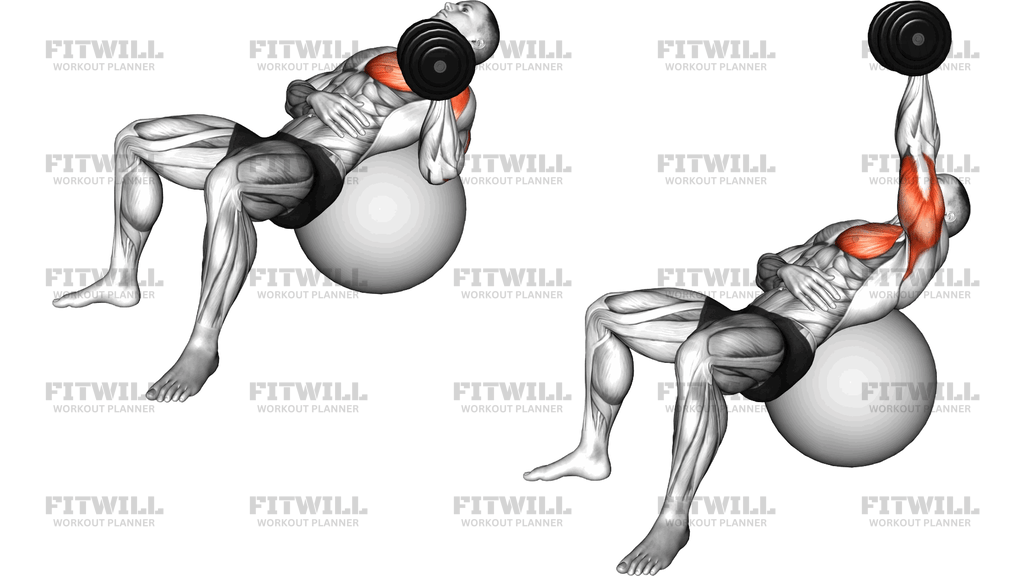
The image shows the shoulder blades resting across the ball rather than the neck or low back, with the dumbbells starting near chest level and finishing above the shoulder line. That setup lets you press with a natural arc while keeping the forearms close to vertical. If the ball sits too high or too low, the press becomes awkward and the shoulders start to drift forward. The goal is to keep the torso supported so the chest can drive the press without turning the movement into a wobble.
At the bottom of each rep, the dumbbells should sit near the outer chest with the wrists stacked over the elbows. Press them upward until the arms are nearly straight and the weights finish over the mid-chest or shoulder line. Lower them slowly to a comfortable depth while keeping the ball quiet and the ribs from flaring. This is a controlled pressing exercise, not a bounce-and-balance drill, so the path should look smooth from the first rep to the last.
This variation is useful when you want pressing strength with an added stability demand. It can fit in upper-body hypertrophy work, accessory strength blocks, or core-focused sessions where you want the trunk to resist movement while the arms press. Lighter loads usually work better than heavy ones because the ball exposes every small loss of control. If the shoulders feel pinched, the ball shifts under you, or the rep path starts to change, the load is too aggressive for the setup.
Use a flat bench or floor press instead if you need a more stable base or if shoulder position becomes inconsistent on the ball. When it is performed well, this exercise builds chest strength, upper-body coordination, and better force control through the torso, all while teaching you to press without losing your base.
[ Workout Log & Planner ]
Put your next workout in Fitwill
Keep your plan and training log ready when you are.


Instructions
- Sit on the exercise ball with a dumbbell in each hand, then walk your feet forward until the ball supports your upper back and shoulder blades.
- Place your feet slightly wider than hip width, keep them flat on the floor, and let your hips stay level instead of lifting into a bridge.
- Bring the dumbbells to chest height with your palms facing forward and your wrists stacked over your elbows.
- Set your shoulder blades gently down and back against the ball so your chest stays open and your neck stays relaxed.
- Brace your ribs before you press so your torso stays steady on the ball.
- Press the dumbbells upward in a smooth arc until your arms are nearly straight and the weights finish above your chest and shoulders.
- Lower the dumbbells slowly until they reach the outer chest line or a comfortable depth that does not let the shoulders roll forward.
- Exhale as you press and inhale as you lower, then reset your feet if the ball starts to shift.
Tips & Tricks
- Set the ball under the upper back, not the neck or low back, so the press starts from a stable support point.
- Use a foot stance wide enough to stop the ball from rolling when the dumbbells get heavier near the top.
- Keep the dumbbells over the outer chest on the way down; if they drift toward your face, the shoulder angle is off.
- Let the wrists stay stacked over the elbows at the bottom so the load travels through the forearms instead of collapsing backward.
- Press upward and slightly back toward the shoulder line rather than straight up into an unstable finish.
- Keep the hips down and quiet; if you are bridging hard to finish reps, the load is too heavy for the ball setup.
- Lower each rep slowly enough that the ball does not visibly bounce under your shoulder blades.
- Choose lighter dumbbells than you would use on a flat bench because the instability is part of the challenge.
Frequently Asked Questions
What muscles does Dumbbell Press On Exercise Ball train most?
The chest is the primary mover, with the front shoulders, triceps, and core helping stabilize the press.
How is this different from a regular dumbbell bench press?
The press pattern is similar, but the exercise ball adds instability, so your feet, ribs, and shoulder blades have to work harder to keep the dumbbells steady.
Where should the ball sit during the setup?
It should support the upper back and shoulder blades. If it sits too high on the neck or too low on the lumbar spine, the press path gets less stable.
Should my hips stay down or rise into a bridge?
Keep the hips mostly down and level. A hard bridge usually means the dumbbells are too heavy or the ball position is too unstable.
How deep should I lower the dumbbells?
Lower them until the upper arms reach a comfortable depth near the outer chest without letting the shoulders roll forward or the ball bounce.
Is this a good exercise for beginners?
Yes, if the load is light and the setup is controlled. Beginners usually do better with conservative range and a wide, stable foot position.
Why do the dumbbells wobble at the top?
Wobble usually comes from narrow feet, flared ribs, or pressing too heavy for the amount of balance the ball allows.
What can I use instead if the ball bothers my shoulders?
A flat dumbbell bench press or floor press is usually a better option because it gives you a more stable base.