Dumbbell Incline Twist Press (Version 2)
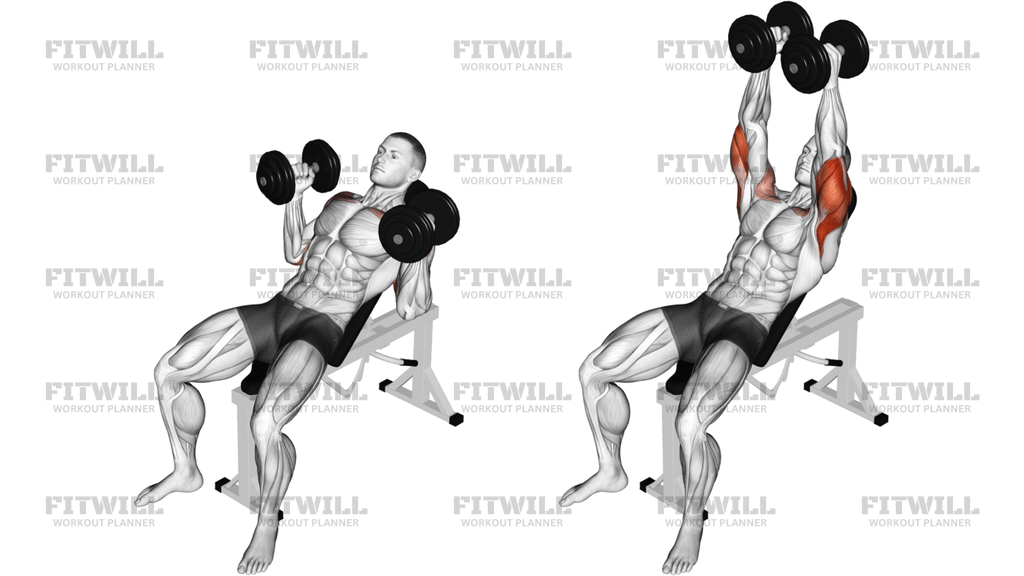
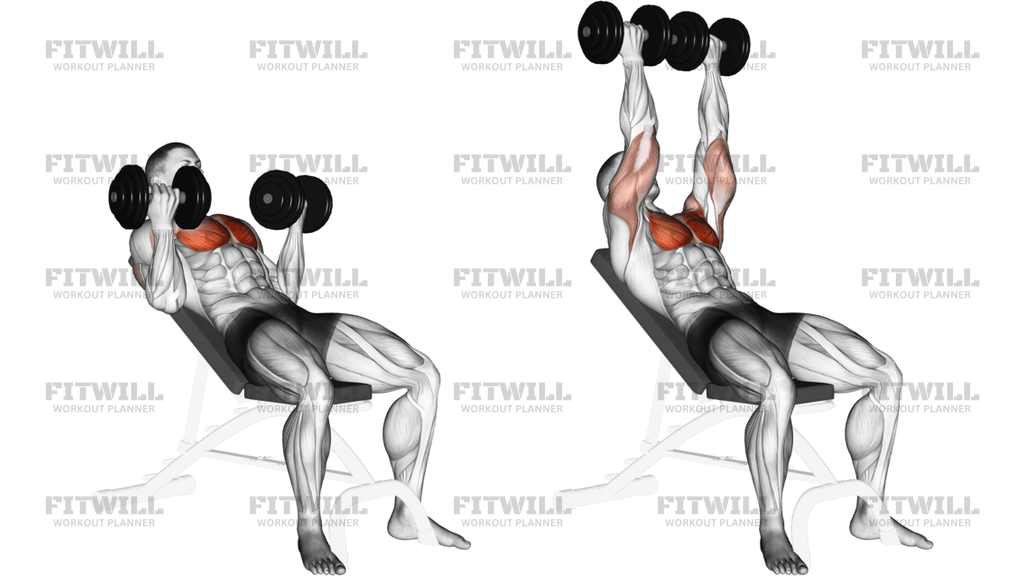
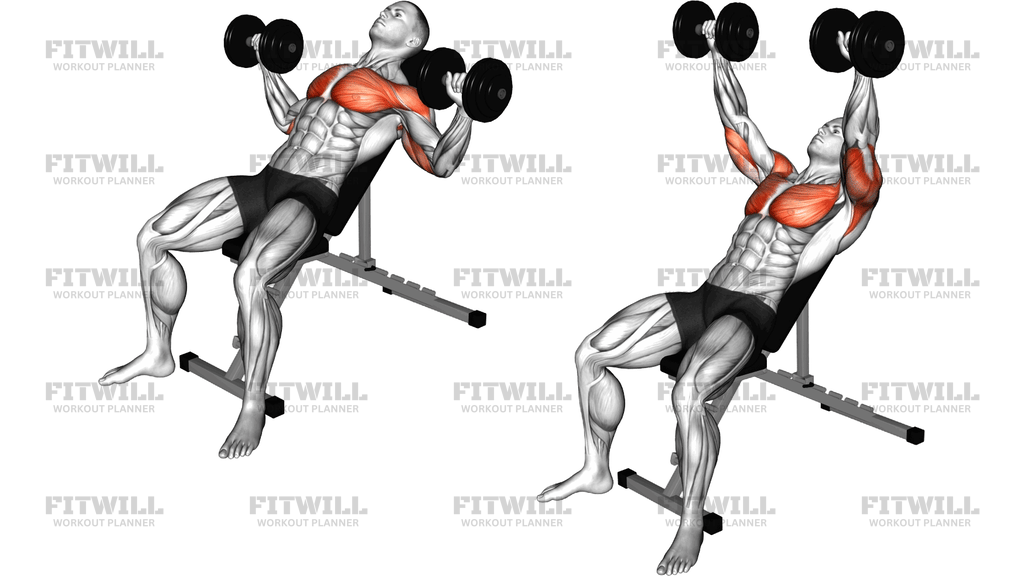
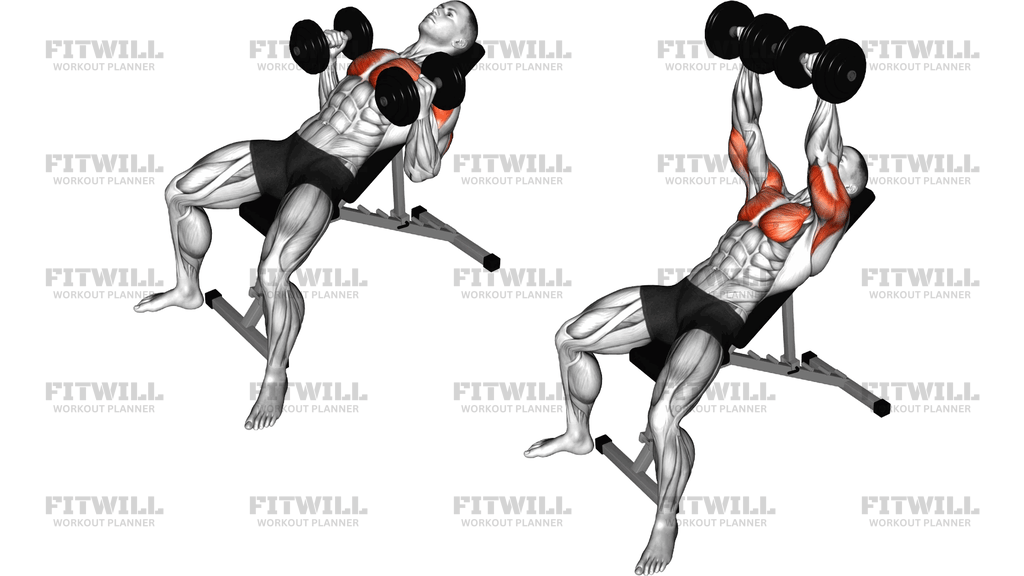
The Dumbbell Incline Twist Press (Version 2) is an incline pressing variation in which you rotate the dumbbells during the press. You lie back on an incline bench with a dumbbell in each hand at shoulder height, then press upward while turning your wrists so the palms finish facing each other with the dumbbells nearly touching above your chest. The rotation changes the path your elbows travel and shifts emphasis toward the clavicular head of the chest, the muscle fibers that run up toward your collarbone.
This movement works well for lifters who already own a solid flat or incline press and want a way to bias the upper chest without loading extremely heavy. Because you can rotate the weights through the rep, the shoulder joints are free to find a comfortable angle, which many people find friendlier than a fixed-grip barbell press. Front delts and triceps still contribute plenty, and the small stabilizing muscles around the shoulder get real work keeping the dumbbells controlled through the twist.
Setup matters more here than in a standard press because the rotating press leaves you less margin for sloppy positioning. Set the bench between 30 and 45 degrees, plant your feet flat on the floor, and keep your upper back and hips in contact with the pad for every rep. Start with the dumbbells at chest level with palms facing forward or slightly angled, elbows set a bit below shoulder line. If the bench is too upright, the press drifts toward a shoulder exercise; too flat, and you lose the upper-chest emphasis that makes this version worth doing.
To execute it well, press both dumbbells up and slightly inward, letting your wrists rotate naturally so the palms end up facing each other at the top. Squeeze the dumbbells close together without clanging them, then reverse the rotation on the way down until you return to the starting grip. The descent should take about twice as long as the press, with the elbows finishing just below the level of the shoulders.
Use this exercise as your main incline push on days when your shoulders feel beat up from barbell work, or as a second chest movement after a heavier compound press when you want a focused upper-chest stimulus with moderate weight. It also suits home gyms well, since a pair of dumbbells and an adjustable bench are all you need.
Keep the load conservative the first few sessions. The wrist rotation is simple to learn but changes the lever position at the top, and jumping straight to your normal incline press weight is the fastest way to lose control mid-rep. If your wrists or shoulders complain, reduce the range of rotation rather than forcing the twist.
[ Workout Log & Planner ]
Put your next workout in Fitwill
Keep your plan and training log ready when you are.


Instructions
- Set an adjustable bench to roughly a 30 to 45 degree incline and sit on it with a dumbbell in each hand resting on your thighs.
- Kick your knees up one at a time to swing the dumbbells back, then lie back so your head, upper back, and hips stay in contact with the pad and your feet are flat on the floor.
- Position the dumbbells at chest level just outside your shoulders with palms facing forward, and draw your elbows slightly below shoulder height.
- Pull your shoulder blades down and back into the bench and brace your core before starting the press.
- Exhale and press both dumbbells up and slightly inward, rotating your wrists as you press so the palms face each other at the top.
- Finish with your arms extended above your upper chest and the dumbbells close together without letting them collide.
- Inhale as you slowly reverse the rotation, lowering the dumbbells back to the starting position with palms facing forward and elbows just below shoulder line.
- Keep your lower back in contact with the bench through every rep; if your hips shift or your back arches hard, the weight is too heavy.
- Complete your reps, then bring the dumbbells back to your thighs or drop them safely to the floor from the top position before standing up.
Tips & Tricks
- If the twist feels awkward, rotate the wrists only during the top half of the press; forcing the full rotation from the bottom usually means the weight is too heavy to control.
- The most common mistake is turning this into a flye by pressing the dumbbells in a wide arc. Keep the path mostly vertical over your upper chest and let the rotation come from the wrists, not the elbows swinging out.
- Check your bench angle before adding weight. Anything steeper than about 45 degrees pulls the front delts into the movement and dilutes the upper-chest focus.
- Let the dumbbells nearly touch at the top but stop an inch or two apart; banging them together kills tension and invites a dropped dumbbell.
- Your elbows should travel at roughly a 45 to 60 degree angle from your torso, not flared straight out to the sides, which puts unnecessary strain on the shoulder capsules during the rotation.
- Use a firm, mid-palm grip slightly toward the inner heads of the dumbbells. A grip too far out on the handle makes the wrist rotation clunky at the top.
- Lower the dumbbells under control for two to three seconds. Rushing the eccentric is where the rotating grip is most likely to slip out of position.
- Warm up your shoulders with a few band pull-aparts or light presses before your first set, since the twist position places the rotator cuff under changing angles through each rep.
- If your wrists ache, try angling the starting grip slightly inward instead of fully forward, or reduce the load by one size and rebuild the pattern.
Frequently Asked Questions
What muscles does the Dumbbell Incline Twist Press (Version 2) work?
The primary target is the upper chest, specifically the clavicular head of the pectoralis major. The front shoulders and triceps assist throughout, and the rotator cuff and serratus anterior help stabilize and control the rotating press.
How is the twist version different from a regular Dumbbell Incline Press?
In the twist press, your palms rotate from facing forward at the bottom to facing each other at the top. This shifts some emphasis toward the upper chest and lets your shoulder joints settle into the angle that feels best at lockout.
What bench angle should I use for the Dumbbell Incline Twist Press (Version 2)?
Set the bench between 30 and 45 degrees. Below 30 degrees the exercise drifts toward a flat press, and steeper than 45 degrees it starts working the shoulders more than the chest.
Is this exercise suitable for beginners?
Yes, but start light and practice the rotation with dumbbells you could press for 15 or more reps. Once the twist feels natural and controlled, add weight gradually.
Why do my wrists feel awkward when the dumbbells rotate at the top?
This usually means the grip is too far out on the handle or the load is forcing a rushed rotation. Grip the handle near the inner head, slow the twist down, or rotate only through the top half of the press until it feels smooth.
How heavy should I go compared to my normal incline press?
Start with around 70 to 80 percent of what you use for a standard dumbbell incline press. The rotating grip changes your control at the top of the rep, and the weight should reflect that.
Can I substitute the Dumbbell Incline Twist Press (Version 2) if I don't have an adjustable bench?
A flat bench works, but the movement becomes a flat twist press and the upper-chest emphasis decreases. As a fallback, a low-incline setup or even a slight wedge of padding under your upper back can approximate the angle.
Should the dumbbells touch at the top of the press?
Let them come close but avoid clanging them together. Touching or banging them releases chest tension and makes it easier for one arm to drift off its path.
Is it safe to press dumbbells overhead with rotated wrists if I've had shoulder issues?
The rotating grip is often easier on the shoulders than a fixed press because the joint can self-select a comfortable path, but you should still start very light and stop any movement that causes sharp pain. Check with a qualified professional if you have a history of shoulder injury.
How do I get the dumbbells into position at the start of the set?
Sit on the bench with the dumbbells on your thighs, then kick each knee up to swing one dumbbell back as you lean into the pad. This keeps your shoulders from having to hoist heavy weights into the starting position from a lying position.