Landmine Single Arm Push Press
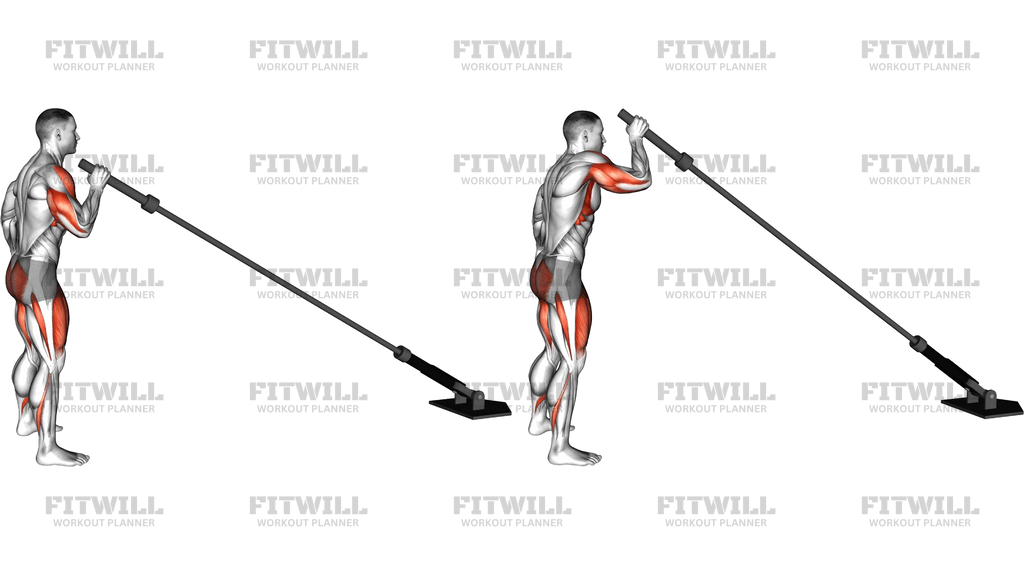
The Landmine Single Arm Push Press is an explosive overhead exercise performed with one end of a barbell anchored in a landmine attachment or wedged into a corner, while you press the free sleeve up with one hand. Because the bar sits at an angle rather than moving straight overhead, the press arc is joint-friendly and the weight loads the shoulder differently than a traditional barbell or dumbbell press. The push press element adds a coordinated leg drive: you dip slightly at the knees and hips, then drive through the floor to help the bar up.
The working side targets the front and side shoulders and the triceps, while the dip-and-drive phase brings the quads and glutes into the movement. Just as important, the offset load and angled bar path challenge your trunk and hip stabilizers to keep you from twisting or drifting, so the core works hard without you doing anything extra. Many lifters notice their lats and upper back contributing as they control the bar on the way down.
The single-arm landmine setup matters for a few reasons. The angled bar reduces the shoulder range of motion at the top compared with a vertical press, which suits lifters who get pinched or uncomfortable pressing a barbell directly overhead. The landmine pivot also creates a slightly curving path that lets you keep your wrist stacked over your elbow, which is easier on the joint than pressing with a straight bar. Training one side at a time exposes and helps correct left-to-right strength differences.
To execute it well, stand facing the anchored end with the sleeve held at shoulder height, feet roughly hip-width apart. Take a shallow dip, then drive the legs and punch the bar up and slightly forward along the bar's natural arc until the arm is extended. Keep your ribs down and your torso tall throughout so the leg drive transfers into the press instead of leaking into a lower-back lean.
This exercise fits well as a main strength movement on shoulder days, as a power-focused option in athletic training blocks, or as a substitute for overhead pressing when a vertical bar path bothers your shoulders. Start with a conservative load to learn the timing between the leg drive and the arm punch, and stop the set as soon as your torso starts twisting to finish reps. Done with tight technique, it builds pressing power, shoulder resilience, and full-body coordination in a single lift.
Fitwill
Log Workouts, Track Progress & Build Strength.
Achieve more with Fitwill: explore over 9600 exercises with images and videos, access built-in and custom workouts, perfect for both gym and home sessions, and see real results.
Start your journey. Download today!




Instructions
- Set one end of a barbell securely in a landmine attachment, or wedge it into a corner with a towel to protect the wall, and load the free end with the desired weight.
- Stand facing the anchored end, feet about hip-width apart, and grip the sleeve with one hand at shoulder height using an overhand grip, elbow tucked in front of the bar.
- Brace your core, pull your ribs down, and set your torso tall with your weight spread evenly across both feet.
- Take a shallow dip by bending the knees and hips a few inches, keeping the bar resting near your front shoulder.
- Drive forcefully through the floor, extending the legs, and let that momentum start the bar moving upward.
- Punch the hand up and slightly forward, following the bar's angled arc, and finish with the arm extended and the wrist stacked over the elbow.
- Hold the lockout for a brief moment with the trunk still square to the anchor point.
- Lower the bar under control back to shoulder height by bending the elbow and absorbing the return with a soft knee bend.
- Exhale as you press, inhale as you lower, and re-brace before each rep.
- Complete all reps on one side, then reset your stance and switch hands.
Tips & Tricks
- A common mistake is turning the set into a standing push with the torso twisting toward the working arm. Keep your chest facing the anchor and limit the rotation instead of muscling the bar around with your spine.
- If your wrist bends backward at lockout, the sleeve is drifting behind the elbow. Finish each rep with the wrist directly stacked over the elbow and the knuckles pointing up.
- Keep the dip shallow, only a few inches. A deep squat turns the rep into a leg exercise and makes the timing between the drive and the press much harder to coordinate.
- Do not let your lower back arch as the bar goes up. If your ribs flare, tighten the abs harder before the dip so the extension comes from the hips and knees, not the spine.
- The bar naturally travels up and slightly forward along its arc. Pressing it straight back over your head fights the setup; follow the angled path instead.
- Grip the sleeve close to where it meets the collar rather than at the very tip, which gives you better control of the lever arm as the bar swings.
- Start lighter than you think you need. The pivot point makes the bar feel unstable in a different way than a dumbbell, and the learning curve is in coordination, not raw strength.
- Switch which foot is slightly forward or keep a square stance consistently between sides, whichever you choose, so the comparison between your left and right arm stays honest.
Frequently Asked Questions
Which muscles does the Landmine Single Arm Push Press work the most?
The front and side shoulders and the triceps do the pressing, while the quads and glutes generate the leg drive. The core and hip stabilizers work hard to keep your torso square against the offset, angled load.
Is the Landmine Single Arm Push Press good for beginners?
Yes, provided the load starts light. The angled bar path is often easier on the shoulder and wrist than a straight overhead press, and the single-arm setup helps beginners learn bracing and leg timing before progressing to heavier barbell work.
Why use a landmine instead of pressing a dumbbell overhead?
The anchored pivot creates a slight arc that reduces overhead range of motion at the top and lets the wrist stay stacked over the elbow, which many lifters find more comfortable. It also lets you use heavier loads with more stability than a single dumbbell.
How deep should the dip be in the Landmine Single Arm Push Press?
Just a few inches, enough to load the legs without losing your tall torso position. If you find yourself dropping into a half squat, the timing between the drive and the press will fall apart.
Can I do this exercise without a landmine attachment?
Yes. Wedge the empty end of the barbell securely into a corner, ideally with a towel wrapped around it to protect the wall and keep the bar from slipping. Make sure the setup cannot slide before adding weight.
Why does my torso rotate during the Landmine Single Arm Push Press?
Rotation usually means the load is too heavy or the core is not braced before the dip. Reduce the weight, tighten your abs and glutes before each rep, and think about keeping your chest pointed at the anchor throughout.
Should the bar end up directly over my head at lockout?
No. Because of the anchored angle, the finished position is up and slightly forward of your head with the arm fully extended. Forcing the bar straight overhead defeats the purpose of the landmine setup.
How does the Landmine Single Arm Push Press differ from a strict landmine press?
The push press version adds a deliberate knee and hip dip followed by an explosive leg drive, which lets you move more weight and trains power transfer through the whole body. A strict press relies on the shoulder and arm alone with no leg contribution.
Is this exercise safe for the lower back?
It is generally manageable when the load suits your strength and your ribs stay down during the press. Problems arise when lifters arch the lower back or twist to help heavy reps, so cut the set off as soon as your torso position changes.