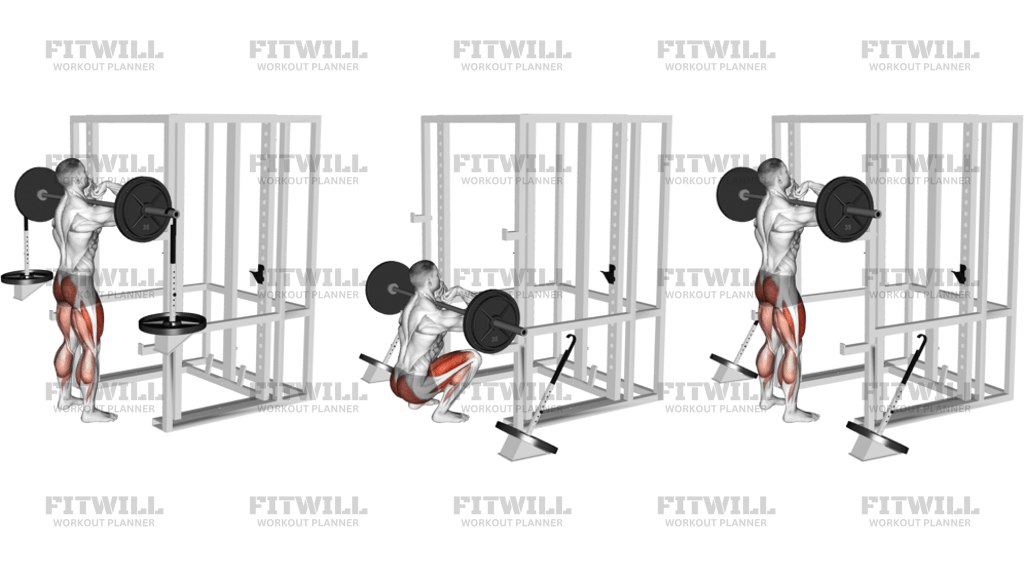
Barbell Incline Shoulders Press (Inside Squat Cag)
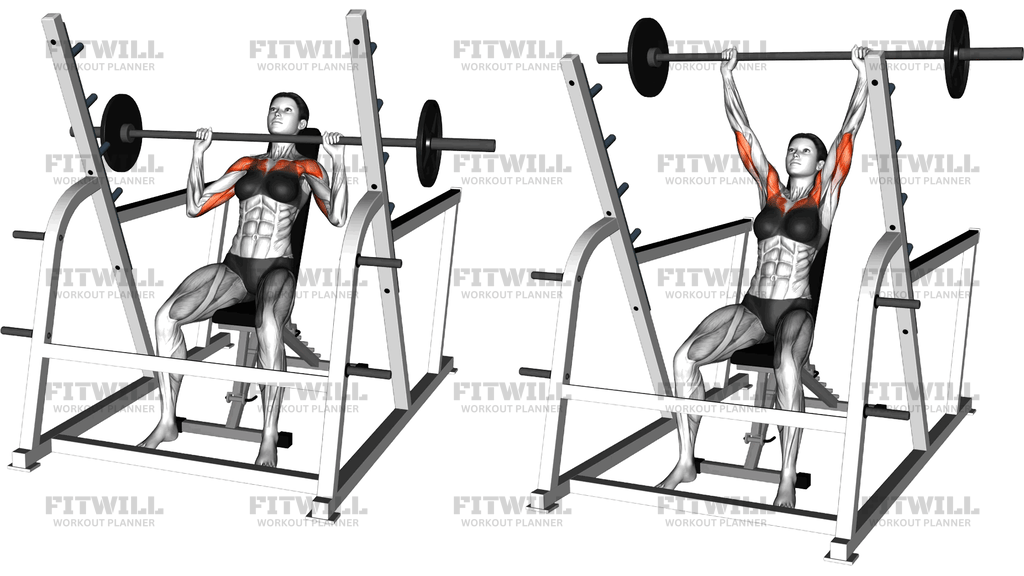
The Barbell Incline Shoulders Press (Inside Squat Cage) is a seated overhead press performed with an inclined bench positioned within a power rack, so the bar starts and finishes at safe heights on the rack uprights. You sit with the bar racked at roughly shoulder height, unrack it to your clavicles, press it straight overhead until your arms are extended, and lower it back under control. The slight backward tilt of the incline bench shifts emphasis toward the front of the shoulders while giving your upper back a solid surface to brace against, which is why this version tends to feel more stable than a standing press.
This movement is a strong choice for lifters who want to build pressing strength without the balance demands of a standing barbell press. Because the rack acts as a safety net, you can train close to failure or work through sticking points without a spotter needing to grab the bar mid-rep. It suits intermediate lifters building shoulder size and strength, as well as anyone returning from a layoff who wants the confidence of fixed safeties before pressing heavier loads.
The primary work comes from the anterior deltoids, with the lateral delts, triceps, and upper chest contributing throughout the lockout. Your upper traps and upper back stabilize the shoulder blades, and your core stays engaged to keep your ribs from flaring as the bar travels. Grip width is typically just outside shoulder width, with forearms roughly vertical at the bottom position.
Setup matters more here than in most shoulder exercises because of the geometry involved. The bench needs to be angled high enough that the bar clears your head on the way up but not so upright that it becomes a pure chest press. The rack hooks should sit at clavicle height and the safeties should be set just above the level of your shoulders when seated, so a failed rep can be lowered safely rather than pinned across your body.
To execute it well, keep your wrists stacked over your elbows, pull your chin back slightly as the bar passes your face, and finish each rep with the bar over the middle of your head rather than drifting forward. Lower the bar to your upper chest and clavicle area in a controlled manner, letting the elbows track slightly forward rather than flaring straight out to the sides. Breathe in at the top or bottom, exhale through the sticking point, and rerack with straight arms before releasing your grip.
You will see this press used as a primary strength movement in shoulder-focused days, typically for sets of five to ten reps, and as a hypertrophy builder with moderate loads and higher volume. It also pairs well with lateral raises and rear delt work to round out shoulder development.
[ Workout Log & Planner ]
Put your next workout in Fitwill
Keep your plan and training log ready when you are.


Instructions
- Set an incline bench to roughly a 60-80 degree angle inside the power rack, with the bench centered between the uprights so the bar can travel straight overhead without hitting the frame.
- Adjust the rack hooks so the bar sits at about clavicle height when you are seated, and set the safety pins just above shoulder level so a missed rep can be lowered safely.
- Sit down with your back, shoulders, and head against the pad, feet flat on the floor about hip-width apart, and grip the bar slightly wider than shoulder width with palms facing forward.
- Brace your core and pull your shoulder blades down and back into the bench, then rotate the bar out of the hooks with straight elbows so your elbows are under the bar before it leaves the rack.
- Lower the bar under control to your upper chest and clavicle line, letting your elbows track slightly forward so your forearms stay close to vertical.
- Press the bar upward, moving your head back a touch as it passes your chin, then drive to lockout with the bar stacked over the middle of your head and your arms fully extended.
- Pause briefly at the top without shrugging the bar into your neck, then lower it along the same path back to your clavicles.
- Exhale as you press through the hardest point of the rep and inhale as the bar comes back down; keep the rhythm consistent across all reps.
- After your final rep, press the bar back to full extension and walk it into the uprights until the bar is fully seated in the hooks before relaxing your grip.
- Reset your back contact and brace before each rep rather than grinding out reps with your lower back arching off the pad.
Tips & Tricks
- If the bar clips your chin or forehead on the way up, the bench is set too far back from the hooks; slide it forward slightly so the bar path starts directly over your shoulders.
- Elbows flaring straight out to the sides at the bottom usually means your grip is too wide; narrow it until your forearms are roughly vertical when the bar is on your clavicles.
- Do not drop the bar onto the hooks from lockout; with this setup a careless rerack can bounce the bar out of the J-cups, so press to full extension and guide it in deliberately.
- If your lower back arches and your ribs flare as the weight gets heavier, lighten the load and consciously keep your lower back in contact with the bench pad.
- Bouncing the bar off your upper chest turns this into a rebound press and robs the shoulders of work; touch, pause for a beat, then press.
- Set the safety pins a test rep lower than you think you need; a pin set at neck height gives you nothing to lower the bar onto if you fail.
- Keep your wrists stacked over your elbows rather than letting the bar roll back into your fingers, which strains the wrists and shortens the press.
- Chalk or a full grip around the bar is worth using here, since reracking overhead with straight arms demands a secure hold.
- Start with just the bar on your first session to confirm hook height and pin placement before adding plates, since the correct height differs for everyone.
Frequently Asked Questions
What muscles does the Barbell Incline Shoulders Press (Inside Squat Cage) work?
The front deltoids do most of the pressing, supported by the side delts, triceps, and upper chest. The upper traps and upper back stabilize the shoulder blades throughout the movement.
Why perform this press inside a squat cage instead of in the open?
The rack provides fixed hooks for easy reracking overhead and safety pins that catch the bar if a rep fails. That makes it practical to train the press hard without a spotter.
How steep should the incline bench be for the Barbell Incline Shoulders Press (Inside Squat Cage)?
Set it fairly high, roughly 60-80 degrees, so the emphasis stays on the shoulders rather than shifting toward the chest. If the press feels like an incline bench press, the angle is too low.
Is this exercise suitable for beginners?
Yes, provided the load stays light at first and the bench and rack heights are set correctly. Beginners benefit from practicing the unrack, bar path, and rerack with an empty bar before adding weight.
Where should the bar touch at the bottom of each rep?
Lower it to your upper chest and clavicle line, just below your chin. Going lower than that shifts the work toward the chest and can strain the shoulders.
What is the most common mistake with this movement?
Letting the hips slide forward and the lower back arch off the pad as fatigue builds, which turns the press into a partial standing press against the bench. Keep your seat planted and your back in contact with the pad on every rep.
How wide should my grip be?
Grip slightly wider than shoulder width so your forearms are close to vertical when the bar is on your clavicles. Too wide reduces shoulder range of motion and flares the elbows; too narrow crowds the shoulders and strains the wrists.
What can I substitute if my gym has no rack with an incline setup?
A seated dumbbell shoulder press on an incline bench is the closest alternative and needs no rack. A standing barbell overhead press trains similar muscles but adds balance and core demands.
How should I breathe during this press?
Inhale and brace at the bottom or top of the rep, then exhale as you press through the hardest point. Avoid holding your breath for multiple consecutive reps.
Is it safe to fail a rep on this exercise?
It is designed to be, as long as the safety pins are set just above shoulder height when seated. On a failed rep, guide the bar down onto the pins rather than trying to force it back to the hooks.