Barbell Standing Shoulders Press
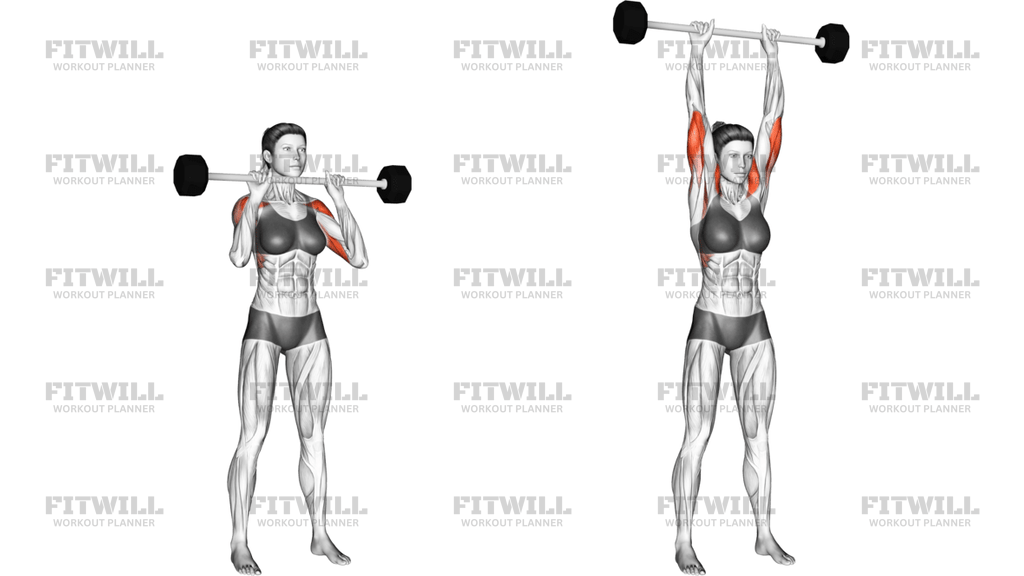
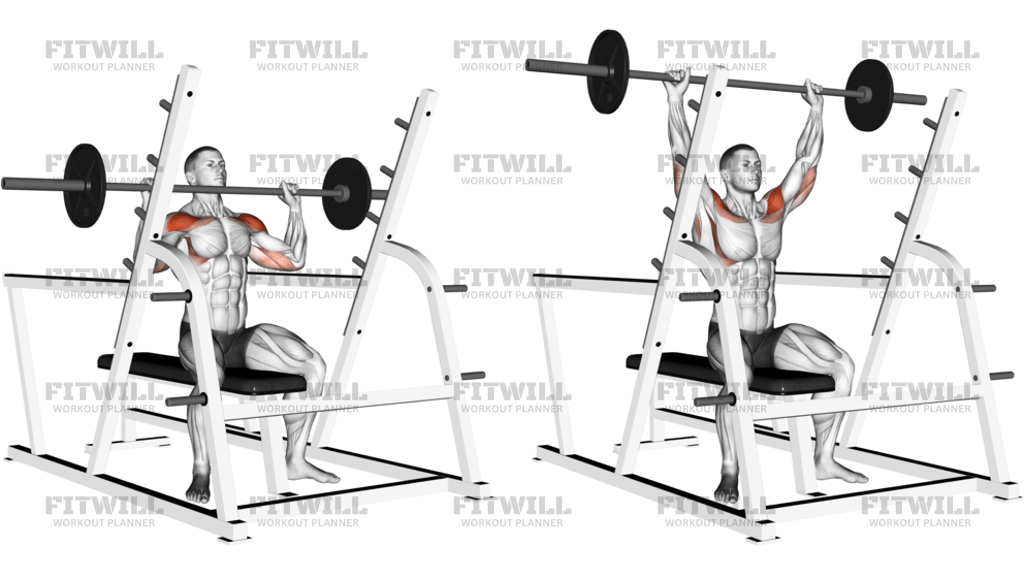
Barbell Standing Shoulders Press is a strict standing overhead press performed from the front rack, with the bar starting across the upper chest and finishing directly over the shoulders and midfoot. The exercise is built around a simple but demanding line of force: drive the bar up without turning the lift into a leg-driven push press, and finish each rep with the torso tall, ribs controlled, and the bar stacked over the body.
The main training emphasis is the delts, with the triceps, upper traps, and upper back contributing to lockout, shoulder stability, and a clean bar path. In anatomy terms, the primary work centers on the Deltoids, with support from Trapezius, Rhomboids, and Triceps brachii. Because the bar has to travel around the face and then settle overhead, the setup matters as much as the press itself. A solid stance, a firm grip, and neutral wrists help the shoulders do the work instead of the lower back and elbows taking over.
Start each rep from a controlled front-rack position: elbows slightly in front of the bar, forearms close to vertical, and the bar resting high on the upper chest or clavicles. Before you press, brace the trunk and keep the glutes lightly on so the torso stays stacked. The bar should travel close to the face on the way up, then settle over the middle of the body at lockout. That straight, efficient path keeps the press strong and reduces wasted effort.
This lift is useful for building overhead strength, shoulder mass, and pressing control in a standing position where the core has to stay honest. It fits well in strength blocks, upper-body sessions, and accessory work after the main press. Beginners can use it with a light bar or empty bar if they can hold the rack position and avoid leaning back. The safest reps are the ones that stay strict: no bounce from the legs, no excessive back arch, and no sloppy descent back to the rack.
Keep the motion pain-free and controlled from start to finish. If the bar drifts forward, the lower back takes over, or the shoulders lose position overhead, reduce the load and clean up the setup before adding weight. Strong repetitions come from repeatable mechanics, not from forcing a bigger range than the shoulders and thoracic spine can support.
[ Workout Log & Planner ]
Put your next workout in Fitwill
Keep your plan and training log ready when you are.


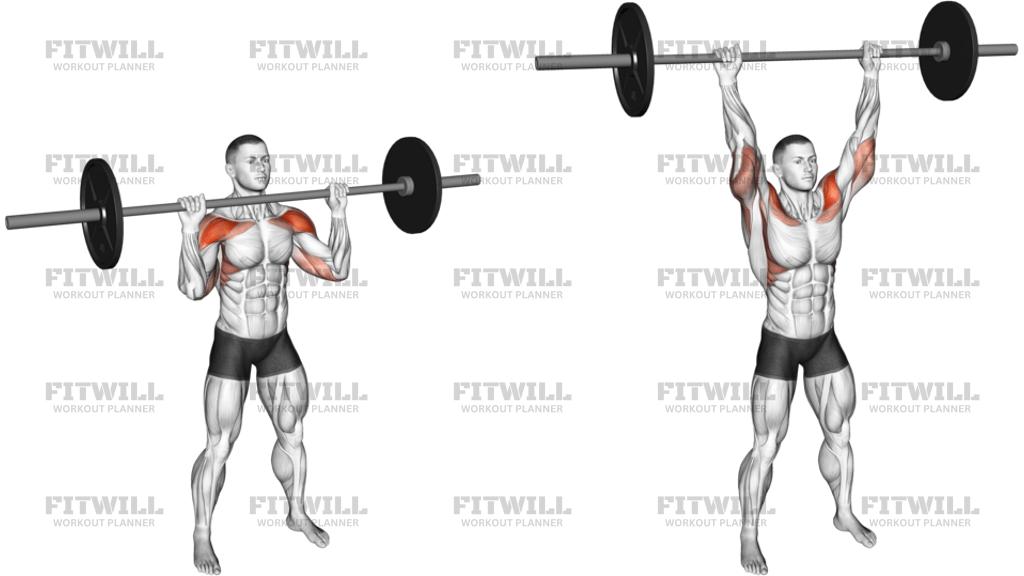
Instructions
- Stand with your feet about hip-width apart and hold the bar slightly wider than shoulder width across the upper chest, with wrists stacked over the forearms.
- Set the bar in a front-rack position on the upper chest or clavicles, elbows slightly forward of the bar and forearms close to vertical.
- Brace your midsection, squeeze your glutes, and keep your ribs down so the torso stays tall before the press begins.
- Press the bar upward in a straight line, letting it travel close to your face as you move your head slightly back to clear the path.
- As the bar passes forehead height, bring your head through under the bar so the finish stacks over the shoulders and midfoot.
- Lock out with straight elbows, active shoulders, and the bar directly over the center of your body.
- Lower the bar under control along the same path until it returns to the upper chest or clavicles.
- Reset your breath and posture before the next rep, then rack the bar only after the final repetition is secure.
Tips & Tricks
- Keep the bar path tight to the face on the way up; letting it drift forward usually turns the press into a leaning lower-back lift.
- Use a grip that allows your forearms to stay nearly vertical in the rack position, which helps the bar start from a stable base.
- Avoid turning the rep into a push press unless that is the plan; the standing press should come from the shoulders and triceps, not the legs.
- Slightly move your head back at the start of the press, then bring it through once the bar clears the forehead to finish in a stacked overhead position.
- Keep the ribs from flaring as the bar rises; a hard back arch usually means the load is too heavy or the brace is losing tension.
- Let the elbows finish under the bar at lockout instead of drifting far behind it, which can stress the shoulder joint and make the rep unstable.
- Lower the bar in a controlled line back to the upper chest rather than dropping it quickly and bouncing out of the bottom.
- If your wrists bend sharply backward, reduce the load or adjust the grip width until the bar sits over the forearms instead of behind them.
Frequently Asked Questions
What muscle does Barbell Standing Shoulders Press target most?
The delts are the main target, especially the front and middle portions, with the triceps and upper traps helping finish the rep.
Where should the bar start for this standing press?
Start with the bar resting high on the upper chest or clavicles in a front-rack position, not down on the hands or in front of the body.
Should I use my legs to drive the bar up?
No. This version is a strict standing press, so the legs stay planted and quiet while the shoulders and triceps move the bar.
Why do I need to move my head back and then through the bar path?
That head movement gives the bar room to pass straight up, then lets you finish stacked under the bar instead of pressing it around your face.
Can beginners do the barbell standing shoulders press?
Yes, if they can hold the front-rack position and keep the torso from leaning back. An empty bar or light load is usually the right place to start.
What usually causes lower-back strain in this exercise?
Most often it is rib flare and over-arching to force the bar overhead. A smaller load and a harder brace usually fix it.
How should the bar travel on the way down?
Lower it along the same path you used to press it, returning to the upper chest or clavicles with control instead of letting it crash down.
What if my wrists hurt in the front-rack position?
Check grip width and bar placement first. If the wrists still collapse back, reduce the load and make sure the bar sits over stacked forearms.