Barbell Bent Arm Pullover
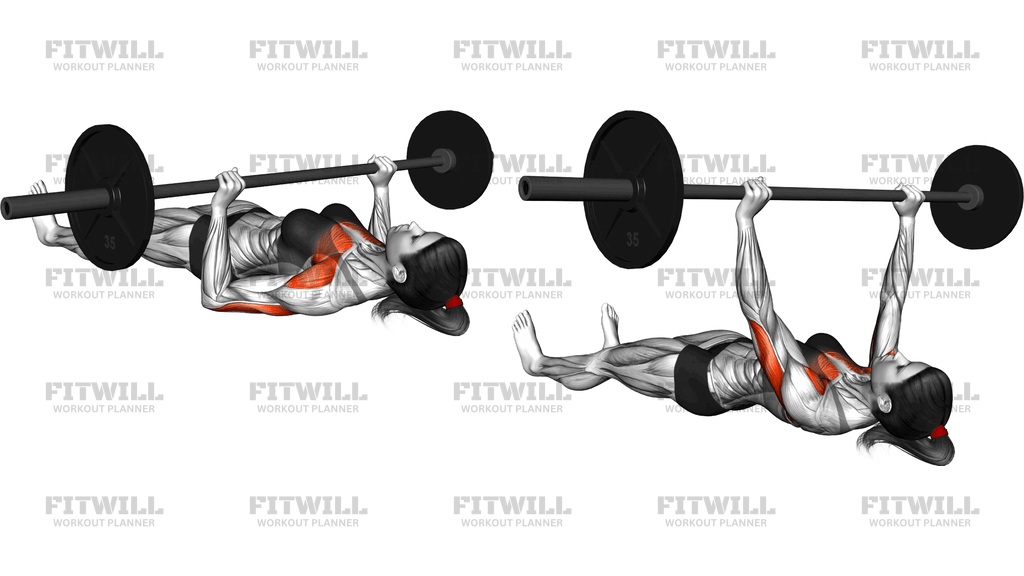
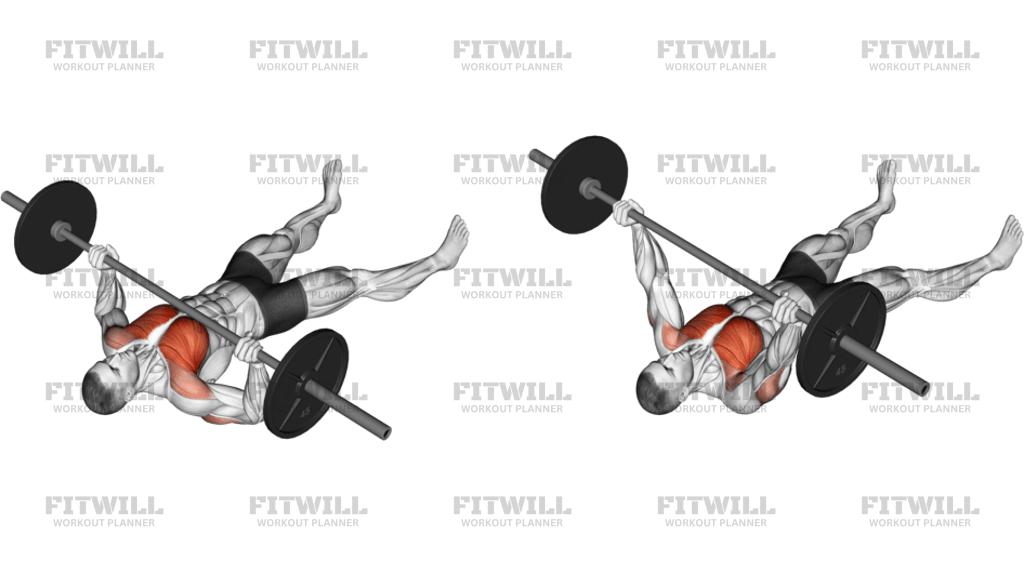
The Barbell Bent Arm Pullover is a classic upper-body movement performed lying across a flat bench with a barbell held in a narrow, close grip. Unlike the straight-arm variation, the elbows stay bent throughout the arc, which shortens the lever and lets you handle a heavier bar while still moving the weight through that deep overhead path. You lower the bar back over your head in a controlled arc, then pull it back up until it sits directly over your chest.
This lift primarily works the chest and lats, with the triceps, front shoulders, and serratus anterior assisting as the bar travels overhead and returns. Because the elbows stay bent, the triceps do more work here than in a straight-arm pullover, and the rib cage expansion at the bottom of the stretch is one reason old-school lifters used pullovers alongside squats. It also teaches your shoulders to tolerate loaded overhead extension, which carries over to pressing and pulling movements.
Setup matters more than most people realize. Lying with your head near the edge of the bench and your feet planted firmly gives you a stable base and keeps your low back from over-arching. The narrow grip means the bar hangs directly over your face and chest, so controlling the descent path is essential for safety — the bar should never drift over your face as you lower it behind your head.
To execute it well, keep the bend in your elbows fixed at roughly the same angle from start to finish, and think of your arms as rigid hooks rather than pressing limbs. Move the bar in a smooth semicircle: back and down until your upper arms reach the level of your head or the bench, pause briefly in the stretch, then pull through the same arc until the bar is stacked over your shoulders. Avoid bouncing at the bottom or turning the movement into a triceps extension.
The Barbell Bent Arm Pullover fits well on chest or back days, usually after your main presses or rows when the larger muscles are already warm. It is also useful for lifters who want a loaded stretch for the lats and pecs without the stability demands of a dumbbell pullover, since a barbell is easier to control in one plane.
Because the bar travels over your head and face, respect the weight. Start lighter than you think you need, use collars on the sleeves, and never work to failure on this lift without a spotter. If you feel pinching in the shoulders or strain in the neck rather than a stretch through the chest and lats, shorten the range or reduce the load before continuing.
[ Workout Log & Planner ]
Put your next workout in Fitwill
Keep your plan and training log ready when you are.


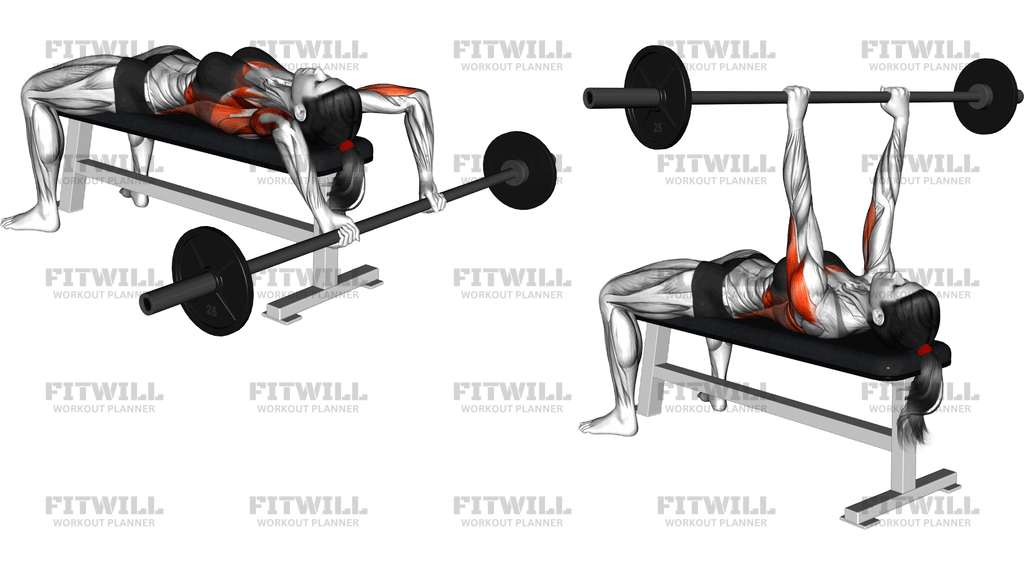
Instructions
- Place a flat bench in an open area and set a barbell with light plates on the floor beside it, with collars secured on both sleeves.
- Lie across the bench with your upper back supported, your head close to the edge, and both feet flat on the floor about hip-width apart for a stable base.
- Reach overhead and take a narrow, overhand grip on the bar with your hands roughly shoulder-width apart, then bring the bar up so it sits directly over your chest with your elbows bent.
- Brace your core and lightly tuck your pelvis so your lower back stays close to the bench rather than arching hard.
- Keeping the elbow bend constant, lower the bar in a smooth arc back over your head until your upper arms are level with your head or the bench behind you.
- Pause for a moment in the stretched position and feel the expansion through your chest and lats without letting your ribs flare up.
- Pull the bar back through the same arc until it is directly over your chest again, driving with your lats and chest while your arms stay in their fixed hooks.
- Exhale as you pull the bar back overhead and inhale slowly on the way down.
- Complete all repetitions, then carefully sit up and set the bar on the floor or rack — never drop it from overhead.
Tips & Tricks
- Lock your elbow angle before the first rep and check it on every rep; if the elbows keep straightening as the bar drops behind your head, the set turns into a sloppy triceps extension.
- The most common mistake is lowering the bar straight back toward the floor instead of in an arc, which shifts load onto the shoulders and pulls the bar off its safe path over the face.
- If your hips rise off the bench as the bar goes back, your weight is too heavy or your range is too deep — cut the depth a few inches before adding plates.
- Keep your head relaxed and on the bench; lifting the head to watch the bar usually rounds the neck and tilts the whole arc off line.
- Grip the bar hard with thumbs wrapped around the sleeve. An open-thumb grip over your face is not worth the risk if the bar slips.
- Because the bar travels over your face, treat every set as a set you can finish — leave two or three reps in reserve instead of grinding to failure.
- Warm up your shoulders with a few light straight-arm swings or band pull-aparts first; cold shoulders tend to complain in the deep stretched position.
- If you feel a pinching sensation at the front of the shoulder at the bottom, stop slightly higher in the arc and gradually increase the range over several sessions.
- Breathe steadily rather than holding your breath through the stretch — holding air while your rib cage is loaded overhead makes the movement feel far heavier than it is.
Frequently Asked Questions
Which muscles does the Barbell Bent Arm Pullover work?
It primarily targets the chest and lats through the long arc of the movement. The triceps, front shoulders, and serratus anterior assist because the elbows stay bent and the bar travels overhead.
What is the difference between a bent arm and a straight arm pullover?
In the bent arm version your elbows stay bent throughout, which shortens the lever and lets you use a heavier barbell while placing more work on the triceps and chest. The straight arm version keeps the elbows nearly locked and stresses the lats through a longer range.
Is the Barbell Bent Arm Pullover safe for beginners?
Yes, as long as beginners start with an empty bar or very light weight and master the arc before loading. Because the bar passes over the face, learning the path with a light bar is the first priority.
Why is a narrow grip used for this pullover?
A narrow, shoulder-width grip keeps the bar balanced in one plane over your chest and makes the arc easier to control. A wider grip on a barbell also pulls the elbows outward and reduces the stretch through the lats and chest.
How deep should I lower the barbell behind my head?
Lower until your upper arms are roughly level with your head or the bench, or until you feel a strong but comfortable stretch in the chest and lats. Going deeper than your shoulders allow usually causes the lower back to arch and the ribs to flare.
Can I use a dumbbell instead of a barbell for this exercise?
Yes, a dumbbell held in both hands under the top plate is a common substitute and may feel easier on the shoulders. The barbell version is steadier because the weight sits in a single straight line.
Should I do pullovers on chest day or back day?
Either works, since the movement straddles both muscle groups. Many lifters place it after their main presses on chest day, or pair it with rows and pulldowns on back day to add a loaded stretch for the lats.
My lower back arches off the bench when I lower the bar — how do I fix it?
Plant your feet firmly, brace your core, and tuck your pelvis slightly before you start. If the arch persists, the weight is too heavy or you are descending too deep, so reduce one or both.
Is a spotter necessary for the Barbell Bent Arm Pullover?
A spotter is recommended when the weight gets challenging, since the bar travels over your head and face. If you train alone, keep the load conservative, use collars, and set the bar down rather than attempting a failed rep.
How many reps and sets should I do?
Two to three sets of 8 to 12 controlled reps works well for most lifters. Because the bar is overhead for the whole set, prioritize smooth technique over heavy loading.