Band Standing Rear Delt Row
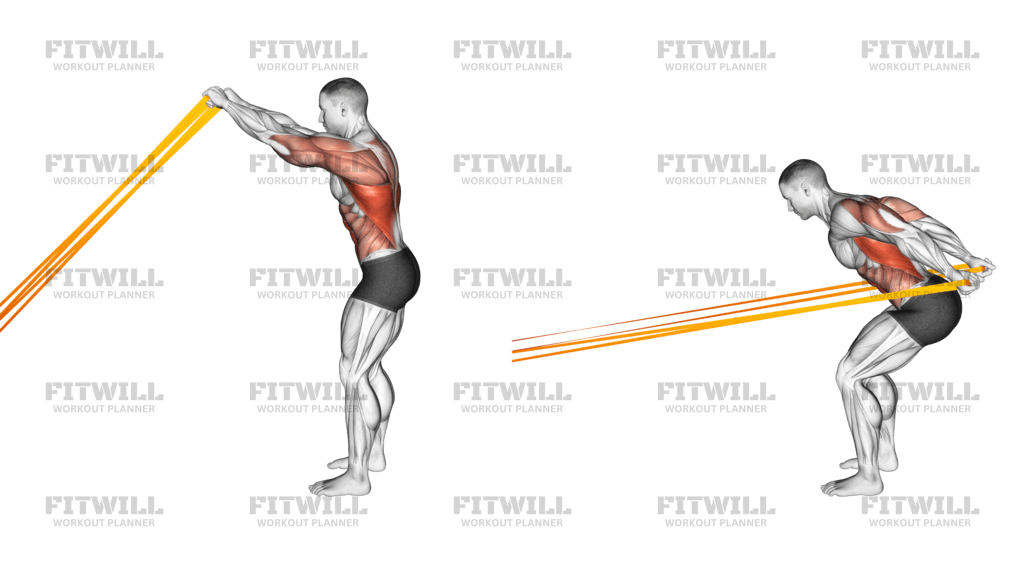
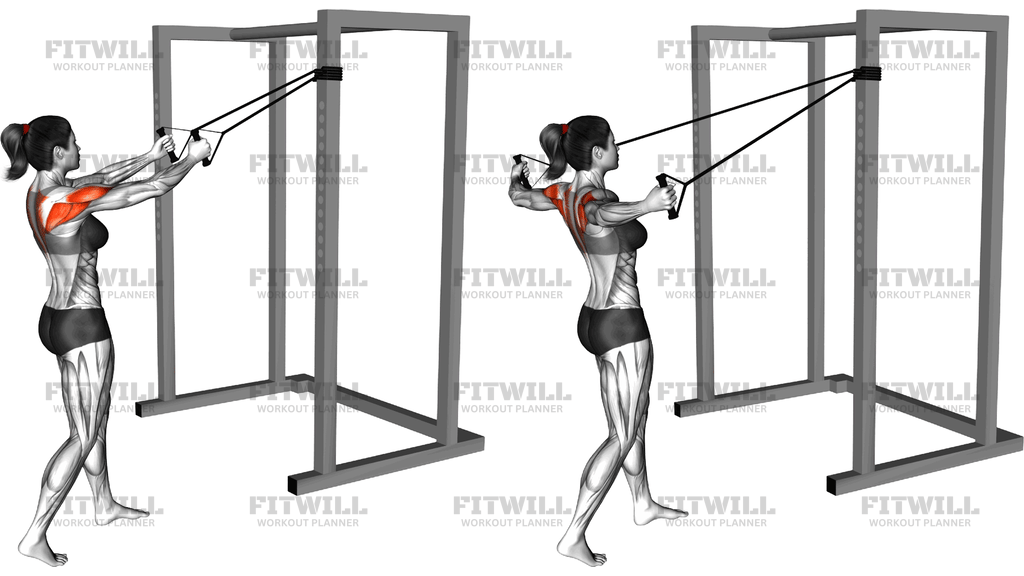
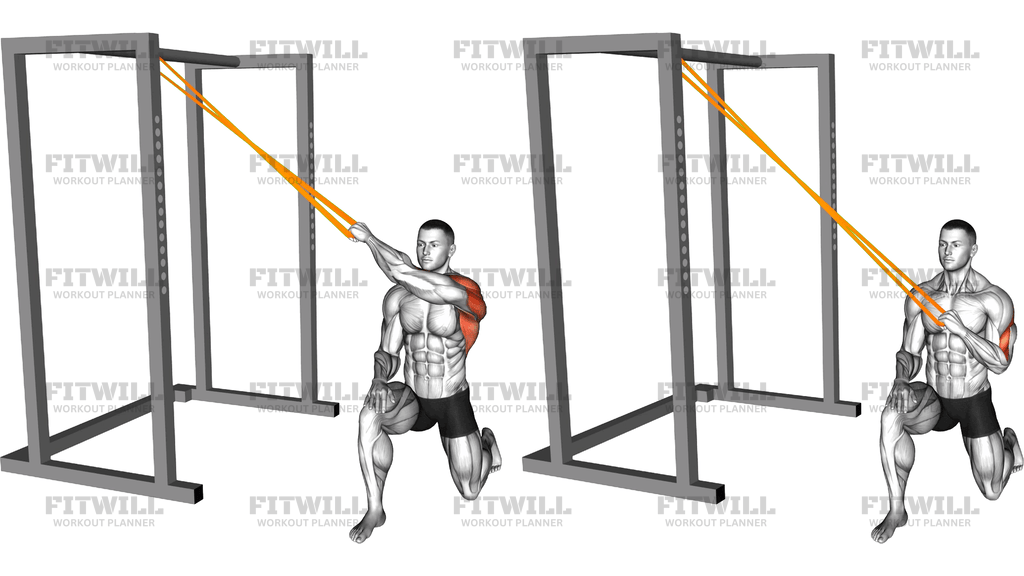
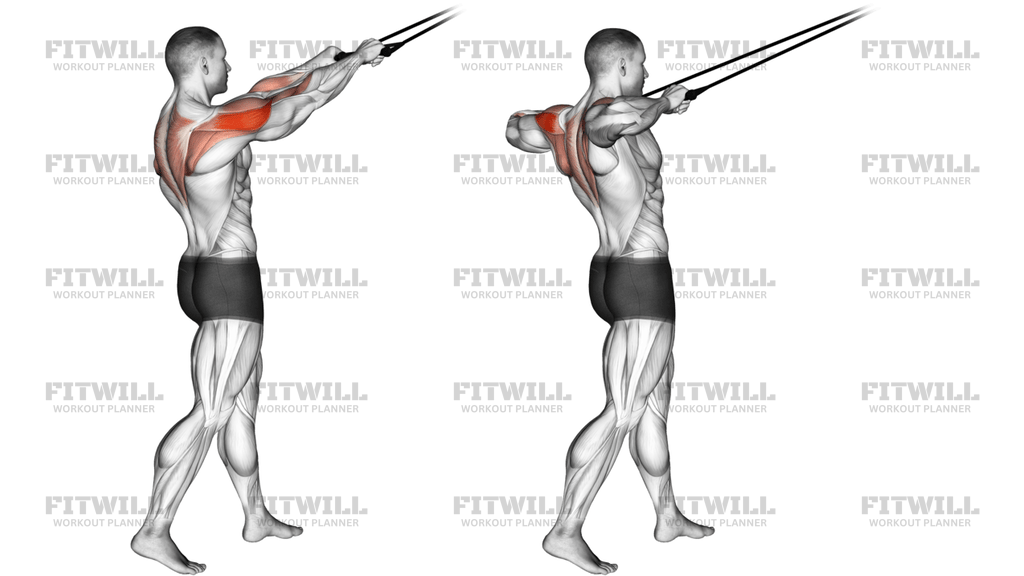
Band Standing Rear Delt Row is a standing band exercise that trains the rear delts with help from the upper back and arms. The setup shown here uses a band anchored in front and slightly above shoulder height, so the line of pull encourages you to open the elbows wide and finish with the upper arms in line with the shoulders. That angle matters because it shifts the work away from a straight-back row and toward the back of the shoulders.
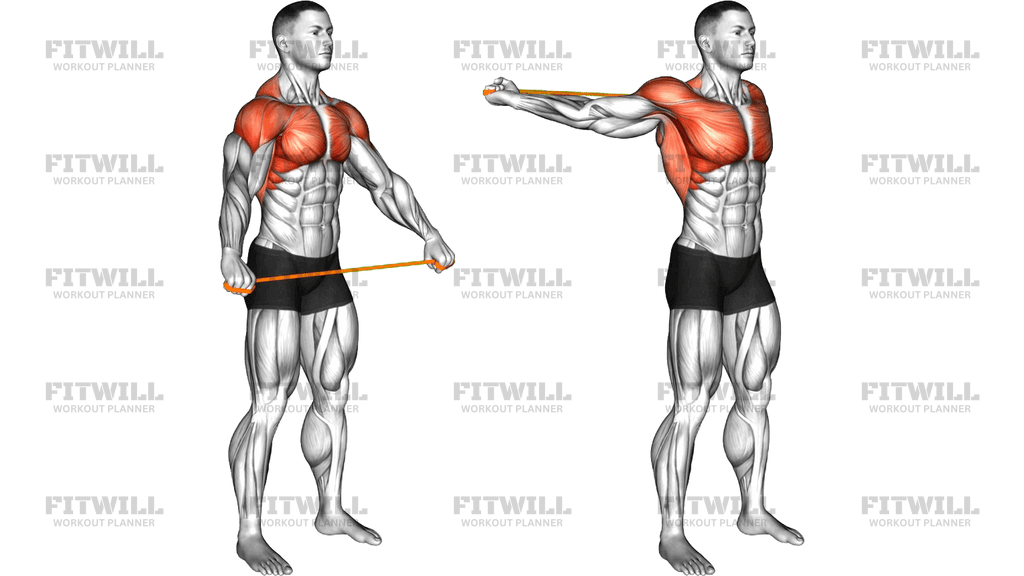
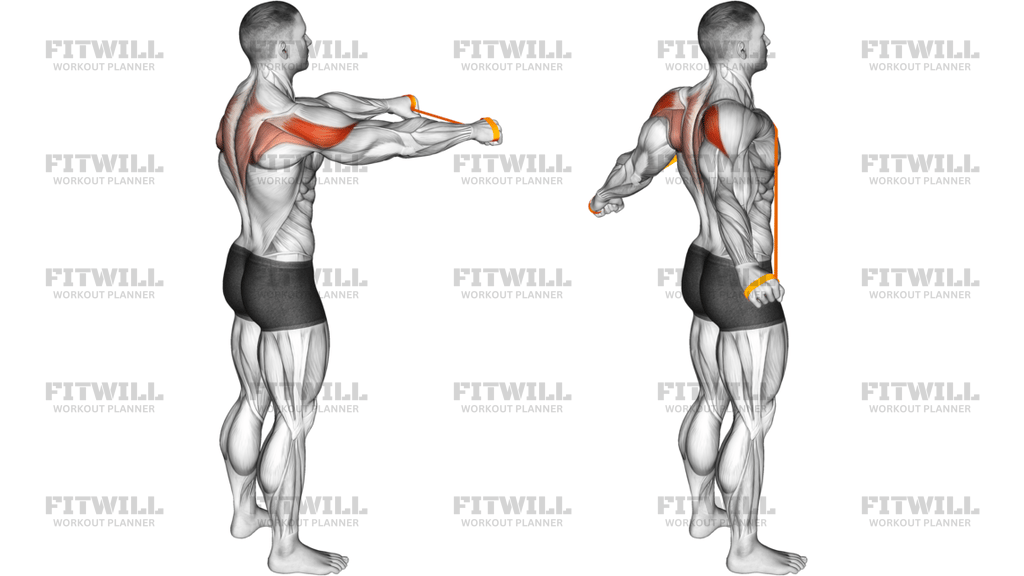
This movement is useful when you want to build shoulder balance, improve posture, and give the rear delts more direct work than a standard band row. In anatomy terms, the main work centers on the Deltoids, with support from the Trapezius, Rhomboids, and Triceps brachii. The exercise is especially helpful for people who press a lot, spend time at a desk, or need cleaner scapular control in pulling patterns.
The best reps start before the band moves. Stand tall in a split or staggered stance, hold the handles with straight wrists, and set the ribs down so the torso does not lean back to steal tension. From there, pull the elbows back and out while keeping them high enough to stay in the rear-delt line of pull. The shoulders should stay packed and away from the ears, with the chest open but not overextended.
At the top, the hands should finish near the sides of the face or upper chest while the elbows flare behind the body. Pause briefly to feel the rear delts shorten, then return under control until the arms are long again and the band is still under tension. The return should stay smooth; if the band snaps you back, the load is too heavy or the anchor is too far away.
Use this exercise as accessory work, posture-focused pulling, or a shoulder warm-up before heavier back or pressing work. It is usually best with moderate-to-higher reps, clean tempo, and strict control. Keep the motion pain-free, and if the front of the shoulder or neck takes over, reduce the resistance or adjust the anchor height before continuing.
[ Workout Log & Planner ]
Put your next workout in Fitwill
Keep your plan and training log ready when you are.


Instructions
- Anchor the band in front of you at about face to upper-chest height and stand facing the anchor in a split stance.
- Hold the handles or band ends with palms facing down or slightly inward and bring your arms straight out in front at shoulder height.
- Stack your ribs over your pelvis, soften your knees, and keep your neck long before the first pull.
- Pull the elbows back and out, leading with the upper arms instead of yanking with the hands.
- Finish with the hands near the sides of your face or upper chest and the elbows slightly behind the torso.
- Squeeze the rear delts for a short pause without shrugging the shoulders upward.
- Lower the handles back to the start slowly until the arms are long and the band is still under control.
- Exhale as you pull and inhale as you return, then repeat for the planned reps.
Tips & Tricks
- Set the anchor high enough that the band pulls from the front and slightly above shoulder level; a low anchor turns the movement into more of a row than a rear-delt raise.
- Keep the elbows high and wide through the pull. If the elbows drop toward your ribs, the mid-back and lats will take over.
- Think about moving the upper arms back, not curling the hands in. The wrists should stay quiet the whole time.
- Do not lean backward to finish the rep. If the torso swings, step farther from the anchor or use a lighter band.
- Keep the shoulders down as the elbows travel back; shrugging usually shifts tension into the upper traps.
- A brief pause at the end of the pull makes the rear delts work harder than a fast touch-and-go rep.
- Control the return all the way to full arm extension so the band does not yank you forward.
- If you feel the front of the shoulder more than the back of the shoulder, shorten the range and lower the tension.
Frequently Asked Questions
What muscle does Band Standing Rear Delt Row target most?
The rear delts are the main target, with the upper back helping stabilize and finish the pull.
Where should the band be anchored for this row?
Use a front anchor around face to upper-chest height so the line of pull keeps the elbows high and wide.
How do I know I am hitting the rear delts instead of just rowing?
Your elbows should travel out and back while staying near shoulder height, and you should feel the back of the shoulders shorten at the finish.
Can beginners use this exercise?
Yes. Start with a light band and a short pause at the top so you can learn the shoulder line before adding tension.
What is the biggest form mistake?
Letting the elbows drop and turning it into a regular row is the most common mistake.
Should my shoulders move forward at the start?
They can reach slightly forward as the arms lengthen, but keep the chest stacked and avoid collapsing the upper back.
Is this the same as a face pull?
It is similar, but this version emphasizes a wider elbow path and a rear-delt finish instead of a high external-rotation finish.
How many reps work best?
Moderate to higher reps usually fit best because the band tension rises quickly and the movement rewards control more than heavy loading.