Bodyweight Isometric Calf Raise Hold
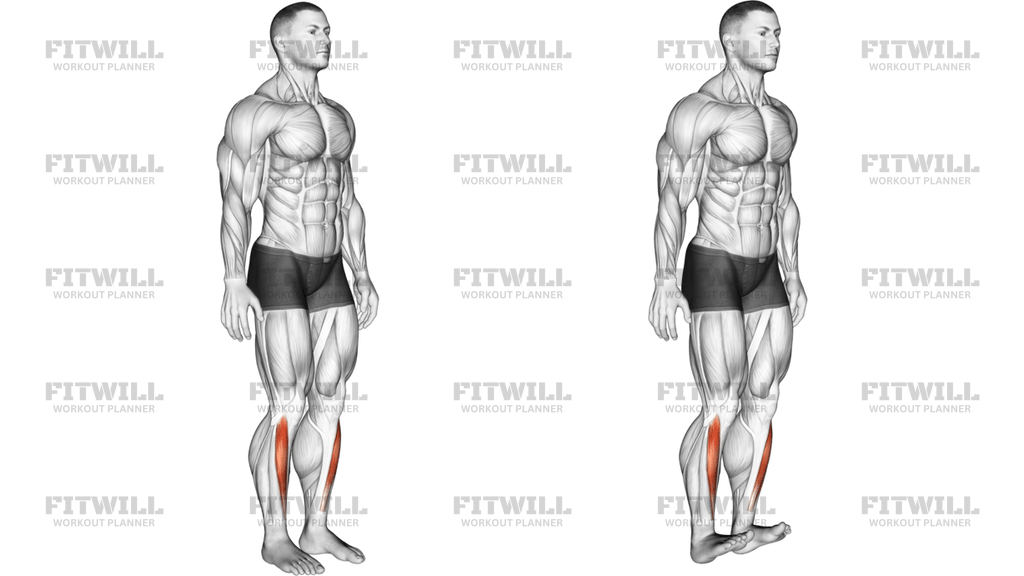
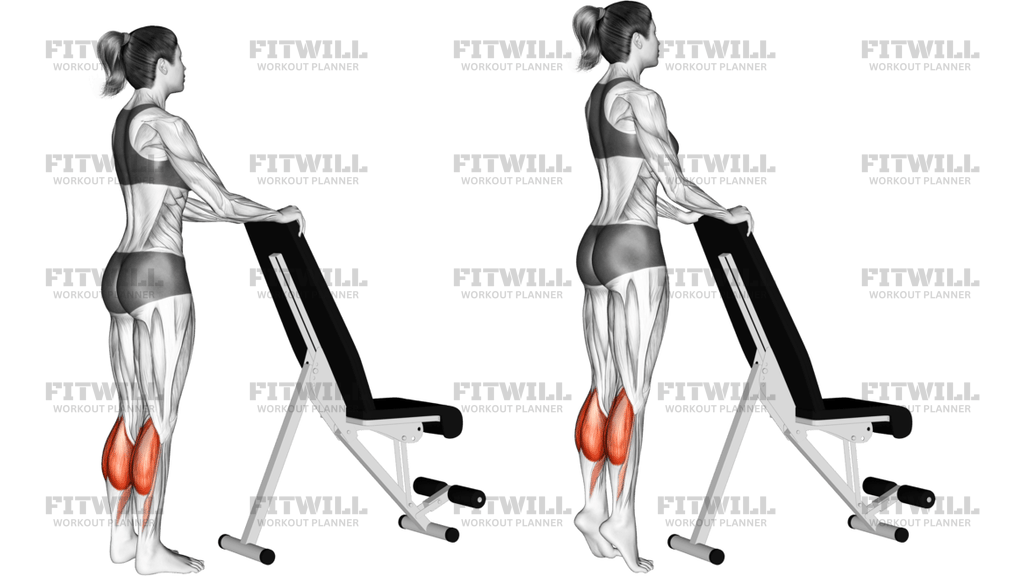
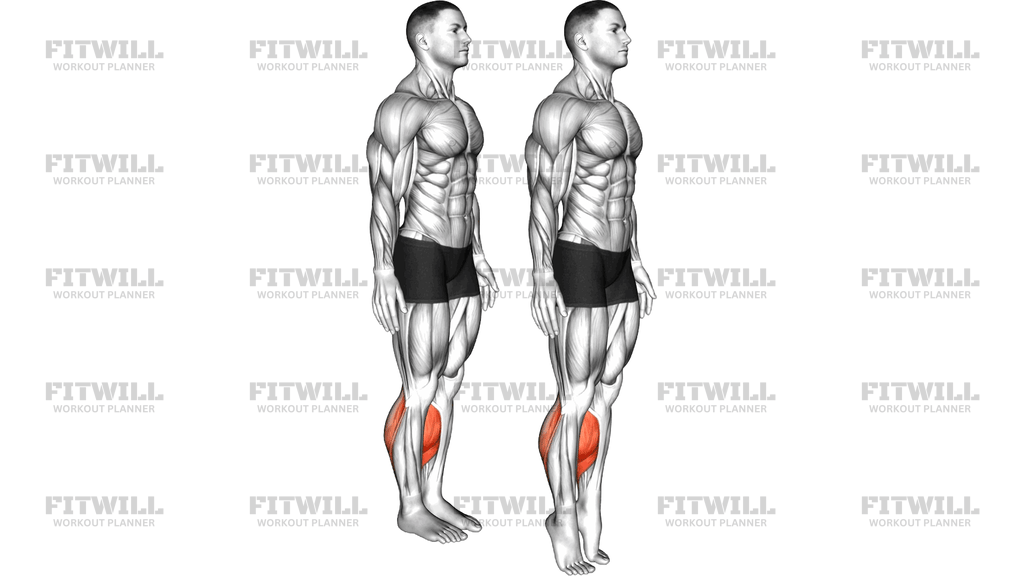
The Bodyweight Isometric Calf Raise Hold is a static strength exercise performed from a standing position. You rise onto the balls of your feet, lift your heels as high as the movement allows, and simply hold that top position without moving. Instead of repeating reps through a full range of motion, the goal is to maintain a strong, elevated heel position against your body weight for a set period of time. The two visible body positions — flat-footed standing and the raised-heel hold — show exactly where the exercise starts and where you need to sustain your effort.
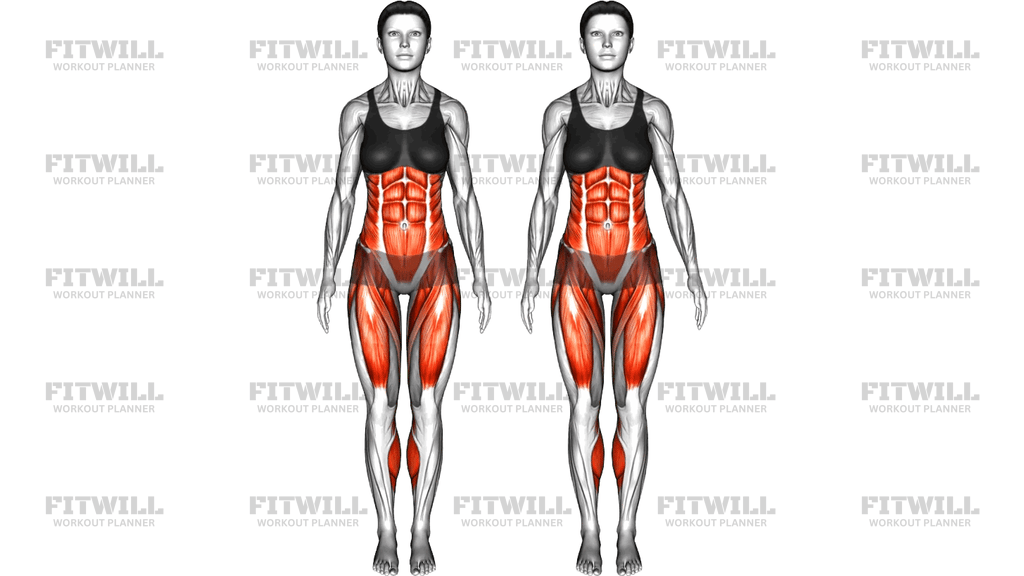
This hold targets the calf complex at the back of the lower leg. The gastrocnemius, the larger visible calf muscle, does most of the work when the knees are straight as they are here, while the soleus underneath contributes steadily throughout the hold. Smaller muscles around the ankle and foot also work isometrically to keep you balanced over the balls of your feet, which is why the exercise feels harder the longer you hold it.
Because it requires no equipment beyond the floor, this movement is useful for beginners learning to feel and control their calves, for lifters who want to add volume to their lower-leg training without loading the spine, and for anyone rehabilitating or reconditioning after time away from training. It also fits well into home workouts, warm-ups before running or jumping, and finishers after heavier calf work. Isometric holds like this one build the ability to sustain tension, which carries over to activities that demand repeated ankle extension such as walking uphill, climbing stairs, and sprinting.
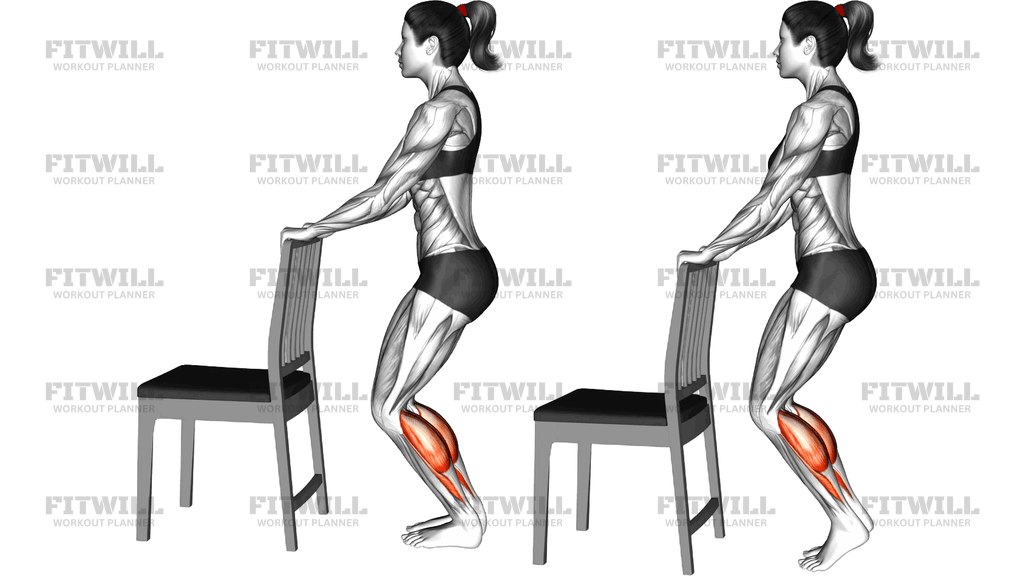
Setup matters more than it might seem. Stand tall with your feet roughly hip-width apart and your weight distributed over the forefoot, and keep your knees straight but not locked. If your heels drift outward or your ankles roll in as you rise, the hold loses its focus on the calves and places uneven stress on the ankle joint. A wall, counter, or sturdy chair can lightly assist your balance, but most of your weight should stay in your own feet.
To execute the hold well, press through the balls of your feet and lift your heels as high as you can, then keep that height constant for the duration of the set. Breathe normally rather than holding your breath, keep your torso upright, and avoid leaning forward or letting your hips drift behind your heels. When time is up, lower your heels under control rather than dropping them, and give your calves a brief moment of relief before the next hold. If your calves begin to shake or your heel height visibly drops, that is a natural sign the set is over — end it with good position rather than grinding out a sloppy hold.
[ Workout Log & Planner ]
Put your next workout in Fitwill
Keep your plan and training log ready when you are.


Instructions
- Stand upright on a flat, stable floor with your feet about hip-width apart and your arms relaxed at your sides.
- Place a hand lightly on a wall or counter if you need help balancing, keeping most of your weight over the balls of your feet.
- Straighten your knees to a natural, comfortable position and brace your core lightly so your torso stays tall.
- Press down through the balls of your feet and lift both heels upward at the same time.
- Rise as high as your ankle range allows, keeping your weight centered between the big toe and little toe sides of each foot.
- Hold the top position with your heels fully lifted, maintaining steady tension in your calves for the target duration.
- Breathe slowly and normally throughout the hold instead of holding your breath.
- Keep your hips stacked over your heels and your torso upright; do not lean forward or let your heels drift toward each other.
- Lower your heels back to the floor in a slow, controlled manner rather than dropping them at the end of the hold.
- Reset your stance, shake out your calves briefly if needed, and repeat for the desired number of sets.
Tips & Tricks
- A common mistake is rising only halfway and calling it a hold — press your heels as high as they will go so the gastrocnemius works through its shortened position.
- If your ankles wobble or roll inward during the hold, spread your toes and imagine pressing evenly through the base of the big toe and little toe on each foot.
- Do not lock your knees back hard; keep them straight but soft so the tension stays in the calves rather than straining the joint.
- Watch that your heels do not drift outward as you rise — both heels should travel straight up, keeping the feet parallel or in their natural stance.
- If you cannot balance without support, rest fingertips on a wall rather than gripping it; leaning on the wall removes load from the calves.
- Shaking calves near the end of a hold are normal; end the set when your heel height drops noticeably instead of letting form deteriorate.
- Lower your heels slowly after each hold — dropping down quickly wastes the controlled portion of the exercise and can jar the ankles.
- To make the hold easier, shorten the duration or hold a slightly lower heel position; to make it harder, extend the time or perform the hold on one leg.
- Keep your breathing steady throughout; holding your breath during a long isometric hold raises tension in the neck and shoulders without helping the calves.
Frequently Asked Questions
Which muscles does the Bodyweight Isometric Calf Raise Hold work?
The primary muscles are the calves, mainly the gastrocnemius, with the soleus contributing throughout the hold. The smaller ankle stabilizers also work isometrically to keep you balanced over the balls of your feet.
How is an isometric calf raise hold different from regular standing calf raises?
Instead of lifting and lowering your heels for repetitions, you rise to the top of the movement and hold that position for time. This builds sustained tension in the calves rather than training through a full range of motion.
How long should I hold the Bodyweight Isometric Calf Raise Hold?
Beginners can start with 15 to 20 seconds per hold and progress toward 30 to 45 seconds as their calves adapt. Stop the hold when your heel height starts to drop or your position becomes hard to maintain.
Is this exercise suitable for beginners?
Yes. Because it uses only your body weight and requires no equipment, it is a low-risk way to learn calf control. Beginners should feel free to hold a wall or counter lightly for balance.
Why do my calves shake during the hold?
Shaking is a normal response to sustaining maximum tension in a small muscle group near the end of a hold. It usually means the set is close to finished; maintain good heel height or end the set rather than letting your position collapse.
Should my knees be straight or bent during the hold?
Keep your knees straight but not forcefully locked. Straight knees place more emphasis on the gastrocnemius, while bending them would shift more work toward the soleus.
Can I make the Bodyweight Isometric Calf Raise Hold harder without adding equipment?
Yes. Perform the hold on one leg at a time, extend the duration, or slow down the lower at the end of each hold to increase the challenge.
Do I need a step or raised platform for this exercise?
No. The exercise is performed from a flat floor, rising from normal standing onto the balls of your feet. A step is only needed if you later want a deeper stretch at the bottom of a full-range raise.
How often can I train this exercise?
Because the load is light and the movement is low impact, it can be performed several times per week. Allow a day of recovery between harder sessions if your calves feel significantly sore.
Is it safe to hold my breath during the hold?
No. Breathe steadily throughout the hold. Holding your breath adds unnecessary strain and does not improve calf activation.