Incline Calf Raise
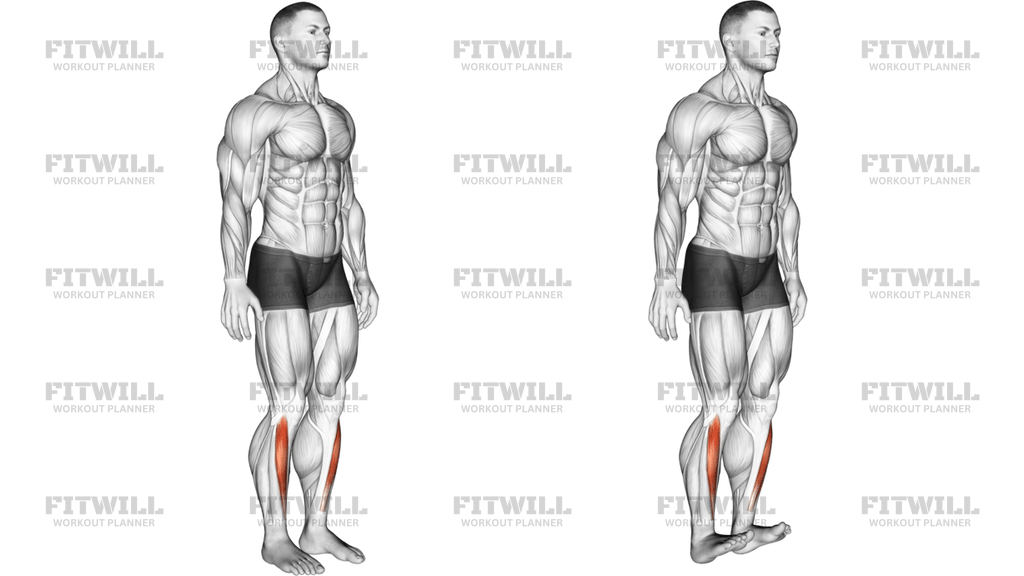
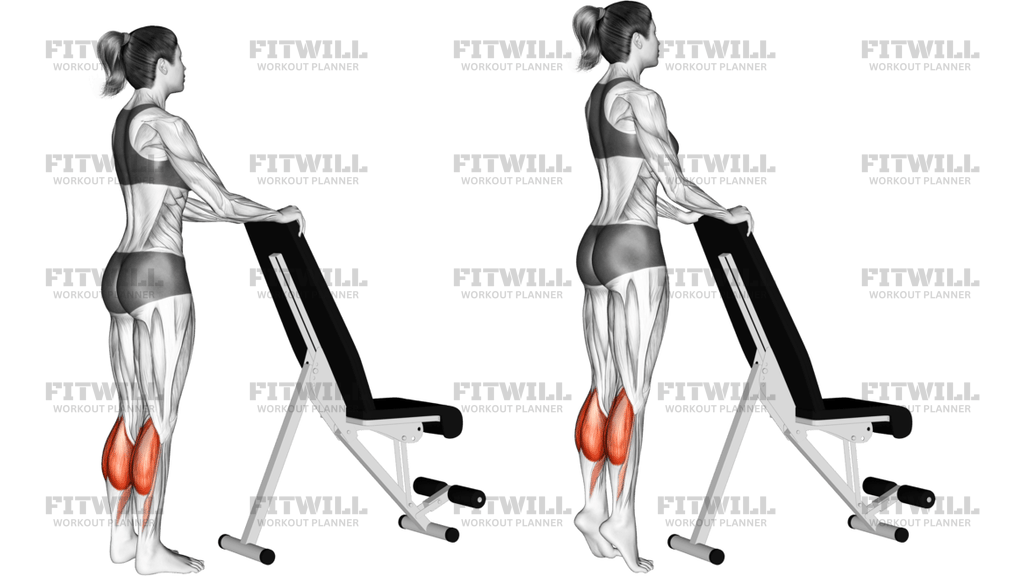
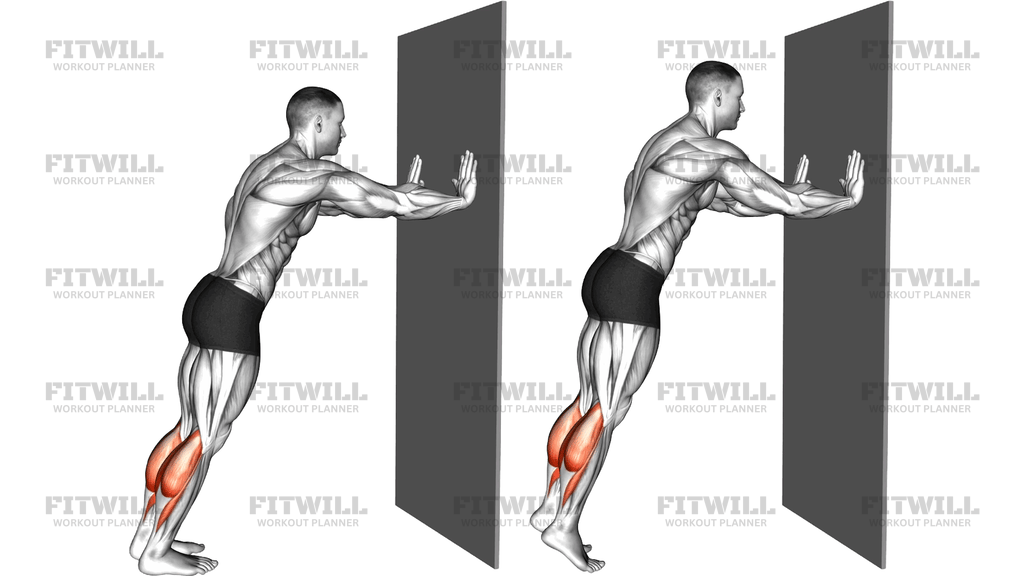
The Incline Calf Raise is a body weight calf exercise performed while leaning forward against a wall with your body held in a straight, angled line from head to heel. Because your arms are extended and pressing into the wall for balance only, your calves carry nearly all of your body weight through a full ankle range of motion, which makes this a surprisingly demanding movement despite requiring no equipment beyond a flat wall.
The angle is what sets this exercise apart from a standing calf raise. Leaning forward shifts your center of mass ahead of your ankles, so your calf muscles work harder to push you up onto the balls of your feet and control you back down. With your knees kept straight throughout, the gastrocnemius — the large two-headed muscle that gives the calf its shape — does most of the work, while the soleus underneath assists and the ankle stabilizers fire constantly to keep you balanced.
This movement suits a wide range of trainees. Beginners can use it to build a foundation of ankle strength and control before touching a calf machine, and more advanced lifters often use it as a high-tension finisher, since slowing the tempo or shifting more weight toward the wall quickly turns it into a serious challenge. It is also a practical option for home workouts, hotel rooms, or warm-ups at the gym when machines are busy.
Setup matters more here than it looks. Stand far enough from the wall that your arms extend naturally when you lean in, place your palms flat at roughly shoulder height or slightly above, and keep your body rigid from shoulders to ankles. If you stand too close, the exercise gets easier and the angle flattens; too far, and your shoulders and wrists take over. A straight line from head to hip to heel keeps the tension where it belongs — on the calves.
Execution is simple but easy to rush. Lower your heels toward the floor to feel a stretch along the back of the lower leg, then press through the balls of your feet to rise as high as your ankles allow, pausing briefly at the top. Control the descent rather than dropping your heels, breathe steadily, and keep the hips and torso locked in that inclined line for every rep. Move with intent, avoid bouncing out of the stretched position, and treat the wall as a balance point, never as something you push off of to complete the rep.
[ Workout Log & Planner ]
Put your next workout in Fitwill
Keep your plan and training log ready when you are.


Instructions
- Stand facing a flat wall about two to three feet away, then lean forward and place both palms flat on the wall at roughly chest to shoulder height.
- Keep your arms straight, your elbows locked softly, and your body in one straight line from head through hips to heels, with your knees fully extended.
- Position your feet hip-width apart with the balls of your feet firmly planted and your weight distributed toward the front of your feet.
- Brace your core and squeeze your glutes lightly so your hips do not sag or pike during the set.
- Lower your heels slowly toward the floor until you feel a stretch through your calves, keeping your knees straight the entire time.
- Press through the balls of your feet and rise up onto your toes as high as your ankle range allows, without bending your knees or pushing off the wall.
- Pause for a moment at the top with your calves fully contracted, then lower your heels back down under control.
- Exhale as you rise and inhale as you lower, keeping your breathing steady throughout the set.
- Complete your reps, then step back from the wall carefully and reset your stance before the next set.
Tips & Tricks
- The most common mistake is pushing hard off the wall to help yourself up. Press just enough to stay stable, and if the wall is doing the lifting, move your feet slightly closer to reduce the leverage you are stealing from your calves.
- If your heels cannot drop below the level of your toes, your calves are likely tight. Start with a partial range and gradually increase the stretch over several weeks rather than forcing it.
- Avoid bending your knees as you rise — the moment the knees flex, tension shifts away from the gastrocnemius and the exercise loses its point.
- Keep your hips extended and in line with your shoulders and ankles. Letting the hips sag turns this into an awkward incline plank and strains the lower back.
- Squeeze hard at the top of each rep for a full second. Because the range is short, the top hold is where most of the useful tension lives.
- Do not bounce out of the bottom stretch. Rebounding off the stretched calf hides range of motion and increases strain on the Achilles tendon.
- Turn your toes slightly inward or outward across different sets to bias the inner and outer heads of the gastrocnemius, but keep the variation deliberate rather than drifting mid-set.
- If your wrists or shoulders complain before your calves do, place your hands slightly lower on the wall and check that you are not leaning excessively far forward.
- Slow the lowering phase to two or three seconds once body weight reps feel easy — this is the simplest way to keep progressing without any equipment.
Frequently Asked Questions
Which muscles does the Incline Calf Raise work?
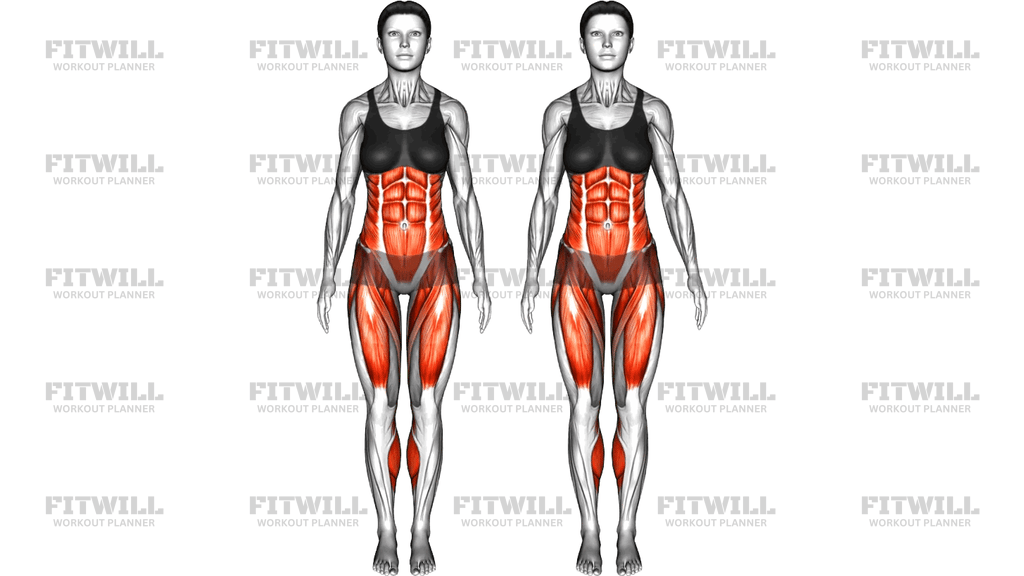
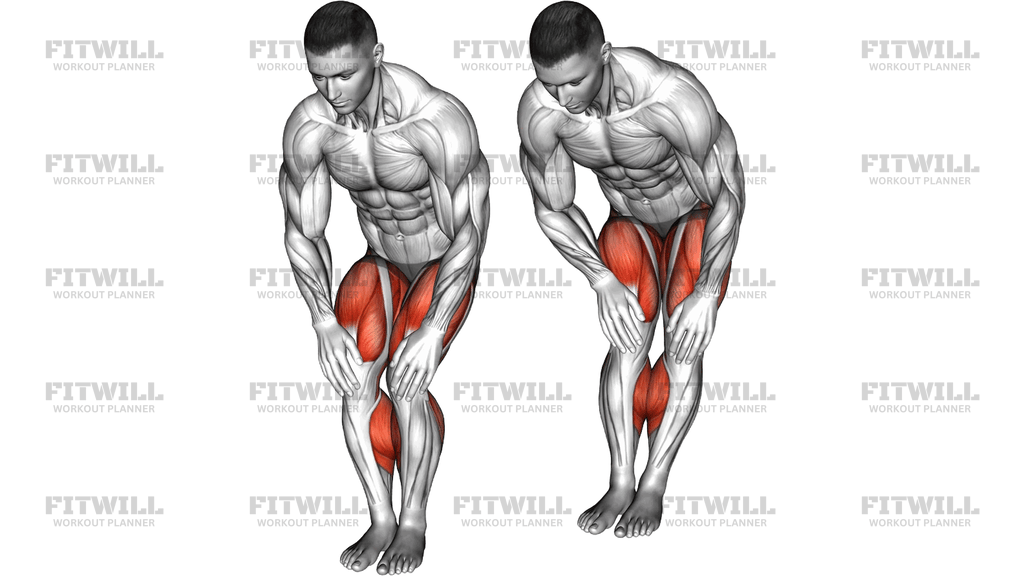
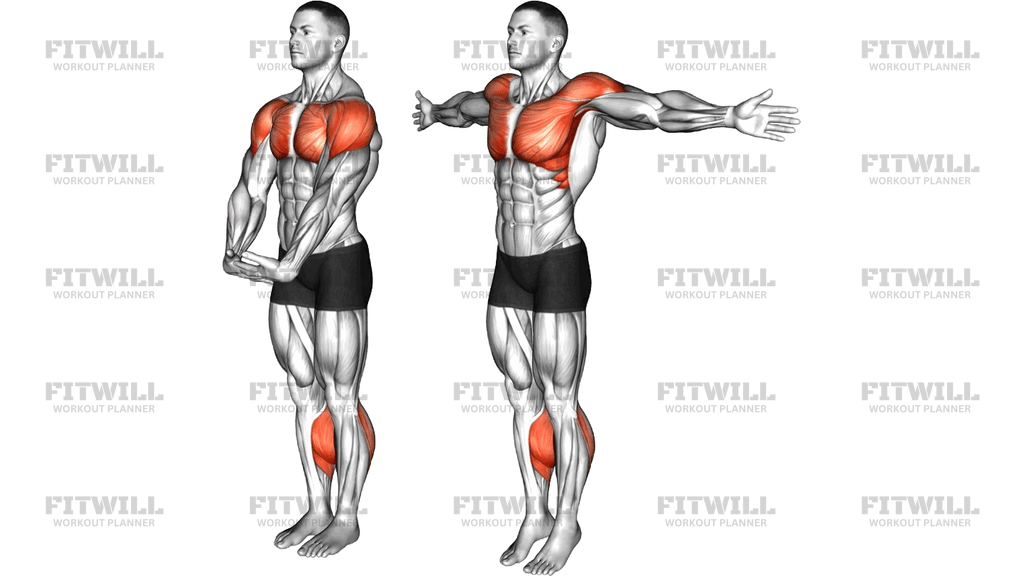
The gastrocnemius, the visible two-headed muscle at the back of the lower leg, is the primary mover because the knees stay straight. The soleus beneath it and the ankle stabilizers assist throughout.
Why lean against a wall instead of doing calf raises standing upright?
The forward lean places your center of mass in front of your ankles, which increases the load on the calves beyond plain body weight. It also allows a deeper heel drop for a longer stretch.
How far from the wall should I stand?
Far enough that your arms extend naturally and your body forms one straight line when your palms are flat on the wall. The steeper the lean, the harder the calves work, so adjust distance to match your strength.
Can beginners do the Incline Calf Raise?
Yes, and it is a good first calf exercise because you can scale it instantly. Stand closer to the wall to make it easier, or step further back as your strength and ankle mobility improve.
Should my knees stay straight the whole time?
Yes. Straight knees keep the emphasis on the gastrocnemius; bending the knees shortens that muscle and shifts work toward the soleus, effectively changing the exercise.
What is the most common mistake with this movement?
Pushing off the wall to drive the body upward. The wall is for balance only — if your arms are doing meaningful work, you are reducing the training effect on the calves.
How many reps and sets should I do?
Start with two to three sets of ten to fifteen controlled reps. Because the load is fixed, progress by slowing the tempo, adding a top-end pause, or increasing your lean angle.
What can I use if I do not have a clear wall space?
Any sturdy vertical surface at about chest height works, such as a solid door frame, a squat rack upright, or a heavy piece of gym equipment you can safely lean against.
Is it safe to lower my heels below the level of my toes?
It is fine as long as the stretch is gradual and pain-free. Do not force a deep stretch from the first rep, and never drop the heels quickly, since the Achilles tendon takes that load.
How does the Incline Calf Raise compare to machine calf raises?
Machines offer adjustable external loading, which suits heavy strength work, while this version needs no equipment and still delivers meaningful tension through the lean angle. Many lifters use it as a finisher or travel alternative.