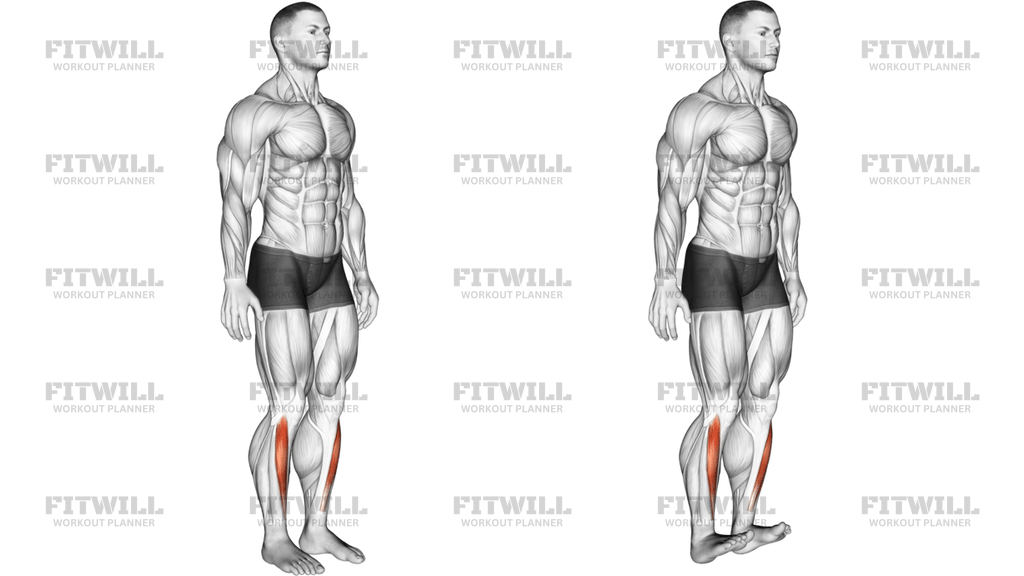
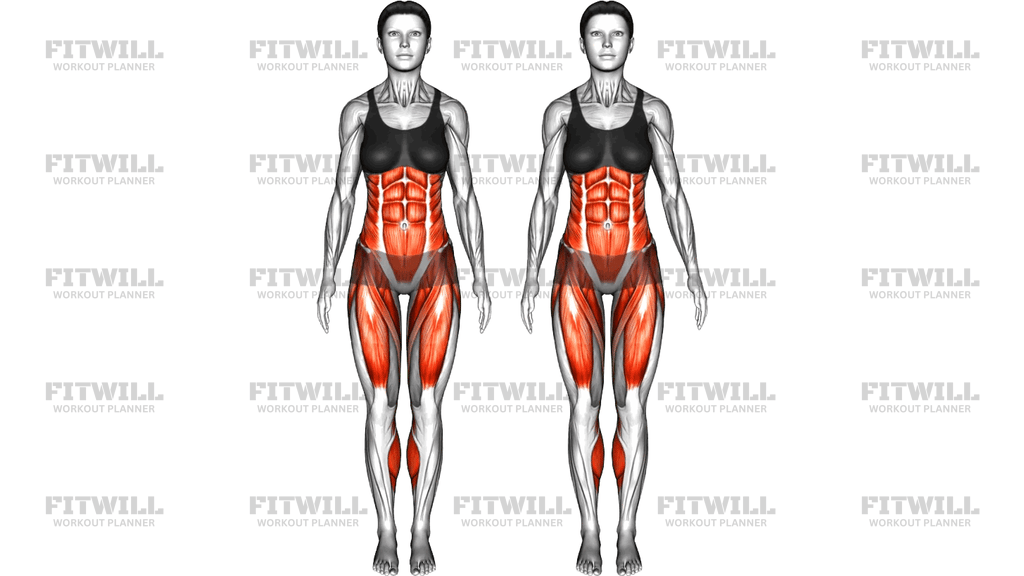
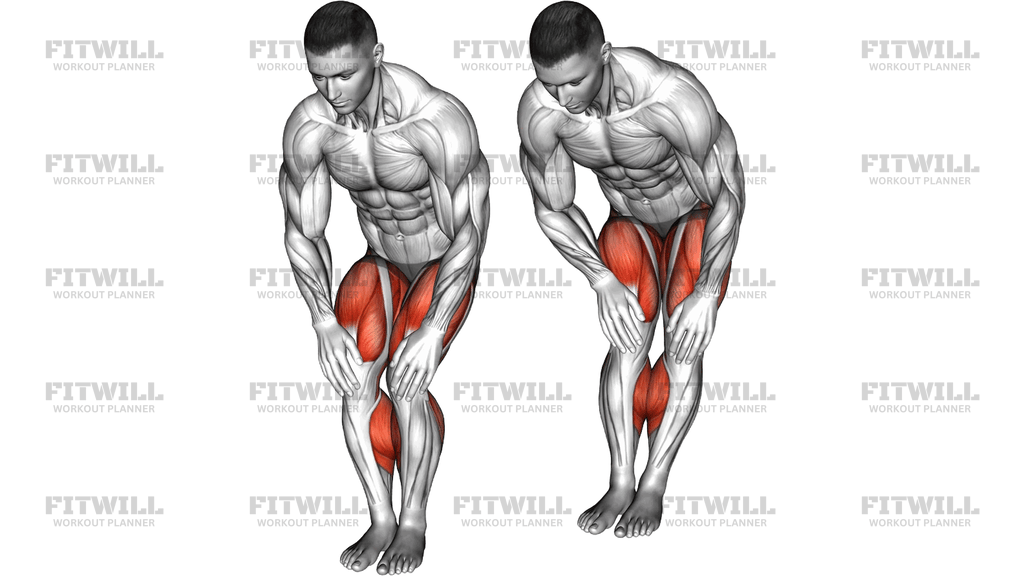
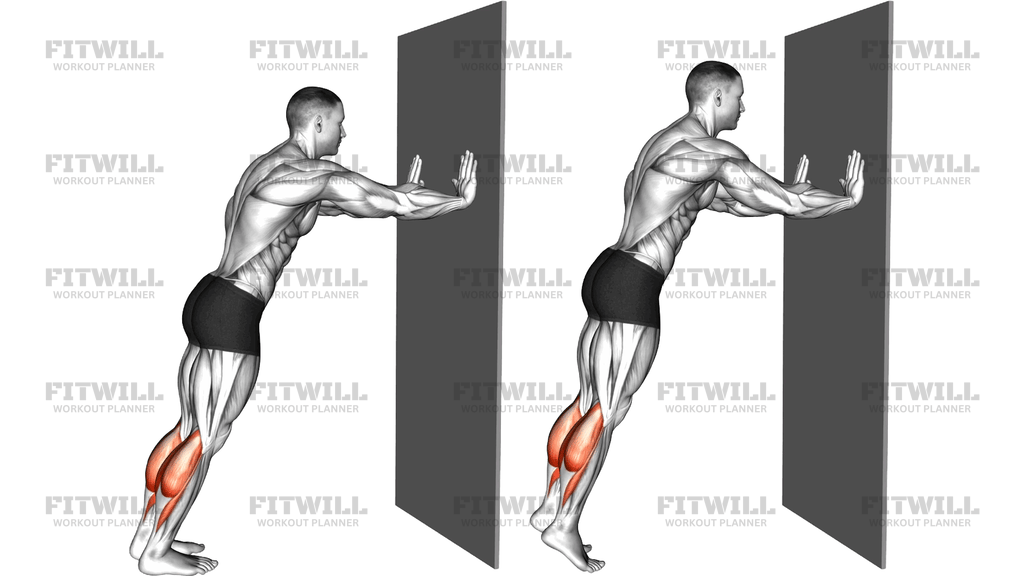
Standing Calf Raise With Support
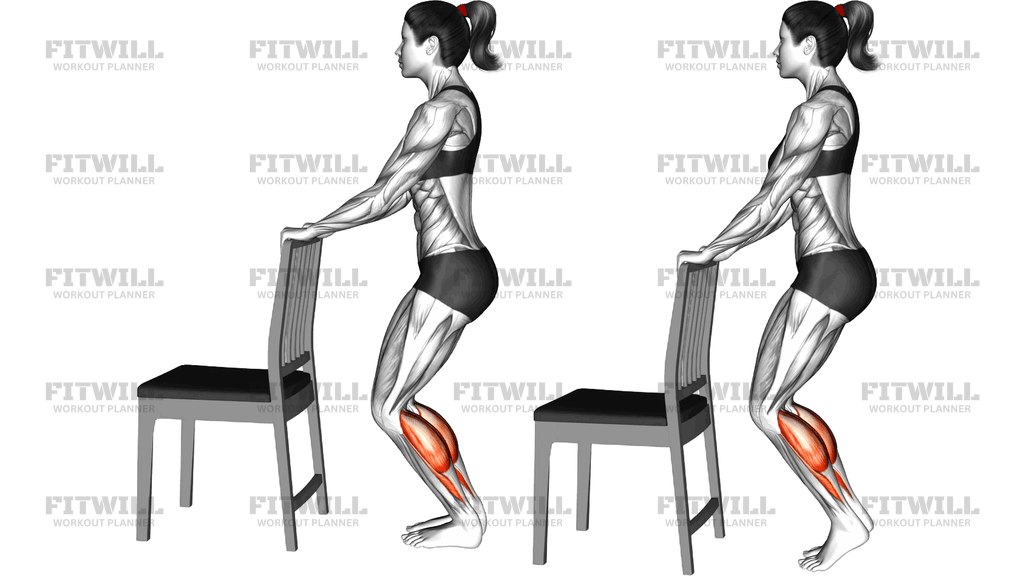
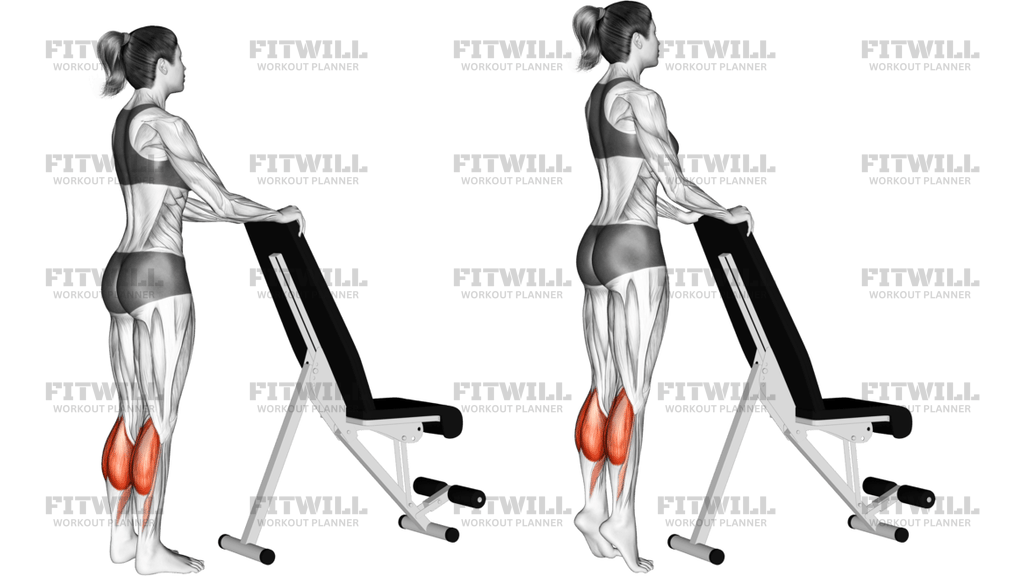
Standing Calf Raise With Support is a bodyweight calf exercise performed with one or both hands lightly resting on a bench or similar support while you rise and lower through the ankle. The support is there to help balance, not to let you push or pull your body through the rep. The exercise emphasizes plantarflexion at the ankle, so the calves do the work while the rest of the body stays tall and quiet.
Because the movement is so small, setup matters. Stand with the balls of your feet on the floor, feet about hip-width apart, knees straight but not locked, and your torso stacked over your hips. Hold the bench backrest or another stable surface just enough to stay balanced. From there, the quality of the rep comes from lifting the heels under control, not from leaning forward, bouncing, or shifting your weight from side to side.
At the top of each rep, the heels should finish as high as you can get them without losing balance, with the ankles fully extended and the calves squeezed hard. The lowering phase is just as important: descend slowly until the heels return toward the floor and you feel a clean stretch through the lower calf. A brief pause at the top and a controlled eccentric make the exercise far more effective than quick, shallow pulses.
This variation is useful as a beginner calf builder, a warm-up before running or lower-body training, or an accessory movement when you want direct calf work without a machine. It is also easy to load later with a dumbbell, backpack, or weight vest if body weight becomes too easy. Keep the support hand light, stay vertical through the torso, and stop the set if you have to twist, bounce, or press heavily into the bench to finish the rep.
[ Workout Log & Planner ]
Put your next workout in Fitwill
Keep your plan and training log ready when you are.


Instructions
- Stand facing a stable bench or support and place your hands lightly on the top of the backrest.
- Set your feet about hip-width apart with the balls of your feet on the floor and your heels hanging free or just touching lightly.
- Keep your knees straight but not locked, stack your ribs over your hips, and keep your torso tall.
- Inhale, brace gently, and press through the big toe and second toe as you lift both heels off the floor.
- Rise as high as you can onto the balls of your feet without leaning into the support or bouncing.
- Pause for a second at the top and squeeze the calves before starting the descent.
- Lower your heels slowly until you feel a strong stretch through the lower calf, keeping the movement smooth and controlled.
- Reset your balance between reps and repeat for the planned number of repetitions.
Tips & Tricks
- Keep the hands light on the bench; if you are pushing hard enough to move it, the calves are no longer doing the work alone.
- Think about lifting straight up through the ankles instead of rocking forward onto the toes.
- Hold the top position long enough to feel the calves contract, especially if body weight feels easy.
- Lower more slowly than you rise to build tension through the full calf length.
- Do not let the arches collapse inward as the heels come down; keep pressure spread across the forefoot.
- A soft knee bend turns the movement into a more mixed calf/ankle exercise, while straighter knees bias the gastrocnemius more.
- Use the support for balance only, not to offload your body weight or help with the upward drive.
- Stop the set when the heel height drops noticeably or you start bouncing off the floor.
Frequently Asked Questions
What muscle does Standing Calf Raise With Support target most?
It primarily targets the calf muscles, especially the gastrocnemius, with the soleus helping stabilize the ankle.
Can beginners perform this exercise?
Yes. The bench support makes it beginner-friendly because you can focus on balance and ankle control without needing a machine.
How should my feet be positioned on the floor?
Place the balls of your feet on the floor with your heels free to rise and lower. Keep your stance about hip-width so each rep stays even.
How high should I come up on each rep?
Raise your heels as high as you can without leaning into the bench or bouncing. The top should feel like a strong calf squeeze, not a body swing.
What is the biggest form mistake in this exercise?
Using the support to pull yourself upward or bouncing through the bottom instead of controlling the ankle movement.
Is it better to keep my knees straight or slightly bent?
A mostly straight knee places more emphasis on the gastrocnemius, while a slight bend can make the movement feel a little easier on the joints.
Can I make this harder without adding a machine?
Yes. Use a backpack, dumbbell, or weight vest, or slow the lowering phase and pause longer at the top.
When should I stop the set?
Stop when you can no longer reach a clean heel rise, your balance shifts, or you need to bounce to finish the rep.