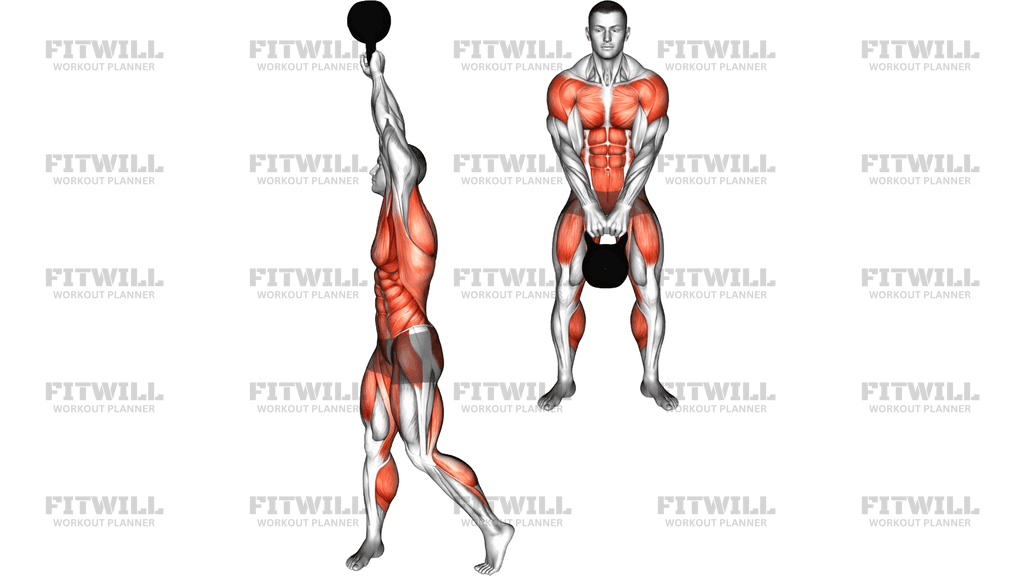
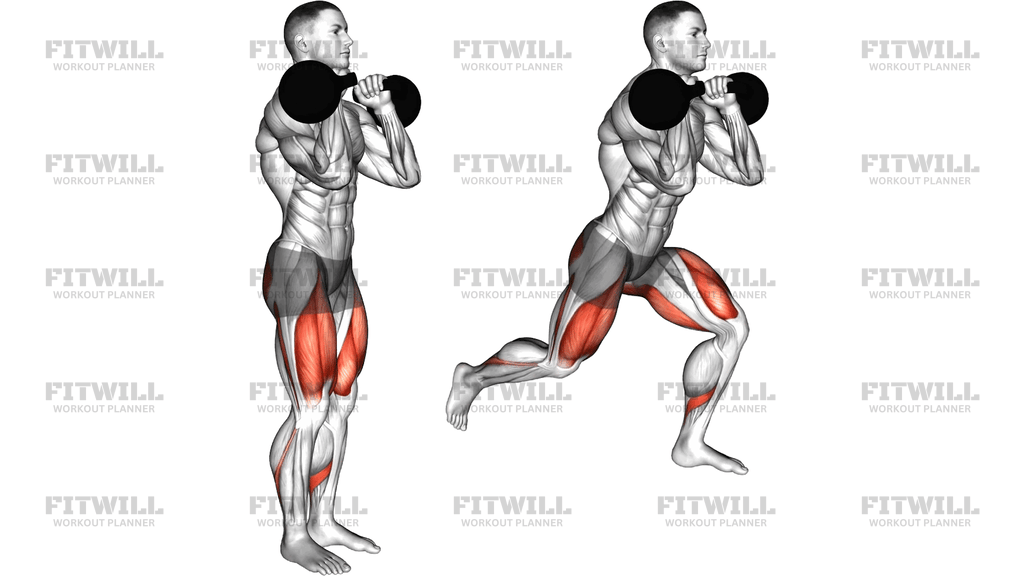
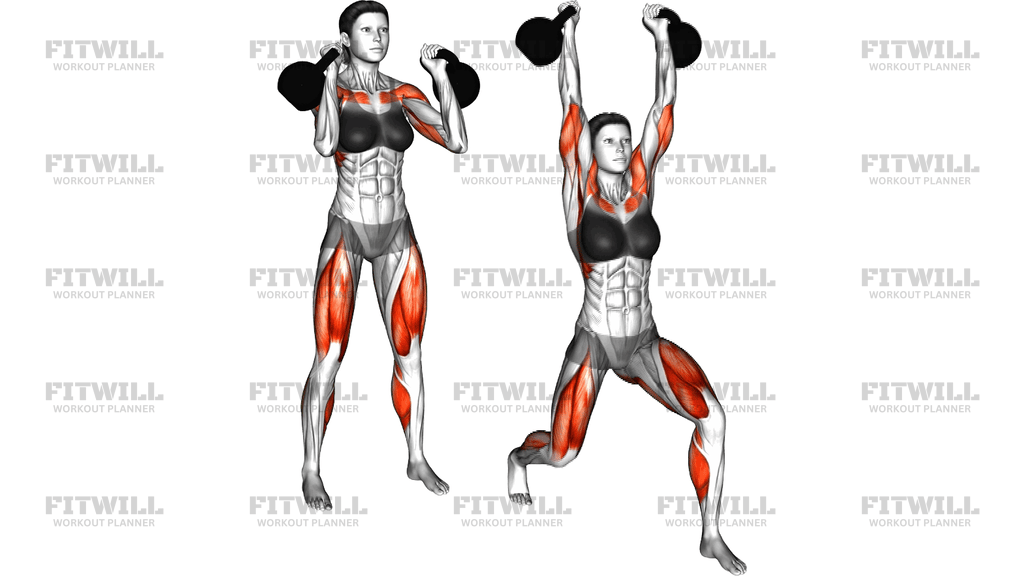
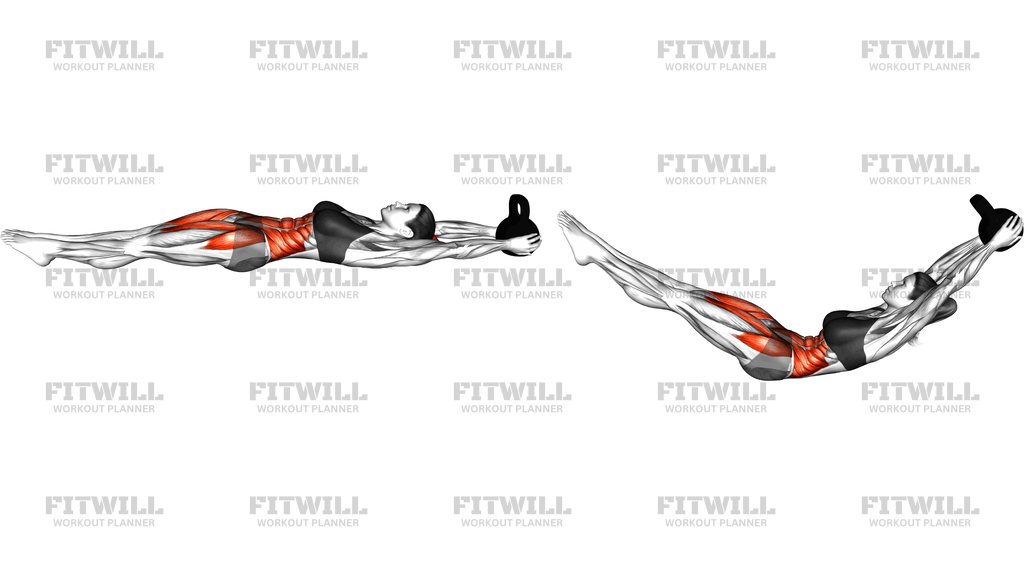
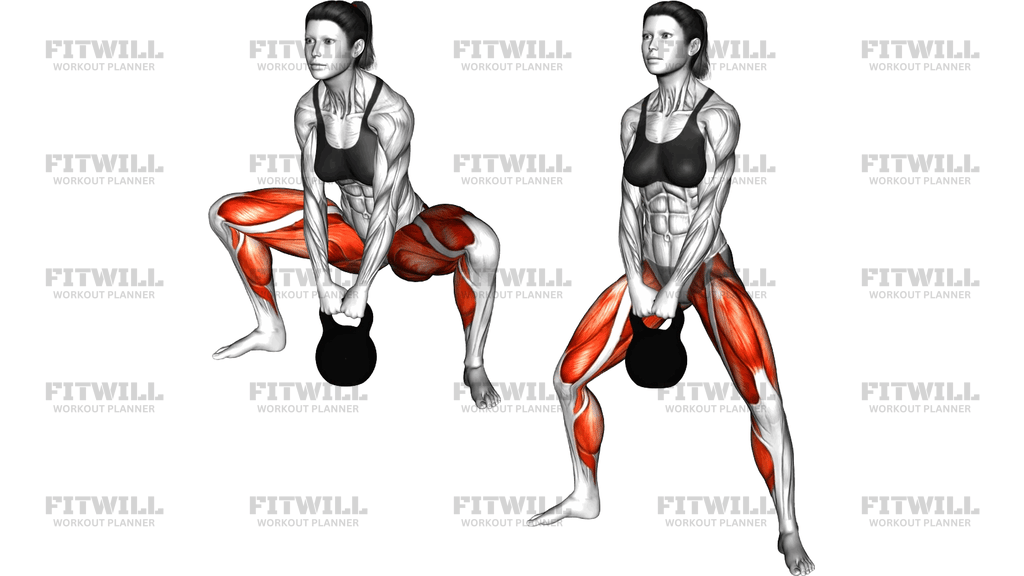
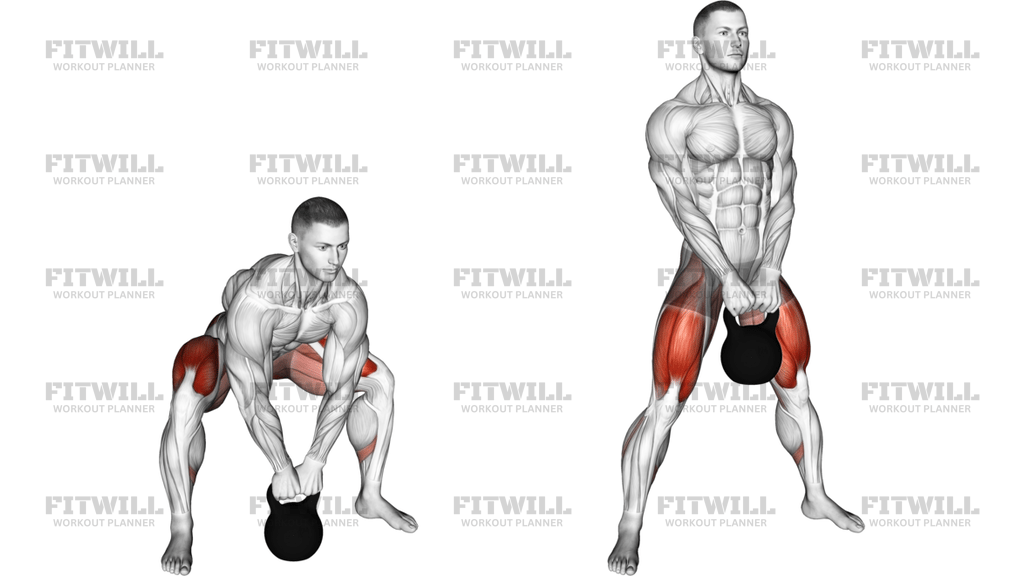
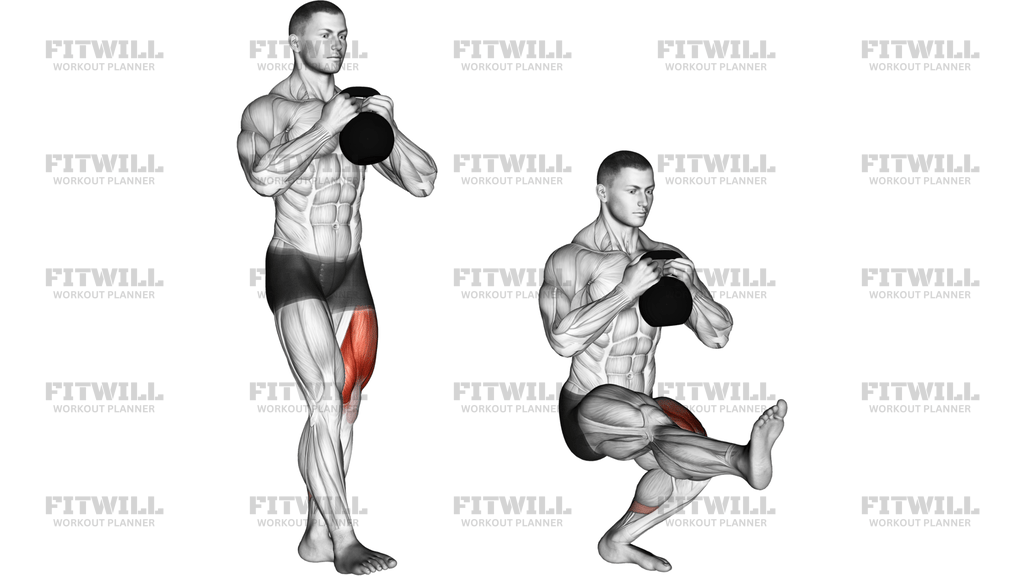
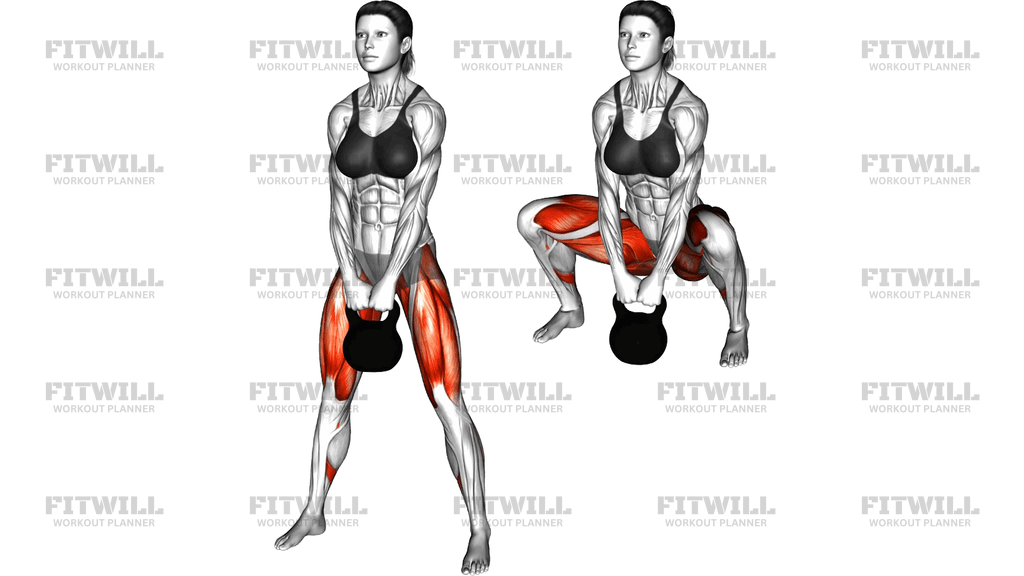
Kettlebell Forward Lunge (Version 2)
The Kettlebell Forward Lunge (Version 2) is a single-leg strength exercise performed with the kettlebell held in front of the chest, supported by both hands. Instead of letting the weight hang at your sides, you cradle it close to your body, which shifts the load forward and forces your trunk to work harder to keep you upright through every step. From a standing position, you step one leg forward, lower the back knee toward the floor, and drive back up to standing.
This movement is a solid choice for lifters who find that standard lunges with dumbbells at the sides pull them forward or bother their grip. Holding the kettlebell at chest height acts as a counterbalance, making it easier to sit tall and keep the torso vertical while the front knee bends. That makes it especially approachable for beginners learning lunge mechanics, and still demanding for experienced lifters once the weight gets meaningful.
The primary work comes from the quads of the front leg, with the glutes driving the return to standing and the hamstrings and calves stabilizing the lower body. Because the weight is carried in front of the sternum, your core, upper back, and shoulders are under constant tension to hold the kettlebell in place, so the exercise trains trunk stability alongside leg strength.
Setup matters here mainly because of where the weight sits. The kettlebell should rest against your chest with elbows tucked down, not flared wide. If the bell drifts away from the body, your lower back takes on extra strain and your balance gets worse. A split stance with the front foot flat and the heel down, plus a controlled descent until the back knee hovers just above the floor, gives the front leg a full, effective range.
A common use case is building unilateral leg strength and addressing side-to-side differences, since each rep loads one leg at a time. It also works well as a warm-up progression into heavier split squats or as a finisher when done for higher reps. Keep your eyes forward, brace the abs before each step, and choose a weight you can control at the bottom, where balance is hardest.
[ Workout Log & Planner ]
Put your next workout in Fitwill
Keep your plan and training log ready when you are.


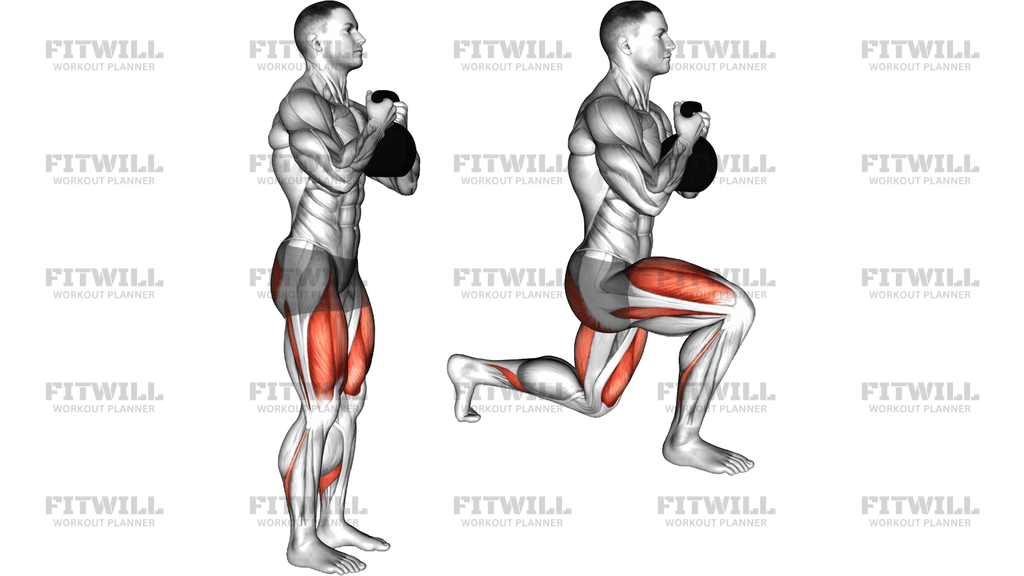
Instructions
- Stand tall with your feet hip-width apart and grip the kettlebell by the horns with both hands at chest height.
- Pull the kettlebell in so it rests against your upper chest, elbows pointing down and tucked in, and stand with your chest lifted.
- Brace your abs lightly and set your gaze on a fixed point ahead of you at eye level.
- Shift your weight onto one leg and step the other foot forward, planting it flat with the heel down, roughly the distance of a normal stride.
- Lower straight down by bending both knees, keeping the front shin close to vertical and the torso upright.
- Descend until your back knee is just above or lightly touching the floor, with the back hip feeling a stretch.
- Push through the entire front foot, especially the mid-foot and heel, to drive back up to standing.
- Exhale as you rise, then bring the stepping leg back to the starting stance or go directly into the next rep on the same leg.
- Complete all reps on one side before switching legs, re-gripping the kettlebell and resetting your brace between sets.
- Keep the kettlebell pressed gently into your chest the entire time so it never pulls you forward.
Tips & Tricks
- If you find yourself leaning forward at the bottom, the kettlebell has drifted away from your chest — squeeze it back in against your sternum before the next rep.
- Keep the front heel glued to the floor. If it lifts, your stride is too short or the weight is too heavy to control.
- Drive the back knee down toward the floor rather than forward past the toes; this keeps the front knee tracking cleanly.
- Hold your breath during the descent and exhale on the way up, especially with heavier bells, to keep the trunk solid.
- Avoid stepping onto a tightrope line — place the front foot slightly to the side of your midline for a more stable base.
- If your front knee caves inward, cue your front knee to track over your second toe and lighten the load.
- Start with a light kettlebell or even bodyweight for a few reps to groove the pattern before loading it.
- Alternate legs each rep only after you can control the same-side set; alternating adds a balance challenge too early for most beginners.
- Watch your back foot placement — pointing it too far sideways rounds the back hip and reduces the stretch at the bottom.
Frequently Asked Questions
Which muscles does the Kettlebell Forward Lunge (Version 2) work the most?
The quads of the front leg do most of the work, with the glutes driving you back to standing. The hamstrings, calves, and core assist, and holding the kettlebell at the chest keeps the upper back and shoulders engaged throughout.
Why is the kettlebell held at the chest instead of hanging at the sides?
The chest-held position shifts the load forward and acts as a counterbalance, which helps you keep the torso upright and deepens the demand on the core. It also removes grip fatigue as a limiting factor.
Is the Kettlebell Forward Lunge (Version 2) good for beginners?
Yes. The counterbalance at the chest makes it easier to learn proper lunge mechanics than many other loaded variations. Start with a light bell and even just your bodyweight to practice the step and descent first.
How deep should I lower in the Kettlebell Forward Lunge (Version 2)?
Lower until your back knee is just above the floor or lightly touching it, as long as you can keep your front heel down and torso tall. Depth is less important than control and clean knee tracking.
Should my front knee pass over my toes?
A small amount of forward knee travel is normal and fine, but the heel should stay flat on the floor. If the knee shoots well past the toes and the heel lifts, lengthen your stride or reduce the weight.
What is the most common mistake with this exercise?
Letting the kettlebell drift away from the chest, which tips the torso forward and strains the lower back. Keep the elbows tucked and the bell pressed gently against your sternum for the whole set.
Can I do the Kettlebell Forward Lunge (Version 2) with a dumbbell instead?
You can hold a single dumbbell vertically at your chest in a goblet-style grip, which closely mimics the kettlebell position. Two dumbbells at the shoulders is a rougher substitute but works in a pinch.
Should I step back to the start after each rep or stay in a split stance?
This version steps forward and returns to standing each rep, which trains the full step-and-drive pattern. Once you are solid, you can transition to split squats or walking lunges for variety.
Is the Kettlebell Forward Lunge (Version 2) safe for the knees?
It is generally well tolerated when the front shin stays close to vertical, the heel stays down, and the knee tracks over the toes. If you currently have knee pain, check with a qualified professional before loading the pattern.