Swimmer Kick Over Sandbag
Swimmer Kick Over Sandbag is a prone posterior-chain drill where you lie face down with a weighted sandbag placed lengthwise under your hips and abdomen, extend your arms overhead, and perform alternating flutter kicks with your legs while your upper body reaches and lifts away from the floor. The sandbag acts as both a padded fulcrum and a destabilizing load, so your back, glutes, and shoulders have to work continuously to hold the elevated position instead of getting a rest between reps.
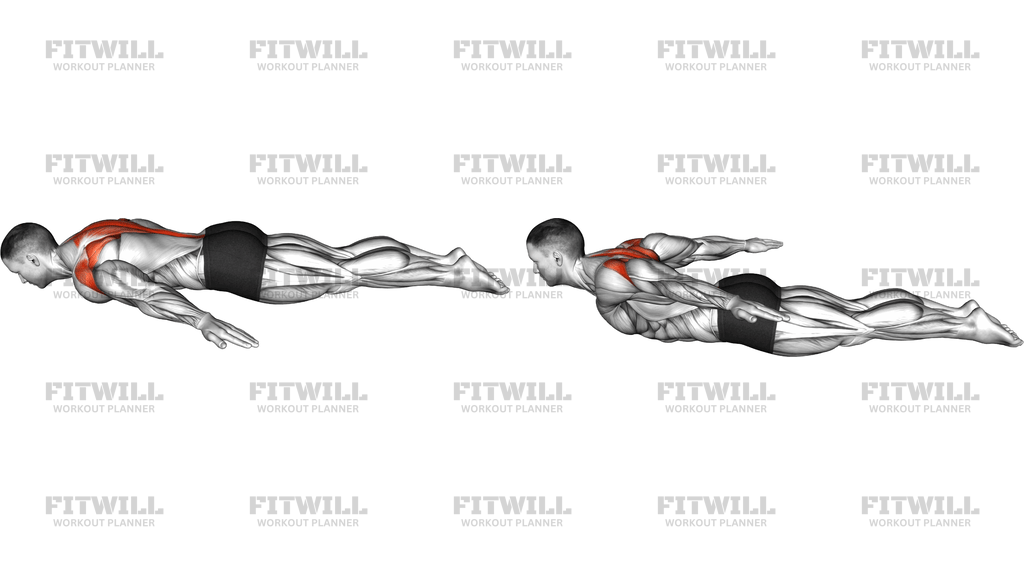
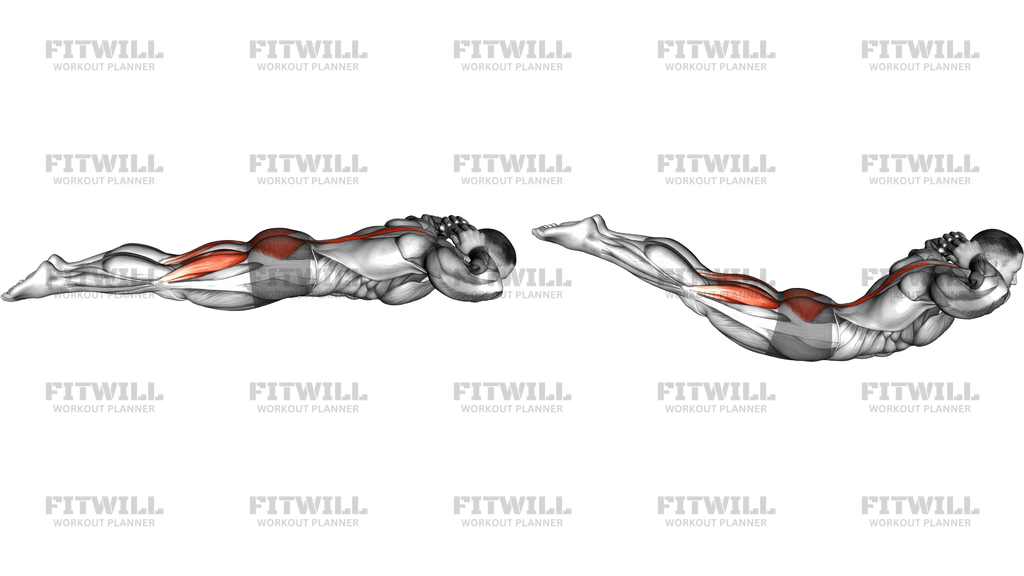
The main work happens in the lower back and glutes, which drive the leg kick and keep your hips extended over the bag. Because your arms stay stretched overhead in a wide Y shape, the shoulders, lats, and muscles between the shoulder blades are also under constant tension, which is why the movement closely mimics the body line and kick rhythm of swimming. The highlighted areas in the exercise artwork match this: the lumbar region, glutes, hamstrings, and upper back do most of the visible effort.
This exercise suits swimmers and triathletes who want a dryland drill that reinforces a long, streamlined body position, as well as anyone building endurance in the spinal extensors without loading a barbell. Because the sandbag supports your midsection, there is less compression on the spine than in a traditional superman hold, making it a reasonable step for people who find full prone back extensions too demanding.
Setup matters more than it looks. Position the bag under your hip crease and lower abdomen, not your ribs or thighs, so your torso can extend behind you and your legs can kick freely without scraping the floor. If the bag sits too high, your breathing gets restricted; too low, and your hips sag and the kick loses its range. Keep the bag stable on a non-slip surface so it does not roll as you alternate legs.
Execution should feel rhythmic rather than maximal. Reach long with the fingertips, lift the chest and arms a few inches, and kick from the hips with mostly straight legs, letting one leg drop as the other rises. The tempo should resemble a controlled swim kick, not a frantic splash. Avoid cranking the neck up or arching aggressively; the lift comes from lengthening the body, not from squeezing into a deep backbend.
A typical use case is two to four sets of 20 to 40 seconds of continuous kicking, either as part of a swimming-focused warm-up or as accessory work after deadlifts or pulls. Because the position is sustained, it trains endurance and body control more than maximal strength. If your lower back starts to pinch or your form gets sloppy, stop the set rather than pushing through fatigue.
[ Workout Log & Planner ]
Put your next workout in Fitwill
Keep your plan and training log ready when you are.


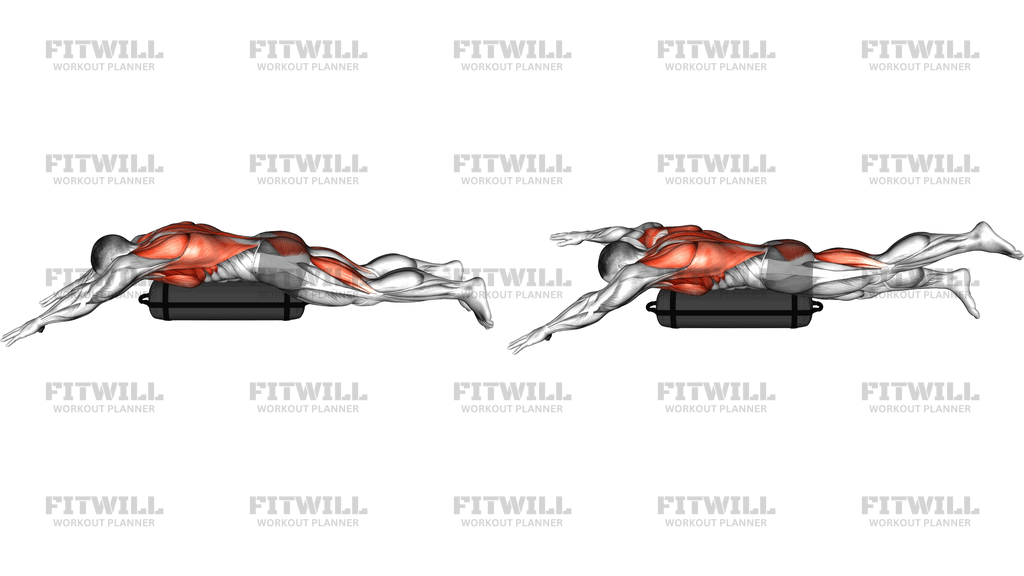
Instructions
- Place a weighted sandbag lengthwise on the floor and lie face down over it so the bag sits under your hip crease and lower abdomen, with your ribcage and legs hanging free on either side.
- Extend both arms straight overhead in a wide Y shape with palms facing down, and let your legs rest long behind you with the tops of your feet near the floor.
- Gently brace your abdominals and squeeze your glutes to set a neutral spine before anything moves.
- Reach your fingertips and crown of the head forward, lifting your chest and arms a few inches off the floor into a long, streamlined line.
- Kick from the hips with mostly straight legs, raising one leg while the other lowers in a steady alternating flutter, like a prone swim kick.
- Keep the opposite arm reaching long as each leg kicks, maintaining the Y shape with your shoulders rather than pulling the arms down.
- Continue the flutter for your target time or rep count, keeping the lift in your chest and legs the entire set.
- Exhale steadily through the kicks and avoid holding your breath, especially with the bag pressed against your abdomen.
- To finish, lower one leg at a time, let your chest and arms come down under control, then roll or step off the bag and stand up slowly before the next set.
Tips & Tricks
- Check the bag placement before each set: if you feel pressure on your ribs or breathing shortens quickly, slide the bag a few inches toward your hips.
- Most people kick too big and too fast. Small, quick kicks from the hips keep tension on the glutes and lower back; large swings pull your hips off the bag and strain the lumbar spine.
- If your shoulders tire before your legs, lower your chest slightly and think about reaching forward rather than lifting high, which keeps the lats and shoulder blades engaged without shrugging.
- Bend the knees slightly if your hamstrings cramp, but avoid turning the drill into a knee-driven leg curl; the kick should still originate at the hip.
- Do not crank the neck backward. Keep your gaze down at the floor with a long neck, since lifting the head exaggerates the arch and often causes neck ache.
- On a slippery floor the bag can creep forward as you kick. Anchor it against a wall or use a flat, textured sandbag so the lengthwise position stays put.
- Start with a light bag. The instability of the padding makes even an empty or lightly filled bag harder than a standard floor superman hold.
- If your lower back tightens during the set, pause, press your hips firmly into the bag, re-brace, and resume with smaller kicks instead of dropping the chest entirely.
Frequently Asked Questions
What muscles does the Swimmer Kick Over Sandbag work?
The lower back extensors and glutes do the primary work of holding the elevated position and driving the kick. Your hamstrings, shoulders, lats, and deep core stabilize continuously throughout the set.
Why lie over a sandbag instead of doing swimmer kicks on the floor?
The bag lifts your hips off the floor, giving your legs room to flutter through a fuller range and removing the floor support, so your back and glutes stay under tension for the entire set. It also pads the hip crease, which makes longer holds more comfortable.
Where exactly should the sandbag sit?
Lengthwise under your hip crease and lower abdomen. If it sits under your ribs you will struggle to breathe, and if it sits under your thighs your hips sag and the kick loses its range.
Is the Swimmer Kick Over Sandbag suitable for beginners?
Yes, if you start with a lightly filled bag and short sets of 15 to 20 seconds. Beginners should focus on keeping the kicks small and the neck neutral rather than chasing a high leg lift.
How long should each set last?
Twenty to forty seconds of continuous flutter is a good working range, since the drill targets endurance in the spinal extensors and glutes rather than maximal strength. Stop the set when your kicks get sloppy or your lower back starts to feel pinched.
My lower back aches during this exercise. What am I doing wrong?
The usual causes are kicking too large from a hyperextended position, letting the head lift, or placing the bag too far down the thighs. Re-center the bag under the hips, keep kicks small, look at the floor, and reduce the set length.
Can I substitute another exercise if I do not have a sandbag?
A firm cushion, rolled mat, or small stability pad under the hips works as a substitute, though it will not add the same instability. You can also do prone swimmer kicks directly on a bench with your hips at the edge.
How is this different from a superman hold?
In a superman hold both arms and legs lift together in one static squeeze, while the Swimmer Kick Over Sandbag uses continuous alternating kicks with the hips elevated, which keeps the legs moving and builds rhythm closer to an actual swimming kick.
Is this a good exercise for swimmers specifically?
It is one of its main uses, because the extended overhead reach, elevated hips, and flutter kick reproduce the streamlined body line and kick tempo of freestyle or butterfly in a dryland setting.