Squat Back WRONG-RIGHT
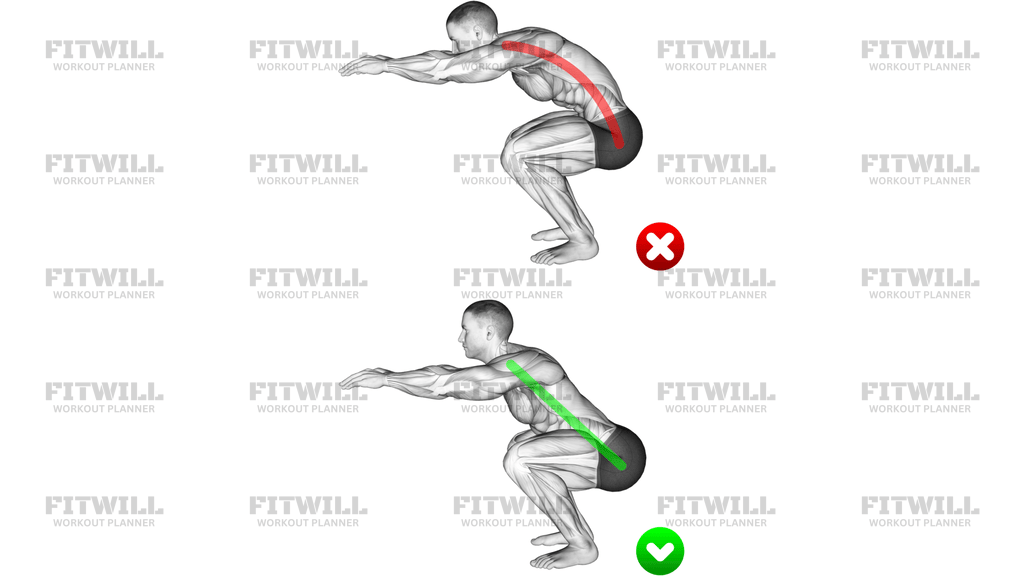
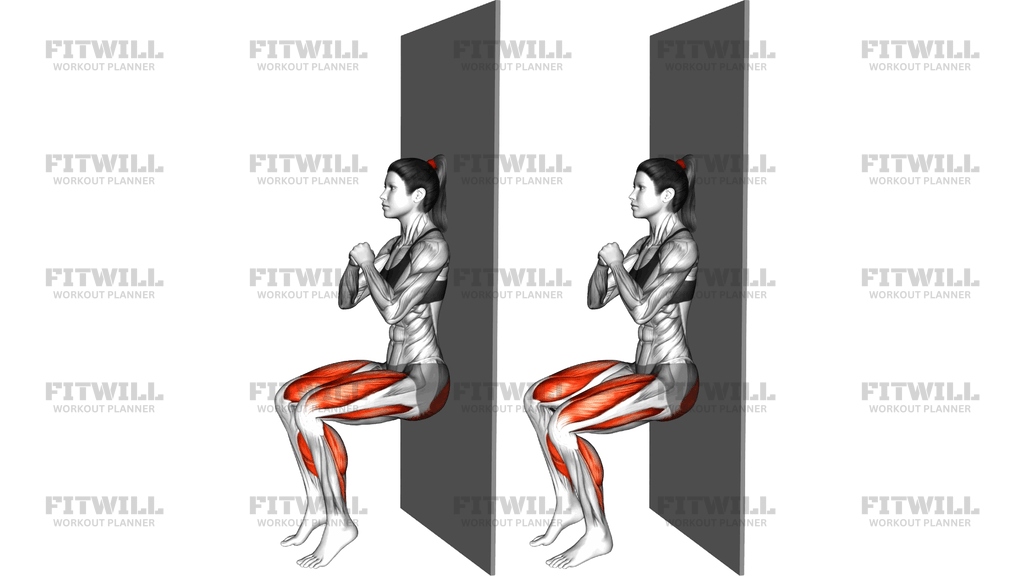
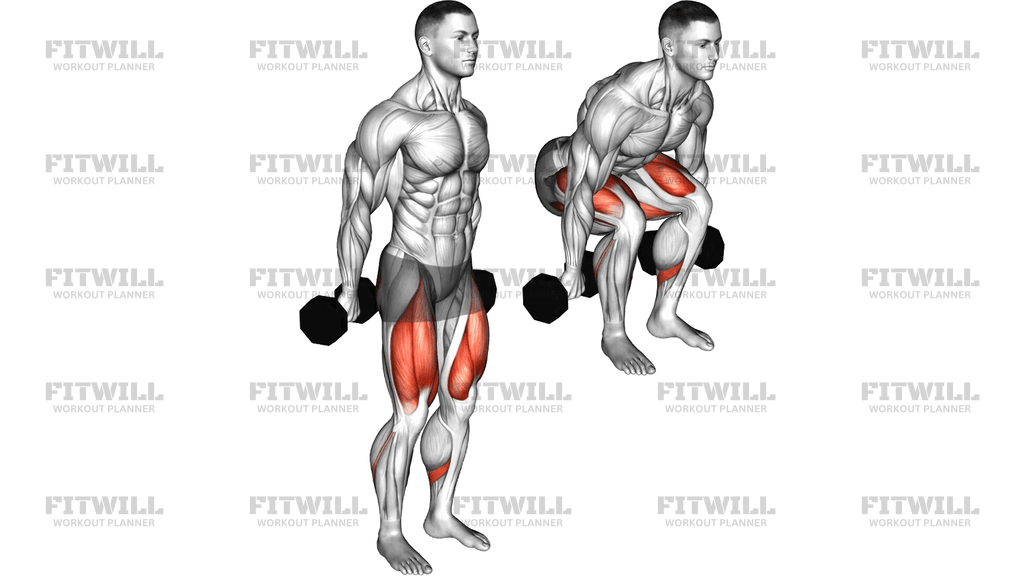
Squat Back WRONG-RIGHT is a bodyweight squat teaching image that contrasts a poor torso position with a better one. The wrong version shows the hips dropping while the trunk folds too far forward and the spine loses its long, organized shape. The right version keeps the chest more open, the ribs stacked over the pelvis, and the torso braced so the squat is driven by the hips, knees, and quads instead of a collapsing back.
This exercise is mainly about finding a repeatable squat pattern. The quads do most of the visible work, but the glutes, adductors, and core all contribute to keep the body balanced as you descend and stand. In the image, the arms are held forward to counterbalance the body, which helps you keep your weight over the middle of the foot while you sit down between the heels.
The setup matters more than people expect. Start with feet about shoulder-width apart or slightly wider, toes turned out just enough for your hips, and a tall posture before you bend. From there, brace lightly, keep the feet rooted, and let the knees track in the same direction as the toes. If the torso tips too far and the low back rounds, the squat usually becomes less stable and the load shifts away from the legs.
Use the movement as a controlled descent and a strong stand-up, not as a drop-and-bounce. Lower until you reach a depth you can hold without losing position, then drive through the whole foot to stand. A small pause at the bottom can help you learn control, but only if you can keep the spine long and the heels down. If the image's wrong position looks familiar, reduce depth, slow the tempo, and prioritize alignment over range.
This version fits beginners, warmups, and technique blocks because it builds the foundation for goblet squats, front squats, back squats, and other lower-body patterns. The goal is not just to go lower; it is to keep the torso, hips, and knees working together so every rep looks the same from the first to the last.
[ Workout Log & Planner ]
Put your next workout in Fitwill
Keep your plan and training log ready when you are.


Instructions
- Stand with your feet about shoulder-width apart, toes turned slightly out, and your arms stretched forward at shoulder height for balance.
- Stack your ribs over your pelvis, brace your midsection lightly, and keep your heels, big toes, and little toes rooted before you start moving.
- Send your hips back and bend your knees at the same time, letting your torso lean only as much as needed to stay balanced.
- Lower under control until your thighs are near parallel or until you reach the deepest position you can hold without rounding your lower back.
- Keep your chest open and your spine long as you descend, with your knees tracking in the same direction as your toes.
- Pause briefly at the bottom if you can keep the position, then keep pressure through the midfoot and heels.
- Drive up by pushing the floor away, extending the knees and hips together until you return to standing.
- Finish tall without leaning back, then reset your breath and stance before the next rep.
Tips & Tricks
- If your torso folds like the red X in the image, shorten the depth until you can keep the ribs stacked and the back long.
- Think about sitting between your heels, not just dropping straight down.
- Keep your weight centered over the middle of the foot; if the toes take over, the heels usually start to lift.
- Let the arms stay forward as a counterbalance instead of letting them drift down and pull the chest with them.
- A slow 2 to 3 second lowering phase makes it easier to feel the right torso angle.
- If your knees cave inward, turn the toes out a little more and lower only as far as you can control the tracking.
- A brief pause at the bottom is useful for learning the position, but only if the spine stays neutral.
- Stop the set when you can no longer keep the same squat shape from rep to rep.
Frequently Asked Questions
What muscles does Squat Back WRONG-RIGHT train most?
It mainly trains the quads, with strong help from the glutes, adductors, and core to keep the squat stable.
Why are the arms held straight out in front?
The forward reach acts as a counterbalance so you can keep the torso more organized and stay over the midfoot.
How low should I squat on this movement?
Go only as low as you can while keeping your heels down, your chest open, and your lower back from rounding.
What is the mistake shown by the wrong version in the image?
The torso folds too far forward and the spine loses its stacked position, which shifts the work away from the legs.
Should my knees move past my toes?
A little forward travel is normal, but they should still track in line with the toes and stay under control.
Is this exercise beginner friendly?
Yes. It works well as a bodyweight drill for learning squat mechanics before adding load.
What if my heels lift off the floor?
Reduce the depth, widen the stance slightly, or turn the toes out a bit more so your ankles and hips can stay balanced.
How do I progress this squat once the bodyweight version feels easy?
Add a goblet hold, slow the lowering phase, or pause at the bottom before moving to a loaded squat variation.