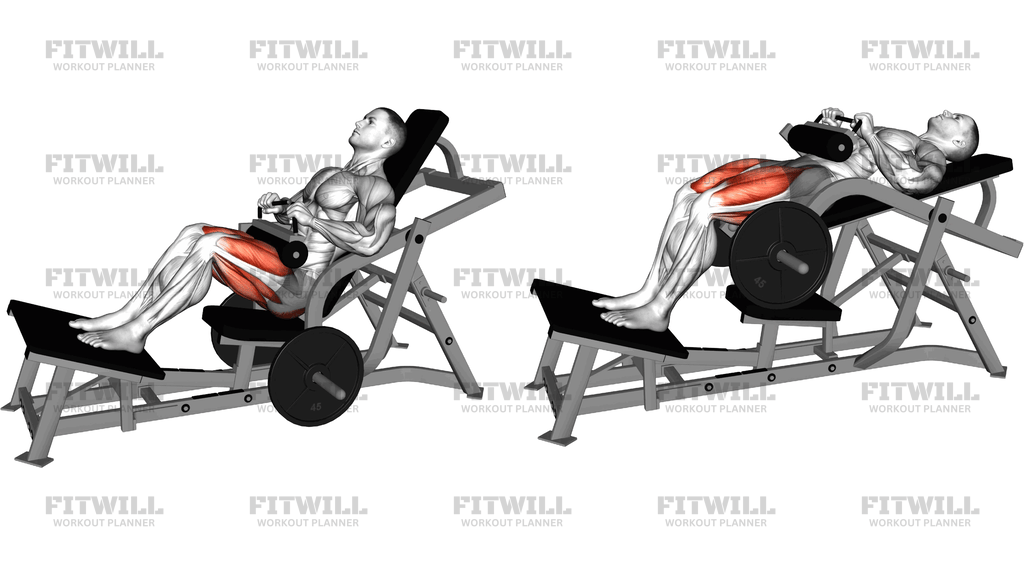
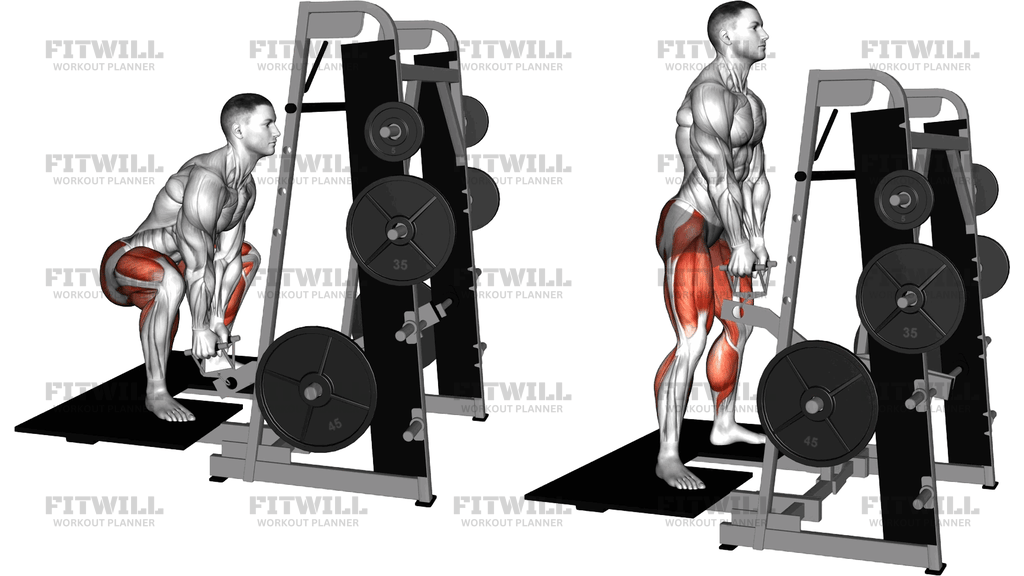
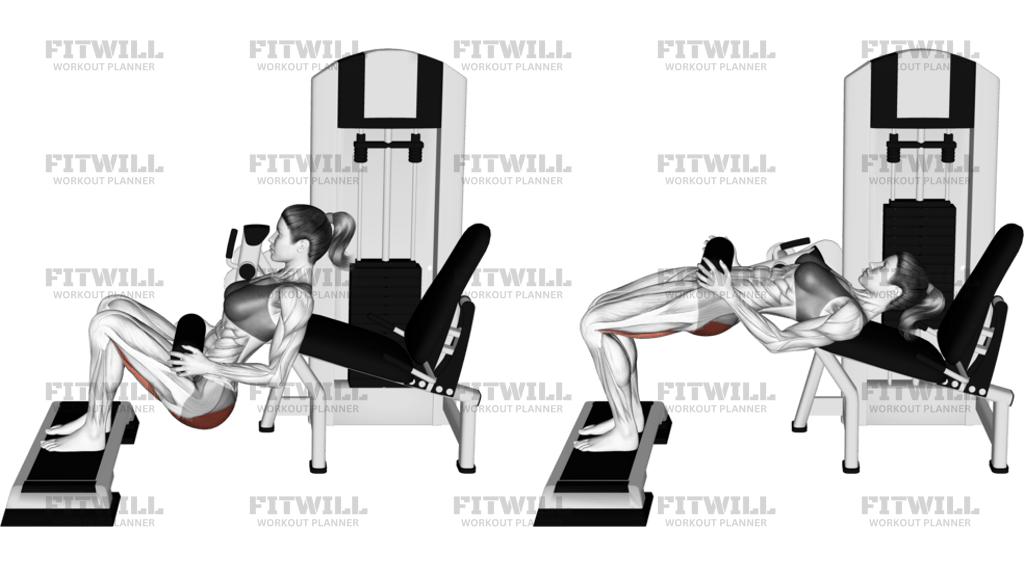
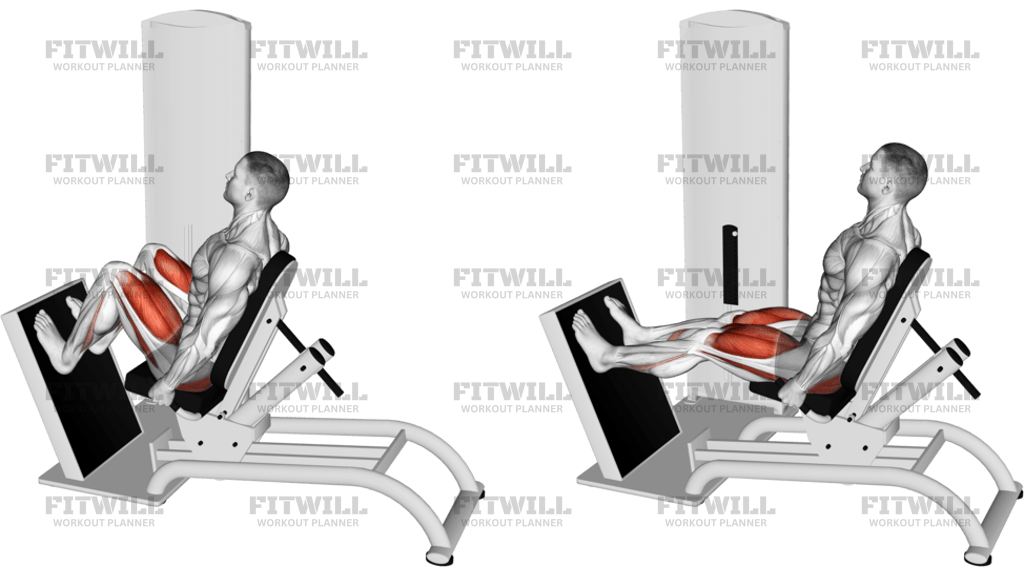
Lever Chair Squat
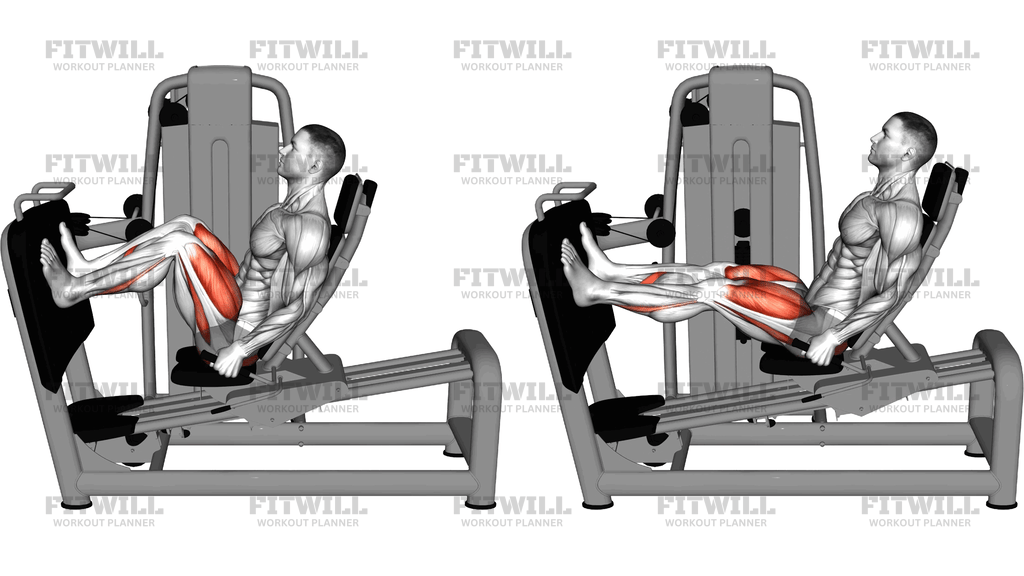
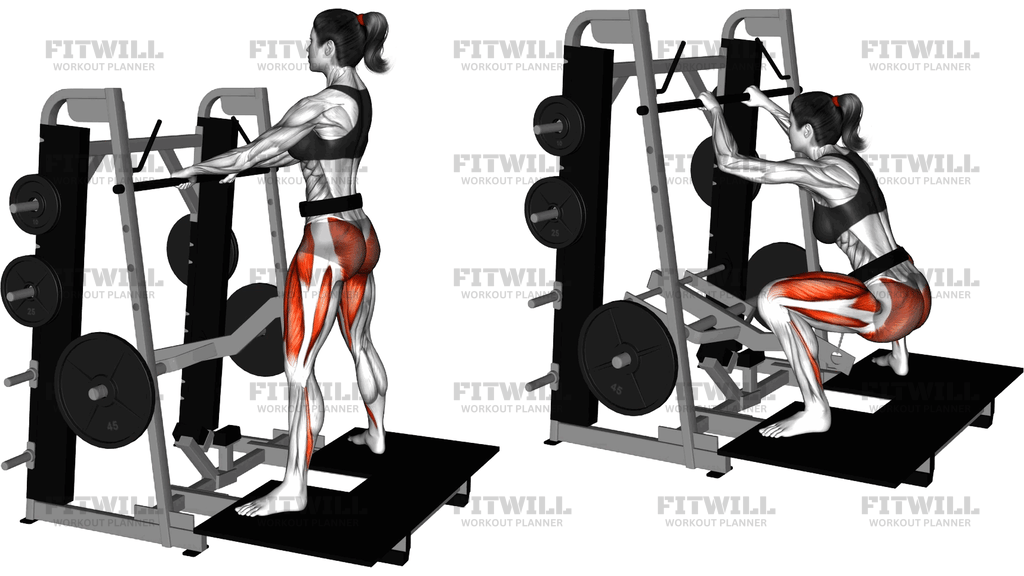
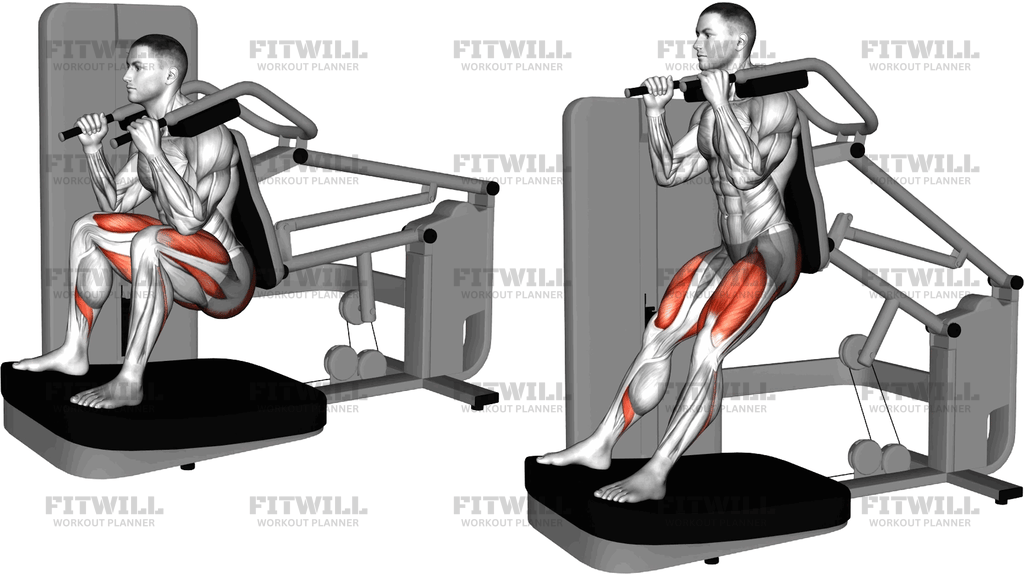
Lever Chair Squat is a machine-based squat pattern that lets you train the lower body through a guided path while the torso stays supported by the back pad and shoulder pads. It is useful when you want the loading and stability of a squat without having to balance a free barbell on your back. The machine still demands real control, especially through the bottom position, but the fixed track makes it easier to focus on leg drive and consistent depth.
This exercise emphasizes the thighs and glutes, with the quads, hamstrings, and trunk helping to control the descent and finish the press. In anatomical terms, the main work centers on the Gluteus Maximus, with assistance from the quadriceps, hamstrings, rectus abdominis, and spinal erectors. Depending on foot placement, a Lever Chair Squat can feel more quad-dominant with a lower foot position or more glute-dominant with a slightly higher, wider stance.
The setup matters because the machine locks in your body angle from the start. Set your feet on the platform so your knees can bend without your heels lifting, and keep your shoulders tucked firmly under the pads before you begin the rep. A stable stance, even pressure through the whole foot, and a neutral spine against the pad help you use the legs instead of collapsing through the hips or bouncing off the bottom.
Each repetition should follow the machine's path smoothly: descend under control until you reach a comfortable squat depth, then drive the platform away by extending the knees and hips together. The bottom position should feel loaded but not pinchy at the knees or lower back. Exhale through the press, inhale on the way down, and avoid locking out so hard at the top that the knees snap back or the hips drift forward.
Lever Chair Squat works well as a main lower-body strength movement, a hypertrophy exercise, or an accessory lift when you want more leg volume with less balance demand than a free squat. It is also easy to scale for beginners by reducing load and shortening depth until the movement is smooth. Use a range of motion you can repeat cleanly, because the best set is the one where every rep looks the same from the first to the last.
[ Workout Log & Planner ]
Put your next workout in Fitwill
Keep your plan and training log ready when you are.


Instructions
- Step into the Lever Chair Squat machine and place your shoulders under the pads with your upper back flat against the backrest.
- Set both feet on the platform about shoulder-width apart, with your toes turned slightly out and your heels fully planted.
- Grip the handles, brace your trunk, and press your back and hips into the pad before starting the first rep.
- Unlock the machine if needed, then lower yourself by bending the knees and hips together until your thighs reach a comfortable depth.
- Keep your knees tracking in line with your toes as you descend, and keep your heels and midfoot heavy on the platform.
- At the bottom, pause briefly without bouncing out of the stretch or letting your lower back round off the pad.
- Drive through the whole foot to press the platform away, extending the knees and hips together until you return to a tall standing position.
- Finish the rep without snapping the knees back into lockout, then reset your breath before the next repetition.
- After the last rep, lower the sled or stop the machine safely and step out with control.
Tips & Tricks
- Put your feet lower on the platform if you want more quad emphasis; move them a little higher if you want the glutes to contribute more.
- If your heels lift, shorten the depth or widen the stance slightly before adding more weight.
- Keep your hips pressed into the back pad so the machine, not your lower back, carries the load.
- Do not let your knees cave inward on the way up; press them in line with the second and third toes.
- Use a controlled 2-3 second lowering phase so you do not drop into the bottom and rebound out of it.
- Stop one or two inches before the point where your pelvis tucks hard under the pad.
- Grip the handles lightly for balance, but do not pull with the arms to help the press.
- Choose a load that lets you keep the same foot pressure and depth on every rep.
Frequently Asked Questions
What muscles does the Lever Chair Squat work?
It mainly targets the quads and glutes, with the hamstrings and trunk helping to control the descent and drive back up.
Is the Lever Chair Squat good for beginners?
Yes, the guided path makes it easier to learn than a free squat, as long as the load stays light enough to control the bottom position.
Where should my feet go on the Lever Chair Squat platform?
Start around shoulder-width with your toes slightly turned out, then adjust higher or lower on the platform to find a knee-friendly depth and the muscle emphasis you want.
How low should I go on the Lever Chair Squat?
Go only as deep as you can while keeping your heels down, your knees tracking cleanly, and your pelvis from tucking hard under the pad.
Should my lower back stay against the pad during the Lever Chair Squat?
Yes. If your lower back pops away from the pad or rounds at the bottom, shorten the range or reduce the load.
Why do my knees feel stressed in this machine squat?
Knee stress usually comes from going too deep too soon, letting the knees cave inward, or placing the feet too low for your current mobility.
Can I use the Lever Chair Squat instead of a barbell squat?
Yes, it can replace a free squat when you want a stable, machine-guided lower-body lift, though it will challenge balance and bracing less than a barbell squat.
What is the safest way to finish a set?
Stop the rep, let the machine settle fully, and step out only after the sled is stable and your feet are clear of the platform.