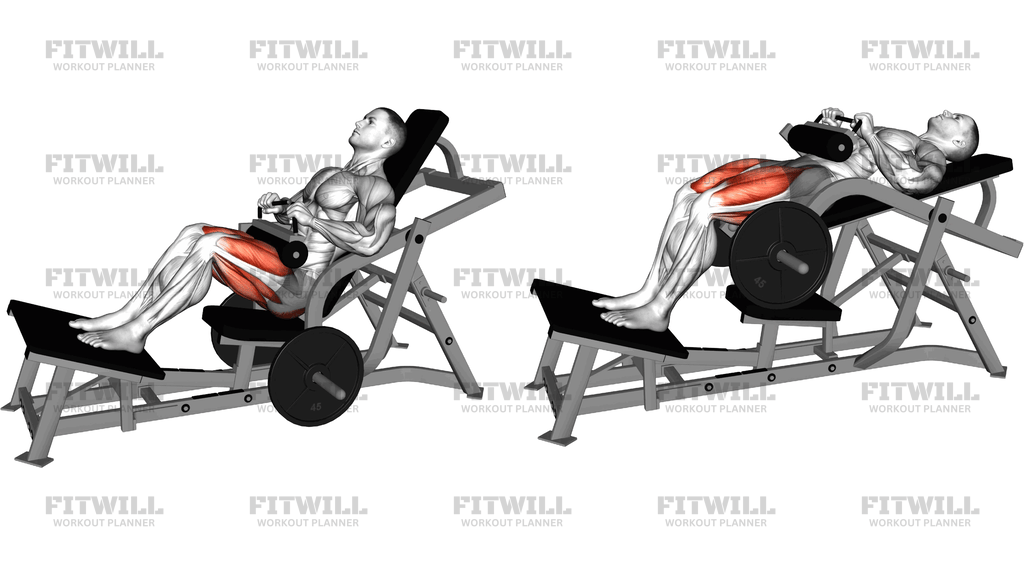
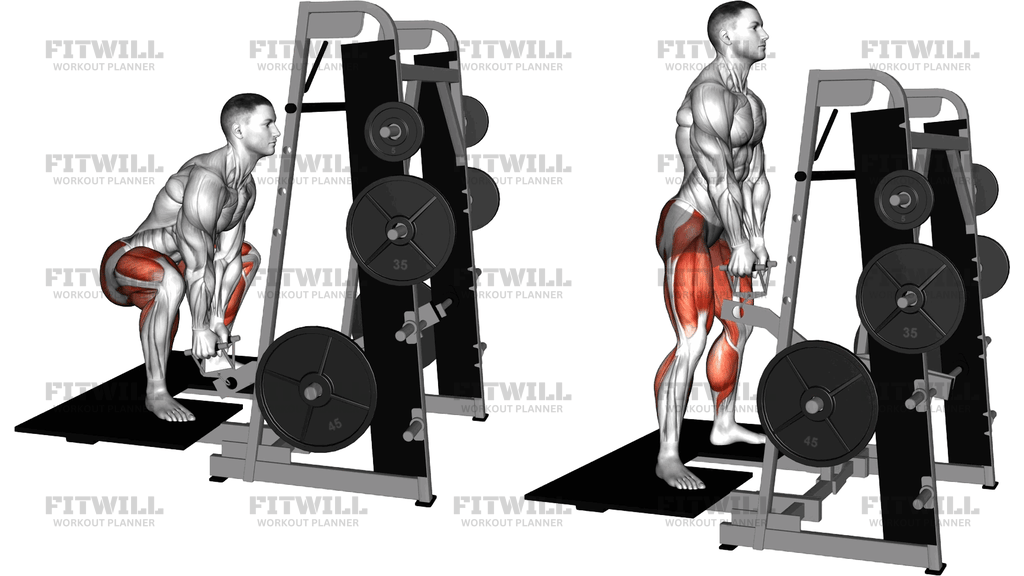
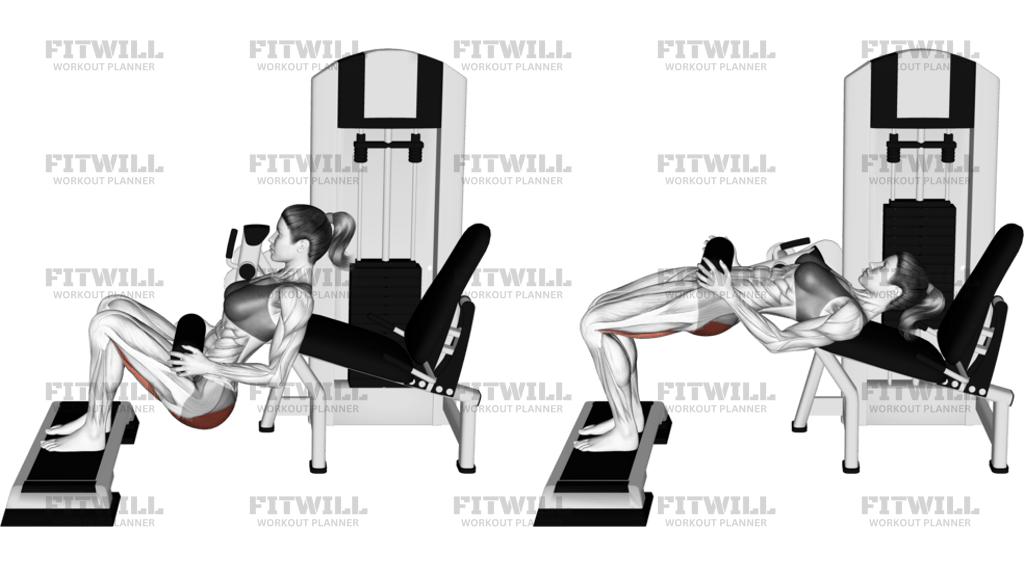
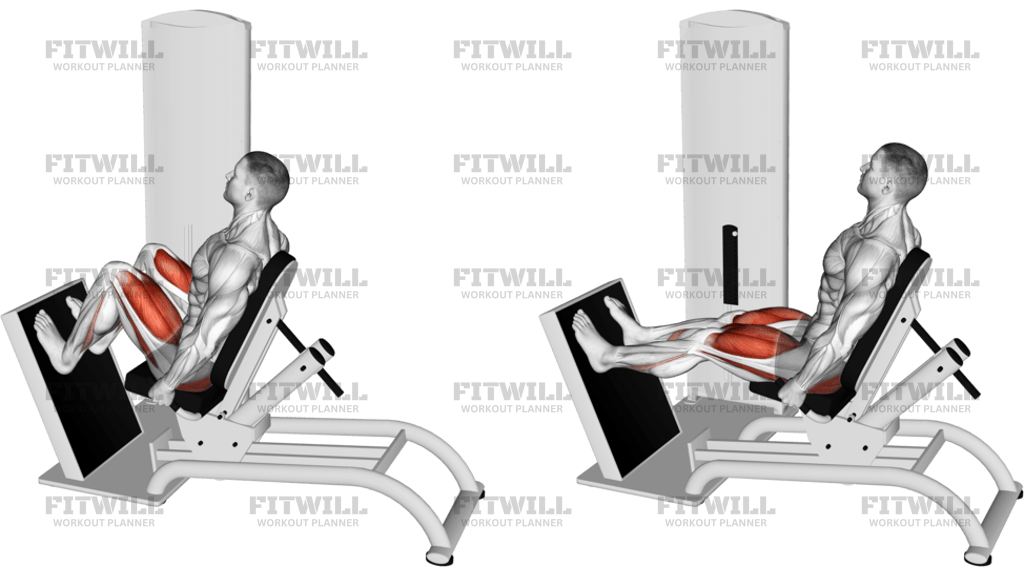
Lever Horizontal One Leg Press
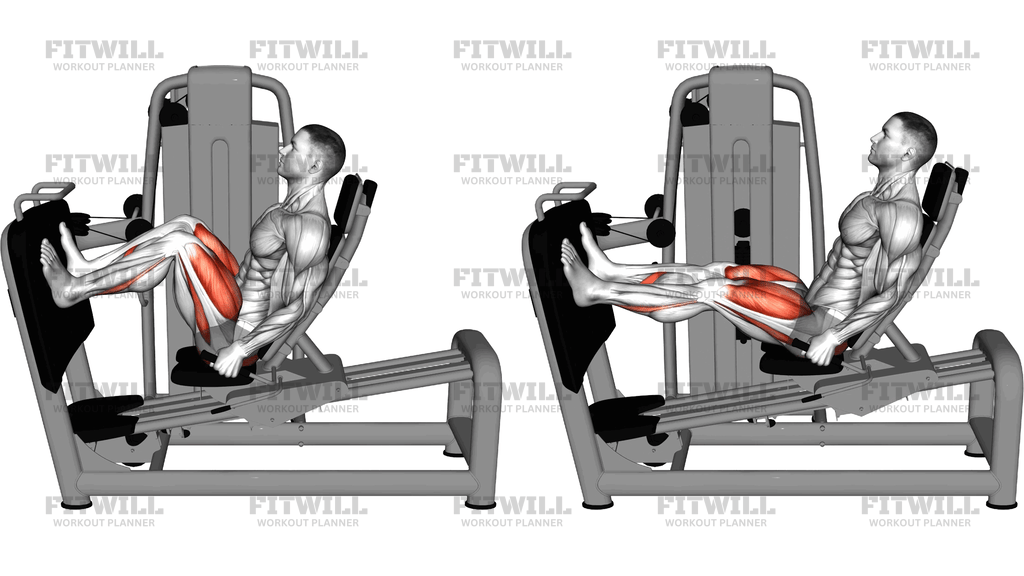
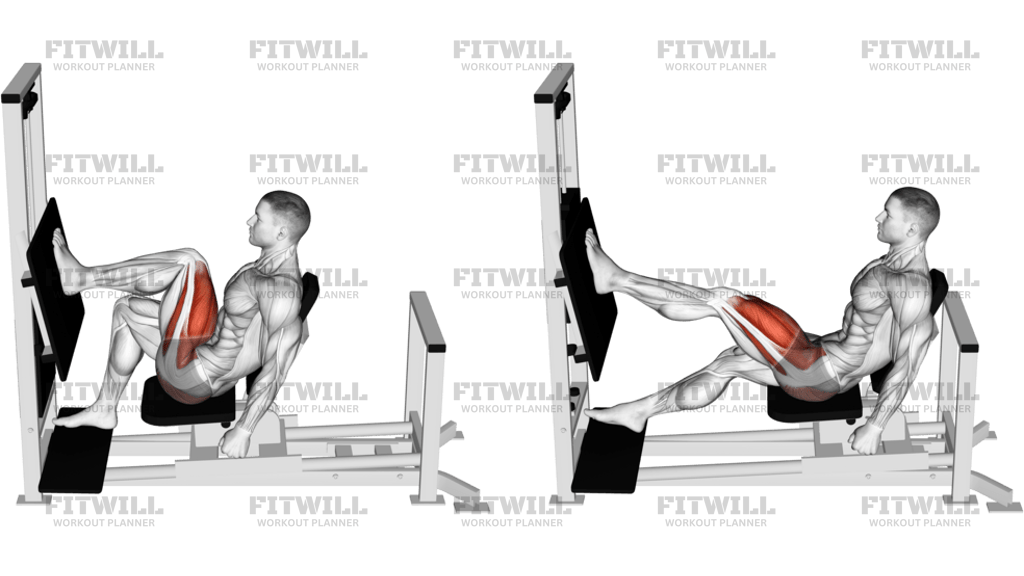
Lever Horizontal One Leg Press is a single-leg machine press that lets you train one side at a time on a guided horizontal path. The supported back pad and fixed track make it useful for building lower-body strength without needing to balance a free weight, which can be helpful when you want to focus on hip and knee extension instead of stabilizing the whole body.
This version places the main effort on the glutes, with the quadriceps and hamstrings assisting through the press and return. Because only one leg is driving the sled, the exercise also exposes side-to-side differences in strength, hip position, and range of motion. That makes Lever Horizontal One Leg Press a practical accessory for unilateral leg work, glute emphasis, and controlled hypertrophy work.
The setup matters more here than on a two-leg press. Your working foot should be planted firmly on the platform with the knee tracking in line with the toes, while the non-working leg stays out of the way so it does not help the rep. Keep your pelvis and low back pressed into the seat pad, then use the side handles to hold your torso still before you start pressing.
Each repetition should move smoothly from a deep but controlled bend at the hip and knee into a strong press without bouncing off the bottom. Drive the platform away by extending the hip and knee together, then lower it under control until the thigh returns to a loaded position. The goal is to keep the same foot position, spine position, and tempo on every rep so the glute and thigh muscles do the work instead of momentum.
Lever Horizontal One Leg Press works well in lower-body strength sessions, unilateral accessory blocks, or rehabilitation-style training when you need a stable pressing pattern. It is especially useful for lifters who want to reduce compensations from the stronger leg or who need a more joint-friendly way to load the legs. Keep the range of motion pain-free, avoid twisting through the hips, and choose a resistance that lets you finish every rep with the same clean path.
[ Workout Log & Planner ]
Put your next workout in Fitwill
Keep your plan and training log ready when you are.


Instructions
- Sit back against the pad and place your working foot flat on the platform at about hip width, with the other leg lifted clear of the carriage.
- Set the seat position so the knee starts bent but not compressed, and hold the side handles to keep your hips and ribcage still.
- Press your low back and pelvis into the pad before you begin the first rep.
- Brace your midsection and keep the working knee tracking in line with the toes.
- Drive the platform away by extending the hip and knee together without letting the pelvis roll or the heel lift.
- Finish the press with a strong but nonviolent knee extension; do not lock out so hard that the hip leaves the pad.
- Lower the platform slowly until the thigh is loaded again and the knee returns to a comfortable deep bend.
- Keep breathing steady through each rep and reset your body position before the next one.
- Complete all reps on one side, then switch legs and match the same seat and foot position.
Tips & Tricks
- Keep the working foot centered enough on the platform that pressure stays through the whole foot, not only the toes.
- If your hip lifts off the pad near the bottom, shorten the depth until you can keep both sit bones planted.
- Let the free leg stay quiet and out of the path of the carriage; do not use it to help the press.
- A slightly slower lowering phase usually makes the glutes work harder than bouncing out of the bottom.
- If the knee caves inward, reduce the load and think about pushing the platform in line with your second toe.
- Use the handles to stop torso drift, but do not pull so hard that your shoulders round forward.
- Stop one or two reps before your pelvis starts rotating or your low back starts arching off the pad.
- Match the setup on both sides exactly so the stronger leg does not get a shorter range of motion.
Frequently Asked Questions
What does Lever Horizontal One Leg Press train the most?
The main emphasis is on the glutes, with the quadriceps and hamstrings helping through the press and return.
Why use one leg at a time on this machine?
Single-leg pressing helps expose left-right strength differences and keeps one side from taking over the rep.
How should my foot sit on the platform?
Place the working foot flat and stable, usually around hip width, so pressure stays spread through the whole foot.
How deep should I lower on Lever Horizontal One Leg Press?
Lower only as far as you can keep the pelvis anchored to the pad and the knee tracking cleanly over the toes.
Should my non-working leg stay on the platform?
No. Keep the free leg clear so it does not assist the press or change your hip position.
What is the most common form mistake?
Most people bounce out of the bottom or let the hip rotate off the pad, which reduces glute tension and control.
Is Lever Horizontal One Leg Press good for beginners?
Yes, as long as the load is light enough to keep the seat position, knee path, and lowering phase strict.
How do I make this more glute-focused?
Use a controlled depth, keep the heel heavy, and avoid locking the knee so aggressively that the pelvis starts to lift.