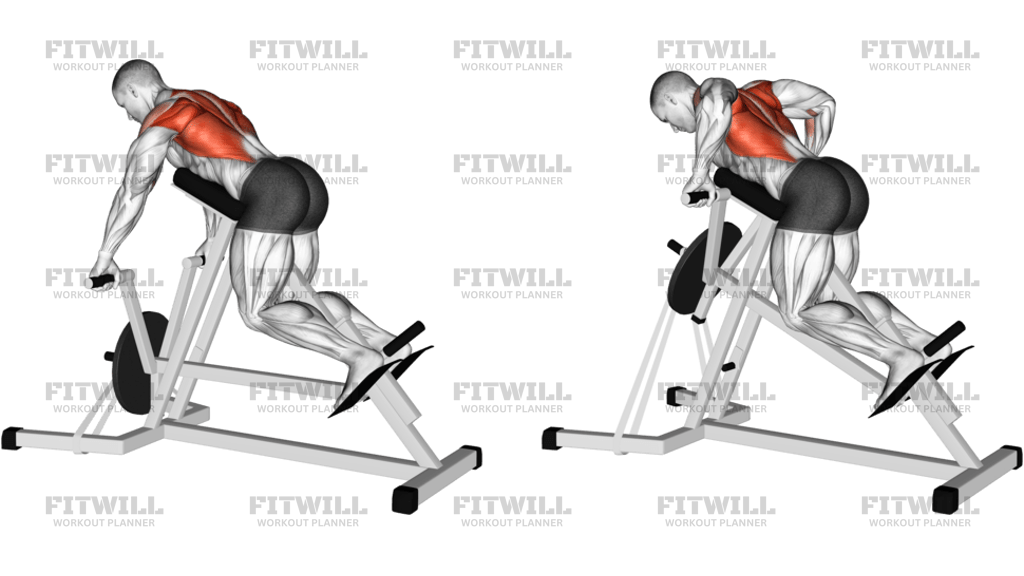
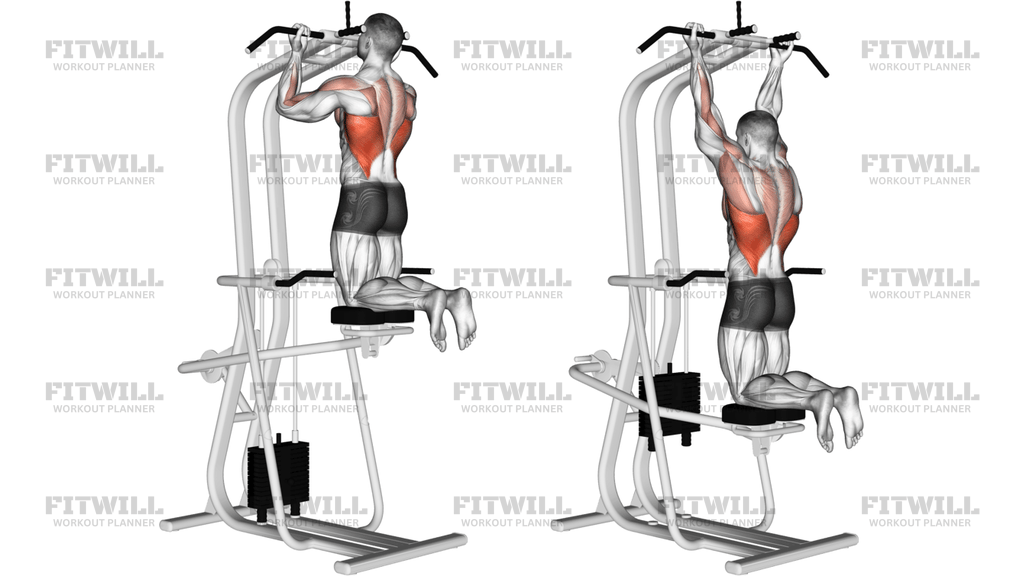
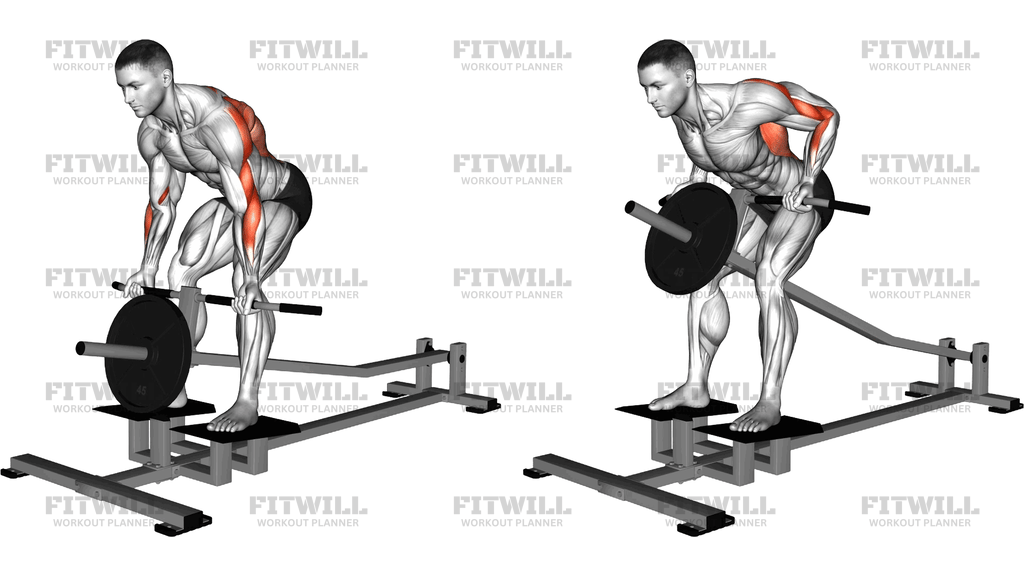
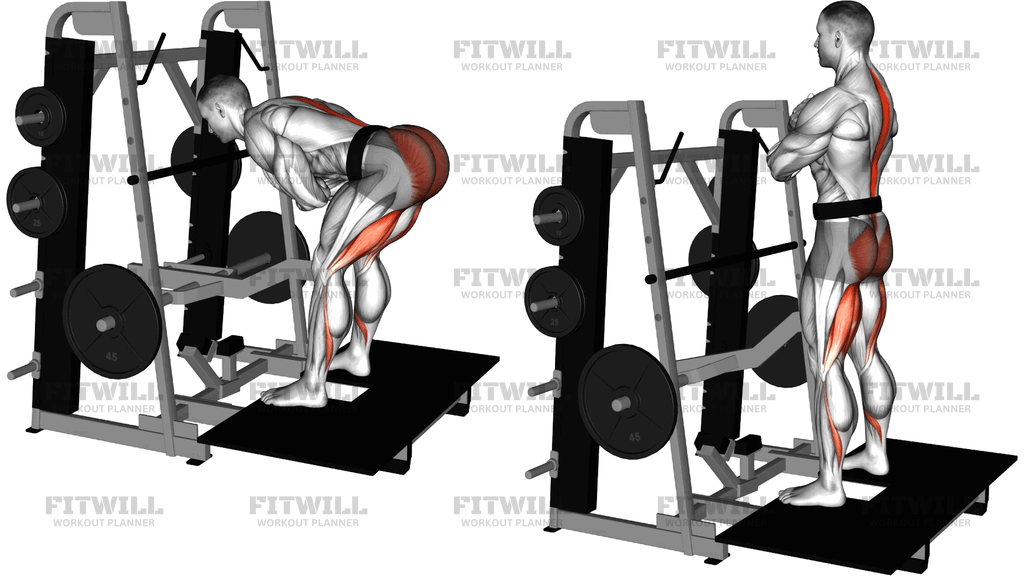
Lever Back Extension
Lever Back Extension is a machine-based trunk extension exercise that trains you to move from a flexed torso into a controlled upright finish without losing position on the pads. The lever path keeps the repetition consistent, which makes this movement useful for learning how to extend through the hips and spine together instead of jerking backward or turning the rep into a swing.
The exercise is usually used to build strength and endurance in the spinal erectors, glutes, hamstrings, and the stabilizers that keep the ribcage and pelvis stacked. Because the machine controls the path, the setup matters more than the load. If the seat height, pad contact, or torso angle is off, the work shifts away from a clean back extension and becomes a sloppy hip drive or a low-back crank.
A good rep starts with the pelvis anchored, the chest tall, and the neck long. Lower only as far as you can while keeping pressure on the pad and a controlled brace through the midsection. From there, extend back to neutral with a smooth drive instead of throwing the shoulders back or over-arching at the top. The finish should feel tall and braced, not collapsed or jammed into end range.
Use Lever Back Extension as accessory work, warm-up volume, or a controlled strength builder when you want predictable resistance and a strict hinge-like pattern. Keep the tempo smooth, choose a load that lets you stay in contact with the machine, and stop the set if you have to bounce out of the bottom or chase extra range by losing posture.
Fitwill
Log Workouts, Track Progress & Build Strength.
Achieve more with Fitwill: explore over 9600 exercises with images and videos, access built-in and custom workouts, perfect for both gym and home sessions, and see real results.
Start your journey. Download today!




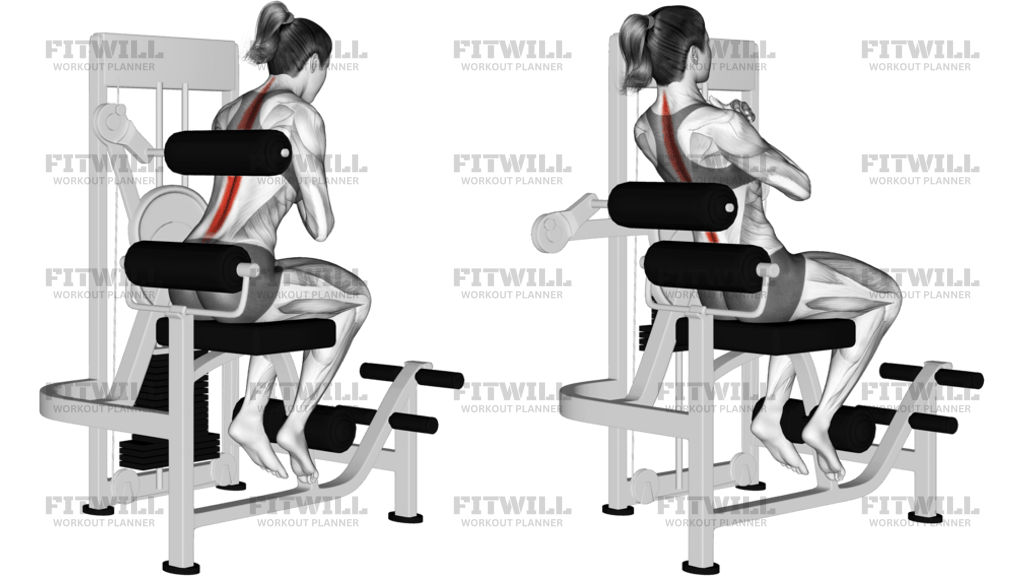
Instructions
- Adjust the seat and back pad so your hips can stay planted and the machine's pivot feels aligned with your torso.
- Sit with your lower back and mid-back against the pad, feet planted on the platform, and your thighs secured under the roller or brace if the machine has one.
- Hold the side handles lightly or cross your arms over your chest so your upper body stays supported without pulling on the machine.
- Set your ribs over your pelvis, keep your neck long, and brace before you start the first rep.
- Inhale and lower your torso forward under control until you feel a firm stretch through the back of the body.
- Keep the movement smooth as you descend; do not round hard through the low back or let your hips slide off the pad.
- Exhale and extend back up to a tall neutral position by driving through the torso and hips together.
- Pause briefly at the top without leaning back into a hyperextended finish.
- Repeat for the planned reps, then return the stack or lever to rest with control.
Tips & Tricks
- If you feel the machine in your thighs or neck instead of your torso, adjust the seat or pad position before adding weight.
- Think about lengthening the spine on the way down and standing tall through the torso on the way up.
- Keep the top position neutral; finishing with a big lean-back usually shifts the load into the joints instead of the muscles.
- Use a 2-3 second lowering phase so you can feel where the stretch changes into the reversal.
- Keep your grip light on the handles; pulling with the arms makes the rep less consistent.
- Only go as low as you can without losing pressure on the pad or sliding your pelvis around.
- Choose a load that lets you pause for a moment at both the bottom and the top.
- If your lower back feels pinched, shorten the range and reduce the load until the motion stays smooth.
- Exhale as you extend up, then reset your brace before the next rep.
Frequently Asked Questions
What muscles does Lever Back Extension train?
It mainly trains the spinal erectors and glutes, with the hamstrings and core helping stabilize the movement.
Can beginners perform this exercise?
Yes. Beginners should use a light load, a short range of motion, and a slow tempo until they can keep the torso positioned cleanly on the machine.
How should I set up the seat and pads?
Set the machine so your hips stay planted, your back stays in contact with the pad, and the lever path feels natural instead of forcing you to slide forward or curl around the machine.
Should I hold the handles or cross my arms?
Either works if it helps you stay steady. Use the handles lightly for balance or cross your arms if that keeps you from pulling with the upper body.
How low should I go on the way down?
Go only as far as you can while keeping contact with the pad and a controlled brace. Depth should come from position, not from rounding and dropping.
Why do I feel this in my lower back?
That is normal if the load is appropriate. The movement is supposed to challenge the spinal erectors, but the sensation should be effort, not a sharp pinch.
What is the most common form mistake?
Overextending at the top or bouncing out of the bottom are the biggest issues. Both remove tension from the muscles and make the machine feel less stable.
Can I use this as part of a warm-up?
Yes. Light sets with a controlled tempo work well as a warm-up for hinge training, posterior-chain work, or back-focused sessions.