Barbell Pulse Squat
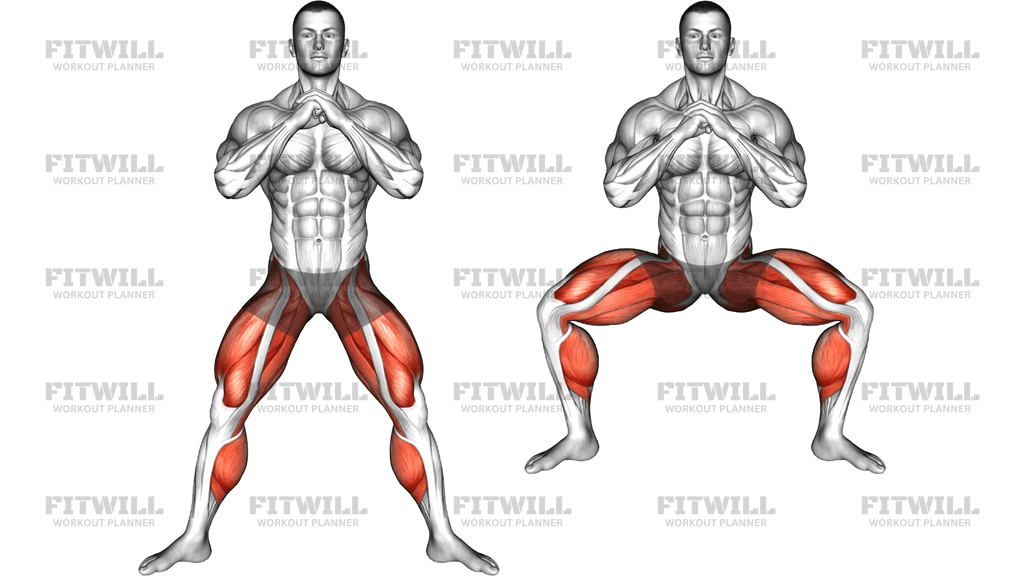
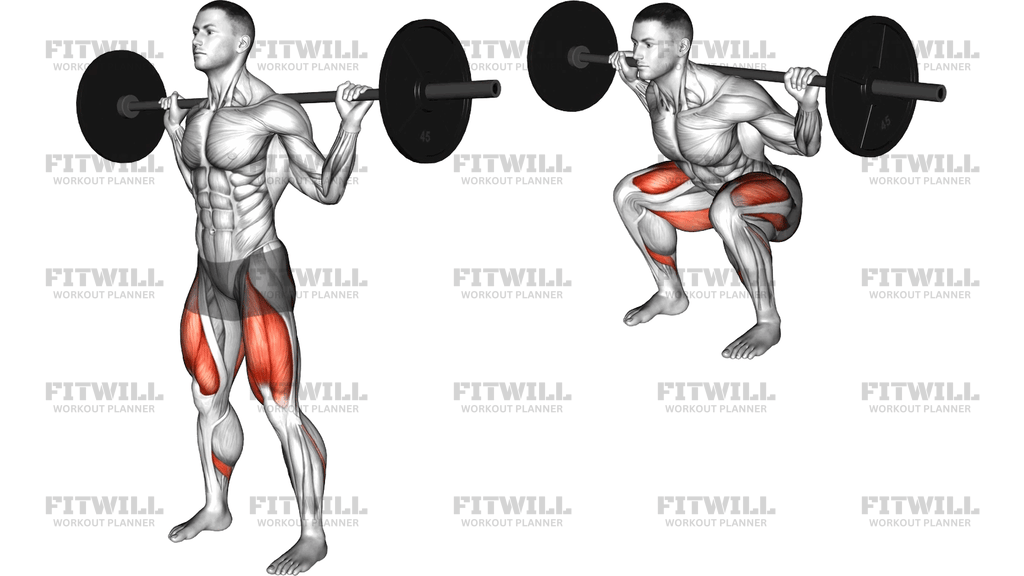
The Barbell Pulse Squat takes a standard back squat and compresses it into small, controlled bouncing repetitions performed from a deep knee bend. Instead of standing fully upright between reps, you sink into the bottom portion of the squat and pulse up and down through a short range, usually the lower third of the movement, keeping constant tension on the quads and glutes. The barbell rests across your upper back exactly as it would for a conventional squat, so this is a loaded variation that demands both strength and stability.
This exercise is best used as a finisher or hypertrophy accessory rather than a main strength lift. Because the pulses keep the muscles under continuous tension without a resting lockout, the quads, glutes, and inner thighs accumulate fatigue quickly even with a moderate load. Lifters who want to grow their legs without handling maximal bar weight often use pulse squats for this reason, as do athletes who need to build strength in deep knee and hip flexion positions that carry over to sprinting, jumping, and changing direction.
The setup matters more here than in a regular squat because you will be spending all your time near the bottom, where form tends to break down first. A bar position resting on the traps, a stance slightly wider than shoulder width with the toes turned out a touch, and a braced torso give you the stable base the pulses require. If your torso tips forward or your heels lift during the bounce, the load shifts away from the legs and onto your lower back and knees, which is exactly what you want to avoid.
To perform the movement well, unrack the bar, step back, and descend into a full squat with control. From the bottom, drive up a few inches, then lower back down into the hole without letting the weight settle or your spine round. Each pulse should be short and deliberate, roughly the height of a fist, with your chest tall and knees tracking over your toes. Keep breathing shallow but continuous through the set, then stand fully only when the set is finished.
Common use cases include finishing a leg day with a burnout set, adding volume to the quads after heavy squats or leg presses, and building positional endurance in the bottom of the squat for powerlifting or Olympic lifting. Because the bottom position is demanding, start light, a load you could squat comfortably for fifteen or more regular reps, and progress gradually. A power rack with safety pins set just below your squat depth is a smart precaution, especially when training alone, since fatigue near the bottom can arrive faster than expected.
[ Workout Log & Planner ]
Put your next workout in Fitwill
Keep your plan and training log ready when you are.


Instructions
- Set a barbell in a power rack at upper-chest height and load it with a light to moderate weight, well below your normal squat working weight.
- Position the bar across your upper traps, grip it slightly wider than shoulder width, and pull your elbows down and back to create a secure shelf for the bar.
- Unrack the bar, step back, and set your feet slightly wider than shoulder width with toes turned out about 15 to 30 degrees.
- Take a deep breath into your belly, brace your core, and keep your chest up and gaze forward.
- Push your hips back and bend your knees to lower into a full squat, keeping your weight distributed across the whole foot with heels down.
- From the bottom position, drive up through your midfoot just a few inches, then lower back down into the squat without standing all the way up.
- Continue these short, controlled pulses, keeping your knees tracking over your toes and your torso as upright as possible on every rep.
- Breathe in short, steady breaths through the set rather than holding your breath, since the pulses are continuous.
- After your final pulse, drive up to a full stand, take a breath, walk the bar back into the rack, and reset your stance before the next set.
Tips & Tricks
- Choose a lighter load than a regular back squat, because the pulses remove the standing rest between reps and fatigue builds much faster in the bottom position.
- If your heels rise during the pulses, widen your stance slightly and turn your toes out more, or spend a few sessions doing bodyweight pulse squats first.
- Keep the pulse range short and consistent, around 3 to 6 inches, so the quads and glutes stay loaded instead of the rep turning into a half squat.
- Do not bounce aggressively off your calves or let the bar drive you into the floor; each descent should be controlled even at speed.
- Watch for your chest dropping toward your knees as the set gets hard, and cue elbows down and chest tall to keep the bar over your midfoot.
- Set safety pins in the rack just below your deepest squat depth if you train alone, since missed pulses near fatigue often fail at the bottom.
- Stop the set and stand up fully if your lower back starts rounding out of the hole, as that position shifts load from your legs to your spine.
- Use pulse squats after your heavy squat or press work rather than before, so fatigue from the bottom-position work does not compromise your main lift.
- Rest 60 to 90 seconds between sets, since the continuous tension makes even light weights demanding on the legs and breathing.
Frequently Asked Questions
What muscles do the Barbell Pulse Squat work?
The quads are the primary movers, with strong contributions from the glutes and inner thighs, especially when the pulses are done from a deep squat. The calves, lower back, and core work to keep you stable through every small rep.
How deep should I go before starting the pulses in the Barbell Pulse Squat?
Descend into a full squat, roughly thighs below parallel or as deep as you can hold with a neutral spine and heels down, then pulse in the bottom third of the range. That is where the continuous tension effect is strongest.
How heavy should the barbell be for pulse squats?
Start with roughly 40 to 60 percent of your normal back squat weight, something you could rep comfortably for fifteen or more standard squats. The lack of a standing lockout makes the effective load feel much harder than the numbers suggest.
Are Barbell Pulse Squats suitable for beginners?
Beginners should first learn a regular bodyweight or goblet squat, then try bodyweight pulse squats before adding a bar. Once you can pulse with good knee tracking and an upright torso, a light barbell is a reasonable next step.
Why do my calves and feet burn during Barbell Pulse Squats?
The short, quick pulses demand constant balance and ankle control, so the calves and small stabilizing muscles around the ankle work overtime. If it is excessive, slow the tempo slightly and check that your weight stays over your midfoot rather than on your toes.
Can I do pulse squats in a Smith Machine instead?
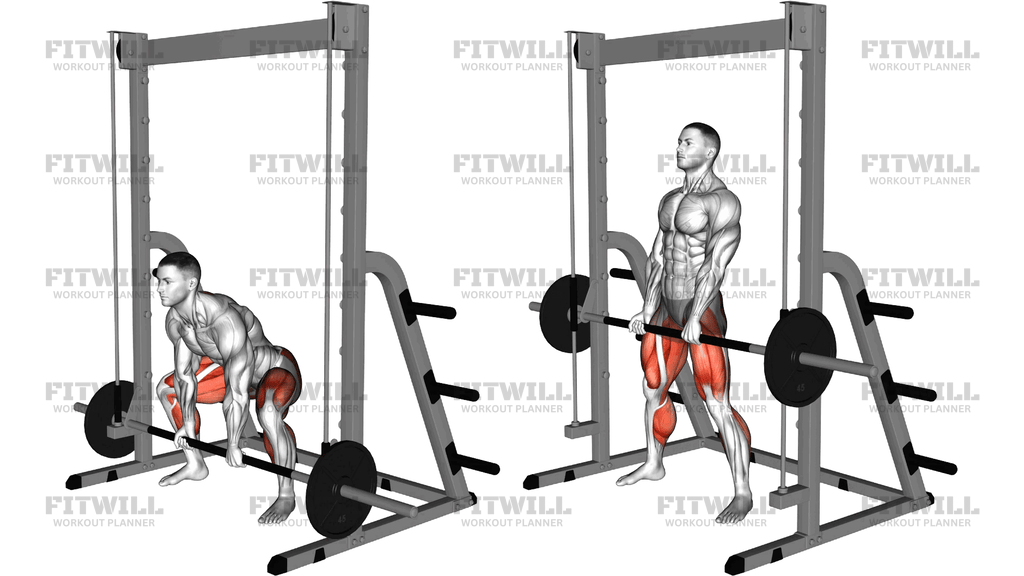
Yes, a Smith Machine is a useful substitution because the fixed bar path removes balance demands and lets you focus purely on the pulsing motion. It is also an easy way to bail safely if you fail a rep near the bottom.
What is the most common mistake in the Barbell Pulse Squat?
Letting the pulse range grow into loose half squats with a rounding lower back as fatigue sets in. Fix it by keeping each pulse short, your chest up, and ending the set the moment your torso starts to tip forward.
Should I hold my breath while pulsing like in a heavy squat?
No, the continuous nature of the set means you need steady, shallow breathing throughout. Holding your breath for a long series of pulses will spike your blood pressure and cut the set short.
Where do Barbell Pulse Squats fit in my leg workout?
They work best as a finisher after your main squat or leg press work, when the goal is extra quad and glute volume under fatigue. Doing them first would leave your legs pre-fatigued for heavier lifting.
Are pulse squats bad for the knees?
Performed with a controlled tempo, heels down, and knees tracking over the toes, they are generally well tolerated. If you have a current knee issue or feel pinching in the deep position, reduce the depth or load and consult a qualified professional before continuing.