Weighted Sandbag Over The Shoulder Toss
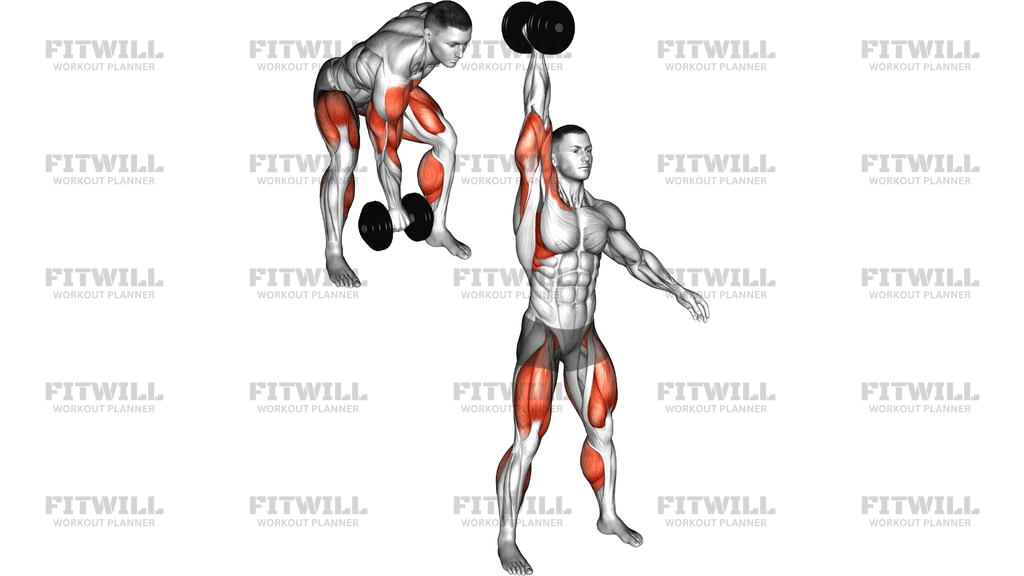
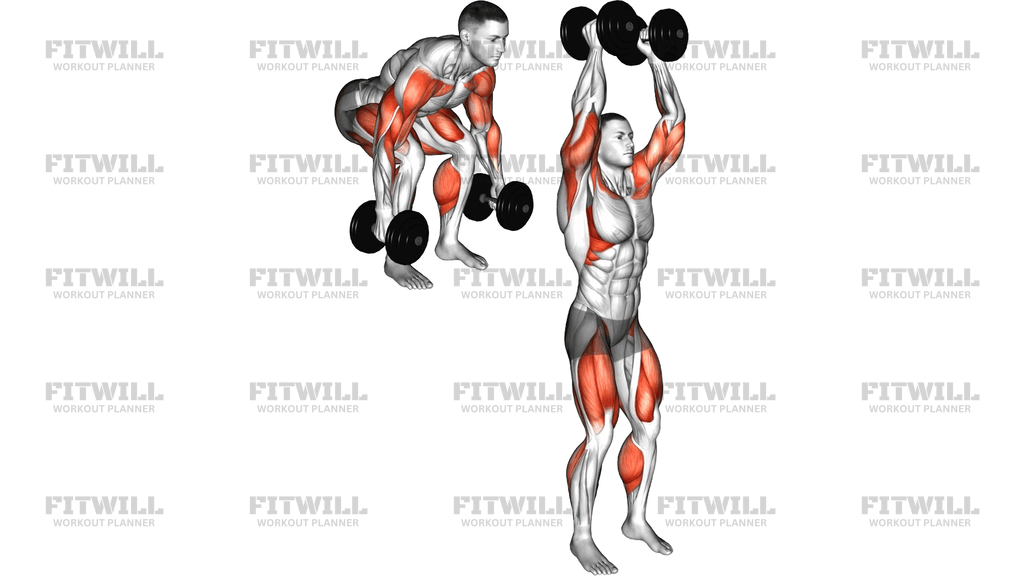
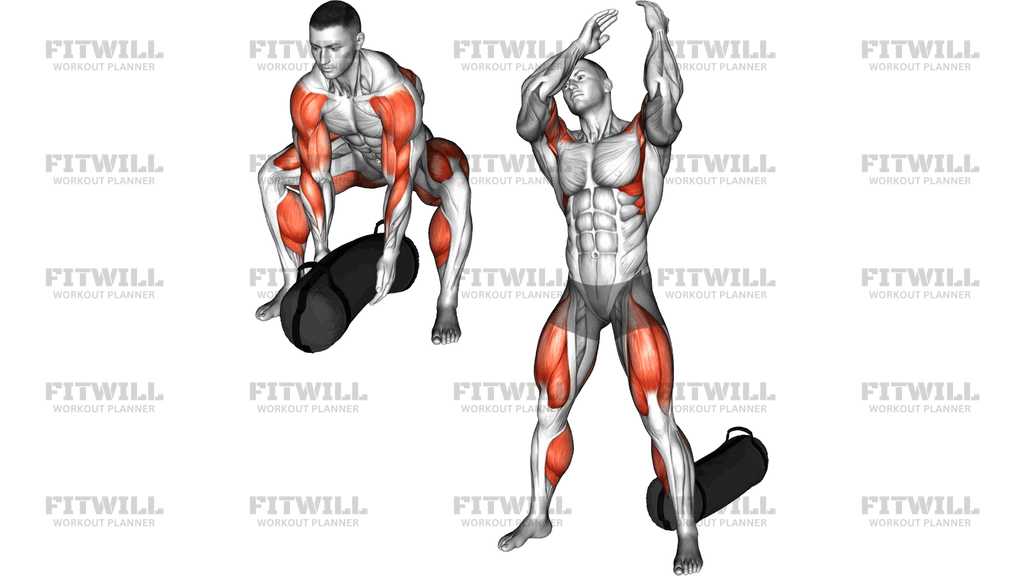
The Weighted Sandbag Over The Shoulder Toss is an explosive full-body drill where you deadlift a sandbag from the floor and hurl it over one shoulder so it lands behind you. The image shows the two halves of the rep clearly: a deep crouched pickup with the bag gripped at both ends, followed by a tall standing finish with the arms extended overhead as the bag sails over the back. It is one of the few lifts that takes a heavy object from the ground and throws it, which makes it a staple in strongman training, combat sport conditioning, and functional strength circuits.
The movement trains the entire hip-hinge-to-triple-extension chain. The glutes, quads, and hamstrings drive the bag off the floor, the lower back and obliques rotate and stabilize the spine as the bag travels across your body, and the shoulders, traps, and arms steer it up and over. Because the sandbag shifts and sags in your grip, your forearms, grip, and trunk stabilizers work far harder than they would with a barbell of the same weight.
Setup matters more than people expect. The bag should sit in front of your feet, your stance should be roughly shoulder-width with the toes turned slightly out, and you should crouch over the bag rather than reaching for it with a rounded back. A deep, controlled pickup gives you the time to brace and set your grip; a rushed first pull is where most sloppy reps and tweaked backs happen.
To execute the toss well, pull the bag up along your body, then in one continuous motion drive through the floor, extend the hips, and flick the bag over one shoulder as your arms reach overhead. The bag should clear your head and land a step or two behind you, not clip your back or drop at your heels. Exhale sharply on the throw, keep your chin tucked as the bag passes over, and watch where it lands so you can step to it for the next rep.
This drill suits anyone with access to a sandbag who wants power, conditioning, and core strength in a single move. It scales easily: lighter bags and higher reps build work capacity, while heavier bags at lower reps develop raw hip extension strength. Common use cases include finisher sets, interval circuits, and rotational power work for throwers and grapplers.
The main safety points are simple. Choose a bag you can control on the pickup, throw into open space with a clear landing zone, and alternate shoulders between sets to keep the load balanced across your trunk. Because this is a throwing movement, quality of extension matters more than squeezing out extra reps once your form starts to drift.
[ Workout Log & Planner ]
Put your next workout in Fitwill
Keep your plan and training log ready when you are.


Instructions
- Place a loaded sandbag on the floor in front of you and set your feet about shoulder-width apart, toes angled slightly outward, with the bag positioned between or just in front of your feet.
- Hinge at the hips and crouch down to grip the bag at both ends or on the handles, keeping your chest up and your weight spread across your whole foot.
- Brace your core, tuck your chin, and take a firm breath before you initiate the pull, locking your lower back into a neutral position.
- Drive through your heels and stand up explosively, pulling the bag up your shins and thighs and letting it rest against your torso as you rise.
- As your hips reach full extension, transfer your power upward by extending the ankles, knees, and hips together so the bag gains momentum toward your chest and shoulders.
- Flick the bag up and across one shoulder, reaching both arms fully overhead as it rotates off your hands and travels behind your head.
- Follow through with your arms and track the bag with your eyes until it lands one to two steps behind you in your landing zone.
- Exhale sharply as you release the bag, then step or walk to its new position rather than reaching back for it.
- Reset your grip and stance with the bag on the opposite side or over the opposite shoulder, or keep the same shoulder for the set if you are targeting one side, then repeat for the desired reps.
- Keep each rep crisp and explosive; if the pickup or toss starts to slow down, end the set rather than grinding out tired throws.
Tips & Tricks
- Crouch over the bag instead of bending straight-legged to grab it; a tall, rounded pickup is the most common way people strain their lower back on this drill.
- Keep the bag tight against your body through the first pull. Letting it drift away from your thighs turns a strong hip drive into a slow arms-only lift.
- The throw comes from hip extension, not from muscling the bag with your shoulders. If your arms feel like they are doing the work, slow down and focus on snapping your hips through.
- Pick which shoulder you toss over deliberately and alternate sides between sets or sessions so your obliques and lower back develop evenly.
- Choose a sandbag weight you can lift for a clean deadlift without rounding; a bag that barely comes off the floor ruins the explosive part of the movement.
- Mark out a clear landing zone behind you before your first rep and keep other people, walls, and equipment out of it, since a dropped sandbag carries real momentum.
- Wear shoes with decent grip and throw on a surface with some give, like turf or rubber flooring, to absorb the bag's landing and protect your floors.
- Do not chase the bag with your eyes so far that you tip forward as it passes overhead; keep your chin tucked and your chest tall so you stay balanced through the release.
- If your grip fails before your legs do, use the bag's handles or reposition your hands closer to the ends of the bag where the fill settles less.
- For conditioning, cap the set by time rather than reps so you stop throwing before your pickup form deteriorates.
Frequently Asked Questions
Which muscles does the Weighted Sandbag Over The Shoulder Toss work most?
The main drivers are the glutes, quads, and hamstrings during the explosive pickup and hip extension, with the lower back and obliques stabilizing the trunk. The shoulders, traps, and forearms finish the throw and handle the shifting load of the sandbag.
How heavy should the sandbag be for the Weighted Sandbag Over The Shoulder Toss?
Pick a bag you can deadlift from the floor with a flat back and lift quickly, since the movement depends on speed. Most people start lighter than they expect and add fill once the toss feels smooth over every rep.
Can beginners do the Weighted Sandbag Over The Shoulder Toss?
Yes, as long as they start with a light bag and a clear landing zone. Beginners benefit most from practicing the pickup and the overhead path slowly with an empty or half-filled bag before throwing at full effort.
Should I alternate shoulders on the Weighted Sandbag Over The Shoulder Toss?
Alternating shoulders between sets or reps keeps the rotational load balanced across your obliques and lower back. Keeping one side for a full set is fine when you are deliberately training a dominant throwing pattern, but balance it with work on the other side.
Why does the sandbag feel harder to control than a barbell of the same weight?
The loose fill shifts inside the bag, so your grip, forearms, and deep core constantly correct for the moving load. That instability is part of the training effect and one reason sandbag throws carry over well to real-world lifting.
What is the most common mistake in the Weighted Sandbag Over The Shoulder Toss?
Rushing the pickup with a rounded back, then trying to muscle the bag over with the arms instead of driving the hips through. Fix both by crouching over the bag with a braced torso and letting the hip snap carry it overhead.
What can I use if I do not have a sandbag for the Weighted Sandbag Over The Shoulder Toss?
A heavy medicine ball or a filled duffel bag can stand in for light throws, though neither shifts the same way. Avoid throwing rigid objects like dumbbells or kettlebells, which are hard to release safely over the shoulder.
How should I breathe during the Weighted Sandbag Over The Shoulder Toss?
Inhale and brace before the pickup, hold that brace through the first pull, then exhale sharply as you release the bag overhead. Reset your breath with the bag on the floor before the next rep.
Where should the sandbag land on the Weighted Sandbag Over The Shoulder Toss?
Aim for the bag to clear your head and land one to two steps behind you in a marked landing zone. If it is clipping your back or dropping at your heels, throw higher and follow through with your arms instead of cutting the release short.
Is the Weighted Sandbag Over The Shoulder Toss safe for the lower back?
It is safe when the bag is lifted with a neutral spine, the brace is set before the pull, and the load matches your strength. Stop the set if your pickup rounds or your throws lose height, and keep the training area free of obstacles behind you.