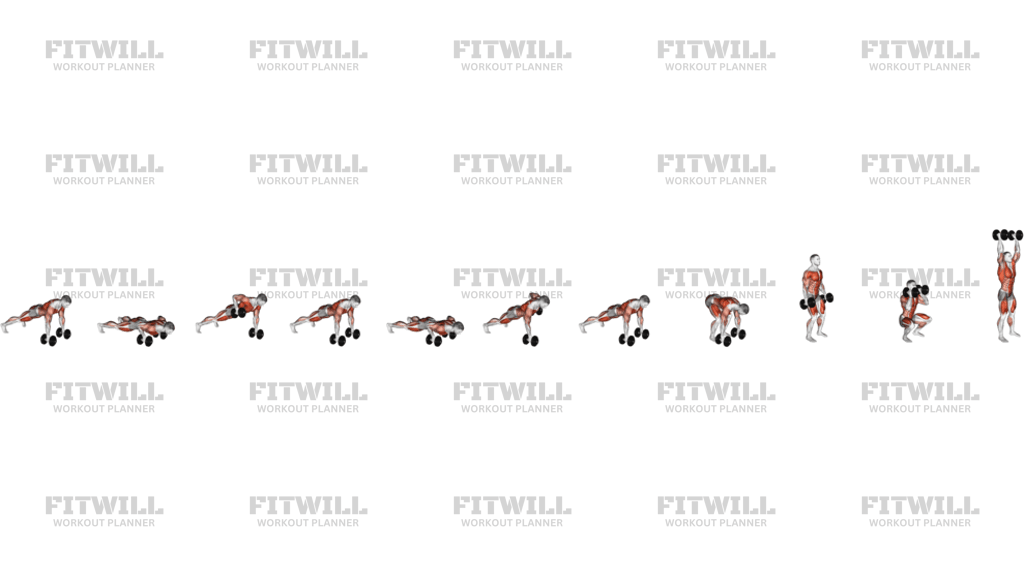
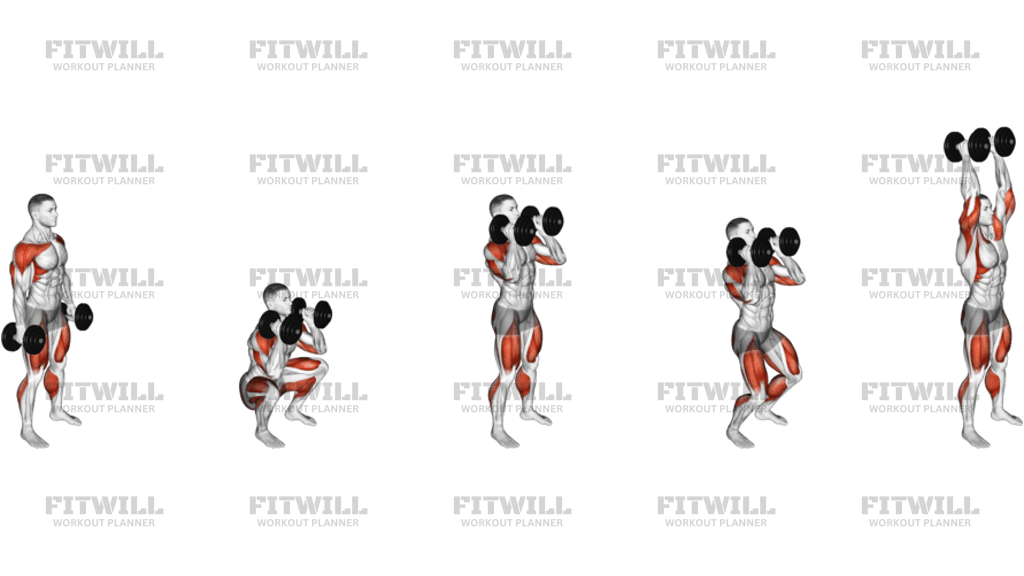
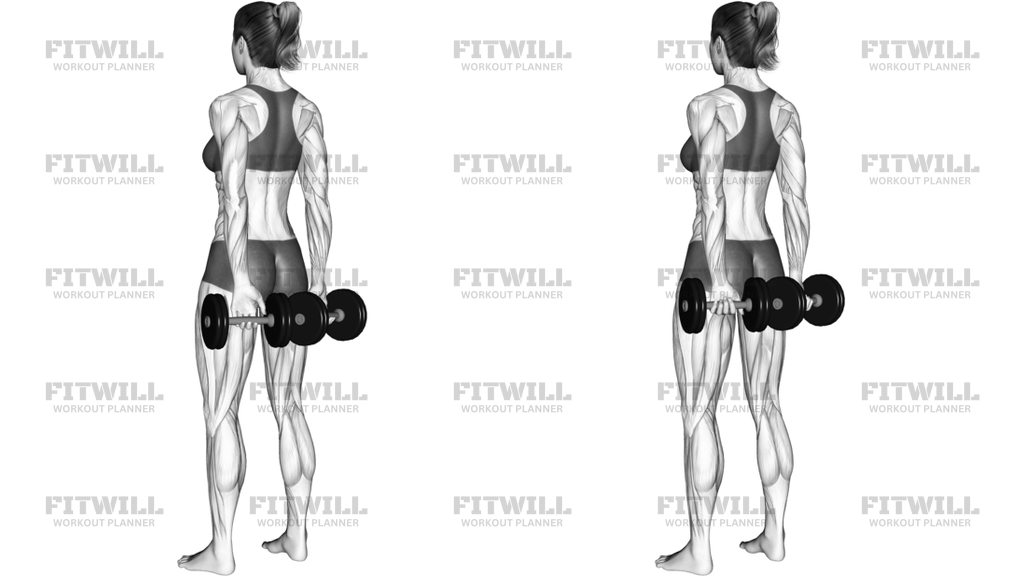
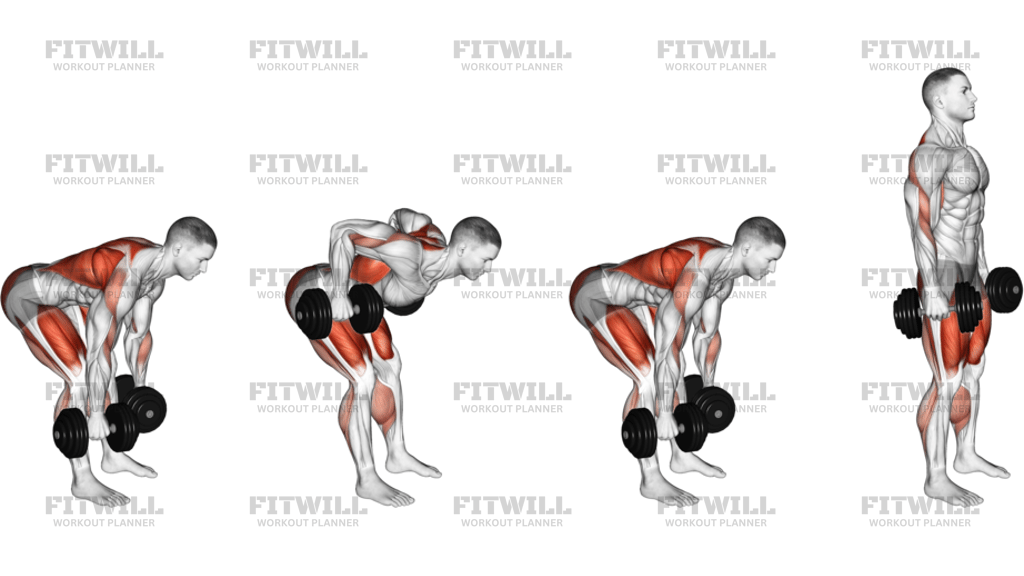
Dumbbell Single Arm Clean And Press
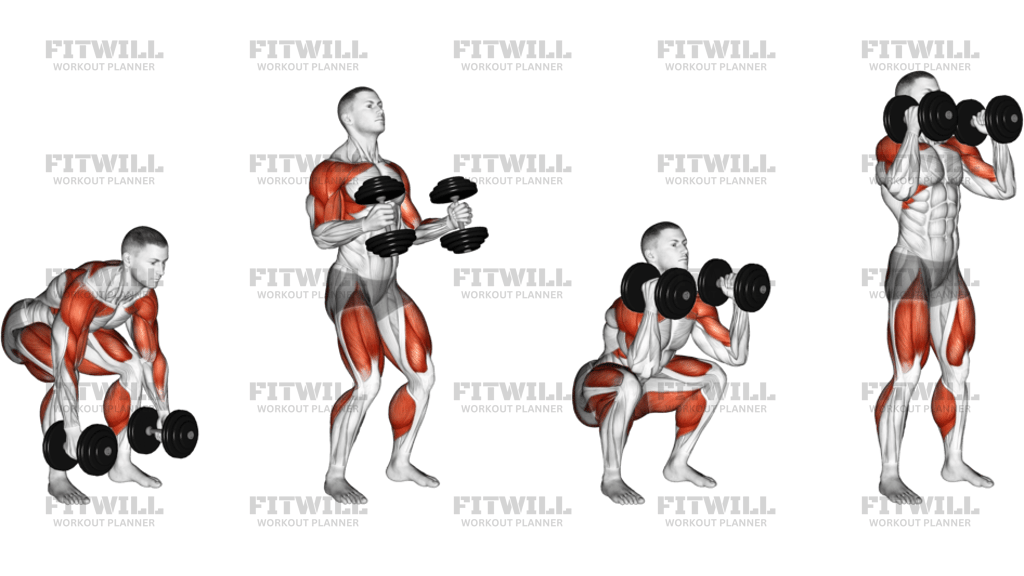
The Dumbbell Single Arm Clean And Press is a full-body lift that takes one dumbbell from the floor to overhead in two linked phases: a single-arm clean that brings the weight up to your shoulder, followed by an overhead press to lockout. Because you work one side at a time with a free hand available for balance, you can handle the movement with more control than a barbell version while still training the same athletic pattern of pulling, pivoting, and driving a weight overhead.
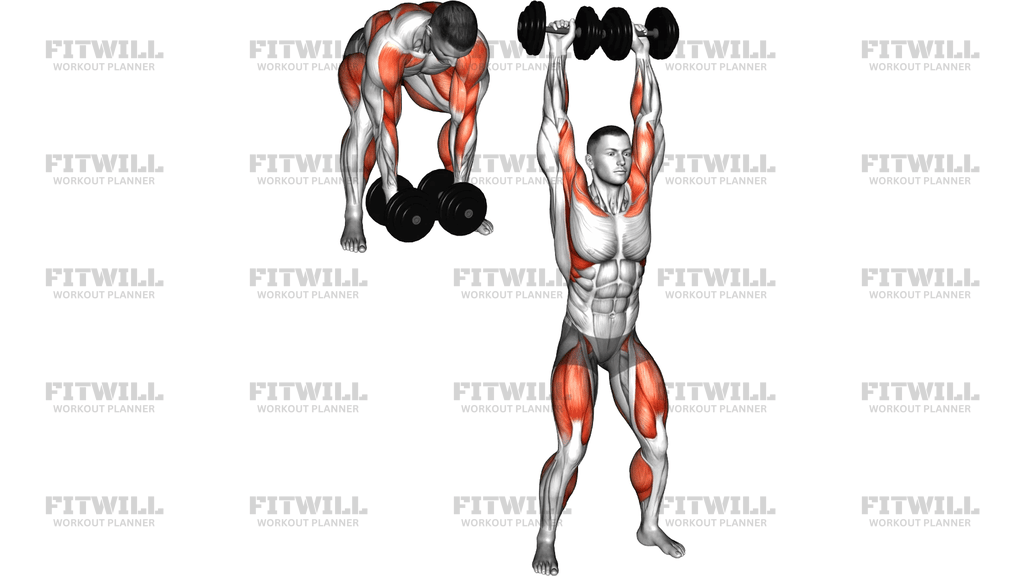
The lift draws on nearly everything. The clean phase loads the hamstrings, glutes, and quads as you hinge down and pull, then demands strong upper back and trap involvement to guide the dumbbell up and catch it at the shoulder. The press phase shifts the emphasis to the shoulders and triceps, while the core works the entire time to keep your ribs stacked over your hips and stop your torso from twisting under a load that lives on only one side of your body.
This movement suits lifters who want a lot of training effect from one dumbbell and one exercise. It shows up in strength circuits, conditioning intervals, and general athletic training because it raises your heart rate quickly while still requiring precise technique. It is also a practical gateway lift: if you learn the single-arm clean and press well, kettlebell cleans and barbell hang cleans become much easier to pick up.
Setup matters more than people expect. Your stance, your hinge position, and the path of the pull all determine whether the dumbbell arrives at your shoulder cleanly or crashes down on your forearm. Stand with feet about hip-width or slightly wider, hold the dumbbell in one hand with a neutral grip, and hinge at the hips so the weight hangs between or just beside your legs. A back that stays neutral through the hinge is the difference between a smooth rep and a strained lower back.
Execution comes down to sequencing. Drive through the floor with your legs, snap your hips open, and let that momentum carry the dumbbell up your body rather than muscling it with your arm. As the weight rises, rotate your elbow down and under it so you catch it racked at your shoulder, then immediately dip slightly and press overhead to a full lockout before lowering under control back to the shoulder and then to the floor.
The most common fault is turning the clean into a heavy arm curl or letting the dumbbell flop onto the shoulder with a loose wrist. Start with a weight you can move crisply, keep the pull close to your body, and treat the catch as an active position, not a landing pad. Keep your free arm out slightly for balance, exhale hard on the press, and reset your brace between reps rather than rushing through a sloppy set.
[ Workout Log & Planner ]
Put your next workout in Fitwill
Keep your plan and training log ready when you are.


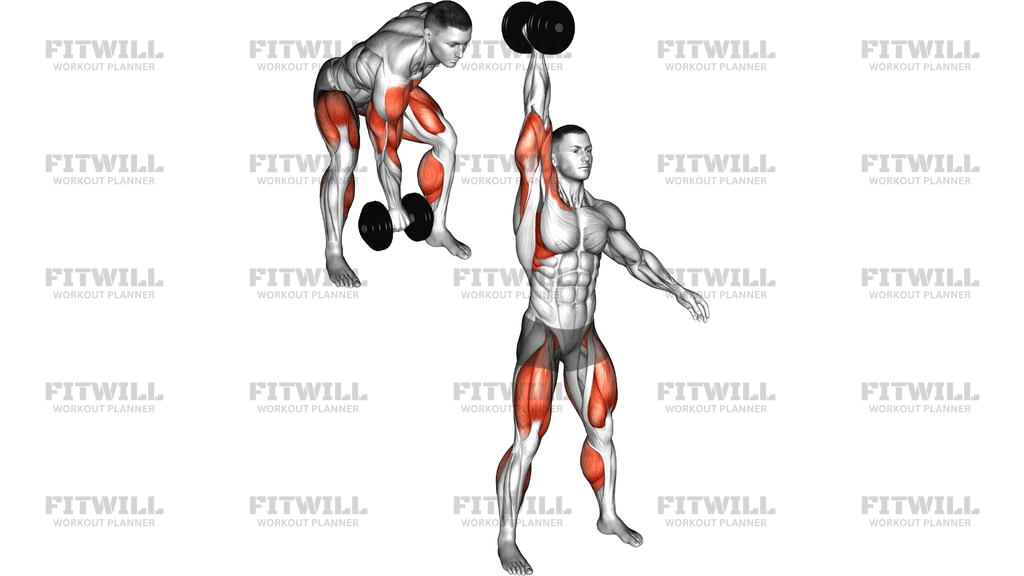
Instructions
- Place one dumbbell on the floor between your feet, standing with feet roughly hip-width apart and toes pointed slightly out.
- Hinge at the hips and bend your knees to grip the dumbbell in one hand with a neutral grip, back flat and chest above the weight; let your other arm hang relaxed or reach slightly out for balance.
- Brace your core and pull your shoulders down and back before initiating the pull.
- Drive through your heels and snap your hips forward to stand, letting the momentum carry the dumbbell straight up along the front of your body, keeping it close to your torso.
- As the dumbbell reaches chest height, rotate your elbow down and under the weight and catch it racked at your shoulder, wrist straight and elbow tucked, in a quarter-squat position.
- Stand fully upright, then press the dumbbell overhead until your arm is locked out with the weight stacked over your shoulder and bicep near your ear.
- Lower the dumbbell under control back to your shoulder, then re-hinge and return it to the floor with a neutral grip rather than dropping it.
- Exhale forcefully as you drive the press up; inhale at the shoulder before each press and re-brace before each clean.
- Complete all reps on one arm, then switch hands and repeat on the other side, resetting your stance and brace before the first rep of each set.
Tips & Tricks
- Keep the dumbbell path tight to your body on the clean. If the weight swings away from you and loops outward, the catch becomes a violent forearm slap; think of pulling your elbow back and up instead of lifting with your hand.
- Do not turn the clean into an arm curl. The height of the dumbbell should come from hip and leg drive, with your arm only guiding and redirecting the weight.
- Catch the clean with a slightly bent knee instead of standing stiff-legged. This soft landing lets your legs absorb the weight and sets up an immediate, powerful dip into the press.
- Keep your wrist straight and your grip firm but not crushing. A bent-back wrist at the rack position is the usual reason the dumbbell rolls onto the forearm or shoulder.
- Watch for torso rotation. With the weight on one side, your ribcage wants to lean and twist toward the pressing arm; squeeze your glutes and keep your hips squared forward.
- If your lower back rounds in the bottom hinge, raise the dumbbell onto a low step or plate so you can keep a neutral spine until your hip mobility improves.
- Use your free arm deliberately: reach it slightly out to the side during the clean and press for counterbalance instead of letting it dangle and swing.
- Breathe in a rhythm that matches the rep: brace and inhale at the shoulder, exhale on the press, and never hold your breath through the entire clean and press.
- Choose a weight you can clean crisply for every rep, not just the first one. Late in a set, a heavy dumbbell usually gets pulled with the arm, which is where form and shoulders break down.
Frequently Asked Questions
What muscles does the Dumbbell Single Arm Clean And Press work?
It is a genuine full-body lift: the glutes, hamstrings, and quads power the clean, the traps and upper back guide the dumbbell to your shoulder, and the shoulders and triceps finish the press. Your core works throughout to resist the twisting pull of a single-sided load.
Is the Dumbbell Single Arm Clean And Press suitable for beginners?
Yes, provided you start light and learn the two phases separately. Practice the single-arm clean until the catch feels smooth, then add the press once you can rack the dumbbell without it banging onto your forearm.
Why does the dumbbell crash onto my shoulder during the clean?
That usually means you are pulling with your arm and letting the weight loop away from your body. Keep the dumbbell close, rotate your elbow down and under it as it rises, and catch it with a slightly bent knee to soften the landing.
Should I squat or hinge at the start of the Dumbbell Single Arm Clean And Press?
Start with a hip hinge and a moderate knee bend, similar to an athletic ready position. Your torso should lean forward far enough that the dumbbell hangs under your shoulder, with a flat back rather than a deep squat.
Can I use a kettlebell instead of a dumbbell for this movement?
Yes, and a kettlebell actually changes the catch, since the weight rests on the back of your forearm rather than at your shoulder. The dumbbell version places the load on the front of the shoulder, which many people find easier to learn first.
How heavy should the dumbbell be for the Single Arm Clean And Press?
Pick a weight you can clean and press with crisp technique for all planned reps on your weaker arm. If the clean gets slow or the dumbbell swings away from your body as you fatigue, the load is too heavy.
Should I do all reps on one arm before switching?
Either approach works. Completing all reps on one side before switching is common in strength training, while alternating arms each rep spreads fatigue evenly and is handy in longer conditioning sets.
Is it safe for my lower back?
It is safe when you hinge with a neutral spine, keep the pull close to your body, and let your legs drive the movement rather than rounding over and yanking the weight up. If your back rounds in the bottom position, elevate the dumbbell or reduce the load until your hinge improves.
What can I substitute if I cannot perform the Dumbbell Single Arm Clean And Press yet?
Break it into parts: practice dumbbell single-arm cleans alone, and train the press separately from a racked position or from a normal standing start. Once both pieces feel solid, link them together.
How many reps and sets should I use?
For strength and technique, 3 to 5 sets of 3 to 6 reps per arm with a controlled weight works well. For conditioning, lighter dumbbells and higher reps in timed intervals are common, but stop the set when your clean form starts to deteriorate.