Sitting Backbend On A Chair
Sitting Backbend On A Chair is a supported spinal extension exercise performed by sitting on a chair, placing both hands behind your head, and leaning your upper back over the top edge of the chair's backrest. The chair acts as a fixed pivot point under your mid-back, so as you lean rearward your thoracic spine extends over the edge while your hips and legs stay anchored on the seat. The elbows open outward as you arch, which encourages the chest to lift and the upper spine to lengthen backward instead of collapsing forward.
This movement is especially useful for anyone who spends long hours at a desk. Sitting rounds the upper back and pushes the head forward, and this exercise works in the opposite direction by guiding the thoracic spine into extension. It is a common pick for office workers between meetings, lifters who want better overhead positions after pressing or bench work, and older adults looking for a gentle, supported way to keep the mid-back mobile. Because the chair takes your body weight, you can relax into the end position rather than fighting to hold yourself up.
The main area being trained is the thoracic spine and its surrounding musculature. The muscles along the spine, particularly in the mid-back, work to produce and control the extension, while the abdominal muscles, chest, and front of the shoulders receive a lengthening stretch as the torso arches back. The highlighted region in the demonstration sits around the upper back between the shoulder blades, which is exactly where most people feel the movement concentrate when they perform it correctly.
Setup matters more here than it looks. The backrest edge needs to contact your back around the bottom of the ribcage or just below the shoulder blades, not the lower back and not the neck. If the contact point is too high, you cannot arch safely; if it is too low, you risk dumping stress into the lumbar spine. Feet stay flat on the floor about hip-width apart, and your hips remain in contact with the seat so the extension comes from the upper spine rather than from sliding forward or hinging at the hips.
To execute it well, cradle the back of your head with your hands rather than pulling on your neck, and let the elbows drift out to the sides as you lean back. Exhale as you arch over the chair, pause briefly at your comfortable end range, then return upright under control. The movement should feel like an opening across the front of the torso and a gentle squeeze through the mid-back, never a sharp pinch anywhere along the spine.
Keep each rep slow and deliberate, and treat the exercise as a mobility drill rather than a strength test. A sturdy chair without wheels is non-negotiable, and anyone with a history of spinal issues should get clearance from a qualified professional before adding loaded or end-range backbends to their routine.
[ Workout Log & Planner ]
Put your next workout in Fitwill
Keep your plan and training log ready when you are.


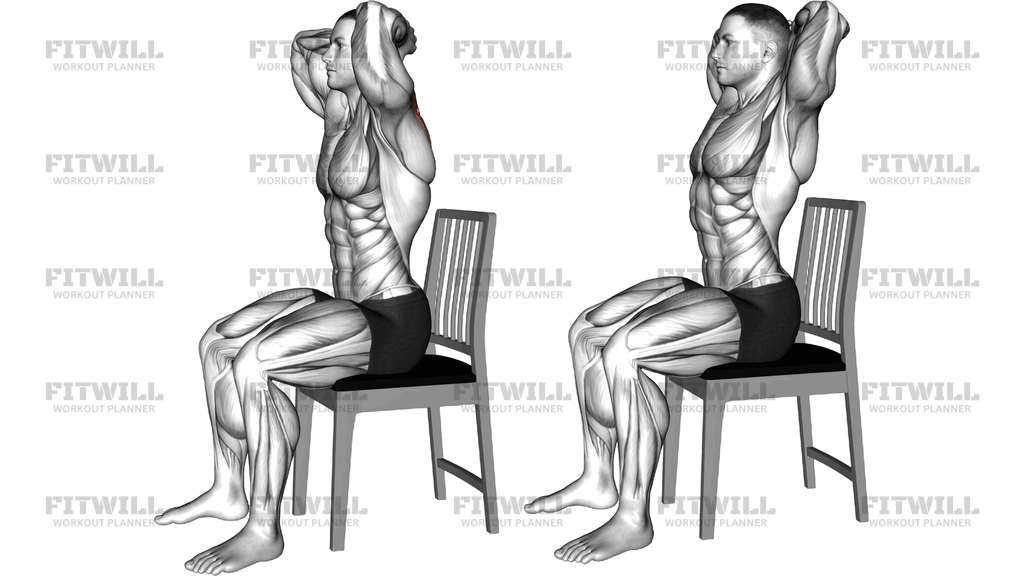
Instructions
- Choose a sturdy, stable chair with a firm backrest and place it on a non-slip surface so it cannot slide as you lean back.
- Sit on the seat toward the front edge with your feet flat on the floor about hip-width apart, knees bent to roughly 90 degrees.
- Position yourself so the top edge of the backrest sits against your back just below the shoulder blades, around the bottom of the ribcage.
- Interlace your fingers and place both hands behind your head to cradle it, keeping your neck relaxed and your gaze forward.
- Brace your core lightly, then slowly lean your upper torso backward, letting your mid-back arch over the backrest edge while your hips stay planted on the seat.
- Continue arching until your elbows open out toward the ceiling and you feel a broad stretch across your chest and abdomen with gentle extension in your upper back.
- Pause for two to three seconds at your end range without letting your head drop back or your lower back take over the arch.
- Exhale as you lean back, then inhale as you raise your torso back up to the upright starting position under control.
- Reset your seat position if you have slid forward, then repeat for the desired number of slow repetitions.
- Stand up carefully when finished, using your legs rather than twisting off the chair while your spine is extended.
Tips & Tricks
- The most common mistake is letting the lower back do all the arching. Keep your hips glued to the seat so the bend happens over the backrest edge at your mid-back, not at the waist.
- Do not pull your head forward or yank on your neck with your hands. The hands are there to support the skull's weight, so keep the pull light and let the torso do the work.
- If the backrest edge digs into your spine, drape a folded towel over the top of the chair or shift slightly higher or lower on the seat until the contact lands on muscle and ribcage rather than bone.
- Never use a chair with wheels or a lightweight folding chair for this exercise; the backward lean shifts weight onto the backrest and can tip an unstable chair.
- If your shoulders feel pinched instead of your chest opening, lower your elbows slightly and shorten the range instead of forcing the arms flat.
- Start with a small arch and add range over several sessions. Forcing a deep backbend on the first try usually produces a lumbar or neck ache rather than a better stretch.
- Move with your breath: exhale into the arch and let the ribcage settle downward slightly at the top instead of holding a big, tense inhale at end range.
- Avoid letting your buttocks slide forward off the seat as you lean back, which turns the movement into a hip hinge and removes the support the chair provides.
- If you feel numbness, tingling, or dizziness when leaning back, come upright immediately and reduce the range or stop; end-range extension is not something to push through symptoms.
Frequently Asked Questions
What muscles does the Sitting Backbend On A Chair work?
The spinal extensors of the mid-back, especially around the thoracic region, do the main work of producing the arch. At the same time, the abs, chest, and front of the shoulders are stretched as the torso extends back over the chair.
Where exactly should the chair backrest contact my back?
Aim for the top edge of the backrest to sit just below your shoulder blades, around the bottom of your ribcage. This lets the mid-back arch over the edge while keeping the stress away from your lower back and neck.
Is the Sitting Backbend On A Chair suitable for beginners?
Yes, it is one of the more accessible back extension drills because the chair supports your body weight. Beginners should simply use a smaller range of motion and build up depth gradually over a few sessions.
Why do I feel this stretch in my lower back instead of my upper back?
That usually means your hips have slid forward on the seat or you are hinging at the waist instead of arching over the backrest edge. Keep your glutes planted and think of lifting the chest as you lean back rather than tipping the whole torso.
Can I do the Sitting Backbend On A Chair every day?
Yes, most people tolerate it daily as a short mobility break, especially if they sit for long periods. Keep the reps and range moderate, and skip it on days when the spine feels irritated rather than stiff.
What kind of chair should I use for this exercise?
A sturdy chair with a firm backrest and no wheels is essential, since the backward lean loads the backrest. Avoid swivel chairs, lightweight folding chairs, and anything with a padded backrest that gives way as you arch.
What can I substitute if I do not have a suitable chair?
A bench without a backrest does not provide the same pivot, but a foam roller placed across the mid-back while lying down offers a similar thoracic extension effect. Standing with hands behind the head and gently arching over a wall corner is another option.
Should my elbows go all the way back during the movement?
Only as far as your shoulder mobility comfortably allows. The elbows opening outward helps the chest lift, but forcing them flat can pinch the shoulders, so let the range come from the spine and stop where the shoulders feel fine.
Is the Sitting Backbend On A Chair safe for people with back problems?
Anyone with a diagnosed spinal condition, recent injury, or persistent pain should ask a healthcare professional before performing end-range backbends. If the exercise is approved, use a shallow range and stop well before any sharp or radiating sensation.
How many repetitions should I perform?
Eight to twelve slow repetitions with a two to three second hold at the top works well as a mobility set. You can repeat that once or twice throughout the day, particularly after long stretches of sitting.