Barbell Butterfly Z Press
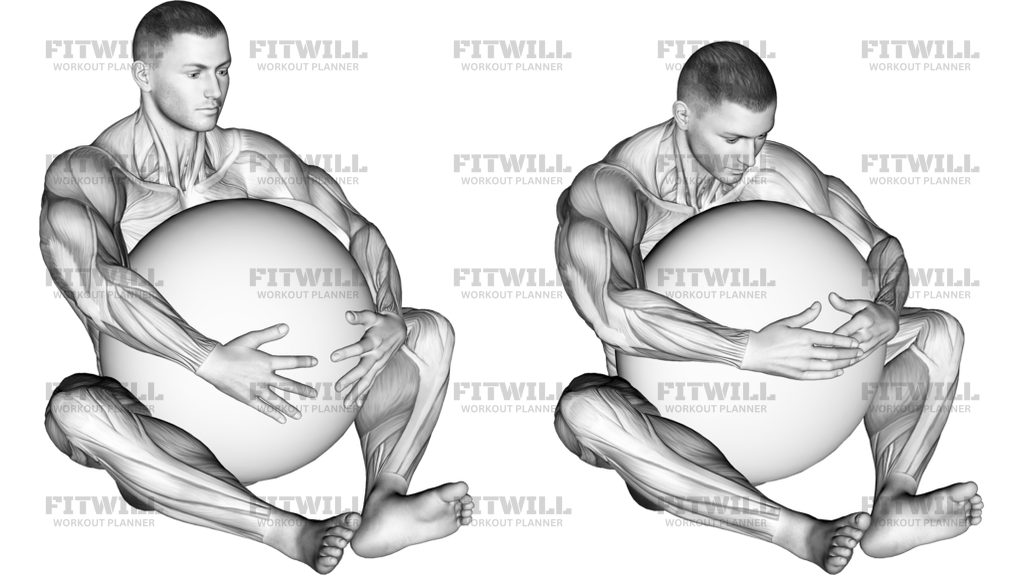
The Barbell Butterfly Z Press is an overhead press performed from a seated position on the floor with the legs crossed in a butterfly position, the soles of the feet drawn together and the knees dropped outward. Because there is no bench or backrest behind you, the only way to keep the bar moving straight overhead is to stay rigid through the trunk, which turns a shoulder exercise into a full-body tension drill. The bar starts at shoulder level with the elbows tucked in front of the torso and is pressed straight up to lockout, then lowered under control back to the shoulders.
This variation suits lifters who already own a solid standing or seated barbell press and want to expose weak points in their overhead mechanics. Without a seat to lean against, the hip flexors, deep core, and upper back have to work for the entire set, so most people immediately notice that the weight they can press standing does not apply here. It is popular in strength and conditioning settings as an accessory for building pressing strength and trunk stiffness, and it also doubles as a hip mobility hold because of the crossed-leg position you maintain throughout.
The primary muscles at work are the front shoulders, with strong assistance from the side shoulders and triceps as the elbows extend toward lockout. The upper chest contributes when the elbows are low and forward at the start of the press. The stabilizing demand is what separates this from a machine or bench press: the abs, hip flexors, and upper back must hold the ribcage down and the spine tall, or the bar path drifts and the press stalls.
Setup matters more here than in most pressing variations. Sit tall with your pelvis vertical, cross your legs and pull your heels toward your groin so your knees can relax toward the floor. The bar should be racked across the front of the shoulders with a grip slightly wider than shoulder width and the forearms roughly vertical under the bar. If you round your lower back or let your chest collapse, you lose the platform you are pressing from, and the movement stops being an overhead press and becomes a low-back strain.
Execution should be deliberate. Press the bar straight up, slightly back so it finishes over the crown of the head, and squeeze the lockout before lowering with the same control. Because you start each rep from a dead stop at the shoulders, there is no stretch reflex to help you, so keep the loads modest at first. Use this movement as a secondary pressing exercise, typically in the 5 to 12 rep range, after your main presses or on days when you want a demanding shoulder and trunk combination with minimal equipment.
[ Workout Log & Planner ]
Put your next workout in Fitwill
Keep your plan and training log ready when you are.


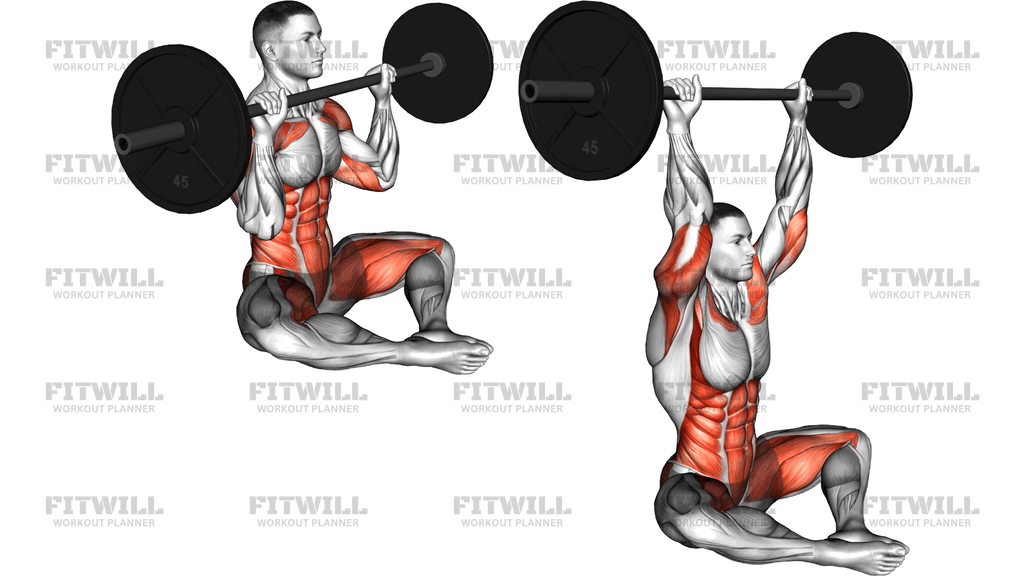
Instructions
- Sit on the floor and cross your legs butterfly style, drawing the soles of your feet together and letting your knees fall outward toward the floor.
- Sit as tall as possible with your pelvis vertical and your weight balanced over your sitting bones, not behind them.
- Rack the barbell across the front of your shoulders with a grip slightly wider than shoulder width and your elbows pointing down and slightly forward so your forearms are vertical.
- Brace your core firmly, pull your ribs down, and squeeze your glutes lightly to lock your pelvis in place before each rep.
- Take a breath into your belly, then press the bar straight up, keeping it close to your face as it travels past your chin.
- Push your head slightly forward under the bar as it passes forehead height so the bar finishes directly over the crown of your head with your elbows locked.
- Pause briefly in the overhead lockout with your arms fully straight and your shoulders engaged.
- Lower the bar under control along the same path back to the front of your shoulders, exhaling on the way down or between reps.
- Come to a complete stop with the bar on your shoulders, re-brace, and reset your posture before starting the next rep.
- When the set is finished, lower the bar safely to the floor in front of you or have a partner take it, then uncross your legs carefully.
Tips & Tricks
- The most common failure in this position is sitting with a rounded lower back. If you cannot sit tall, elevate your hips slightly on a small pad or firm cushion so your pelvis can stay vertical.
- If your knees float high and your torso slouches forward, your hips are too tight to press from this position yet. Work on the butterfly stretch separately before loading it.
- Do not flare your elbows out to the sides at the start of the press; keeping them tucked in front of you keeps the bar path straight and protects the shoulder joints.
- Because each rep starts from a dead stop with no momentum, expect to use far less weight than your standing press. A good starting point is roughly a third to half of your standing press load.
- If the bar drifts forward as you press, it usually means your ribcage is flaring. Exhale before the rep and imagine pulling your belt buckle toward your ribs.
- Keep your head neutral rather than craning your neck back to clear the bar; move the bar around your head, not your head under the bar.
- Warm up the position unloaded or with an empty bar first. Pressing from the floor exposes hip and ankle stiffness that a bench hides.
- Avoid bouncing your hips or rocking backward to help the bar up. If you need to lean back, the weight is too heavy for the trunk demand of this variation.
- Set collars on the bar. Pressing overhead with loose plates shifting on a sleeve is an avoidable risk in an already unstable position.
Frequently Asked Questions
What muscles does the Barbell Butterfly Z Press work?
The front shoulders are the primary movers, supported by the side shoulders and triceps through lockout. The deep core, hip flexors, and upper back work hard to hold your seated posture stable throughout the set.
Why is the Barbell Butterfly Z Press harder than a standing barbell press?
There is no bench or brace behind you, so your trunk has to generate all the rigidity that a seat would normally provide. Starting each rep from a dead stop at the shoulders also removes any stretch reflex.
Can beginners do the Barbell Butterfly Z Press?
Yes, but it should come after they can sit tall with a neutral spine and press an empty bar cleanly overhead. Starting with a very light load or just the bar is the sensible approach, since the trunk demand is high relative to the pressing load.
How does the butterfly leg position affect the lift?
Crossing the legs with the soles together opens the hips and removes the wide base a straight-leg Z Press gives you. This makes balance and trunk control harder, and it demands enough hip mobility to keep your torso upright.
What is the most common mistake in the Barbell Butterfly Z Press?
Slouching or leaning backward as the bar gets heavy, which turns the press into a lower-back loading problem. Fix it by bracing hard, keeping your ribs down, and reducing the weight until your torso stays still.
What can I substitute if I cannot sit in the butterfly position comfortably?
A standard Z Press with the legs extended straight, or a seated dumbbell press on a bench, trains the shoulders similarly. You can also prop your hips on a low pad to make the crossed-leg position more reachable.
How heavy should I go on the Barbell Butterfly Z Press?
Keep the load light enough that your torso never leans back and the bar path stays straight. This works best as a moderate-weight accessory in the 5 to 12 rep range rather than a max-effort lift.
Should the bar touch my shoulders between every rep?
Yes, let the bar settle fully on the front of your shoulders and re-brace before each press. This dead-stop start is what builds the strict pressing strength the exercise is known for.
Where should the bar finish at the top of the Barbell Butterfly Z Press?
Directly over the crown of your head with your elbows fully locked and the bar stacked over your wrists, shoulders, and hips. Finishing with the bar out in front means the lockout is incomplete and your balance will suffer.
Is the Barbell Butterfly Z Press safe for the lower back?
It is safe when your spine stays neutral and the load stays honest, but pressing from the floor punishes poor posture more than a bench press does. If you feel the work shifting into your lower back, drop the weight or choose a supported seated press instead.