Seated Shoulder Stretch On A Chair
The Seated Shoulder Stretch On A Chair is a cross-body stretch that targets the muscles around the back of the shoulder, particularly the rear deltoid and the small muscles that stabilize the shoulder blade. You sit upright on a chair with your feet flat on the floor, draw one arm straight across your chest at shoulder height, and use the opposite hand to gently pull the arm closer to your torso. The chair simply gives you a stable, supported seat so your torso stays quiet and the stretch stays focused on the shoulder itself.
This stretch is especially useful for anyone who spends long hours at a desk, drives frequently, or does a lot of pressing work in training, since those habits leave the rear shoulder and upper back area tight and restricted. Office workers, gym-goers warming up for upper body sessions, and people cooling down after shoulder or chest exercises all benefit from keeping it on hand. Because it is performed seated, it is also a good low-effort option for older adults or anyone recovering general mobility who may not want to stretch standing up.
Setup matters more than most people expect. Sitting tall with your ribs stacked over your hips keeps the spine neutral, which prevents you from rotating your trunk to fake extra range. The arm you are stretching should stay roughly parallel to the floor and be pulled straight across the chest, not angled up toward the throat or dropped down toward the waist. The pull should come from the hand on the upper arm or elbow, applied gently, rather than a yank at the wrist.
To execute it well, sit on the front half of the chair with both feet planted and your spine tall. Extend your right arm across your body at shoulder height, then hook your left hand just above or below the right elbow. Exhale and draw the arm toward your chest until you feel a clear stretch through the back of the right shoulder. Hold there, breathing steadily, without letting the shoulder creep up toward the ear. Release slowly, then switch sides and repeat on the left arm for an even stretch.
A few practical points keep this stretch safe and effective. The sensation should be a mild to moderate pull in the muscle, never a sharp or pinching feeling at the front or top of the shoulder. Keep the neck relaxed and the shoulders down away from the ears throughout the hold. If you have any recent shoulder injury, a history of dislocation, or nerve symptoms like tingling into the arm, reduce the intensity substantially or check with a qualified professional before loading the joint into this position.
Used consistently, one or two rounds of 20 to 40 seconds per side can make a noticeable difference in how freely the shoulders move before pressing, pulling, or overhead work. It also works well as a short reset during a long day of sitting, since it takes less than two minutes and requires nothing more than a sturdy chair.
[ Workout Log & Planner ]
Put your next workout in Fitwill
Keep your plan and training log ready when you are.


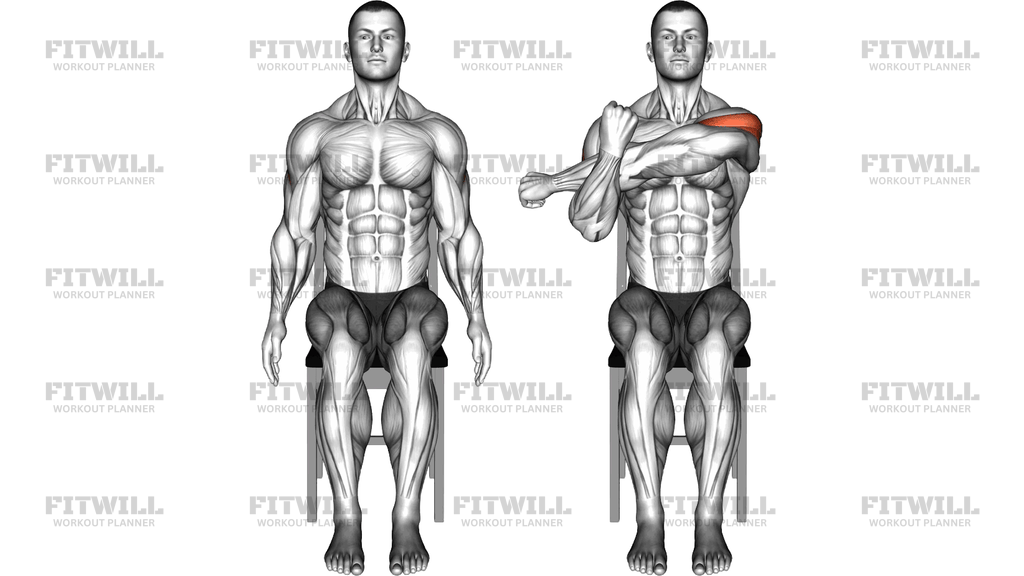
Instructions
- Sit on the front half of a sturdy, armless chair with both feet flat on the floor, hip-width apart.
- Sit up tall, stack your ribs over your hips, and let both shoulders relax down away from your ears.
- Raise your right arm to shoulder height and bring it straight across the front of your chest, thumb pointing down.
- Reach your left hand across and grip just above or just below the right elbow, avoiding the elbow joint itself.
- Keep your torso square to the front and exhale as you gently draw the right arm closer to your chest.
- Stop at the point where you feel a clear stretch through the back of the right shoulder, and hold for 20 to 40 seconds while breathing calmly.
- Make sure the stretching arm stays around shoulder height and does not climb toward your throat or sink toward your waist.
- Release the grip slowly and let the right arm return to your side before switching sides.
- Repeat the same steps with your left arm across the chest, using the right hand to pull, and aim for one or two rounds per side.
Tips & Tricks
- Do not shrug the stretching shoulder toward the ear as you pull in; that shortens the very muscles you are trying to lengthen, so consciously press the shoulder down first.
- Avoid gripping directly on the elbow joint. Place your hand just above or below it so the pressure goes into the upper arm bone instead of stressing the joint.
- If you feel pinching at the top of the shoulder, slightly lower the arm below shoulder height and rotate the thumb down more, which usually clears the pinch.
- Keep your hips square and resist the temptation to rotate the trunk toward the stretching arm; rotating steals range from the shoulder and twists the lower back.
- Bend the elbow of the stretching arm only slightly. Fully straightening it or cranking it hard across the body shifts tension into the elbow instead of the shoulder.
- Breathe out as you deepen the pull rather than holding your breath; exhaling lets the muscle relax into the stretch instead of guarding against it.
- Use a chair with a back you can lightly touch with your shoulder blades if you find yourself slouching forward, but do not lean your full weight back against it.
- For a stronger version, tuck the chin slightly and keep the stretching arm lower, which lengthens the upper trap along with the rear shoulder.
- Never bounce or pulse at the end range. The chair position makes it easy to over-pull with the hand, so treat the pull as a slow, steady draw.
Frequently Asked Questions
Which muscles does the Seated Shoulder Stretch On A Chair target?
It primarily targets the rear deltoid on the back of the stretching shoulder, along with the rotator cuff muscles and the upper traps and rhomboids around the shoulder blade. The chair setup keeps the torso still so the tension stays concentrated in that shoulder area.
How long should I hold the Seated Shoulder Stretch On A Chair?
Hold each side for 20 to 40 seconds and repeat once or twice per arm. If you are using it after a workout, longer holds of 30 to 45 seconds tend to feel more productive.
Can beginners do this stretch on a chair?
Yes, it is one of the most beginner-friendly shoulder stretches because the chair supports your posture and the intensity is fully controlled by how hard you pull. Start with a light pull and only deepen it as the muscle relaxes.
Why should the arm stay at shoulder height during the Seated Shoulder Stretch On A Chair?
Holding the arm at shoulder height keeps the pull aligned with the fibers of the rear shoulder, which is where the stretch should be felt. Angling the arm up toward the throat or down toward the waist changes the line of pull and can create pinching at the joint.
What is the most common mistake with this stretch?
The most common mistake is shrugging the stretching shoulder up toward the ear while pulling, which protects the tight muscle from actually being lengthened. Another frequent error is yanking at the wrist or elbow joint instead of applying steady pressure on the upper arm.
Can I do the Seated Shoulder Stretch On A Chair standing instead?
You can perform the same cross-body stretch standing, but the seated version removes balance demands and makes it easier to keep the trunk square. If you stand, keep the feet shoulder-width apart and be extra careful not to rotate the torso.
Is this stretch good before a shoulder workout?
It works well as part of a warm-up when held for shorter periods of about 15 to 20 seconds, especially before pressing or overhead movements. For longer, deeper holds, it is generally better suited to after training or as a separate flexibility session.
Should I feel the stretch in my chest or upper arm?
The main sensation should be through the back of the shoulder, though some people also feel it along the upper arm or behind the shoulder blade. If you feel sharp pain, tingling, or numbness down the arm, ease off immediately rather than pushing through.
Is the Seated Shoulder Stretch On A Chair safe after a shoulder injury?
If you have a recent strain, rotator cuff issue, or history of shoulder dislocation, keep the pull very light and stop short of any pinching or pain. It is wise to get clearance from a doctor or physical therapist before adding this position to your routine.