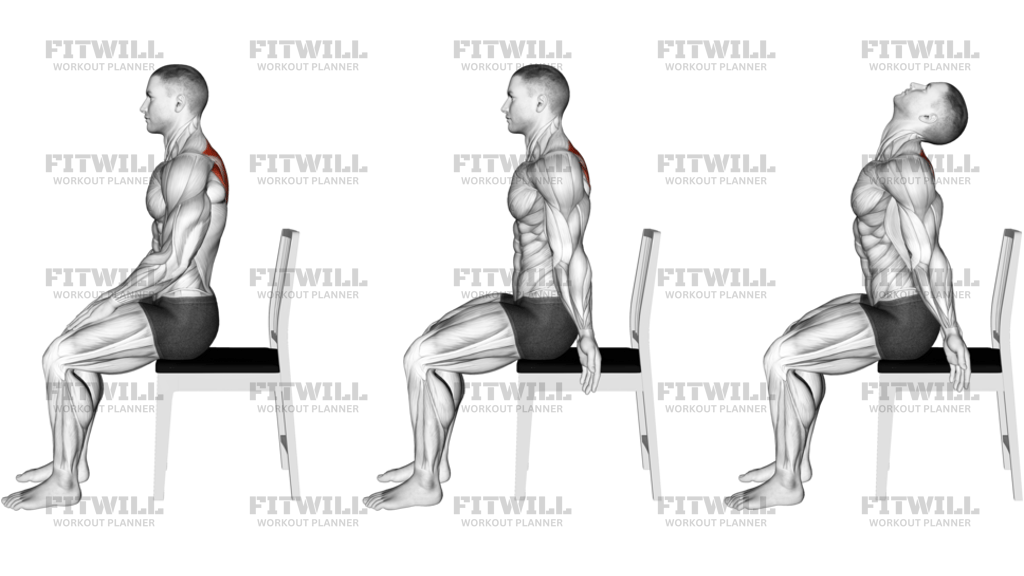
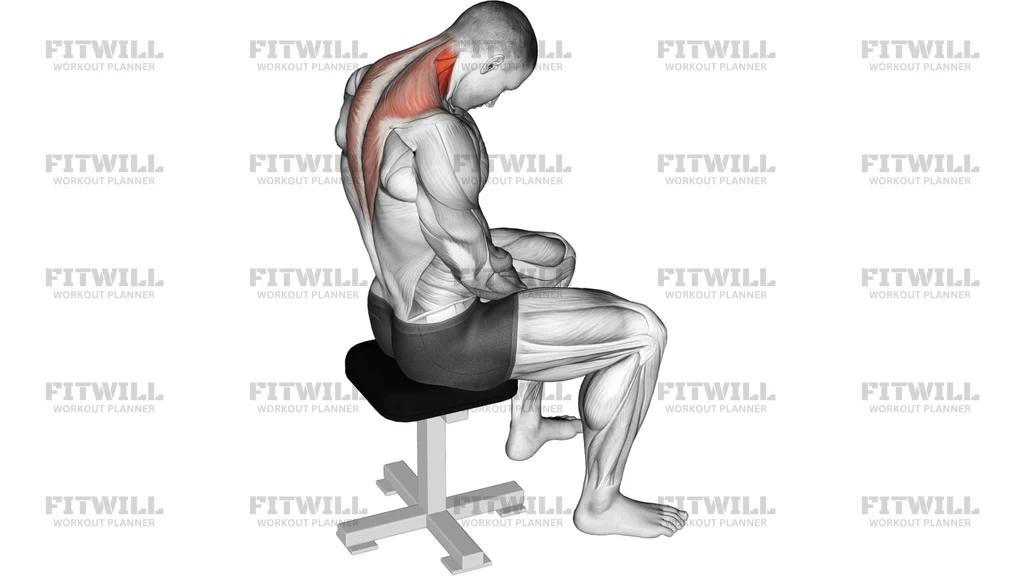
Seated Lateral Neck Stretch On A Chair
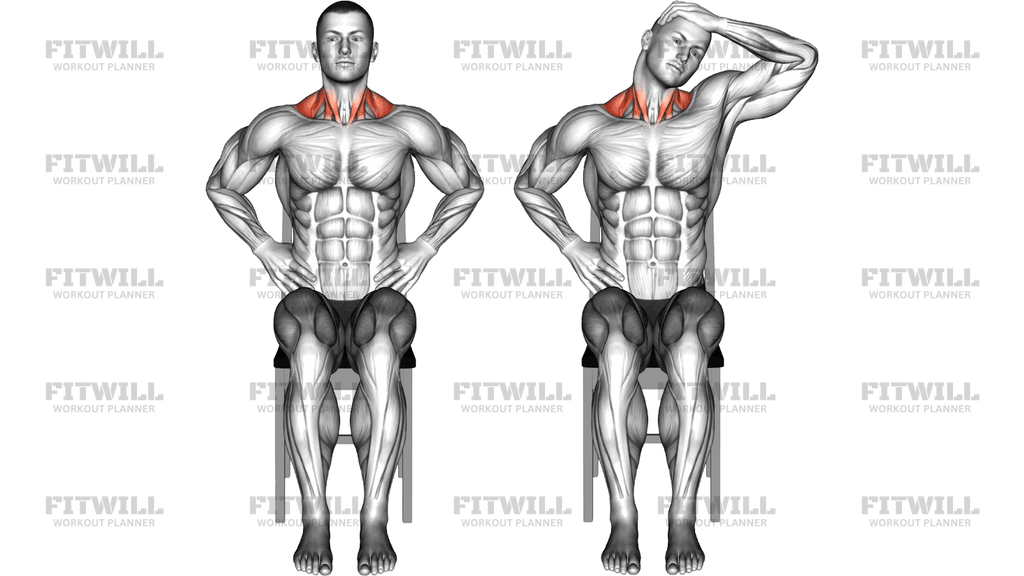
The Seated Lateral Neck Stretch On A Chair is a simple, targeted stretch for the side of the neck and the top of the shoulder, most notably the upper trapezius and the levator scapulae. You sit upright on a chair, anchor one hand on your hip or the seat for stability, and use the opposite hand to gently guide your head sideways so your ear travels toward the same-side shoulder. The tension you feel running down the opposite side of the neck, across the top of the shoulder, and sometimes up behind the ear is exactly the tissue this stretch is meant to reach.
This stretch is one of the most practical additions to a desk worker's routine. Long hours at a computer with the head drifted forward and shoulders hunched leave the upper trapezius and levator scapulae chronically shortened and tender on one or both sides. It is equally useful after heavy upper-body training days, when the traps have taken a beating from shrugs, carries, overhead pressing, or deadlifts, and it can be a calm way to wind down before bed because it requires no equipment beyond a chair and very little space.
The seated setup matters more than most people realize. Sitting on a chair with both feet flat on the floor pins the torso so it cannot lean or rotate away from the stretch, which forces the movement to come from the neck itself. When you stand or slouch, the shoulders rise and the rib cage collapses, and you end up stretching a shorter range while recruiting muscles you were trying to relax. Sitting tall with a long spine keeps the shoulder blade on the stretching side depressed, which is what truly lengthens the upper fibers of the trapezius.
To execute it well, the guiding hand should rest on the head rather than pull aggressively. Place it over the temple area or lightly across the top of the head, and let the weight of your arm do most of the work as your chin stays roughly level and your head tilts purely sideways. Avoid dragging the head forward or twisting it, since that changes which fibers you target and can irritate the cervical joints. The free hand pressing gently down on the opposite hip or bracing against the seat edge helps keep that shoulder sunk, deepening the stretch without extra force.
Keep the intensity honest: a mild to moderate pull along the side of the neck is the goal, never pain, tingling, or dizziness. Hold each side for 20 to 30 seconds with slow breathing, and repeat two to three times per side. Because the neck is a mobile, sensitive area, treat this stretch as something you ease into daily rather than force, and skip it entirely if you have a recent neck injury, numbness into the arm, or a headache that worsens with the position.
[ Workout Log & Planner ]
Put your next workout in Fitwill
Keep your plan and training log ready when you are.


Instructions
- Sit sideways-neutral on a sturdy chair with both feet flat on the floor, about hip-width apart, and sit tall through the spine as if a string were lifting the crown of your head.
- Rest your left hand on your left hip or press it lightly against the side of the seat to anchor that shoulder down; this is the side that will stretch.
- Brace your core lightly and settle your shoulders so both sit level before you begin; avoid hunching either one toward the ears.
- Take your right hand and place it over the left side of your head, with the palm resting near the temple and the fingers relaxed across the top of the head.
- Slowly let your right arm guide your head so your left ear tilts toward your left shoulder, keeping your chin level and your face pointing forward rather than twisting.
- Once you feel a steady pull down the right side of your neck and across the top of the right shoulder, ease off slightly to a comfortable intensity and hold.
- Breathe slowly through your nose, letting each exhale soften the area; with every breath or two, you may allow a few extra degrees of tilt if the tension permits.
- Keep the right shoulder actively sunk away from the right ear throughout the hold, since letting it creep upward shortens the muscle you are trying to lengthen.
- After 20 to 30 seconds, use your right hand to support your head as you return it to center under control, then release the arm.
- Reset your posture, switch hands, and repeat on the other side, aiming for two to three holds per side.
Tips & Tricks
- The most common mistake is yanking the head over with the hand. Rest the hand on the head and let gravity and arm weight do the work; pulling hard can strain the small cervical muscles instead of stretching the trapezius.
- If you feel the stretch mostly behind your ear rather than on top of your shoulder, your head is tilting with a slight rotation. Keep your nose pointing straight ahead and your chin level to bias the upper trapezius.
- A rising shoulder on the stretching side is the giveaway of a wasted hold. Press that hand firmly into your hip or the seat edge the entire time to keep the shoulder blade depressed.
- If tilting feels pinchy at the front of the neck, add a tiny nod of the chin downward, which opens the back of the neck and shifts the pull toward the upper trap and levator scapulae.
- Do not jut the chin forward as you tilt. A forward jutting head changes the line of stretch and loads the front of the cervical spine; think of the ear traveling along an arc straight over to the shoulder.
- Warm the area first if you are stiff, such as after sitting all day. A few slow shoulder rolls or gentle head turns before the hold make the stretch far more comfortable.
- Breathe out during the tilt itself. Holding your breath tenses the neck reflexively and will cap your range no matter how long you hold.
- For a slightly stronger version without more hand pressure, add a gentle self-resist: press your head lightly into your own hand for five seconds, relax, and then ease a little deeper into the tilt.
- If one side is noticeably tighter, do the tight side first and give it one extra hold, but still stretch both sides to keep balance across the neck.
Frequently Asked Questions
Which muscles does the Seated Lateral Neck Stretch On A Chair target?
The main targets are the upper trapezius and levator scapulae on the side opposite the tilt, with some involvement of the scalenes and other small lateral neck muscles. Keeping the shoulder depressed is what makes the upper trapezius the primary felt stretch.
Can I do the Seated Lateral Neck Stretch On A Chair at my desk during the workday?
Yes, and that is one of its best uses. Any stable chair works, and a 20 to 30 second hold per side every hour or two can counteract the desk posture that tightens the top of the shoulders.
Why does the guiding hand go on top of the head instead of pulling harder?
The neck responds poorly to aggressive force, so the hand should simply guide the tilt and add gentle weight. Firm pulling recruits the very muscles you are trying to relax and can strain the cervical joints.
What is the most common mistake in this stretch?
Letting the shoulder on the stretching side ride up toward the ear, which shortens the upper trapezius and erases most of the stretch. Anchor that hand on your hip or the seat and keep the shoulder actively sunk.
How long should I hold the Seated Lateral Neck Stretch On A Chair?
Aim for 20 to 30 seconds per side, repeated two to three times, breathing slowly throughout. Shorter holds are fine when you are just loosening up between tasks.
Can beginners do this stretch safely?
Yes, it is beginner friendly because the range is small and self-regulated. Start with almost no hand pressure, tilt only until you feel a mild pull, and build the hold time gradually over the first week or two.
What can I use if I do not have a chair available?
Any stable seat such as a bench or the edge of a bed works the same way. The key is having your torso supported and your feet planted so the torso cannot sway while your head tilts.
Should I feel anything down the arm during the stretch?
No. Tingling, numbness, or pain radiating into the arm or hand means a nerve is being irritated, so ease out of the tilt immediately and reduce the range. If it recurs at even mild angles, skip this stretch and consult a professional.
Is it normal for one side of my neck to feel much tighter than the other?
Yes, most people have a tighter side from sleeping position, carrying bags, or how they sit at a screen. Stretch both sides, but give the tighter side an extra hold and expect the difference to shrink with consistent daily practice.
When is the best time to do the Seated Lateral Neck Stretch On A Chair?
It works well as a daily mobility break, as part of a warm-up before shoulder or upper-body training, and in a cool-down after sessions that load the traps. Avoid forcing it right after a hard set when the muscles are fatigued and guarded.