Dumbbell Seated Shoulder Press Parallel Grip
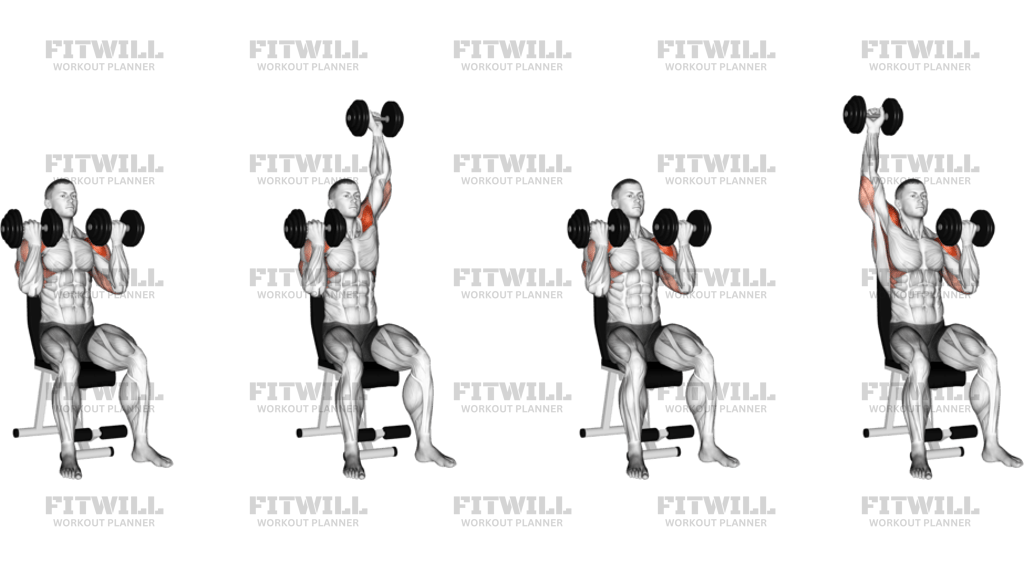
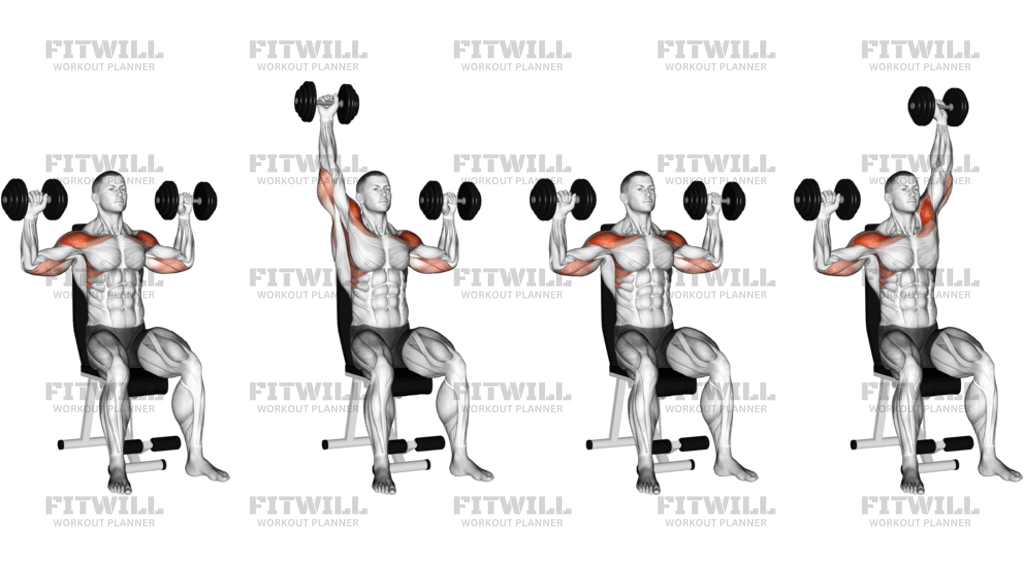
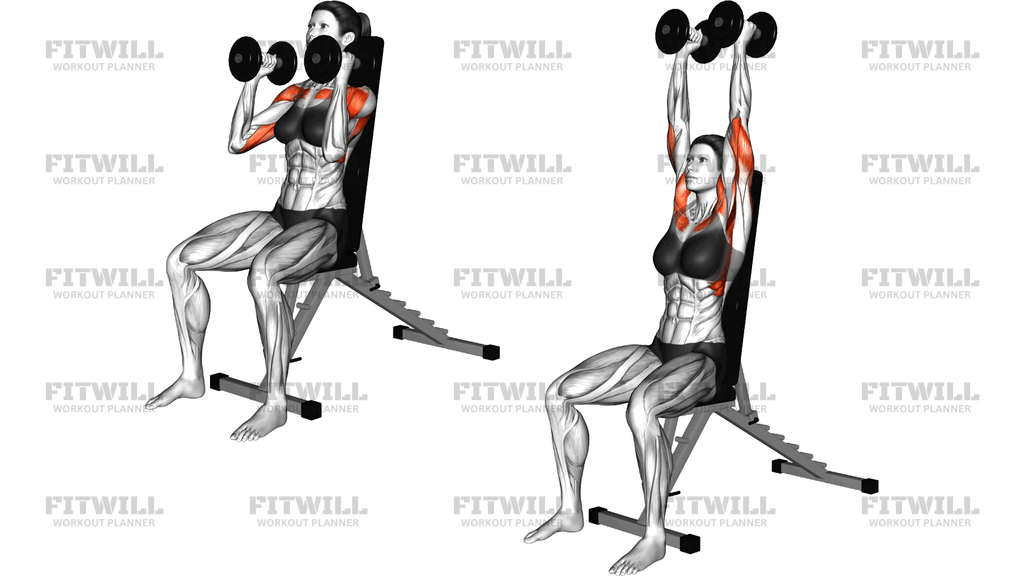
Dumbbell Seated Shoulder Press Parallel Grip is a seated overhead pressing exercise that uses a pair of dumbbells and a back-supported bench to train the shoulders in a strict, upright position. The neutral, palms-facing grip keeps the elbows in a friendlier path for many lifters and makes it easier to press smoothly without flaring the ribs or turning the movement into a standing push.
The seat and back support matter because they remove most of the lower-body drive and make the shoulders do the work. With your torso fixed against the pad, each rep becomes a cleaner test of pressing strength, shoulder control, and scapular upward rotation. That makes this variation useful for building overhead strength when you want less momentum and more precision than a standing press.
A good Dumbbell Seated Shoulder Press Parallel Grip rep starts with the dumbbells stacked beside the shoulders, forearms vertical, and wrists neutral. From there, press the weights slightly up and in until the arms finish overhead without smashing the bells together or shrugging hard into the ears. On the way down, bring the dumbbells back to shoulder level under control and stop before the elbows drop too far behind the torso.
Because the bench removes a lot of cheating, this movement is easy to expose quickly if the load is too heavy. Keep the chest tall, the ribcage controlled, and the neck long so the press stays in the shoulders instead of becoming a lower-back arch or a neck-driven shrug. Lifters who press comfortably with a neutral grip often find this version easier on the shoulders than a wide-pronated dumbbell press, especially when training volume is high.
Use Dumbbell Seated Shoulder Press Parallel Grip as a main shoulder builder, an accessory after chest work, or a controlled strength movement in an upper-body session. It is also a practical option for lifters who want overhead pressing volume without a barbell or who need a more shoulder-friendly hand position. The best reps look smooth and repeatable: no leg drive, no bouncing off the bottom, and no drifting elbows that turn the dumbbells into a wobbling path.
[ Workout Log & Planner ]
Put your next workout in Fitwill
Keep your plan and training log ready when you are.


Instructions
- Set an incline or upright bench with back support, then sit tall with both feet flat and your hips and upper back firmly planted against the pad.
- Hold a dumbbell in each hand at shoulder height with your palms facing each other, wrists straight, and elbows slightly in front of your torso.
- Draw your ribs down and lightly brace your abdomen before you press so your lower back stays quiet.
- Press both dumbbells upward in a smooth line, bringing them slightly inward as they rise until your arms are straight overhead.
- Keep the dumbbells close enough that they stay balanced over your shoulders, but do not crash them together at the top.
- Lower the weights back to shoulder level under control, stopping when your upper arms are just below parallel to the floor.
- Keep your forearms vertical and your elbows tracking under the dumbbells on every rep so the load stays stacked over the joints.
- Breathe out as you press up and inhale as you lower, keeping the torso steady instead of leaning back to finish the rep.
- When the set is done, lower both dumbbells to your thighs before standing up or racking them safely.
Tips & Tricks
- A neutral grip usually feels kinder on the shoulders than a palms-forward press, especially if overhead work has irritated the front of the joint before.
- If your lower back arches hard at the top, the dumbbells are too heavy or your bench angle is too upright for your current control.
- Stop the descent when the dumbbells reach shoulder height; dropping lower often turns the bottom position into a front-delt rest and loosens your setup.
- Keep the elbows slightly forward of the shoulders instead of flaring them straight out to the sides, which can jam the press path.
- Press in the same plane on both sides; if one dumbbell drifts forward, the rep is usually too heavy or one shoulder is losing position.
- Do not lock the bells together overhead unless your anatomy naturally allows it; finishing with the weights stacked over the shoulders is enough.
- A slower lowering phase helps keep tension on the delts and makes it easier to spot when your shoulder position starts to drift.
- If the bench has a tall back pad, keep the head neutral instead of craning forward to watch the dumbbells.
- Choose a load that lets you keep the wrists straight; bent wrists usually show that the dumbbells are too far back in the hand or the set is too heavy.
Frequently Asked Questions
What does Dumbbell Seated Shoulder Press Parallel Grip train most?
It mainly targets the shoulders, especially the front and side delts, with the triceps helping to finish the press.
Why use a parallel grip for the dumbbells?
The palms-facing grip keeps the elbows in a more natural path for many lifters and often feels smoother than a fully pronated press.
How low should I bring the dumbbells on each rep?
Lower them until they are about level with your shoulders and your forearms stay close to vertical. Going much lower often shifts tension away from the pressing muscles.
Is Dumbbell Seated Shoulder Press Parallel Grip beginner-friendly?
Yes, if you use light dumbbells and keep your back against the pad. Beginners should focus on smooth reps without leaning back or bouncing the weights.
What is the most common mistake on this exercise?
The biggest mistake is turning it into a standing lean-back press by arching the lower back and driving the dumbbells upward with momentum.
Should the dumbbells touch at the top?
They can come close, but they do not need to touch. Finishing with the bells stacked over your shoulders is enough and often keeps the shoulders more stable.
Can I substitute this for a barbell overhead press?
Yes, it is a solid single-joint alternative when you want a more shoulder-friendly hand position or need less load than a barbell press.
Why does my neck or upper traps take over?
That usually happens when the load is too heavy or the ribcage pops up. Keep the chest tall but the ribs controlled so the shoulders press without shrugging aggressively.