Resistance Band Seated Straight Back Row
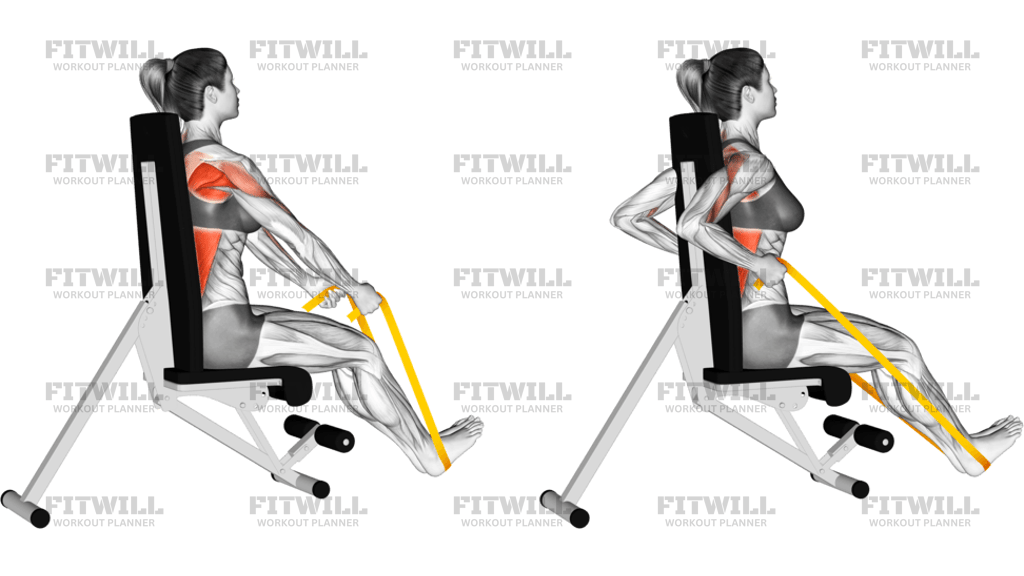
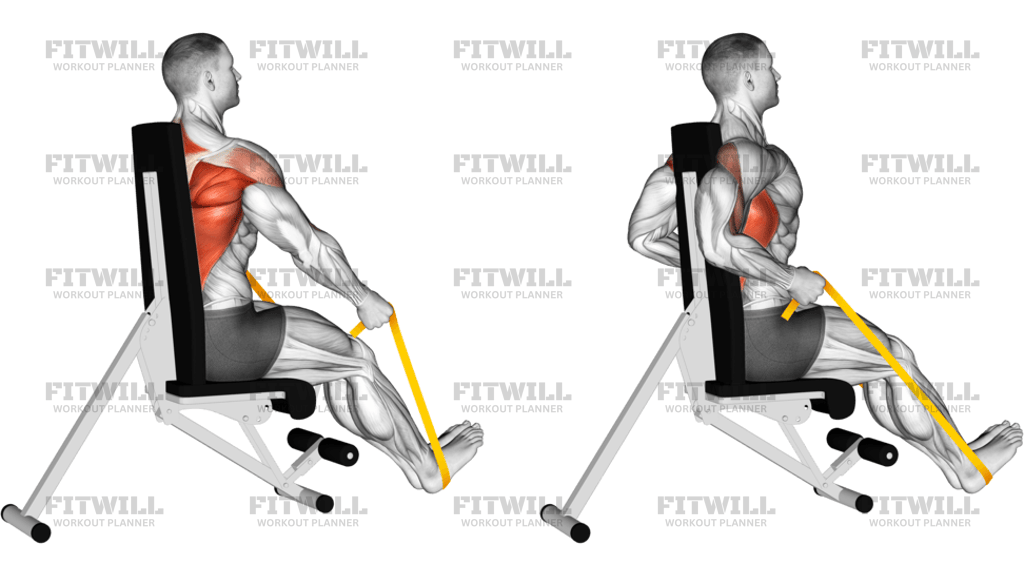
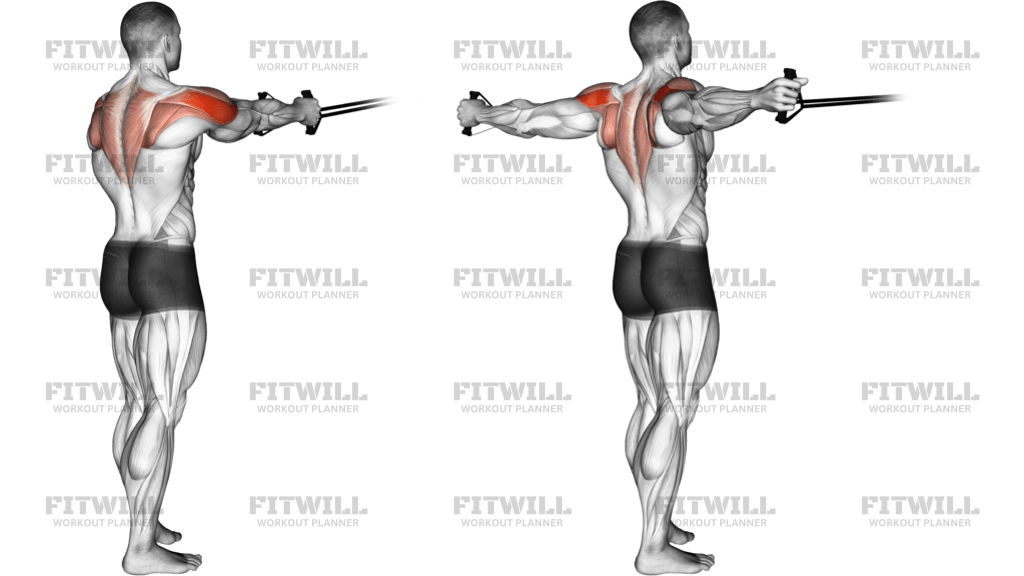
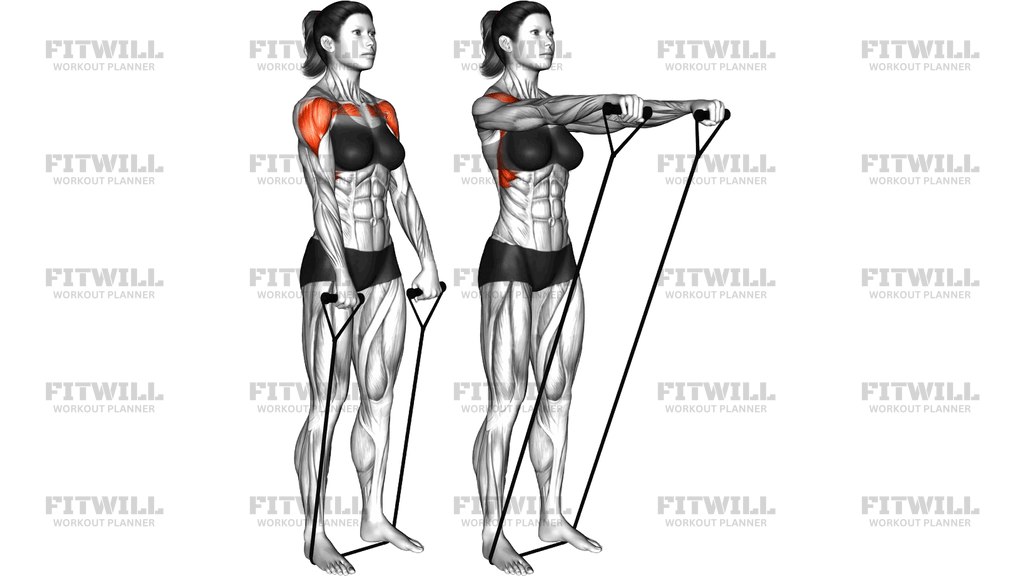
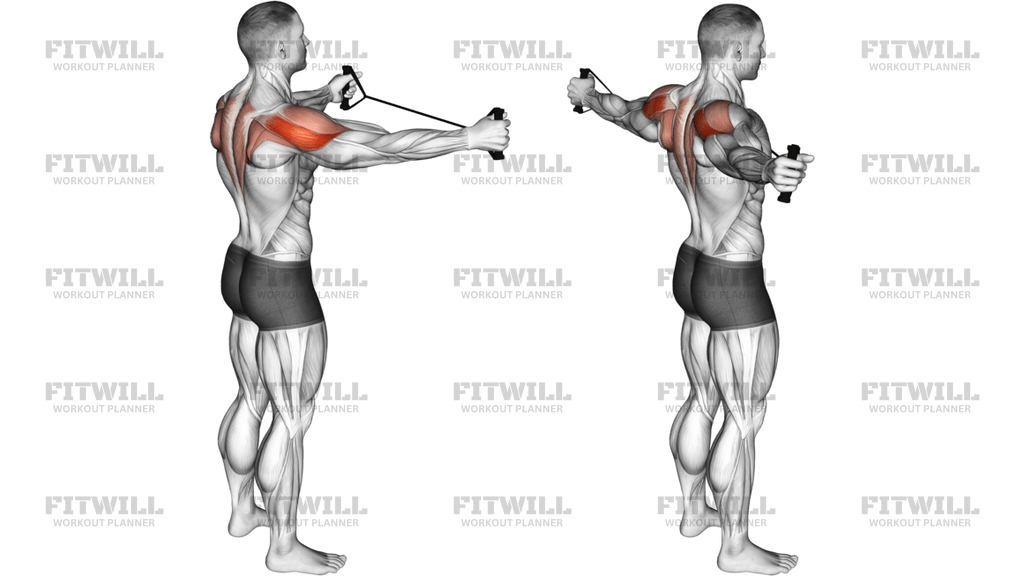
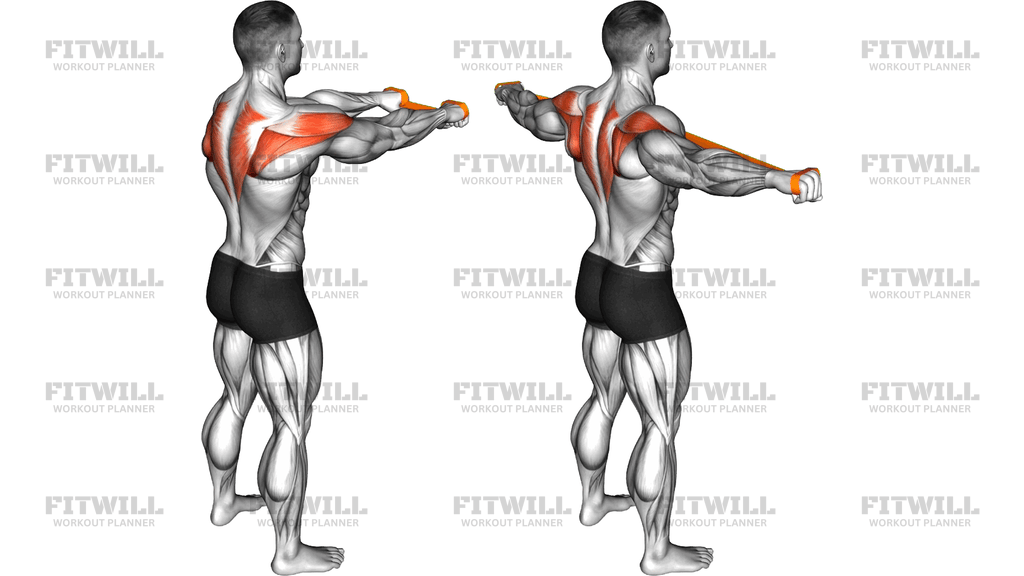
Resistance Band Seated Straight Back Row is a seated rowing exercise that trains the upper back with the torso held tall and the chest supported or kept upright throughout the set. It is useful when you want the pulling pattern of a row without the body English that often shows up in standing or bent-over versions. Because the image shows a strict seated position with the shoulders working from a stable base, the exercise is best approached as a controlled back-builder rather than a fast conditioning movement.
The main emphasis falls on the traps, with the rhomboids, lats, rear shoulders, and biceps assisting as the band is pulled back. In practical training terms, Resistance Band Seated Straight Back Row helps reinforce scapular retraction and shoulder control while still asking the arms to finish the pull cleanly. That makes it a solid choice for improving posture, balancing pressing work, or adding moderate-volume back work when you want less lower-back fatigue than a hinge-based row.
The setup matters more here than people expect. Sit far enough from the anchor that the band starts with tension, then keep the ribcage stacked over the pelvis instead of leaning back to chase range. If your station includes a back pad, keep your upper back tall against it so the pull comes from the shoulders and elbows instead of from rocking the torso. A neutral wrist and steady shoulder position help the band track smoothly into the body instead of drifting upward toward the neck.
During each repetition, pull the elbows back and slightly down until the hands reach the lower ribs or waistline, then squeeze the shoulder blades together without shrugging. The return should be slow and deliberate so the band keeps tension on the upper back instead of snapping the arms forward. Exhale during the pull and inhale as the arms lengthen, but keep the chest lifted and the neck relaxed so the breathing rhythm does not turn into torso sway.
Resistance Band Seated Straight Back Row fits well in accessory work, warm-ups, rehab-style strength sessions, or higher-rep back training where you want a repeatable path and a clean contraction. It is also a good option for beginners who need a lower-load row that teaches body position before moving to heavier cables or dumbbells. The best reps are the ones that stay strict from the first pull to the last, with no jerking, no collapsing through the shoulders, and no loss of upright posture.
[ Workout Log & Planner ]
Put your next workout in Fitwill
Keep your plan and training log ready when you are.


Instructions
- Sit on the bench or machine seat with the band anchored in front of you at low to mid-torso height and the handles or band ends in both hands.
- Plant your feet firmly on the floor or foot plate, keep your knees soft, and sit tall with your chest lifted and your lower back neutral.
- If there is a back pad, keep your upper back lightly in contact with it so your torso stays straight and does not rock as you row.
- Start with your arms extended toward the anchor, shoulders down, and wrists stacked in line with your forearms.
- Pull the elbows back and slightly down until the handles reach your lower ribs or waistline.
- Squeeze your shoulder blades together at the end of the pull without leaning back or shrugging your shoulders.
- Pause for a brief second in the contracted position, then return the band forward under control until your arms are long again.
- Inhale as you reach forward and exhale as you row, keeping the same upright torso position on every rep.
Tips & Tricks
- Choose a band that lets you finish the pull with the elbows just behind the torso, not by yanking the shoulders toward the ears.
- If the band starts too light, scoot farther from the anchor; if it starts too heavy, move closer so the first inch of the pull is smooth.
- Keep the chest tall against the support instead of arching away from it, because the straight-back position is what keeps the row strict.
- Think about driving the elbows back rather than pulling with the hands; the hands should simply follow the elbow path.
- Stop the set if your shoulders start rolling forward at the stretch, since that usually means the band is too heavy or the anchor is too far away.
- A brief squeeze at the back is more useful than a long hold if your neck starts tightening on the top position.
- Keep the wrists neutral so the band does not bend them back as the pull gets harder.
- Use a slower return than pull if you want more upper-back tension and less momentum on the next rep.
Frequently Asked Questions
What muscles does Resistance Band Seated Straight Back Row work most?
It mainly targets the traps and upper back, with the rhomboids, lats, rear shoulders, and biceps helping during the pull.
How should I sit for Resistance Band Seated Straight Back Row?
Sit tall on the seat with your feet planted and your torso upright against the support, if there is one. The goal is to row without leaning back.
Where should the band or handles finish on each rep?
They should finish around the lower ribs or waistline. If the handles drift up toward your chest, you are likely shrugging instead of finishing the row with the back.
Can beginners do Resistance Band Seated Straight Back Row?
Yes. It is beginner-friendly when the band is light enough to keep the torso still and the shoulders relaxed.
Why is the straight-back position important?
It removes extra swing from the torso and shifts the work to the upper back. That makes each rep cleaner and easier to repeat with the same tension.
What if my neck or upper traps take over?
Lower the resistance and keep your shoulders away from your ears. The row should feel like the shoulder blades moving back, not like a shrug.
Is this a good substitute for a cable row?
Yes, if the anchor height and pulling path are similar. A band version usually feels smoother and lighter at the start of the rep.
What is the most common mistake on this exercise?
Leaning back to fake a bigger pull is the biggest one. Keep the ribs stacked and let the elbows travel, not the torso.