Dumbbell Lying One-Arm Rear Lateral Raise
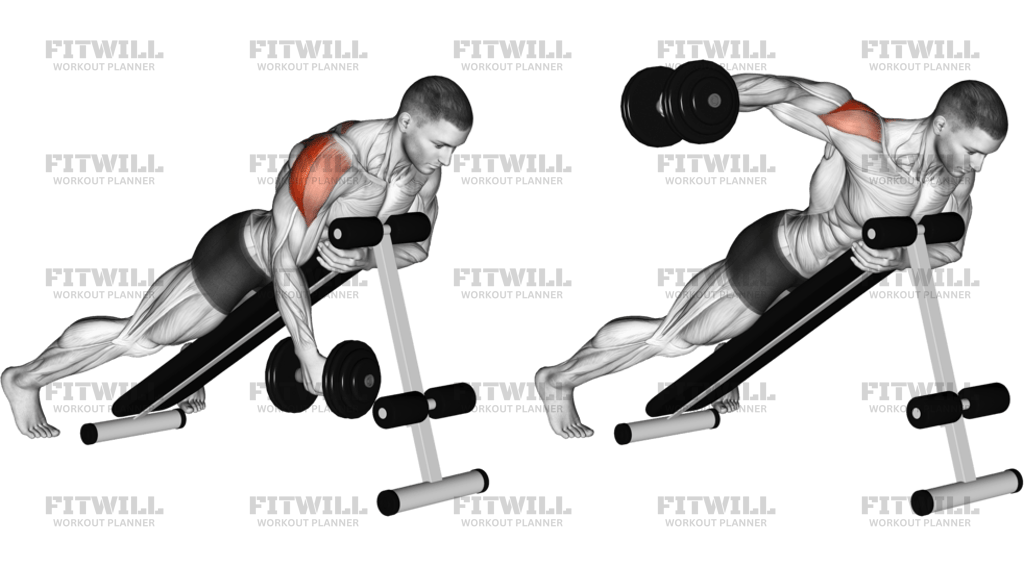
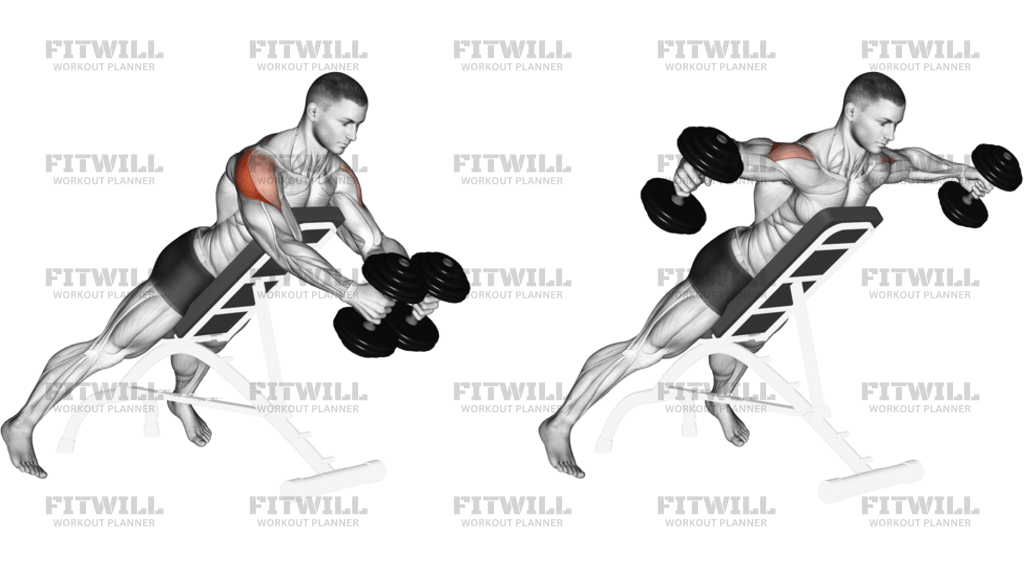
Dumbbell Lying One-Arm Rear Lateral Raise is a chest-supported rear-shoulder isolation exercise performed on an incline bench with one dumbbell. Lying face down removes most of the torso swing that can hide weak rear-delt work, so the shoulder has to create the lift while the upper back keeps the joint organized. It is a useful choice when you want cleaner tension on the rear deltoid than you get from standing swings or unsupported bent-over raises.
The setup is the main reason this variation works well. The bench should be angled so the chest and ribs are supported while the working arm can hang freely toward the floor. One hand stays on the bench for balance, the feet press into the floor, and the spine stays quiet so the arm can move without the body helping. If the bench is too steep, the movement turns into a shrug; if it is too flat, the shoulder often loses a clean line of pull.
Each repetition starts with the dumbbell hanging under the shoulder and the elbow kept softly bent. The lift should travel in a wide arc out and back, led by the elbow rather than the hand. The dumbbell rises until the upper arm is close to shoulder height or until the rear delt stops working cleanly. From there, lower the weight slowly and under control until the arm is fully loaded again at the bottom.
This exercise mainly targets the rear delts, with the mid traps, rhomboids, and triceps helping to stabilize the shoulder blade and arm position. It fits well in shoulder accessory work, upper-back training, or physique-focused programs where you want more detail and balance across the shoulder without using heavy loads. The one-arm setup also makes it easy to compare left and right sides and notice where control, range, or tempo changes.
The best results come from strict repetitions, moderate loading, and a consistent bench position. Keep the chest pressed into the pad, keep the working shoulder away from the ear, and stop the set when the rear shoulder can no longer move without shrugging or twisting. Done well, this movement gives the rear delts a precise stimulus with very little momentum and very little stress on the lower back.
Fitwill
Log Workouts, Track Progress & Build Strength.
Achieve more with Fitwill: explore over 9600 exercises with images and videos, access built-in and custom workouts, perfect for both gym and home sessions, and see real results.
Start your journey. Download today!




Instructions
- Set an incline bench at about 30 to 45 degrees and lie chest-down with your nonworking hand and chest supported on the pad.
- Plant both feet on the floor, hold one dumbbell in the working hand, and let it hang straight down from the shoulder with a soft elbow bend.
- Keep your neck long, ribs down, and hips quiet so the torso stays fixed on the bench.
- Brace lightly, then start the rep by leading with the elbow and lifting the upper arm out and back in a wide arc.
- Keep the wrist quiet and let the hand follow the elbow rather than twisting the torso to move the weight.
- Raise the dumbbell until the upper arm is near shoulder height or the rear delt starts to lose clean tension.
- Lower the dumbbell slowly back to the hanging start position without bouncing off the bottom.
- Exhale as you lift, inhale as you lower, finish the planned reps on one side, then switch sides with the same setup.
Tips & Tricks
- Choose a bench angle that leaves the arm hanging freely; if the bench is too steep, the rear delt work gets replaced by upper-trap shrugging.
- Keep a small elbow bend and hold it nearly constant so the shoulder, not the elbow, determines the rep.
- Let the elbow travel out and slightly back; if the hand leads the motion, the raise usually turns into a wristy swing.
- Press the chest into the pad to stop the lower back from rotating and stealing tension from the rear shoulder.
- Use a light dumbbell that you can pause briefly at the top without tipping the torso.
- Lower the weight slowly, because the rear delt usually stays loaded better on the way down than on the way up.
- Keep the working shoulder away from your ear so the motion stays a rear-delt raise instead of a shrug.
- Match the angle, tempo, and range on both sides so one stronger side does not hide the weaker one.
Frequently Asked Questions
What does Dumbbell Lying One-Arm Rear Lateral Raise train the most?
It mainly trains the rear delts, with the mid traps and rhomboids helping to control the shoulder blade.
Why use an incline bench for this rear delt raise?
The incline bench supports the chest and removes torso swing, which makes the rear shoulder do more of the work.
How high should the dumbbell go?
Lift until the upper arm is about level with the shoulder or until the rear delt starts to lose clean tension.
Why do I feel this in my traps more than my rear shoulder?
The bench may be too steep, the load may be too heavy, or the shoulder may be shrugging instead of moving out and back.
Should my palm turn up during the lift?
No hard rotation is needed; keep the wrist quiet and let the elbow drive the path while the hand follows.
Is this a good exercise for beginners?
Yes, if the dumbbell is light and the chest stays glued to the bench, beginners can learn it safely.
What is the biggest form mistake?
Swinging the torso to get the dumbbell higher instead of keeping the chest supported and moving only the shoulder.
When should I use this exercise in a workout?
It fits well after presses or rows as a rear-shoulder accessory movement when you want precise tension rather than heavy loading.