Cat Stretch
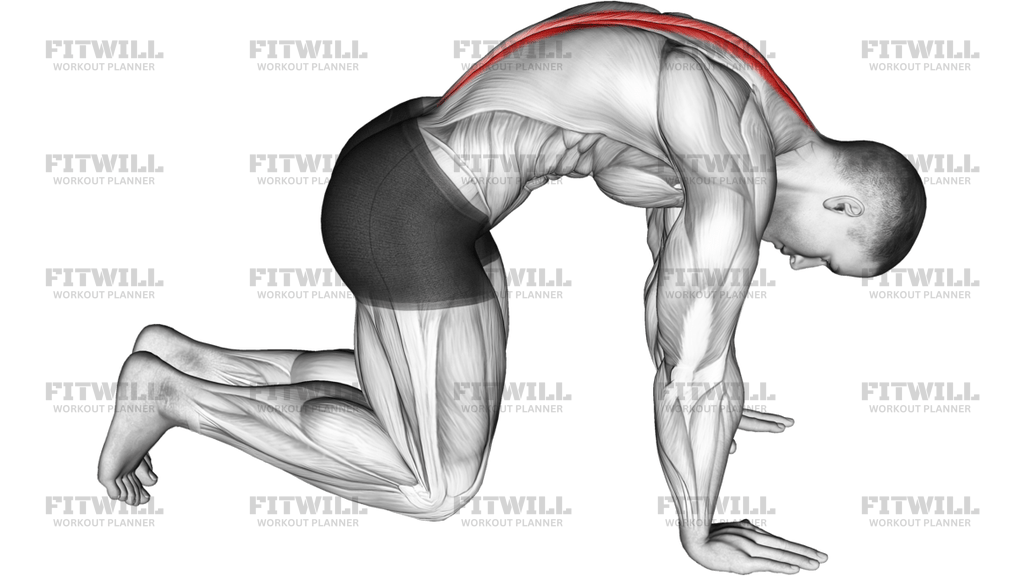
Cat Stretch is a floor-based spinal mobility drill performed on hands and knees on an exercise mat. The body rounds into flexion while the shoulders stay stacked over the hands and the knees stay under the hips. It is used to wake up the upper back, trunk, and shoulder girdle before training, or to reduce stiffness after sitting, lifting, or long periods in one posture.
The key idea is not to force the deepest possible curve. A good cat stretch starts with a controlled setup, then moves segment by segment from the pelvis through the mid back and finally the upper back and neck. When it is done well, the stretch feels organized and active: the hands press the floor away, the shoulder blades spread, the ribs draw up, and the abdomen helps guide the spine into a smooth rounded shape.
Breathing is part of the movement. Exhaling as you round the spine helps the ribs close and the trunk brace lightly so the position feels smooth instead of collapsed. The neck should follow the spine without jamming the chin into the chest. The shoulders should stay stable over the hands, and the hips should stay roughly over the knees so the stretch comes from the spine rather than from sliding the body around.
Cat Stretch is useful in warm-ups, recovery sessions, mobility blocks, and low-intensity movement prep. It can also be paired with the opposite spinal pattern when a workout calls for a balanced back and trunk routine. The movement is appropriate for most beginners because there is no load to manage, but the range should still be comfortable and pain-free. If wrists, knees, or the low back feel irritated, adjust the setup, shorten the range, or use a more comfortable surface before continuing.
[ Workout Log & Planner ]
Put your next workout in Fitwill
Keep your plan and training log ready when you are.


Instructions
- Place both hands under your shoulders and both knees under your hips on an exercise mat.
- Spread your fingers and press evenly through the whole hand so the wrists feel supported.
- Keep your elbows straight but not locked, and let your head stay in line with the spine.
- Exhale and tuck your pelvis as you push the floor away and round your low back.
- Continue curling the spine upward through the mid back and upper back until the shoulder blades spread.
- Let the chin drift toward the chest only as far as it follows the curve of the spine comfortably.
- Pause briefly at the top while keeping the abdomen lightly active and the breath smooth.
- Inhale as you return slowly to the neutral hands-and-knees position without dumping into the low back.
- Repeat for the desired number of controlled reps, keeping the same hand, knee, and neck alignment each time.
Tips & Tricks
- Think of the motion as moving one spine segment at a time, not just pushing the shoulders up and the hips back.
- A full exhale at the top usually helps the ribs close and makes the rounded position feel cleaner.
- Keep the palms planted and avoid shifting your weight so far back that the knees almost straighten.
- If the wrists bother you, place more pressure through the base of the index finger and thumb instead of sinking into the heel of the hand.
- Do not force the chin hard toward the chest; let the neck follow the spine instead of leading the movement.
- A small, controlled curve is better than a dramatic collapse in the low back.
- If the shoulders feel pinched, reduce the range and keep the shoulder blades wide instead of shrugging upward.
- Use a softer mat or folded towel under the knees if the floor makes the setup uncomfortable.
- Keep the motion slow enough that you could pause anywhere in the range without losing balance.
Frequently Asked Questions
What does Cat Stretch work most?
It mainly mobilizes the spine, upper back, shoulders, and trunk while gently stretching the back-side line of the body.
Where should my hands and knees be in the cat position?
Set your hands under your shoulders and your knees under your hips so the rounding comes from the spine, not from sliding forward or backward.
Should I hold my breath while I round my back?
No. Exhale as you round so the ribs can close and the position feels controlled instead of forced.
How high should the back go in Cat Stretch?
Only as high as you can round smoothly without pain or pinching. A smaller, clean curve is better than a hard collapse.
Can I do Cat Stretch if my wrists are sensitive?
Yes, but you may need to reduce the time on the hands, spread the fingers more, or use a softer surface and an easier range.
Is Cat Stretch the same as Cat-Cow?
No. Cat Stretch shows the rounded cat position only. Cat-Cow adds the opposite arching phase after it.
What is the most common mistake in this exercise?
People usually turn it into a shoulder shrug or a low-back collapse instead of creating a smooth full-spine round.
When is Cat Stretch useful in a workout?
It works well in warm-ups, mobility circuits, recovery days, or any session where you want to loosen the spine before harder work.