Outward Calf Raise
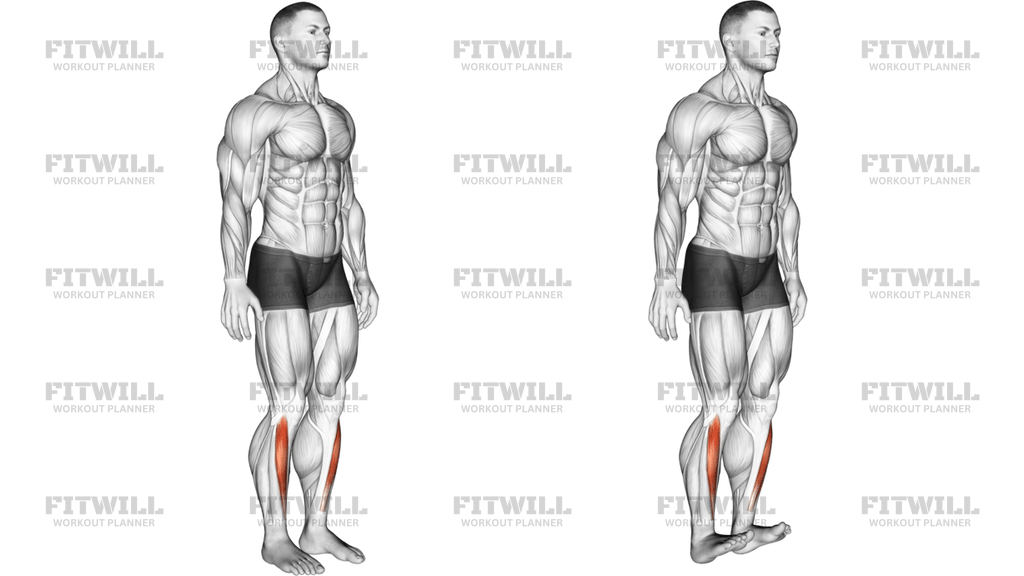
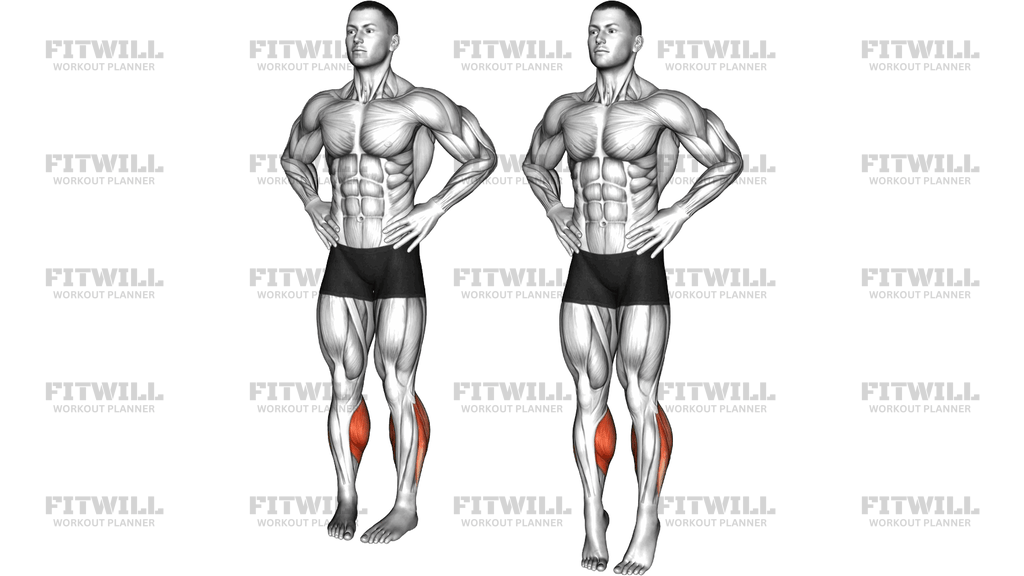
The Outward Calf Raise is a standing bodyweight calf exercise performed with your toes turned outward at an angle, so your heels sit closer together and your feet form a V. From that stance you rise up onto the balls of your feet and lower back down under control. Rotating the feet outward shifts the emphasis of the lift toward the inner portion of the gastrocnemius, the large calf muscle that gives the lower leg most of its visible shape, while the soleus and the small stabilizing muscles around the ankle assist throughout.
This version of the calf raise is useful for anyone who wants to balance out calf development without equipment. Because the calves respond to angle changes, turning the toes out compared with a straight-ahead stance gives you a slightly different stimulus than a standard raise, which matters if you have been doing the same movement for months and progress has stalled. It is also a practical choice for beginners, since bodyweight reps let you learn how the ankle joint actually moves before you add load to a machine or hold a dumbbell.
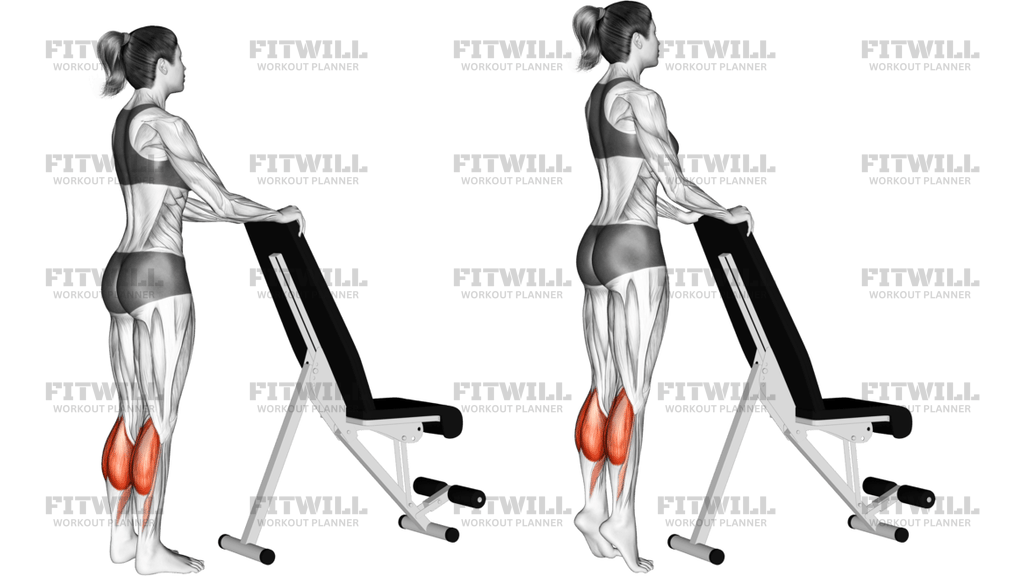
Setup matters more than most people expect. Stand tall with your hands resting on your hips or lightly touching a wall for balance, feet about hip-width apart, and rotate from the hips so the toes point diagonally outward rather than twisting at the knee or ankle alone. Keep your weight distributed over the ball of the foot and the big toe, not rolled toward the outside edge, because that is where most form breakdown happens in this stance.
To execute the movement, press through the balls of your feet and lift your heels as high as your range allows, keeping your legs straight but your knees soft. Pause briefly at the top, then lower your heels slowly until you feel a mild stretch in the calves before starting the next rep. Moving quickly or bouncing at the bottom is the most common mistake; the stretch position is where a lot of the benefit lives, so own it instead of rushing through it.
You will see this exercise used in home workouts, warm-ups before running or jumping, and higher-rep finishers at the end of a leg session. It also suits people rehabbing ankle strength under guidance, since the movement is low load and easy to control. Start with two to three sets of twelve to twenty reps, and if your balance wobbles, put one hand on a wall rather than shortening the range.
As with any calf work, stay patient. Calves are accustomed to carrying you around all day, so they generally need higher volume and a full, honest range of motion to respond. Controlled tempo, a deliberate pause at the top, and a slow lower under stretch will do more for you than cranking out fast partial reps.
[ Workout Log & Planner ]
Put your next workout in Fitwill
Keep your plan and training log ready when you are.


Instructions
- Stand tall with your feet about hip-width apart and rotate from the hips so your toes point diagonally outward, heels closer together in a V stance.
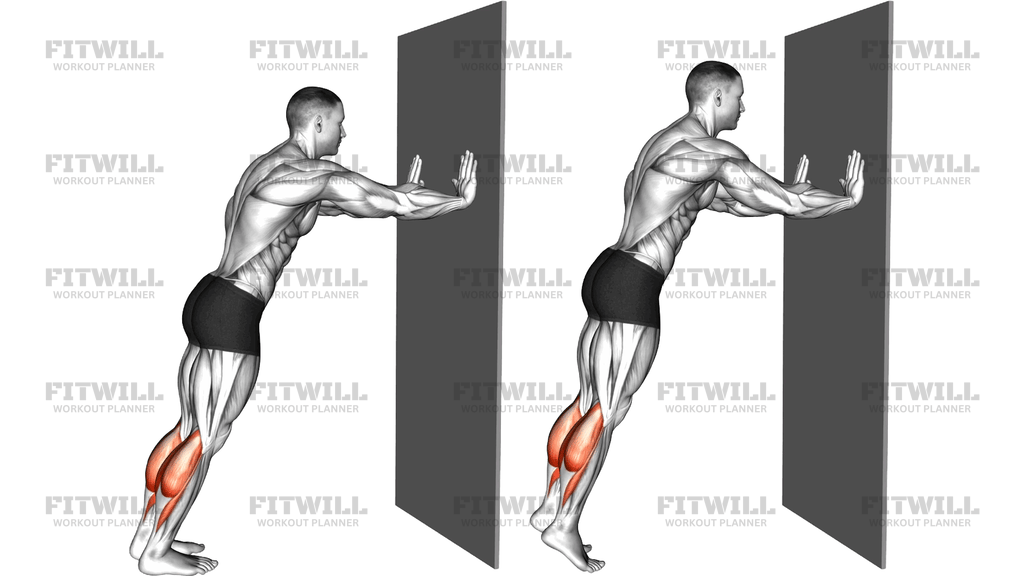
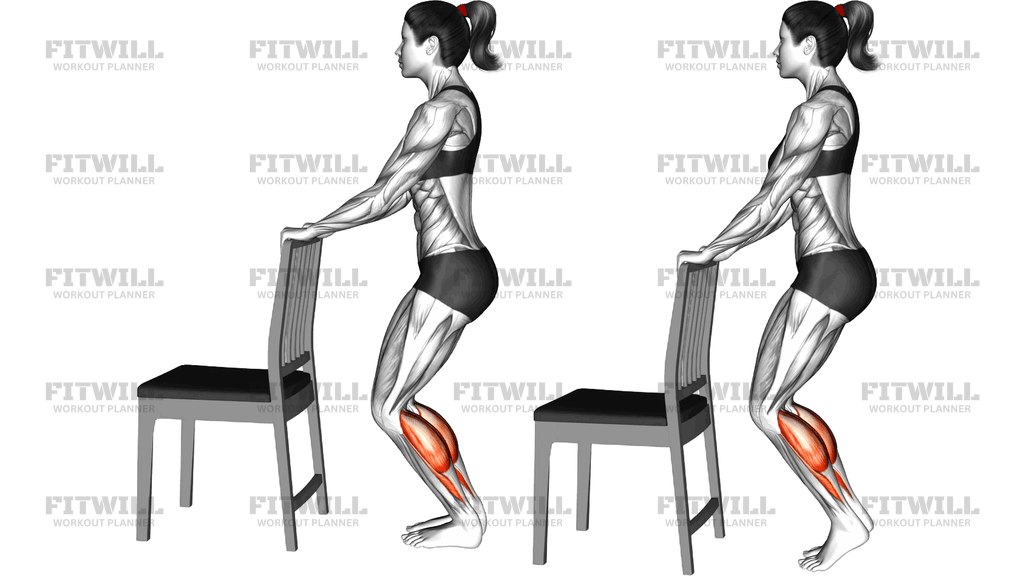
- Place your hands on your hips, or rest one hand lightly against a wall or sturdy surface if you need balance support.
- Brace your core, keep your chest up, and let your weight settle over the balls of your feet and big toes.
- Keep your legs straight but your knees soft, and avoid locking or hyperextending them at any point.
- Press through the balls of your feet and raise your heels as high as you can, feeling the calves shorten fully at the top.
- Hold the top position for one to two seconds, keeping your ankles from rolling outward.
- Lower your heels slowly until you feel a light stretch in your calves, stopping just before they touch the floor or lightly touching down.
- Exhale as you rise and inhale as you lower, keeping the breathing rhythm steady across the set.
- Complete your reps with the same tempo, then reset your stance and check that your toes are still turned outward before the next set.
Tips & Tricks
- Rotate from the hips, not from the knee or ankle. Forcing the turnout at the joints below the hip strains the knee and shifts work away from the calves.
- Do not let your ankles roll toward the outside edge of your feet as you rise. Keep pressure over the big toe and ball of the foot so the calf, not the outer ankle structures, does the lifting.
- If you bounce at the bottom, slow down. Count two to three seconds on the way down; the stretch under the calf is where much of the training effect happens.
- Short reps at the top are a common failure point. Lower your heels close to the floor each rep so you train the full range, not just the easiest part of it.
- Wobbling usually means the stance is too narrow or your balance support is too far away. Widen the feet slightly or put a fingertip on a wall rather than cutting the set short.
- Because this stance biases the inner calf, pair it with an inward-toe version or a straight-ahead raise across the week if balanced development is your goal.
- Higher reps tend to work better here than max effort. Aim for twelve to twenty controlled reps and add sets before you add external weight.
- If your calves cramp on the first sessions, that is normal for this muscle at long ranges. Stop, stretch briefly, and resume with a slightly smaller range until it passes.
Frequently Asked Questions
What muscles does the Outward Calf Raise work?
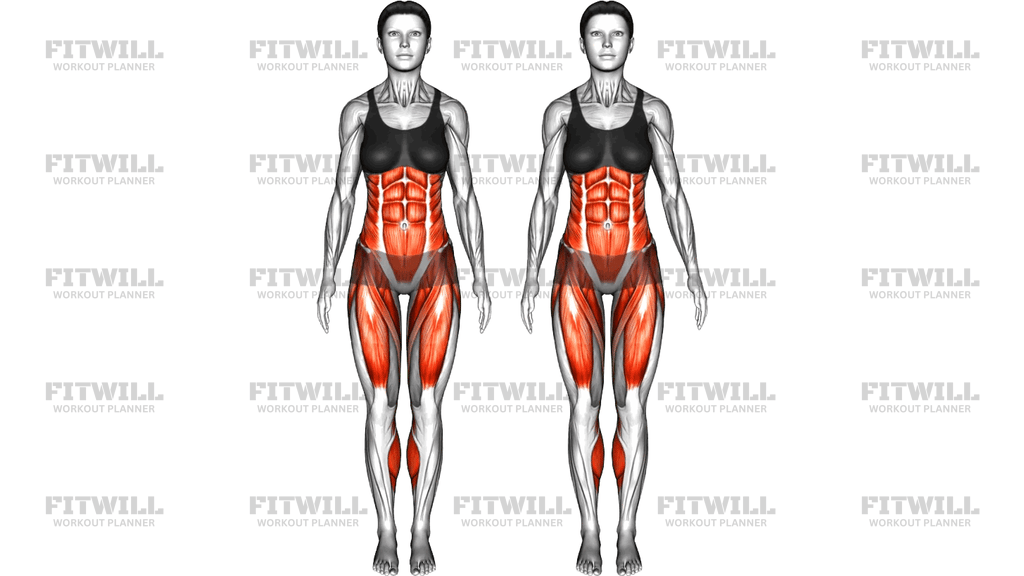
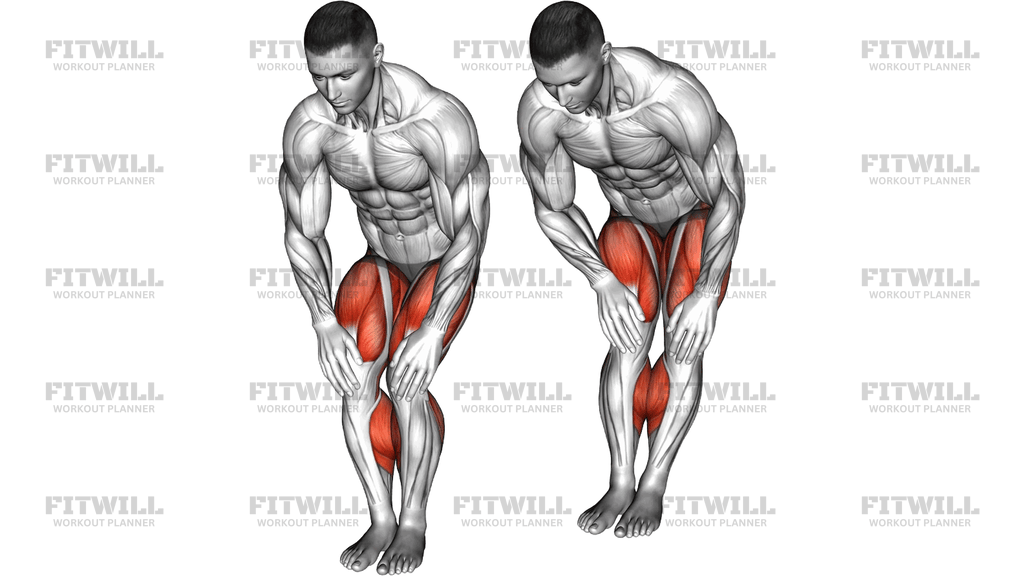
The gastrocnemius, the large two-headed calf muscle, does most of the work, with the outward foot position biasing its inner head. The soleus underneath and the small ankle stabilizers assist throughout the lift.
Why are the toes pointed outward in the Outward Calf Raise?
Turning the toes out changes the line of pull at the ankle and places slightly more emphasis on the inner portion of the gastrocnemius compared with a straight-ahead stance. It is a simple way to vary calf training without any equipment.
Is the Outward Calf Raise good for beginners?
Yes. It requires no equipment, the load is your own bodyweight, and the balance demand is modest, especially with a hand on a wall. Beginners should focus on a full range and slow tempo before worrying about volume.
How many reps and sets should I do?
Two to three sets of twelve to twenty reps is a solid starting point. Calves are used to constant daily work, so they often respond better to higher reps and controlled tempo than to low-rep attempts.
Should my heels touch the floor between reps?
Let them come down close to the floor or touch it lightly, but do not rest and relax between reps. The goal is to keep tension on the calves while still reaching a mild stretch at the bottom.
My ankles roll outward when I rise. How do I fix that?
Deliberately keep your weight over the big toe and ball of the foot as you press up, and slow the tempo down. If it still happens, hold a wall for balance and reduce the range slightly until you can control the ankle path.
Can I add weight to the Outward Calf Raise?
Yes, once bodyweight reps feel easy you can hold a dumbbell in one hand with the other hand on a wall, or use a Smith machine or calf raise machine with the same outward stance. Keep the tempo and range identical to the bodyweight version.
How is this different from a regular standing calf raise?
The mechanics are the same, but the outward toe position shifts emphasis toward the inner calf, whereas toes straight ahead work the muscle more evenly and toes in bias the outer portion. Rotating between the three angles across your training covers the muscle more completely.
Is it safe to do the Outward Calf Raise every day?
Light bodyweight sets are generally well tolerated, but your calves still need recovery to adapt. Two to four focused sessions per week is plenty for most people, and persistent soreness or ankle discomfort is a signal to back off.