Bodyweight Standing Inside Calf Raise
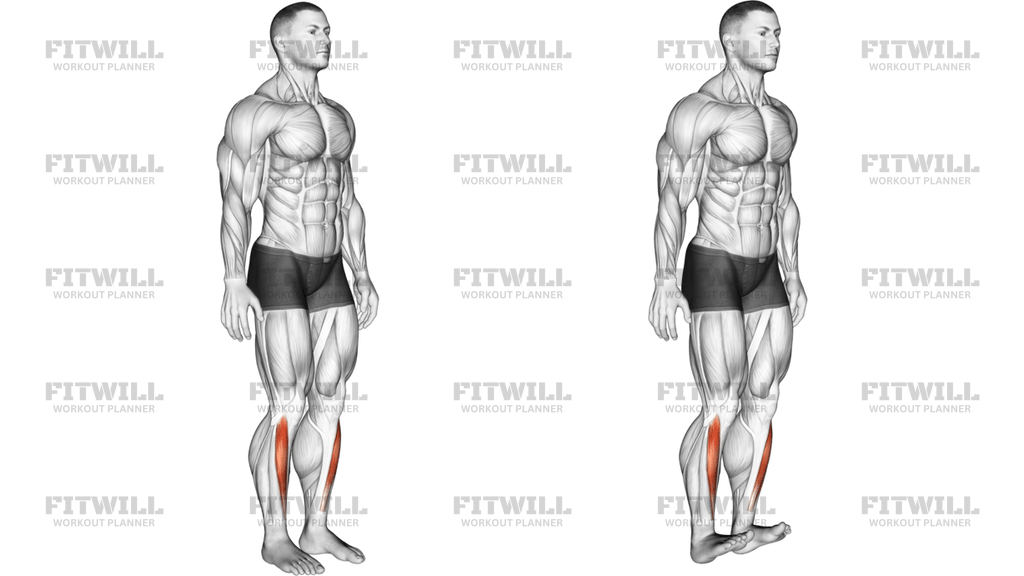
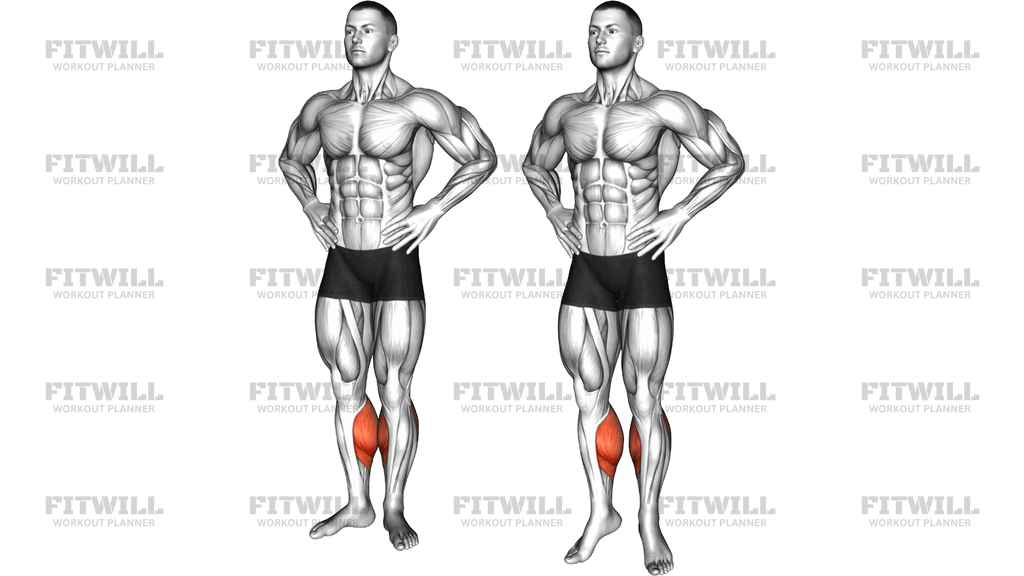
The Bodyweight Standing Inside Calf Raise is a calf isolation exercise performed from a standing position with your toes turned inward, so your feet angle toward each other rather than straight ahead or outward. From this pigeon-toed stance, you rise up onto the balls of your feet as high as possible, then lower your heels back down under control. Because it needs no equipment beyond your own body and a firm floor, it is one of the simplest ways to train the calves anywhere.
The turning-in of the feet is what separates this version from a standard standing calf raise. Rotating the toes inward changes the line of pull at the ankle and shifts the emphasis across the calf complex, placing greater demand on the lateral structures of the lower leg while still loading the gastrocnemius and soleus as a group. For anyone whose calf development feels one-sided or whose standard calf work has stalled, adjusting foot angle like this is one of the few honest ways to change the stimulus without adding load.
This movement is useful for beginners learning what a proper calf contraction feels like, for lifters who want extra volume after weighted calf work, and for runners, jumpers, and court-sport athletes who need resilient ankles and strong push-off strength. It also serves as a low-friction rehabilitation-style exercise for the lower leg, since the load is light and the range can be adjusted instantly.
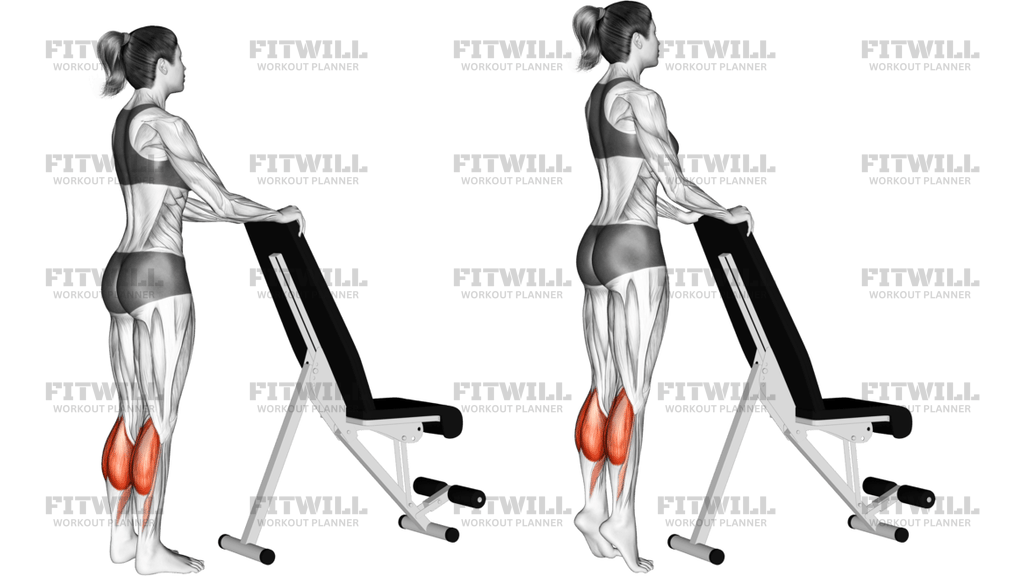
Setup matters more than most people expect. Stand tall with your hands on your hips or near a wall for balance, feet close together with toes angled inward, and your weight distributed over the balls of your feet. Your knees should stay essentially straight but not locked, because bending them lets the soleus take over and reduces the stretch on the gastrocnemius. The full benefits of the inside stance are lost if the ankles roll outward as you rise, so the arch of the foot must stay engaged rather than collapsed.
Execution is deliberately slow. Press through the ball of the foot and the big-toe side of the foot to lift the heels as high as the ankle allows, pause briefly at the top, then lower until you feel a mild stretch in the calf before starting the next rep. Bounce-free reps with a clear pause at both ends will do far more for the calves than fast, momentum-driven pumping. Two to four sets of fifteen to twenty-five controlled reps is a practical starting point.
Keep the torso upright throughout and avoid letting the hips drift backward or the knees bend to cheat the heel higher. If you lose balance, lighten the range rather than grabbing support aggressively; the goal is a stable ankle producing the lift, not a wobble being rescued. Because the calves are used to constant low-level work, progress comes from adding reps, slowing the tempo, or eventually moving to single-leg versions rather than rushing the load.
[ Workout Log & Planner ]
Put your next workout in Fitwill
Keep your plan and training log ready when you are.


Instructions
- Stand upright with your feet roughly hip-width apart and turn your toes inward so they point toward each other, keeping your heels closer together than your toes.
- Place your hands on your hips, or stand within arm's reach of a wall and rest your fingertips on it lightly for balance only.
- Brace your core, keep your chest tall, and straighten your knees so they are extended but not forcefully locked.
- Shift your weight onto the balls of your feet and confirm that your arches are lifted, not rolled inward or outward.
- Press down through the balls of your feet, especially the big-toe side, and lift both heels as high as your ankles allow without letting the feet roll outward.
- Pause for one to two seconds at the top with the calves fully shortened and your body balanced over the toes.
- Lower your heels slowly and under control until the calves feel a mild stretch just above the floor, with no bounce at the bottom.
- Exhale as you press up onto the toes and inhale as you lower the heels back down.
- Complete your target reps with the same tempo, then shake out the ankles and reset your inward foot angle before the next set.
Tips & Tricks
- The most common fault in this exercise is letting the ankles roll outward as you rise, which turns an inside calf raise into a sloppy standard raise; actively squeeze the arch and keep the big-toe side of the foot pressed into the floor.
- Do not angle the toes so far inward that your knees or shanks twist uncomfortably; a modest inward turn of about twenty to forty degrees is enough to change the emphasis.
- If your calves cramp at the top, which is common in this stance, reduce the peak height slightly and shorten the pause until your calves adapt to the shortened position.
- Keep the knees straight throughout; even a slight bend shifts work toward the soleus and shortens the gastrocnemius, blunting the standing-calf effect.
- Use a wall for balance with light fingertip contact only; leaning your weight into the wall removes load from the calves.
- Count to two on the way down instead of dropping the heels; the lowering phase is where much of the muscle-building stimulus in calf raises comes from.
- Bounce reps off the stretch reflex feel easier but reduce tension on the calf; stop briefly at the bottom of each rep to keep the muscle doing the work.
- If your balance is shaky, narrow your inward angle and shorten the range first, then increase the height and tempo as your ankle stabilizers strengthen.
- Warm the ankles up with a few slow standard calf raises before switching to the inside stance, since the turned-in position can feel stiff on cold ankles.
Frequently Asked Questions
What does the 'inside' in Bodyweight Standing Inside Calf Raise refer to?
It refers to turning your toes inward so the feet point toward each other during the raise. This foot angle changes how force travels through the ankle and shifts the emphasis across the calf muscles compared with a straight-ahead or toes-out stance.
Which muscles does the Bodyweight Standing Inside Calf Raise work?
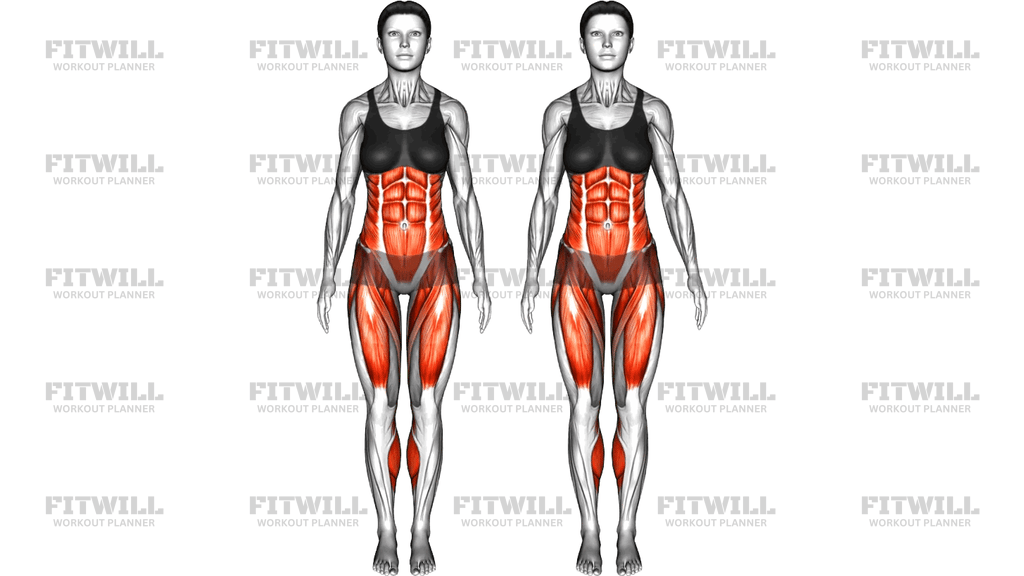
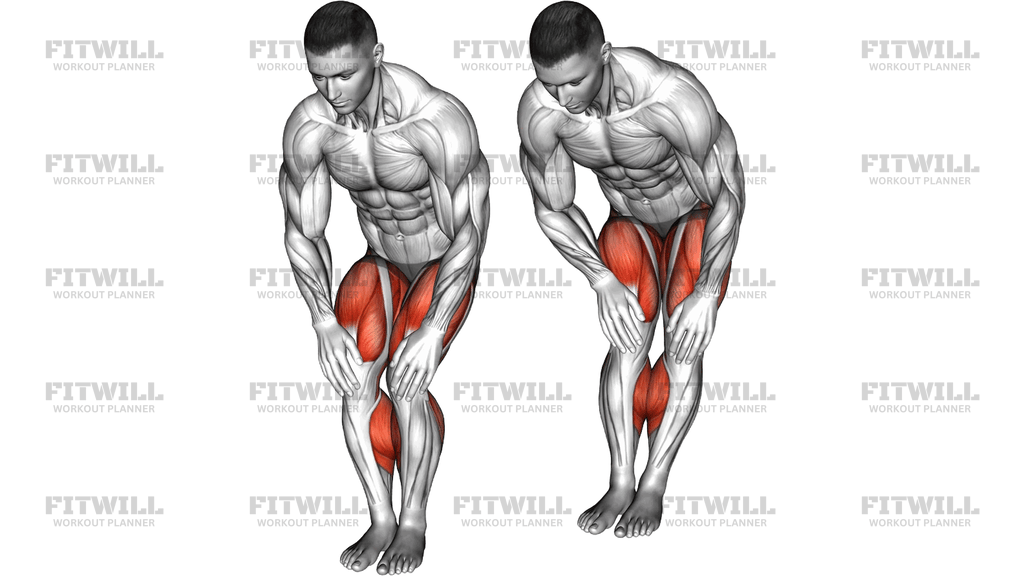
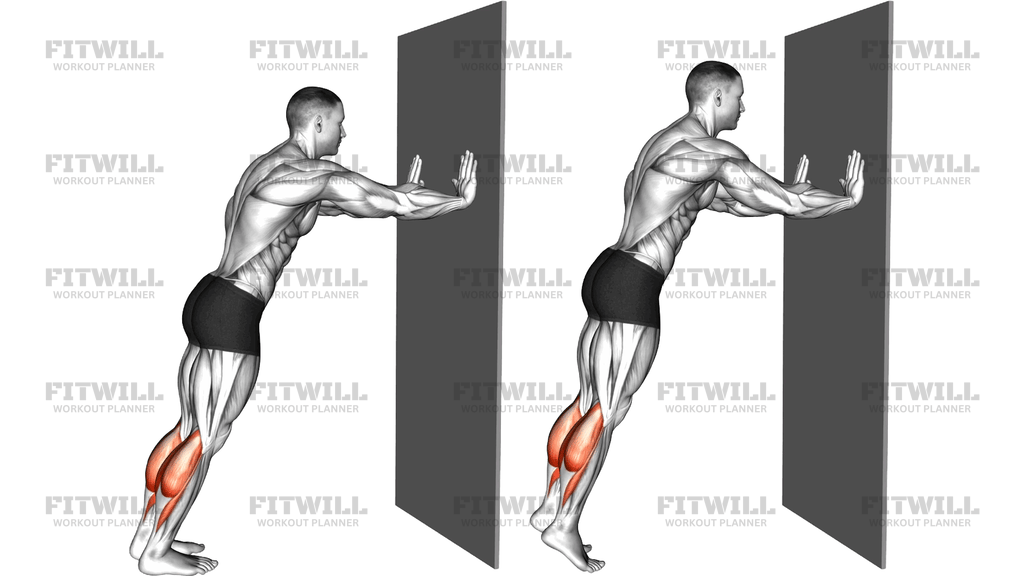
The primary muscles are the calves, mainly the gastrocnemius, with the soleus assisting below it. The small stabilizing muscles around the ankle also work hard to keep the turned-in foot balanced as you rise.
How is this different from a regular standing calf raise?
Only the foot angle changes, but that angle alters the line of pull at the ankle joint and challenges ankle stability differently. It is a useful variation when standard calf raises feel stale or one-sided.
Can beginners do the Bodyweight Standing Inside Calf Raise?
Yes, and it is actually a good beginner calf exercise because the load is your own body and the range is easy to adjust. Start near a wall for balance and keep the inward turn modest until the movement feels natural.
Why do my calves cramp when I hold the top position?
The shortened position with the toes turned in puts the calf under peak tension, which can trigger cramps if you are new to the stance. Lower the rise height slightly, shorten the pause, and build up over a few weeks.
How many reps should I do of the Bodyweight Standing Inside Calf Raise?
Because the load is light, higher rep ranges work well, typically fifteen to twenty-five reps per set for two to four sets. Slow the tempo or move to single-leg versions when that becomes easy.
Should I keep my knees straight or bent?
Keep them straight but not locked. Bending the knees relaxes the gastrocnemius and turns the movement into more of a soleus exercise, which defeats the purpose of a standing calf raise.
What can I use if I struggle with balance?
Stand with your fingertips lightly touching a wall, a railing, or the back of a sturdy chair. Support should only be for balance; if you are leaning into it, the calves are no longer lifting your full weight.
Is it safe to do this exercise every day?
Light bodyweight calf raises are generally well tolerated and can be done frequently, but the calves still need recovery like any muscle. If your lower legs feel sore or tight, take a rest day or reduce the volume.
How do I make the Bodyweight Standing Inside Calf Raise harder without equipment?
Slow the lowering phase to three or four seconds, pause longer at the top, or progress to one leg at a time. Standing with the balls of your feet on a step to add a deeper stretch at the bottom also increases the difficulty.