Standing Quadriceps Stretch
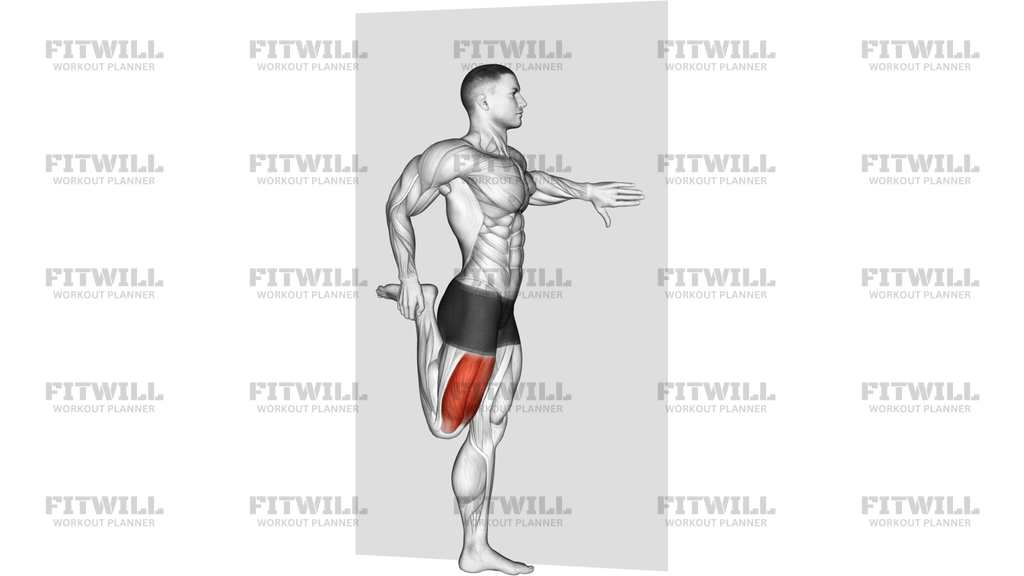
Standing Quadriceps Stretch is a standing single-leg mobility drill that lengthens the front of the thigh while asking the body to stay upright and balanced. In the image, one foot is pulled behind the body with the same-side hand, the opposite arm reaches forward for counterbalance, and the standing leg stays tall under the hip. That setup makes the stretch much more specific to the quadriceps and rectus femoris instead of turning it into a low-back arch or a loose balance pose.
The main purpose is to open the quadriceps and the hip flexor line on the lifted side. When the pelvis stays stacked and the knees stay close, the stretch lands where it should: across the front of the thigh and upper hip. If the pelvis tips forward or the ribcage flares, the pull shifts away from the quad and into the lower back, which usually makes the stretch feel less effective and less comfortable.
A good rep starts by standing tall, finding a stable support point if needed, and bringing the heel toward the glute only until the front thigh lengthens. The standing foot should stay planted, the lifted knee should point down rather than flare out, and the free arm can reach forward to steady the body. Breathing should stay smooth so the body can soften into the position without bouncing or forcing range.
Use this stretch after leg training, during a warm-up, or between lower-body sets when the quads feel tight and you want to restore clean hip extension. It is especially useful after squats, lunges, running, or cycling because those activities keep the quadriceps under long periods of shortening. For comfort and control, keep the stretch pain-free, avoid yanking the heel, and use a wall or rack if balance becomes the limiting factor rather than the stretch itself.
If the knee feels pinched, the lower back takes over, or the hip opens too far to the side, the position is too aggressive. Shorter holds with a cleaner pelvis usually work better than trying to force the heel closer. The goal is a precise front-thigh stretch that you can repeat on both sides with the same posture, balance, and breathing.
[ Workout Log & Planner ]
Put your next workout in Fitwill
Keep your plan and training log ready when you are.


Instructions
- Stand tall on one leg with the other knee bent behind you, and use a wall or rack with the free hand if balance is unsteady.
- Reach back with the same-side hand and hold the ankle or top of the foot on the stretching side.
- Bring your knees closer together and keep the lifted knee pointing down instead of drifting out to the side.
- Brace lightly, tuck the pelvis just enough to avoid arching the lower back, and keep the ribs stacked over the hips.
- Press the standing foot into the floor and squeeze the glute on the stretching side to keep the thigh line controlled.
- Pull the heel toward the glute only until you feel a strong front-thigh stretch, not a pinch in the knee or low back.
- Reach the free arm forward for counterbalance and hold the stretch with slow, steady breaths.
- Release the foot slowly, return to standing under control, and repeat on the other side before switching back if needed.
Tips & Tricks
- Keep the standing foot rooted in a tripod so the ankle does not roll inward when you pull the heel back.
- Think about bringing the knees together before you pull harder; that keeps the stretch on the quad instead of letting the hip open.
- A small posterior pelvic tilt usually makes the stretch better because it reduces lower-back arching and isolates the front thigh.
- If the stretch moves into the knee joint, ease off and shorten the heel-to-glute distance.
- Use the free hand on a wall when the balance demand is higher than the stretch demand.
- Exhale as the heel comes closer to the glute so the hip flexors and quads can soften instead of guarding.
- Avoid flaring the bent knee wide; that turns the position into a hip stretch and usually reduces quad tension.
- Hold a cleaner, slightly easier position for longer rather than forcing a max range that makes you wobble.
Frequently Asked Questions
What muscle does Standing Quadriceps Stretch target most?
It primarily targets the quadriceps, especially the rectus femoris on the bent-leg side.
Do I need to hold onto something while doing it?
You do not have to, but a wall or rack makes it much easier to stay tall and keep the stretch focused on the quad.
Should my knees stay close together?
Yes. Keeping the knees close helps keep the thigh line straight and reduces hip flare.
Why does my lower back feel it more than my quad?
That usually means the pelvis is tipping forward and the ribs are flaring. Tuck slightly, stand taller, and pull the heel back less aggressively.
Can I do this if my knee feels tight?
Yes, as long as the stretch stays in the front thigh and not in the knee joint. If the knee gets pinched, reduce the range or use a gentler variation.
Where should I feel the stretch?
You should feel it along the front of the thigh and sometimes the upper hip on the lifted-leg side.
Is this better as a warm-up or a cool-down stretch?
It works well in both, but it is especially useful after leg training or running when the quads are already shortened and warm.
What should I do if I cannot reach my ankle comfortably?
Use a wall for balance and only pull as far as you can keep a tall torso. Do not force the heel into the glute.