Weighted Plate Pinch Curl
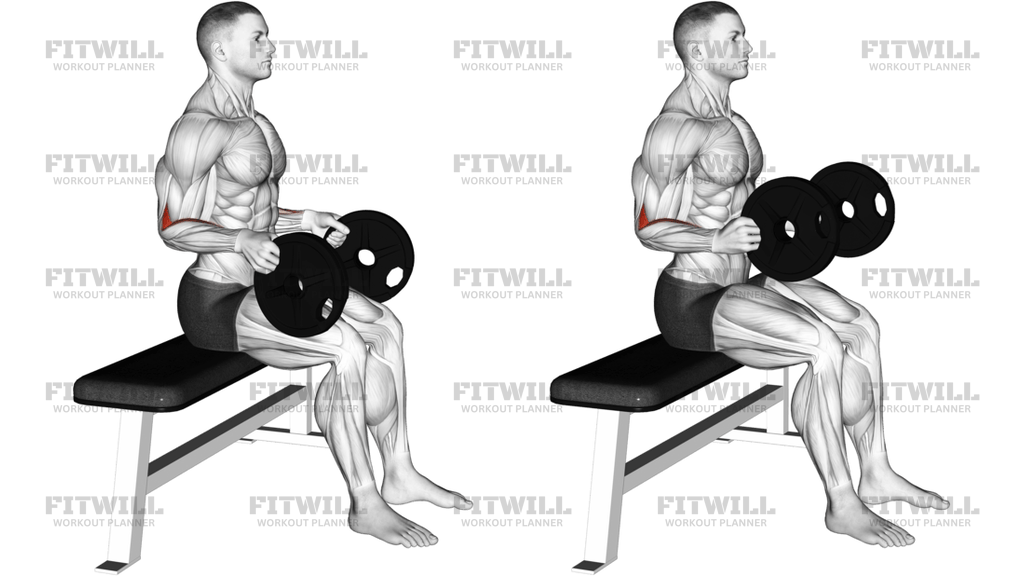
The Weighted Plate Pinch Curl is a standing arm exercise that combines a pinch grip on a weight plate with a curling motion, so your forearms and hands have to work double duty. Instead of holding a dumbbell or barbell through a handle, you trap the flat rim of a plate between your thumb and fingers and curl it from your side up toward your shoulder. This forces the muscles of the forearm, hand, and upper arm to work together on every rep.
This movement is especially useful for anyone who wants to build real crushing and pinching grip strength. Climbers, martial artists, football players, and lifters who struggle to hold heavy bars all benefit from direct pinch grip work, and the curl adds elbow flexion training on top of it. It is also a smart choice for people whose grip gives out before their biceps do during regular curls, because it teaches the hands to stay locked in under load.
The main muscles working are the forearm flexors and the intrinsic muscles of the hand, which must squeeze the plate hard enough to keep it from slipping. Because the load sits flat against your fingers rather than through a handle, the brachioradialis and brachialis on the top and outside of the forearm do a large share of the elbow flexion, with the biceps assisting. The standing position also lightly challenges your shoulders and core to keep your torso upright while both arms pull.
Setup matters here more than with a normal curl. The plate should hang vertically at your side, pinched by its rim, not supported flat on your palm. If you let the plate rest against your palm or fingers from below, you turn it into an ordinary curl and lose the grip challenge that defines the exercise. Choose a plate with a smooth, cleanable rim you can hold with confidence, and start lighter than you think you need.
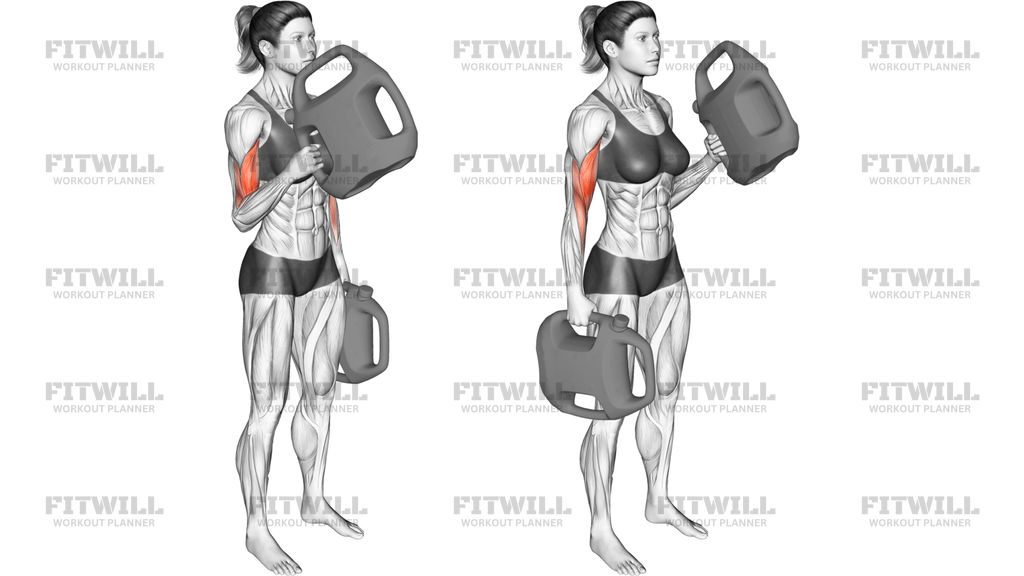
To perform it well, stand tall with feet about hip-width apart, one plate pinched in each hand at arm's length by your sides. Curl both plates up in a smooth arc toward the front of your shoulders without swinging your torso or letting your elbows drift forward. Squeeze at the top, then lower under control until your arms are fully extended again. Because the plate can slip when your grip fatigues, the lowering phase deserves extra attention, and you should end the set the moment your pinch starts to loosen.
Common use cases include finisher work after pulling sessions, dedicated grip and forearm blocks, and conditioning circuits where holding strength matters. Keep reps in the moderate range, stay strict with your posture, and treat any tingling, numbness, or loss of pinch pressure as your signal to stop and rest rather than push through a failing grip.
[ Workout Log & Planner ]
Put your next workout in Fitwill
Keep your plan and training log ready when you are.


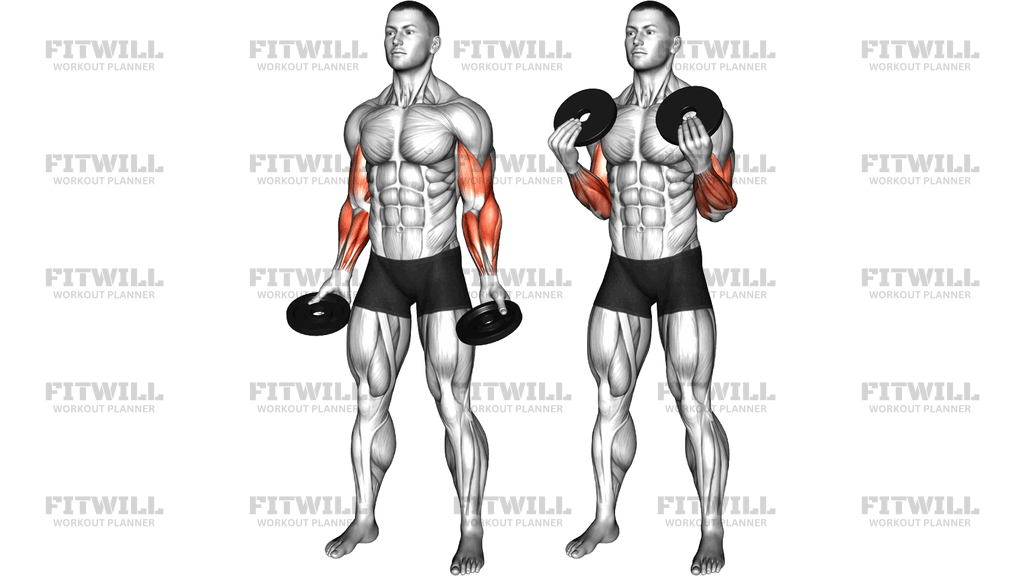
Instructions
- Stand upright with your feet about hip-width apart, knees soft, and a straight spine.
- Place a weight plate on edge at the outside of each thigh and pinch its flat rim between the thumb and fingers of each hand, keeping the plate vertical and away from your palm.
- Let your arms hang fully extended at your sides with a firm pinch on each plate, and brace your core to keep your torso from leaning.
- Keep your elbows pinned close to your torso and your upper arms still throughout the set.
- Curl both plates upward in a smooth arc toward the front of your shoulders, exhaling as you lift.
- Pause briefly at the top with the plates near shoulder height and your grip squeezed tight.
- Lower the plates slowly back to the starting position at your sides, inhaling on the way down, and keep the pinch secure through the entire descent.
- At full extension, let the plates hang momentarily without relaxing your hand, then begin the next rep.
- If your pinch starts to slip or your torso begins to swing, set the plates down safely and rest before continuing.
Tips & Tricks
- Use smaller, thinner plates to start. A thin plate is harder to pinch than a thick one of the same weight because your thumb and fingers have to squeeze harder to control the rim.
- If the plate slides toward your palm mid-set, your pinch pressure is failing, not your curl strength. End the set rather than converting it into a regular curl.
- Keep your wrists in a neutral line with your forearm. Bending the wrist back to help the plate up shifts work away from the brachioradialis and strains the elbow.
- Chalk or a dry towel on your hands can help if sweat makes the plate slippery, but avoid relying on straps, which would defeat the purpose of the exercise.
- Watch for elbow drift. If your elbows travel forward as you curl, the weight is likely too heavy or your upper arms are no longer locked at your sides.
- A slight bend in the knees and a braced core stop the common habit of leaning back to help the plates up as fatigue sets in.
- Curl both arms together rather than alternating when you are new to the movement, since unbalanced side-to-side loading makes the pinch harder to control.
- Lower slower than you lift. The eccentric portion exposes grip fatigue quickly, and dropping the plate from chest height is the main safety risk in this exercise.
Frequently Asked Questions
What muscles does the Weighted Plate Pinch Curl work?
The forearm flexors and hand muscles drive the pinch grip, while the brachioradialis, brachialis, and biceps perform the curl itself. The grip demands make the forearms the standout area compared with a standard curl.
Why pinch the plate instead of using a dumbbell?
Pinching the flat rim forces your thumb and fingers to actively squeeze, which trains pinch grip strength that handles and bars cannot target. It also shifts more of the curling work to the forearm muscles.
Is the Weighted Plate Pinch Curl suitable for beginners?
Yes, as long as you start with a light plate such as a 2.5 or 5 kg plate and focus on keeping a secure pinch. Most beginners find their grip fails long before their arms, so progress gradually.
What weight plate should I use for the Weighted Plate Pinch Curl?
Choose a plate with a smooth, dry rim that you can pinch comfortably with your fingertips and thumb. Start lighter than your normal curling weight, because the pinch grip is usually the limiting factor.
How many reps should I do?
Moderate ranges of about 8 to 12 reps work well for most lifters, with 3 to 4 sets. Stop the set when your pinch pressure fades, even if your arms still feel strong.
Why does the plate keep slipping out of my fingers?
Either the plate is too heavy, your hands are sweaty, or you are letting the plate rest against your palm instead of pinching only the rim. Dry your hands, lighten the load, and reset the plate in a vertical pinched position each rep.
Can I curl one arm at a time instead of both together?
Yes, once you are comfortable with the movement. Curling one side at a time lets you focus on the pinch, but keep your torso square and avoid twisting toward the working arm.
What can I substitute if I do not have weight plates?
You can mimic the pinch with two smooth, flat objects of equal weight such as hub-style grip tools or thick textbooks, though plates are the standard choice. Any substitute must allow a secure fingertip and thumb pinch through the full curl.
Is the Weighted Plate Pinch Curl safe for the elbows?
It is generally elbow-friendly when you keep your wrists neutral and your elbows fixed at your sides. Avoid swinging the weight or curling with a bent-back wrist, and stop if you feel sharp pain at the elbow or forearm.