Weighted Dead Hang
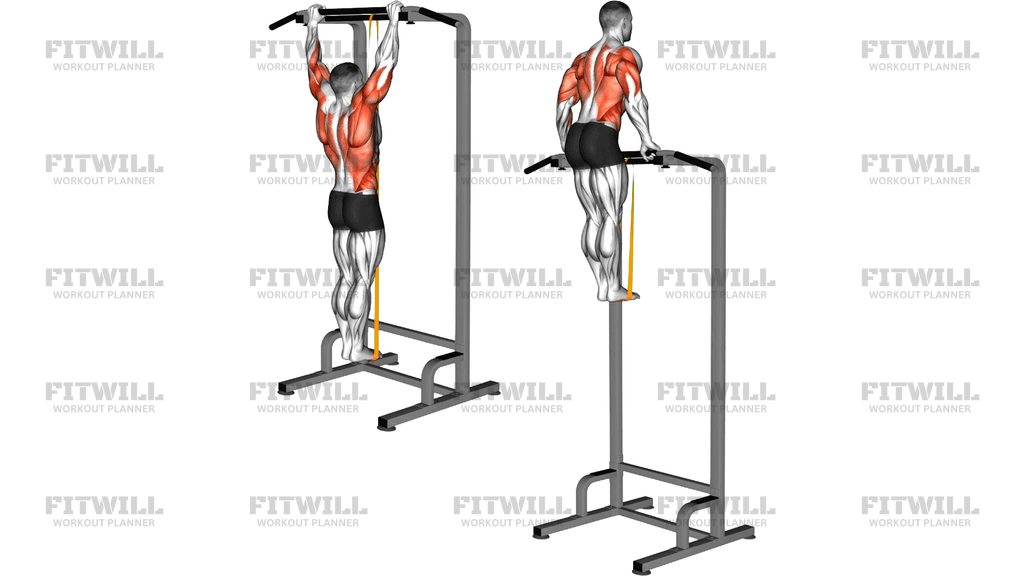
The Weighted Dead Hang is a simple but demanding isometric exercise: you hang from a pull-up bar with an added load, usually a plate attached to a dip belt, and simply hold on. There is no pull, no swing, and no repetition count — the entire challenge is maintaining a full grip on the bar while your body carries extra weight. It looks almost passive from the outside, but anyone who has held a weighted hang for thirty seconds knows how quickly the forearms, shoulders, and upper back start working.
This movement is especially useful for people who want to build grip strength and hang endurance. It is popular among climbers, obstacle course racers, and lifters who struggle to hold onto the bar during heavy pulling work. Because the added load makes the forearms, lats, and traps work harder than in a regular dead hang, it can help you progress toward tougher pulling goals such as heavy pull-ups, dead hangs for longer durations, or bar work that taxes your grip before your back gives out.
Setup matters more than it might seem. The weight should hang from a secure dip belt at hip level or slightly below, with the plate resting between your thighs so it does not swing. Your grip should be slightly wider than shoulder width with the palms facing forward, and your body should start from a fully extended hang with arms straight and feet clear of the floor. A loose or careless setup invites swinging, and a swinging plate turns a controlled hold into a stressful, jerky challenge for the shoulders.
To execute the hold well, keep the arms fully extended but not completely slack through the shoulders. Think of staying long rather than collapsing into the hang — a small, active pull-down of the shoulder blades keeps the shoulder joint in a safer position without turning the hang into a shrug. Breathe steadily throughout; many people instinctively hold their breath, which fatigues them faster and makes the hold feel harder than it needs to be.
The Weighted Dead Hang fits well at the end of a pull session as a grip finisher, or early in a session when grip is the focus and you want fresh forearms. Start conservatively with a light plate and shorter holds, and add weight or time gradually. If you cannot maintain a still, controlled position, the load is too heavy — drop the weight and let your grip and shoulders earn the right to progress.
[ Workout Log & Planner ]
Put your next workout in Fitwill
Keep your plan and training log ready when you are.


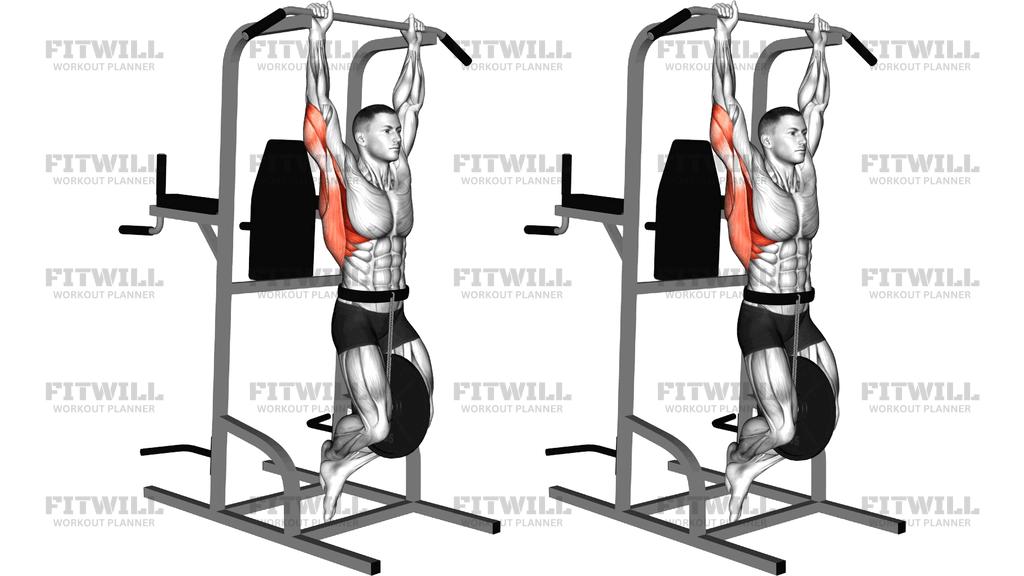
Instructions
- Secure a dip belt around your waist and attach a weight plate to the chain so it hangs at mid-thigh level between your legs.
- Stand on a stable platform or bench set under a pull-up bar, or step up from the floor if the bar is low enough, and grip the bar with an overhand grip slightly wider than shoulder width.
- Step off the platform so you are fully suspended, arms completely straight, with the plate hanging still between your thighs and your feet clear of the floor.
- Set your shoulders by pulling them slightly down away from your ears while keeping your elbows locked straight — stay long through the arms rather than sinking into a slack hang.
- Brace your midsection lightly and keep your legs quiet, either hanging straight or with knees softly bent behind you as shown, so the plate does not swing.
- Hold this position for your target time, keeping your body still and your grip wrapped firmly around the bar.
- Breathe steadily through the hold — slow inhales through the nose and controlled exhales — instead of holding your breath.
- When you finish, step back onto the platform or bench before releasing the bar, and unclip the belt once you are standing safely.
- Rest fully between holds so each set is limited by your grip, not by fatigue carrying over from the previous hold.
Tips & Tricks
- Position the plate between your thighs, not in front of your body — a plate hanging forward pulls you into an arch and encourages swinging through the hold.
- Do not drop straight into the hang from the bar at full speed; step off under control so the sudden stretch on the shoulders is not multiplied by a falling plate.
- If your shoulders feel loose or achy during the hold, you are likely hanging completely slack — actively draw the shoulder blades down a few centimeters while keeping the arms straight.
- Grip the bar deep in the fingers with the thumb wrapped around, not hooked with the fingers alone, so the hold does not end prematurely because of an open-hand slip.
- A common mistake is shrugging up toward the ears as fatigue sets in; if you feel the traps creeping up, shorten the hold or reduce the weight instead of pushing through a poor position.
- Keep your knees still — kicking or swinging your legs to relieve forearm fatigue changes the exercise and makes the load harder to control than the plate itself.
- Chalk your hands or use a firm grip method before adding weight; sweaty palms that were fine on bodyweight hangs often become the limiting factor once load is added.
- Progress one variable at a time: add either time or weight per session, not both, so you can tell which factor is actually improving.
- Use a bench or platform to enter and exit the hang rather than jumping down with the plate attached, which loads the lower back and knees on landing.
Frequently Asked Questions
What muscles does the Weighted Dead Hang work?
The main work is done by the forearm flexors and grip as they hold your loaded bodyweight on the bar. The lats, traps, and the muscles stabilizing the shoulder joint also stay active to control the hang, and the core works lightly to keep the body still.
How is the Weighted Dead Hang different from a regular Dead Hang?
The only difference is the added load, usually a plate hung from a dip belt. That extra weight makes the grip, forearms, and shoulder stabilizers work much harder for the same hold time, so it accelerates grip strength development once bodyweight hangs feel easy.
Can beginners do the Weighted Dead Hang?
Beginners should first build up to comfortable 30-second bodyweight dead hangs with quiet, controlled body position. Once that is easy, start with a small plate — often 5 kg or less — and keep the hold short and still.
How long should I hold a Weighted Dead Hang?
Most lifters do well with holds of 15 to 40 seconds for strength-focused work. If you can hold a weight for over a minute comfortably, it is time to add load rather than more time.
Why does my weight plate swing during the hold?
Swinging usually comes from stepping off the platform too forcefully or from the legs moving during the hold. Step down smoothly, let the plate settle between your thighs before starting the clock, and keep your legs relaxed and still.
Should my shoulders stay shrugged or pulled down in the hang?
Keep a slight active pull of the shoulder blades down while the arms stay fully straight. A completely slack hang lets the joint capsule and passive tissues take all the load, which is not ideal when extra weight is involved.
What can I use if I do not have a dip belt?
A strong lifting belt with a plate threaded on a chain or strap through it is a common substitute, or you can hold a dumbbell between your feet or ankles for a lighter load. Whatever you use, make sure it is secure and hangs close to your body.
Does the Weighted Dead Hang help with pull-ups?
Yes, indirectly — grip failure is a common limiter in high-rep or weighted pull-ups, and building hang endurance with load raises that ceiling. It will not replace pulling work, but it removes a frequent bottleneck.
Is it safe to hang with added weight every day?
Daily weighted hangs are not necessary and can irritate the shoulders and fingers over time. Treat them like any loaded strength work: two to four sessions per week with rest days in between is a more sustainable approach.
How do I get out of the hang safely at the end of a set?
Bring your feet back to the platform or bench, take the load off your grip, and only then release the bar. Dropping straight down while wearing a belt and plate jars the knees and lower back and risks a twisted ankle.