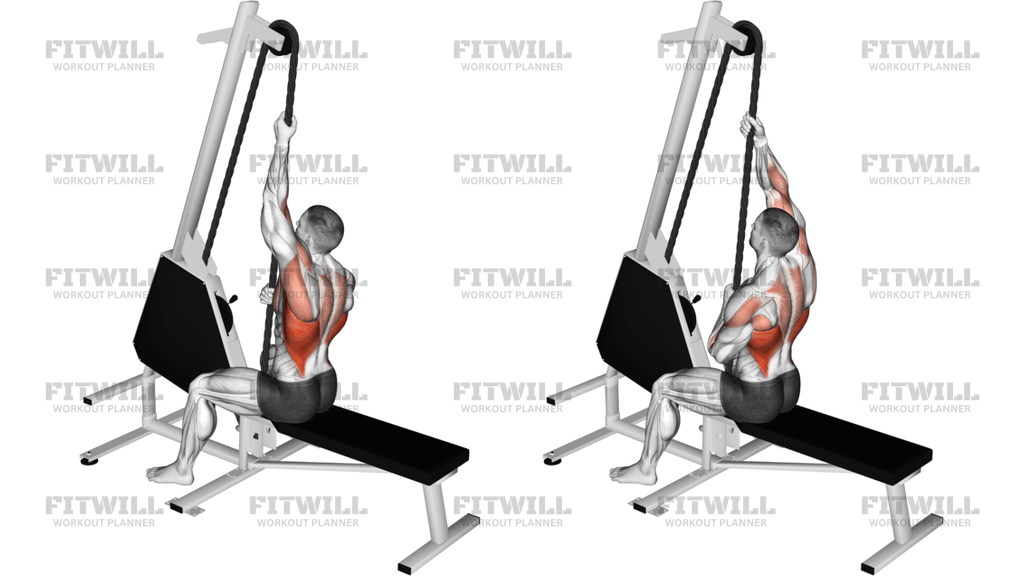
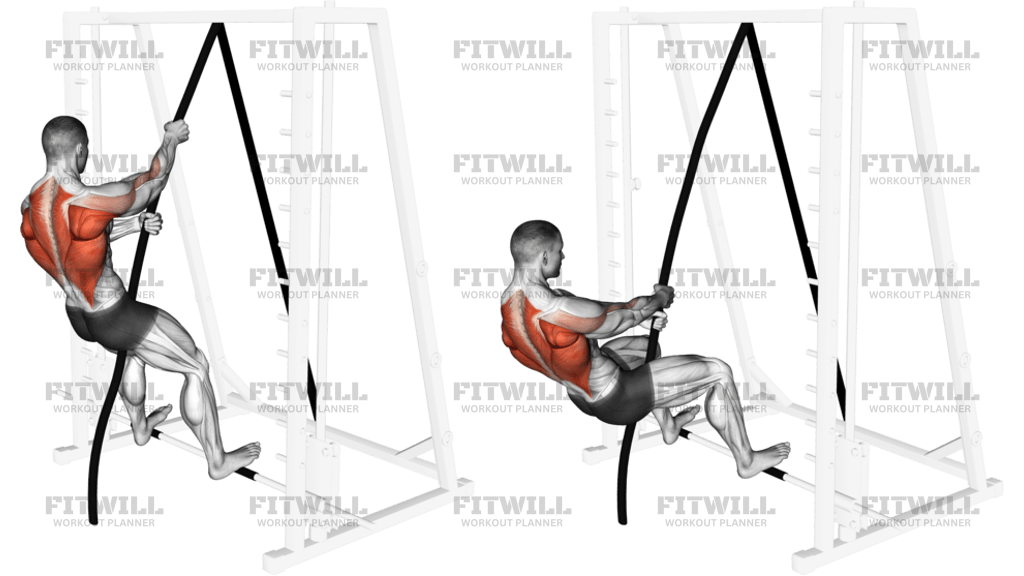
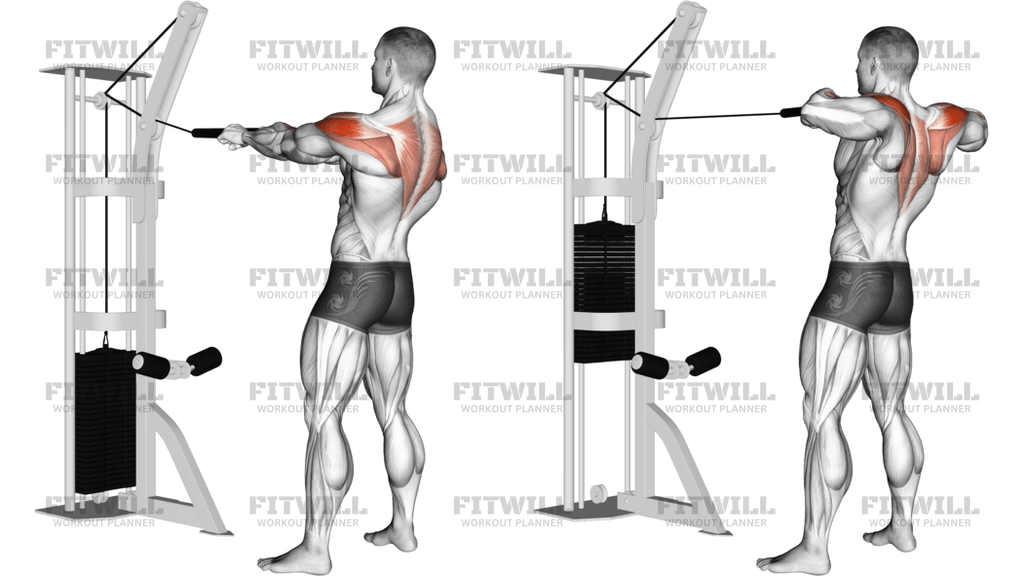
Cable Lat Prayers (Rope Attachment)
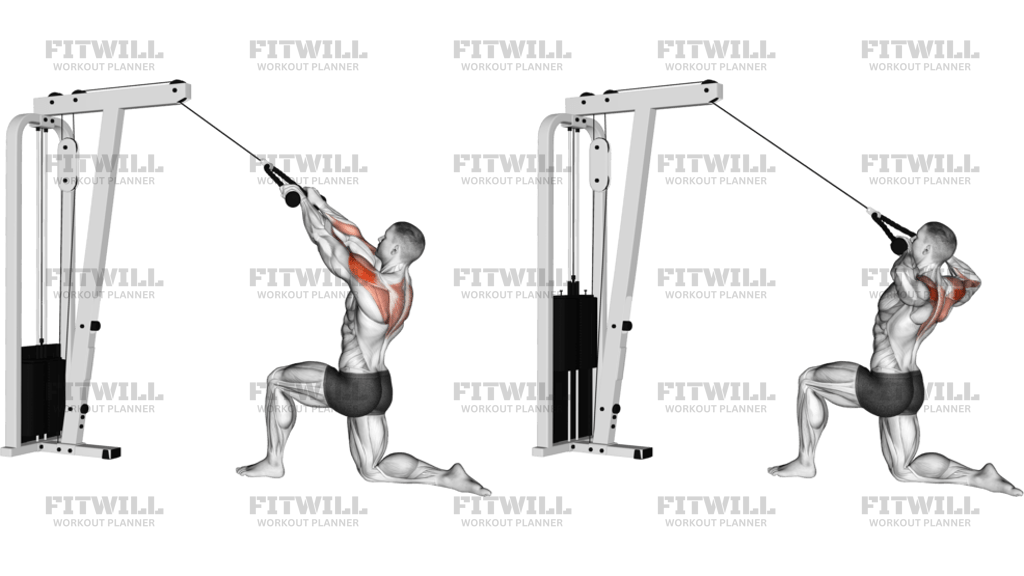
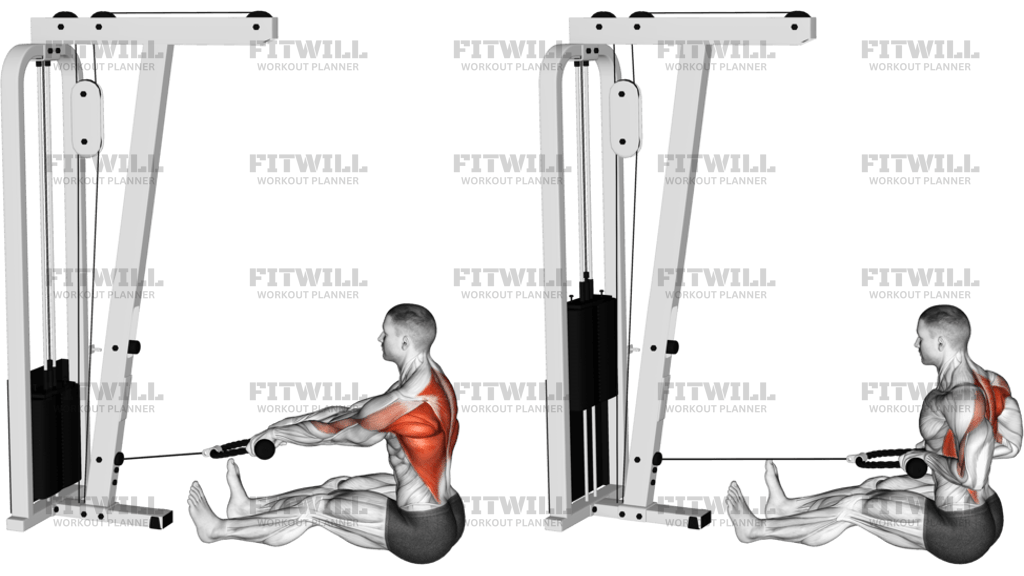
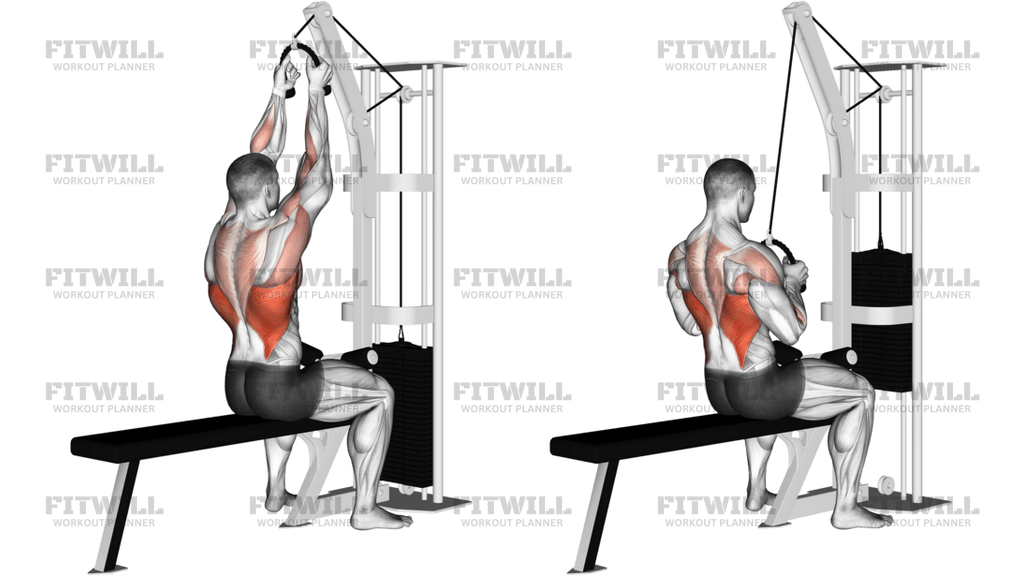
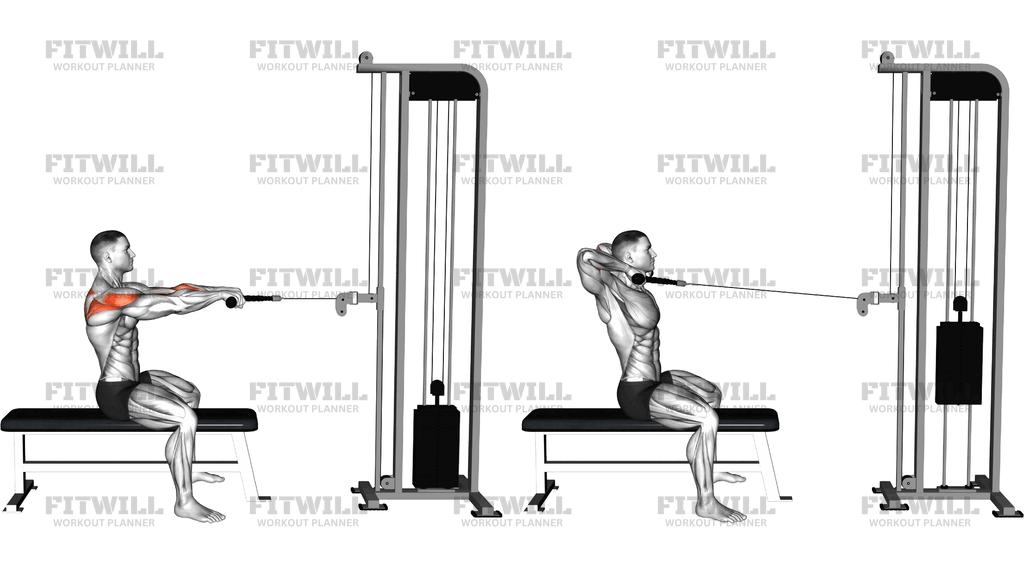
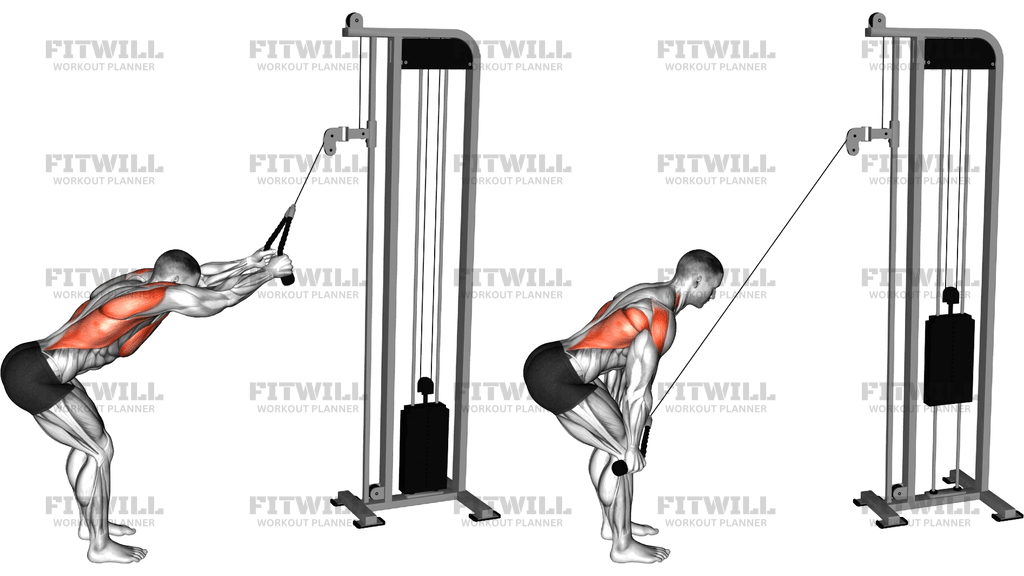
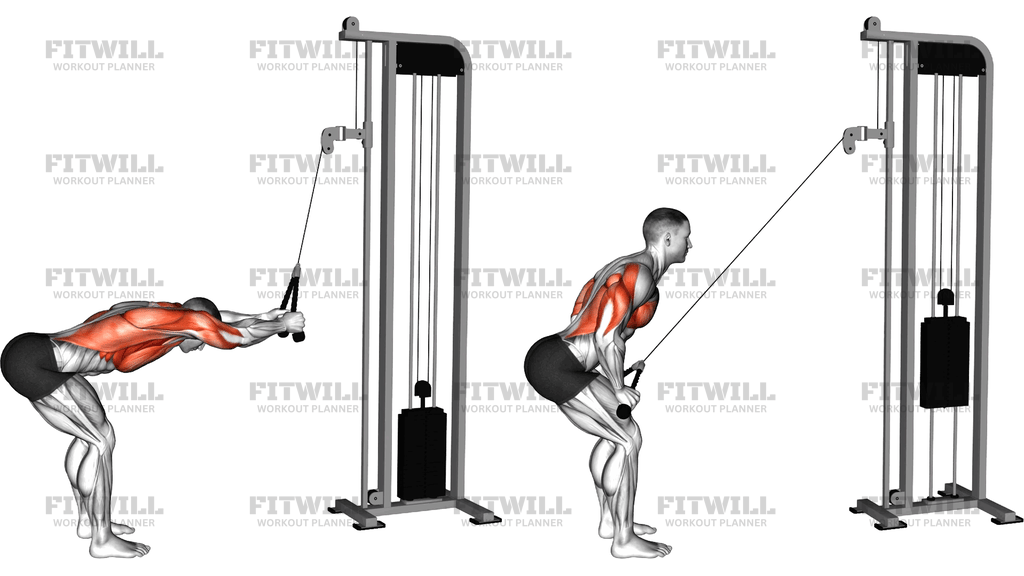
Cable Lat Prayers with a rope attachment is a straight-arm pulling exercise performed bent over at the hips while facing a high cable pulley. You hold the rope with a neutral grip, hinge forward until your torso is close to horizontal, and sweep your straight arms down and back until your hands reach your thighs. The name comes from the starting position, where your body is bowed forward with arms extended overhead toward the cable, resembling a kneeling prayer posture carried into a standing hinge.
The main workers here are the lats, which extend the shoulders against the cable's resistance. Because the elbows stay locked in a slightly bent but fixed position, the biceps are largely removed from the lift, which is exactly why this movement earns its place in a back program. The rear deltoids, teres major, and lower traps assist as the arms travel down and the shoulder blades settle back, while the spinal erectors and core work isometrically to hold the hinge.
This exercise suits lifters who want lat development without forearm and bicep fatigue, people whose grip gives out before their back on rows, and anyone who struggles to feel their lats during conventional pulldowns. It also works well as a pre-fatigue or finisher before bent-over rows or deadlifts, or as a teaching tool to build the mind-muscle connection needed for bigger pulling movements.
Setup matters more than it might seem. The high pulley position, the rope's neutral grip, and a solid hip hinge with soft knees all determine whether the resistance line runs through the lats or drifts into the shoulders and lower back. Stand far enough from the machine that the plates don't rest at the start, keep the hinge at roughly 45 to 90 degrees depending on your hamstring flexibility, and let the cable run just outside your arms.
Execution should feel like a wide arcing sweep rather than a pull. Initiate the movement by driving the elbows down and slightly back, keeping the arms straight the whole way, and finish with the hands beside your thighs and the chest proud. Control the return slowly so the lats stretch under load instead of letting the cable yank your torso upright. Breathe out on the pull, in on the return, and keep the neck neutral throughout.
The most common errors are bending the elbows into a row, using torso momentum to swing the weight, and rounding the lower back in the hinge. Keep the load moderate, the spine long, and the movement driven entirely from the shoulders. If you feel it mostly in the triceps or the front of the shoulders, you are likely pressing down rather than pulling back and down along the arc.
[ Workout Log & Planner ]
Put your next workout in Fitwill
Keep your plan and training log ready when you are.


Instructions
- Clip a rope attachment to the high pulley of a cable machine and select a light-to-moderate weight.
- Face the machine, grip the rope ends with a neutral grip (palms facing each other), and take two or three steps back so the weight stack is lifted off the rest at full arm extension.
- Hinge forward at the hips with a slight knee bend until your torso is angled between 45 and 90 degrees, arms extended overhead toward the pulley with a small bend in the elbows.
- Brace your core, keep a long neutral spine, and let your head follow your torso rather than craning up to watch the mirror.
- Pull the rope down and back in a smooth arc by driving your elbows toward your hips, keeping the elbow bend constant the entire rep.
- Finish with your hands beside or slightly behind your thighs, lats fully contracted, and chest lifted without hyperextending the lower back.
- Pause briefly at the bottom, then reverse the path slowly, letting the lats stretch as your arms rise back overhead under control.
- Exhale as you pull the rope down, inhale during the controlled return.
- Complete all reps without standing up between them, then set the rope down or let the stack settle fully before resting.
Tips & Tricks
- If your elbows bend as the rope descends, the weight is too heavy or you are thinking 'pull' instead of 'sweep' — lighten the load and cue driving the elbows to the back pockets.
- Stop just short of lockout at the top so tension stays on the lats; fully hanging off the cable at the stretch can load the shoulder capsule unnecessarily.
- Keep the hinge static for the entire set. If your torso rises each rep to help the weight up, momentum is doing the lats' job.
- Spread the rope ends slightly apart at the bottom of the rep to get an extra squeeze through the lats and rear delts.
- If your hamstrings limit how far you can hinge, bend the knees a little more rather than rounding your lower back to reach the angle.
- The rope's neutral grip is easier on the shoulders than a straight bar for many lifters — if a straight-arm pulldown bothers your shoulders, this version is worth trying.
- Squeeze for a one-second count at your thighs on each rep; this movement rewards contraction quality far more than heavy weight.
- Stand at a distance where the cable runs in line with your arms at the start. Too close and the arc shortens; too far and the stack may rest between reps.
- Use this as a burnout after rows or pulldowns with a lighter weight and higher reps rather than chasing a heavy top set.
Frequently Asked Questions
What muscles do Cable Lat Prayers with a rope attachment work?
The lats are the primary movers, with help from the teres major, rear deltoids, and lower traps as the arms sweep down. Your core and spinal erectors work statically to hold the bent-over position.
Why keep the arms straight during Cable Lat Prayers?
Locking the elbows in a fixed, slightly bent position removes the biceps from the movement, forcing the lats to extend the shoulders. This makes it one of the most direct lat isolation exercises available on a cable machine.
Is Cable Lat Prayers suitable for beginners?
Yes, provided you start with a light weight and learn the hip hinge first. The movement itself is simple, but holding a stable bent-over torso against cable tension takes a little coordination.
How is Cable Lat Prayers different from a straight-arm pulldown?
Both are straight-arm lat movements, but Cable Lat Prayers are done hinged forward with a rope, which changes the resistance angle and lets the arms travel a longer arc past the body. The rope's neutral grip is also more shoulder-friendly for many people.
Why do I feel Cable Lat Prayers in my triceps instead of my lats?
You are likely pressing the rope down like a pushdown rather than pulling it back in an arc. Keep the elbow bend constant and focus on driving the elbows toward your hips so the shoulders, not the elbows, do the moving.
How far should I hinge over during Cable Lat Prayers?
Anywhere from roughly 45 to 90 degrees of hip flexion works, as long as your spine stays neutral and the hinge stays fixed during the set. Choose the depth your hamstrings allow without rounding your lower back.
What can I use if my gym has no rope attachment?
A straight bar or single handles on a high pulley work with the same hinge and sweep. The rope is preferred because the neutral grip allows a natural wrist and shoulder path, but the lat stimulus is similar.
How many sets and reps should I do for Cable Lat Prayers?
This movement responds best to moderate loads and controlled reps, so 2 to 4 sets of 10 to 15 reps works well. It fits nicely as a finisher after rows or as a pre-fatigue before heavy pulls.
Is it safe to do Cable Lat Prayers with a rounded back?
No — rounding under the hinge places strain on the lumbar spine and reduces lat involvement. Keep a long neutral spine, soften the knees, and reduce the hinge depth if you cannot hold your back flat.
Should the weight stack touch between reps on Cable Lat Prayers?
Ideally not; let your arms rise until the lats are fully stretched but keep the plates hovering so tension remains constant. Full stack contact between every rep turns the set into disconnected singles.