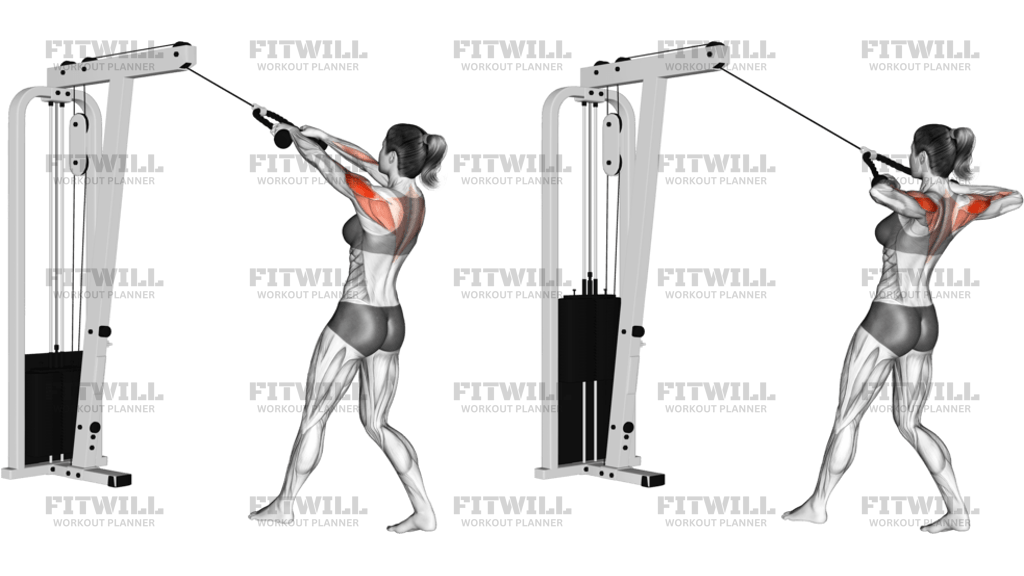
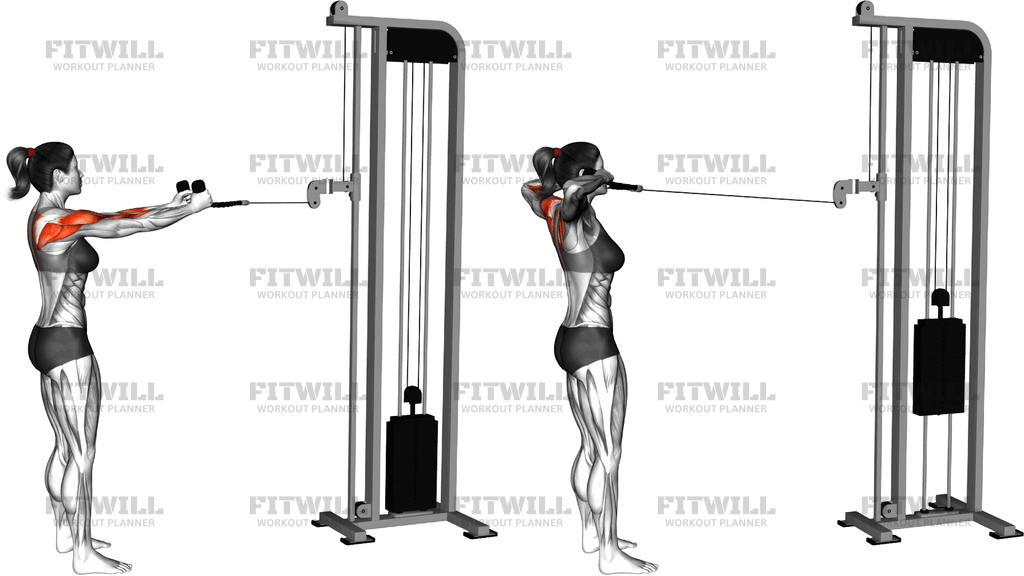
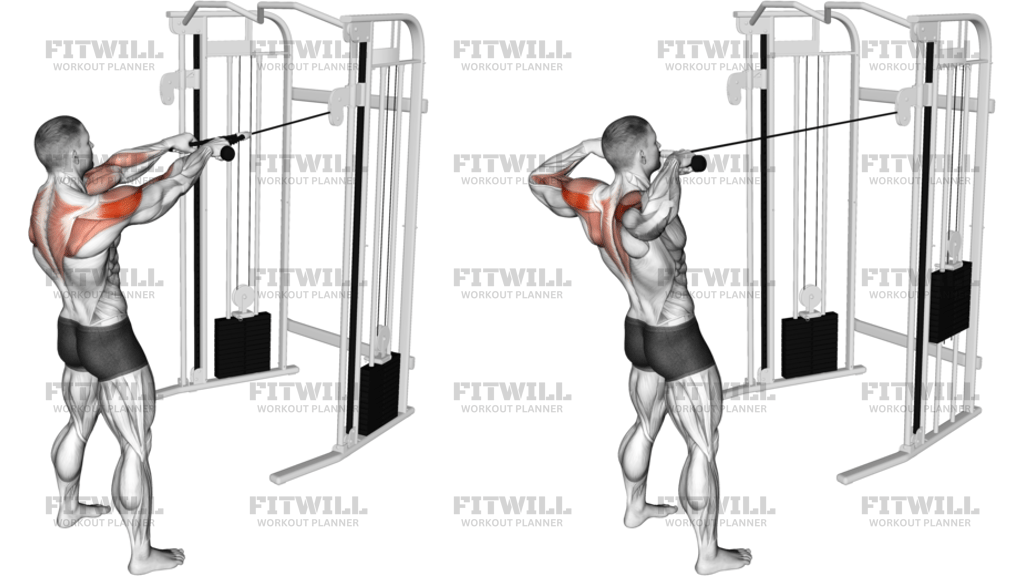
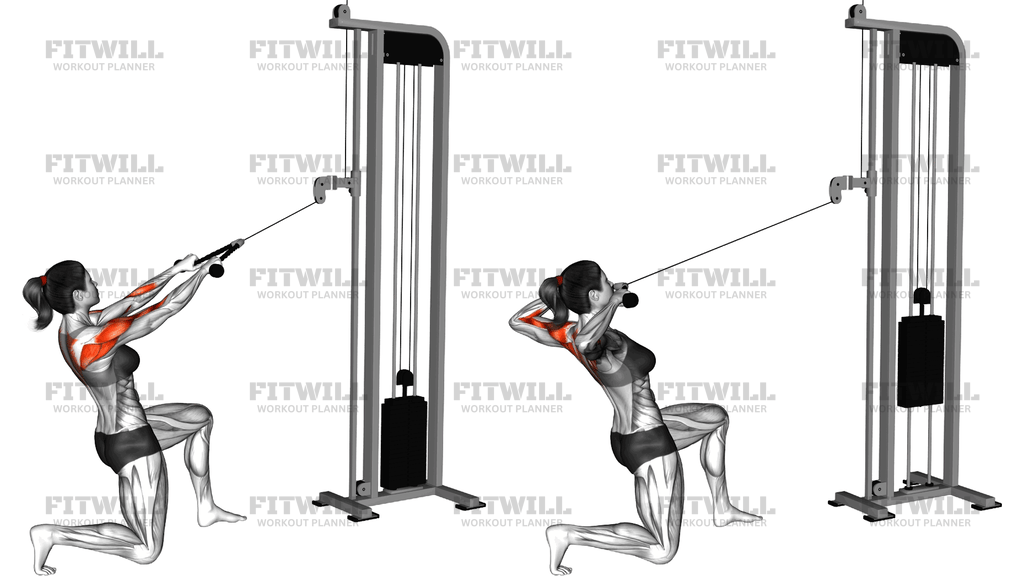
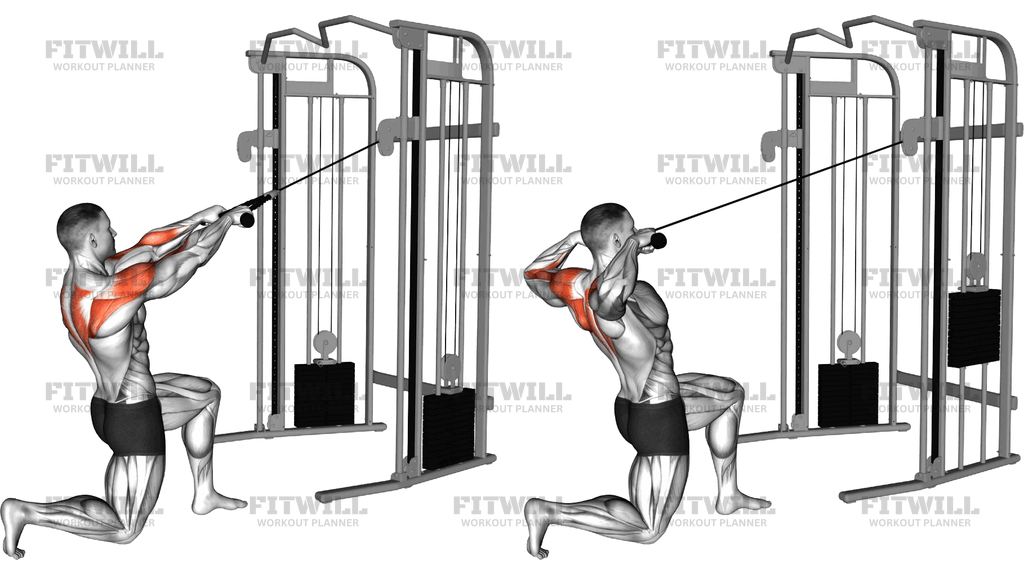
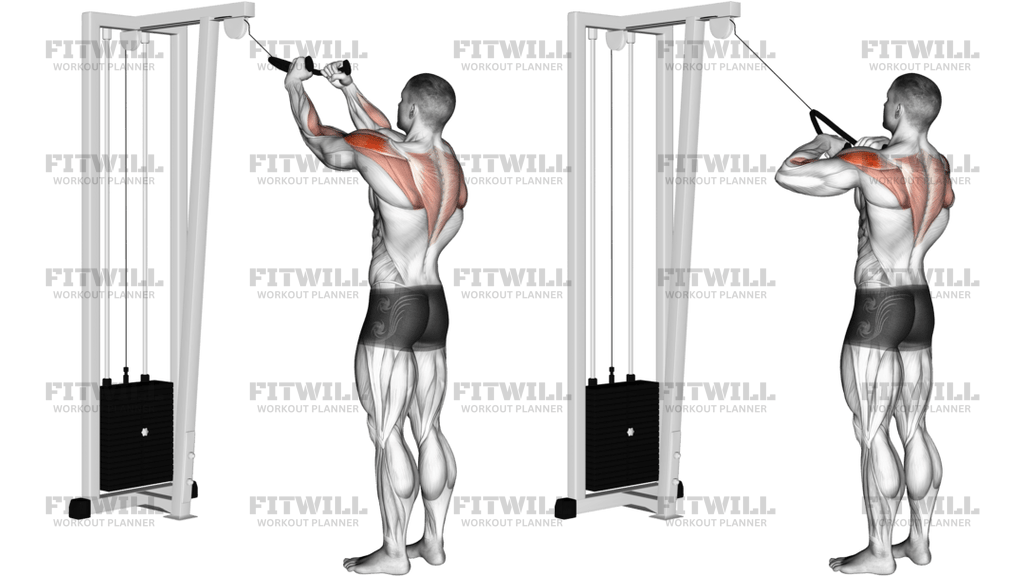
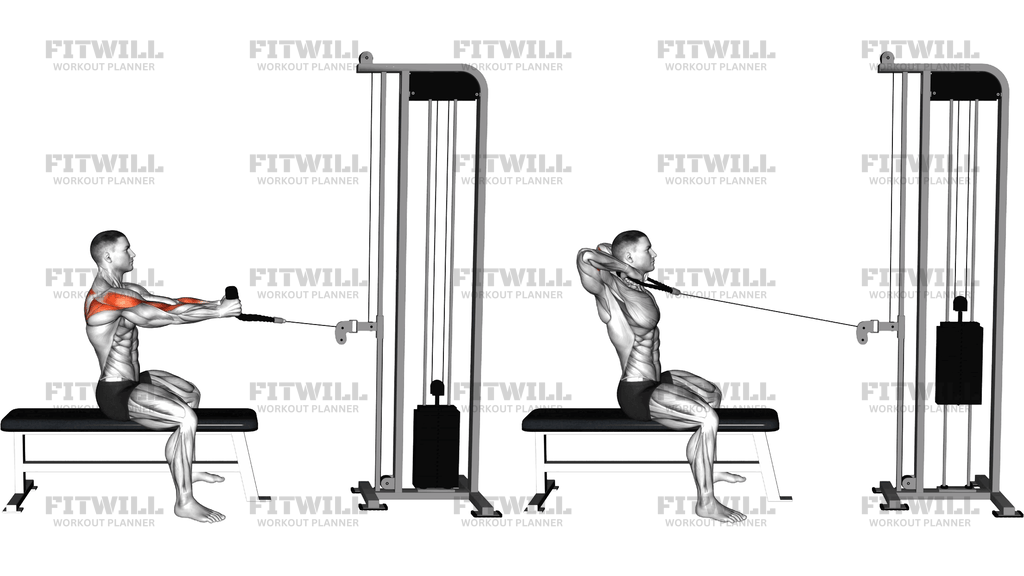
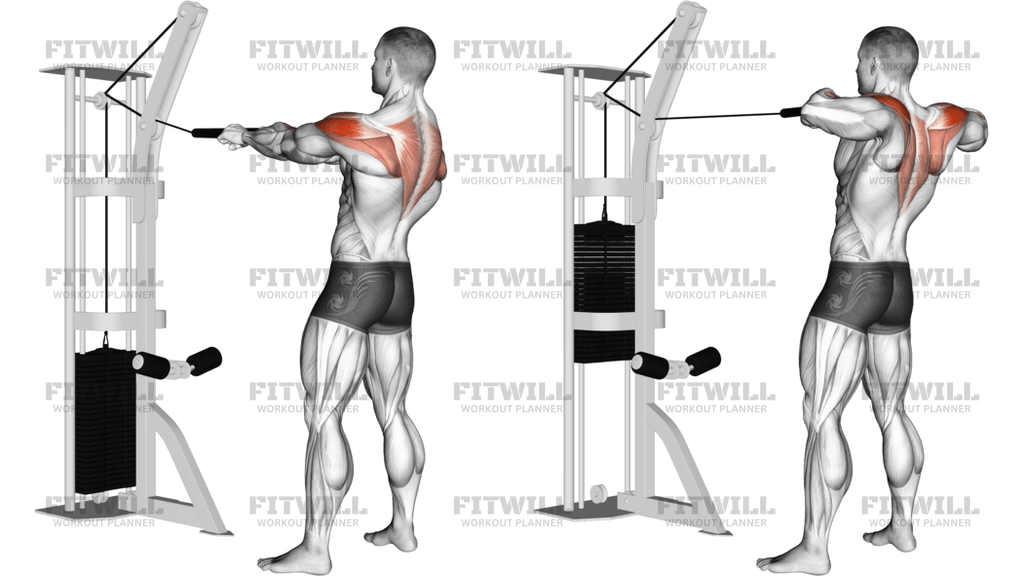
Cable Seated Row To Neck (Rope Attachment)
The Cable Seated Row To Neck With Rope Attachment is an upper-back pull performed on a cable station with a rope handle set at roughly chest height. You sit facing the machine on a flat bench, take a neutral grip on the two rope ends with your arms extended forward, and pull the rope back toward your neck with your elbows flared wide. Because the rope ends travel past your head at the finish, the movement drives the shoulder blades together and places a strong emphasis on the rear delts and mid-traps rather than the lats alone.
This version of the seated row is especially useful for lifters whose pressing volume has outpaced their pulling, or anyone who feels standard rows mostly in the lats and biceps. The high elbow path and rope handle give you freedom to rotate your hands slightly apart at the end, which lets the shoulder blades retract and depress fully. That makes it a good pick for building the area between the shoulder blades and the back of the shoulders, regions that support posture and shoulder health under heavy pressing work.
Setup matters more here than in a low pulley row. The cable should run close to a straight line from the pulley to your hands when your arms are extended, and the bench should be positioned so your torso stays upright with a slight forward lean at the stretch. If the cable angle is too low, the pull turns into a conventional row; if your seat is too close, your elbows will collide with your torso and the rear-delt emphasis disappears.
To execute it well, keep your chest up and your neck relaxed, pull the rope ends apart as they approach your face, and finish with your elbows out at or above shoulder height and your hands beside your neck. Pause briefly in that contracted position, then let the rope pull your arms back to full extension while your shoulder blades protract and your upper back rounds slightly forward under control. Breathing is straightforward: exhale as you pull in, inhale as you extend.
You will see this movement used in back and shoulder days alike, often as a second or third rowing variation after heavier barbell or machine rows. Because the cable provides constant tension and the rope is easy on the wrists, it also works well as a higher-rep finishing movement. Keep the load moderate; the moment you have to jerk your torso backward or shrug violently to move the weight, the rear-delt and mid-back focus is lost and the stress shifts to the lumbar spine and traps.
[ Workout Log & Planner ]
Put your next workout in Fitwill
Keep your plan and training log ready when you are.


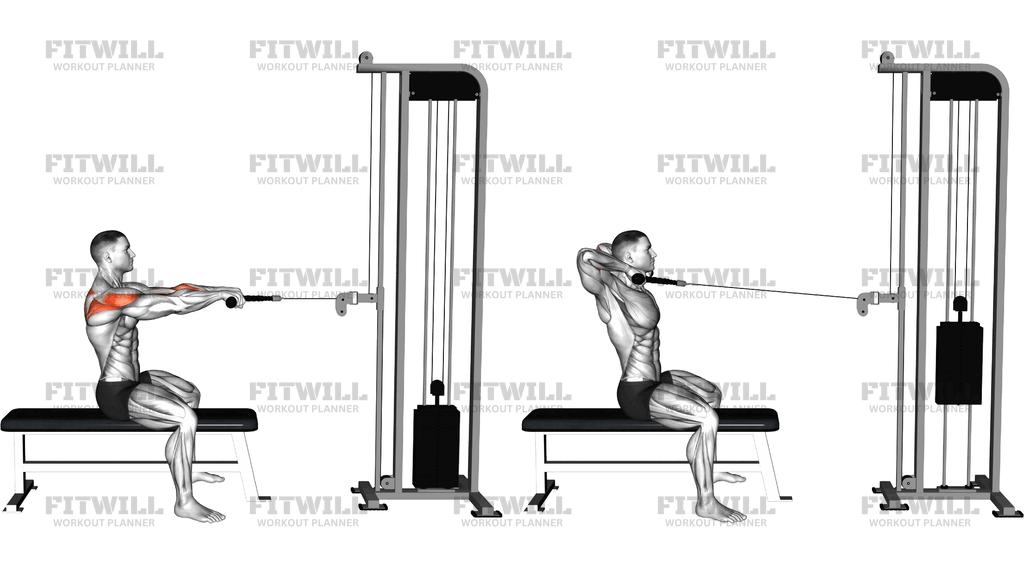
Instructions
- Set the pulley of the cable machine to roughly chest height and clip a rope attachment to the carabiner.
- Place a flat bench facing the machine so that, when seated, your extended arms meet the rope in a straight line with your torso upright and knees bent with feet flat on the floor.
- Grip one rope end in each hand with a neutral palms-facing-in grip and sit tall, arms extended forward at chest height.
- Brace your core, lift your chest, and lean back just slightly from the hips without arching your lower back.
- Pull the rope toward your neck by driving your elbows up and out to the sides, keeping them above the level of your hands throughout the pull.
- As the rope reaches your face, split the two rope ends outward so your hands finish beside your neck and your shoulder blades squeeze together.
- Hold the contracted position for a beat, feeling the rear delts and mid-back under tension.
- Slowly extend your arms forward, letting your shoulder blades spread and your upper back round gently until your arms are fully straight.
- Exhale during the pull toward your neck and inhale as you return to the stretched position.
- Complete your repetitions, then release the rope and stand up from the bench to reset.
Tips & Tricks
- Keep the elbows the moving part of the pull. If your hands race ahead of your elbows, the movement degrades into a biceps curl toward the chin instead of a row to the neck.
- Actively pull the rope ends apart at the finish. Letting your hands stay together shortens the range and robs the rear delts of the end-range contraction.
- Do not over-shrug. If your traps bunch up toward your ears at the end of every rep, drop the weight slightly and focus on pulling the elbows back and down rather than up.
- Watch the cable line. If the rope drags along your thighs or the pulley sits below chest height, reposition the machine or bench so the pull runs level to your shoulders.
- Avoid leaning back more than a few degrees as the set gets hard. Rocking your torso turns the exercise into a hip-driven heave and unloads the mid-back.
- Let your upper back round slightly at full arm extension instead of holding a rigid chest-up position at the stretch. This small protraction increases the working range for the rhomboids and rear delts.
- Because the rope pulls past your head, keep your chin tucked and neck neutral so you are not craning forward to meet the handle.
- Use lighter loads and higher reps than you would for a standard seated row. The rear delts and mid-traps respond better to controlled tension than to momentum.
- If the rope ends slip from your grip on heavy sets, choke up closer to the rubber stops rather than squeezing harder with your forearms.
Frequently Asked Questions
Which muscles does the Cable Seated Row To Neck (Rope Attachment) work?
The primary targets are the rear delts, mid-traps, and rhomboids, with the upper traps, lats, biceps, and forearms assisting. Because you pull to neck level with elbows flared, the emphasis sits higher on the back than in a standard low row.
Why pull the rope to the neck instead of the stomach?
Pulling to neck level forces the elbows out wide, which biases the rear delts and upper-back muscles. A pull to the stomach keeps the elbows low and shifts the work toward the lats.
How high should the cable pulley be set for this exercise?
Set the pulley at roughly chest height so the rope runs in a straight, level line from the machine to your hands with your arms extended. A much lower pulley turns the movement into a conventional seated row.
Can beginners do the Cable Seated Row To Neck (Rope Attachment)?
Yes, as long as the weight is kept light and the focus stays on the elbow path. Beginners often benefit from starting with fewer sets than their regular rows because the small mid-back muscles fatigue quickly.
What is the most common mistake in this exercise?
Jerking the torso backward and shrugging the shoulders to move the load. Both errors shift tension away from the rear delts and rhomboids and put unnecessary strain on the lower back and neck.
What can I use if my gym has no rope attachment?
Two single stirrup handles on the same pulley, or a cable bar held with a wide overhand grip, can replicate a similar high-elbow pull, though the rope allows the best hand separation at the finish.
How does this exercise differ from a face pull?
The setup and end position are similar, but this is a seated row with a straighter cable line and a stronger horizontal pull, so the mid-back and lats contribute more, while a face pull uses a higher pulley angle and rotates the shoulders more externally.
Is it safe to pull the rope toward my neck?
Yes, as long as your chin stays tucked and you keep the rope ends to the sides of your neck rather than letting them strike your throat. Start with a light weight to learn the path before loading up.
How many sets and reps work best for this movement?
Most lifters get the most from 3-4 sets of 10-15 controlled reps. The rear-delt and mid-back emphasis rewards tempo and a brief pause at the contracted position more than heavy loads.