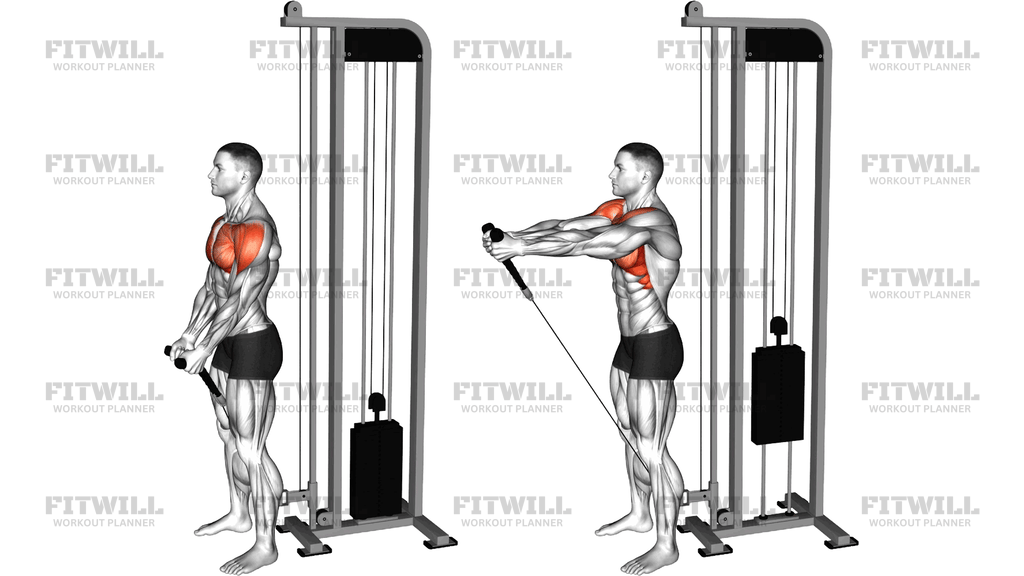
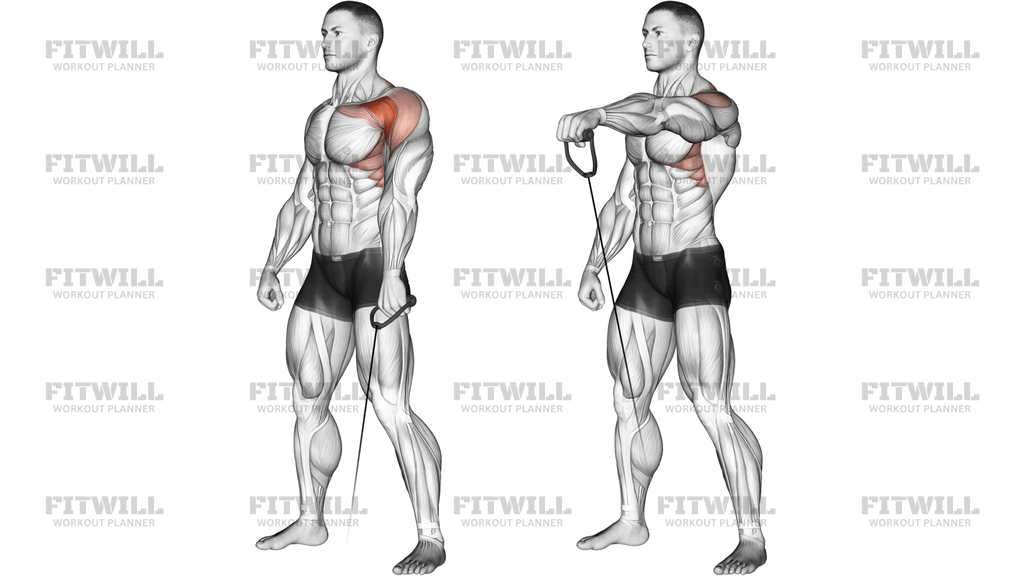
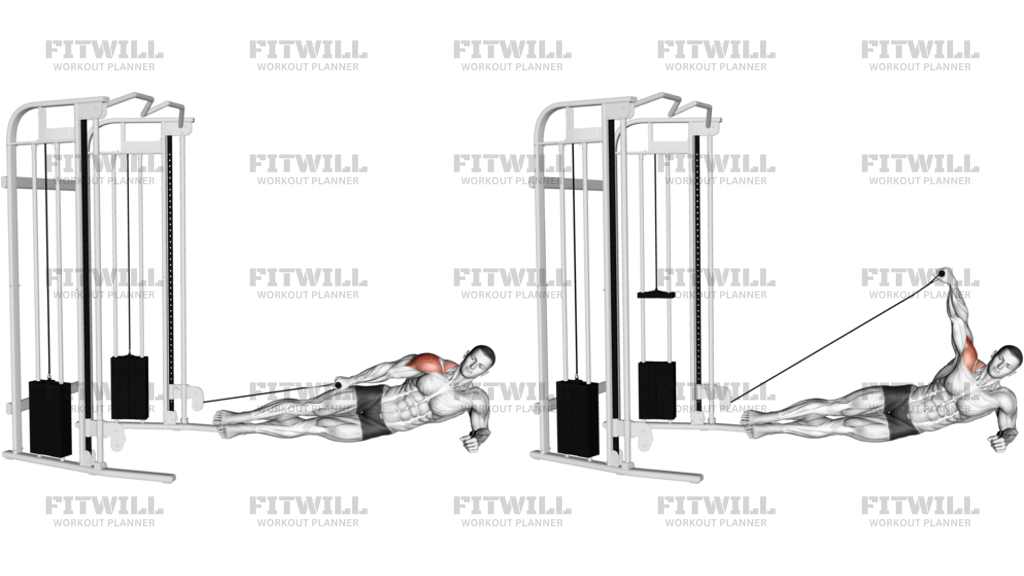
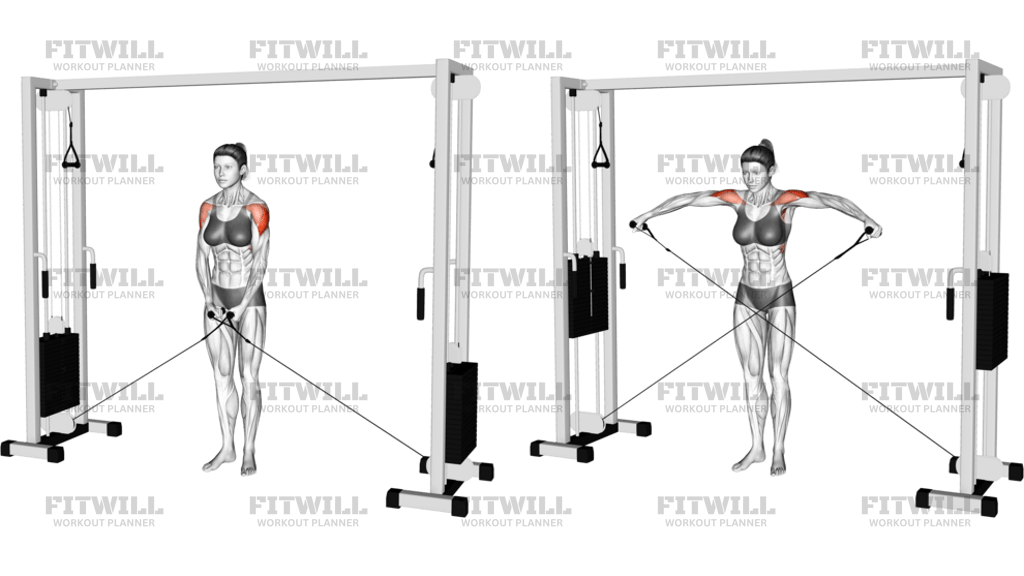
Cable Standing Rear Delt Horizontal Row With Rope
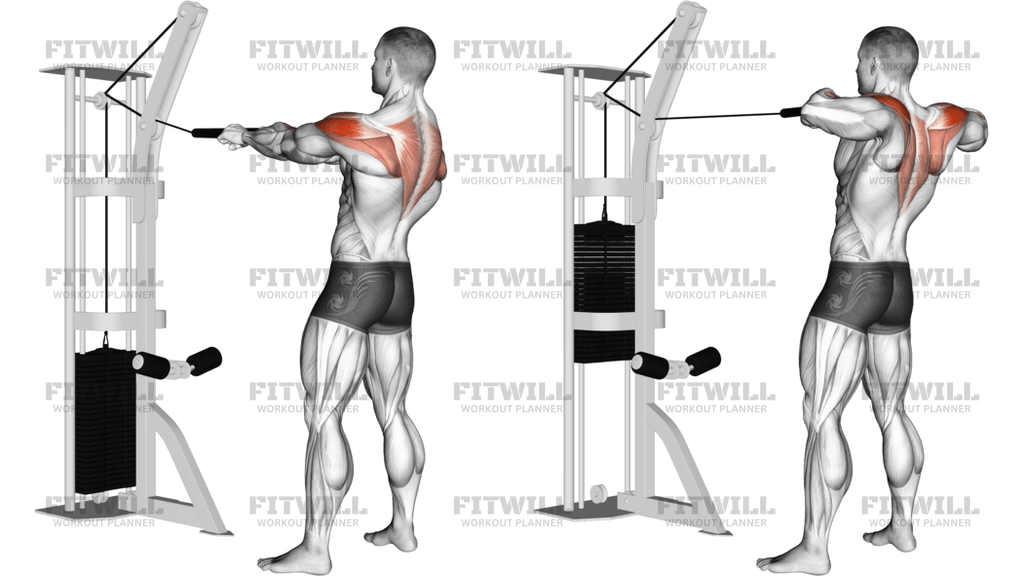
Cable Standing Rear Delt Horizontal Row With Rope is a standing cable exercise that keeps constant tension on the rear shoulders while also involving the upper back and arms. The pulley path and rope attachment let you pull the elbows out and back in a horizontal line, which makes the movement especially useful when you want to train the rear delts without needing a lot of body English or heavy loading.
The main job of Cable Standing Rear Delt Horizontal Row With Rope is to strengthen the rear head of the deltoid while the rhomboids, middle and lower traps, and triceps help stabilize the pull. It is a practical accessory movement for shoulder balance, posture-focused upper-back work, and hypertrophy work when you want the back of the shoulder to do the bulk of the work rather than the lats taking over.
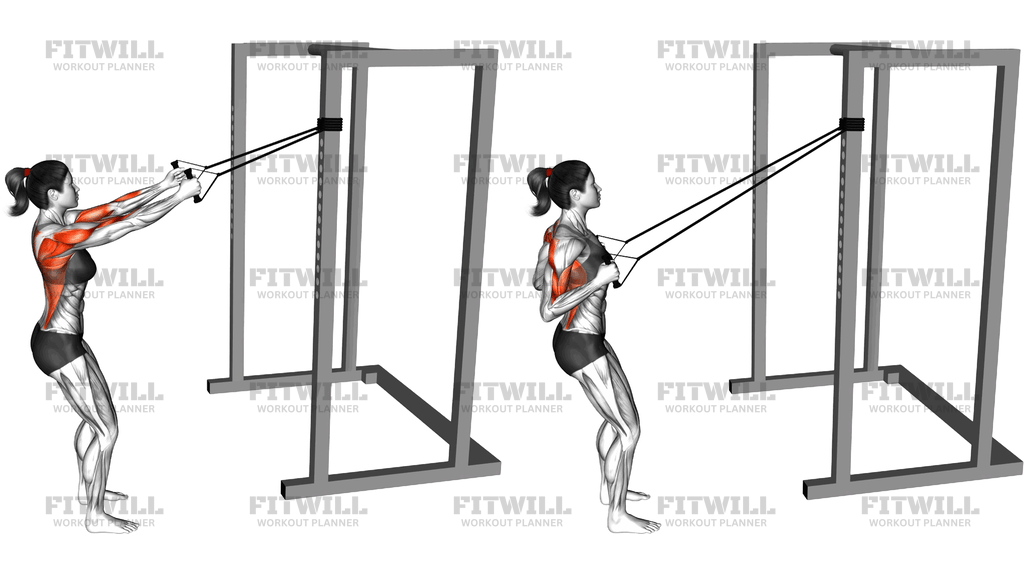
The setup matters because the cable height and your distance from the stack determine the line of pull. Set the pulley around upper-chest to shoulder height, step back until the weight is just off the stack, and stand tall with a soft bend in the knees. Hold the rope with a neutral grip, keep the chest lifted, and let the arms start long in front of you without shrugging the shoulders up toward the ears.
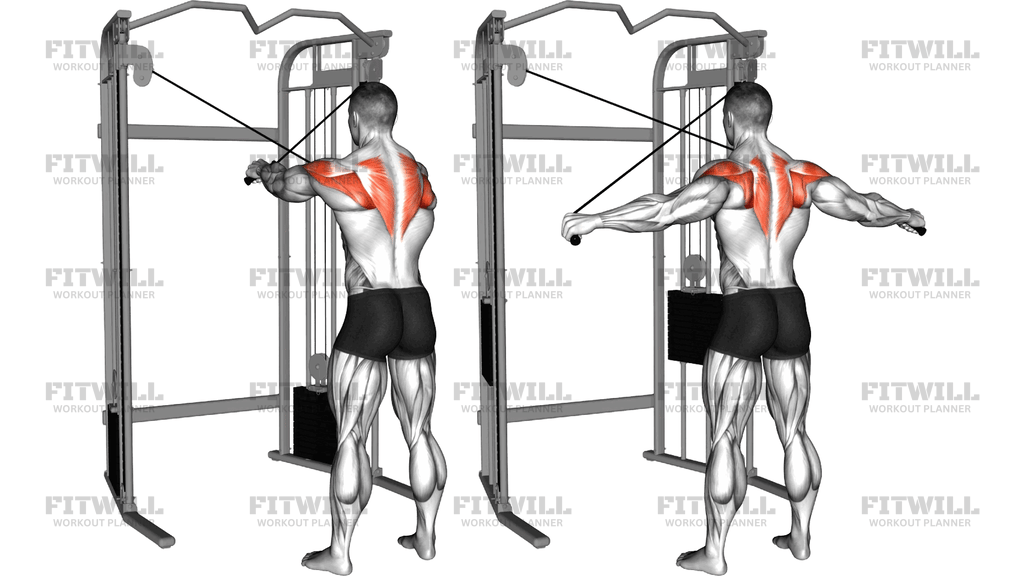
Each repetition should travel in a wide horizontal arc driven by the elbows, not by the hands. Pull the rope apart as the elbows sweep out and back, then finish with the upper arms roughly in line with the torso or slightly behind it, depending on your shoulder comfort and the machine angle. The rear delts should feel like they are finishing the rep, while the upper traps stay quiet and the neck stays long.
This exercise works well as a light-to-moderate load accessory after presses, rows, or pull work, and it also fits well in shoulder-prehab style training when you want cleaner scapular control. Use slower returns than pulls, keep the ribcage from flaring, and stop the set if you have to swing your torso or turn the motion into a lat row. Beginners can use it, but only if they keep the pull small, the stance steady, and the rope path honest.
[ Workout Log & Planner ]
Put your next workout in Fitwill
Keep your plan and training log ready when you are.


Instructions
- Set the cable pulley around upper-chest to shoulder height and clip on the rope attachment.
- Step back from the stack until the weight lifts, then stand facing the machine with feet about hip-width apart and knees softly bent.
- Hold the rope with both hands in a neutral grip, arms extended in front of your chest, and keep your shoulders down away from your ears.
- Brace your midsection and keep your torso tall without leaning back or twisting.
- Pull the rope out and back in a wide horizontal arc by driving your elbows out to the sides.
- Finish with your hands near the outside of your chest and your rear shoulders squeezed, not your upper traps.
- Pause briefly at the end of the pull while keeping your wrists straight and neck relaxed.
- Return the rope forward under control until your arms are long again and the cable stays under tension.
- Exhale as you pull, inhale as you return, and reset your stance before the next rep if your balance shifts.
Tips & Tricks
- A higher pulley usually gives a cleaner rear-delt line of pull than a low setting, so adjust the stack before you start loading the set.
- Think about moving your elbows, not your hands; if the hands lead, the movement often turns into a biceps-heavy row.
- Keep the rope just below shoulder level at the finish instead of yanking it toward your face, which tends to recruit more traps.
- If you feel your lower back arching, shorten the reach and bring your ribs back over your pelvis before the next rep.
- A staggered stance can help if the cable wants to pull you forward, but keep both hips square to the machine.
- Use a lighter load than you would for a standard row; rear delts usually respond better to crisp reps than to heavy grinding.
- Let the shoulders stay down and wide on the return so the neck does not take over the set.
- If the lats dominate, slightly flare the elbows more and reduce the range until the back of the shoulders starts the pull again.
Frequently Asked Questions
What muscle does Cable Standing Rear Delt Horizontal Row With Rope target most?
The rear delts are the main target, with the rhomboids and middle traps helping finish the pull.
Where should the rope be set for Cable Standing Rear Delt Horizontal Row With Rope?
A pulley around upper-chest to shoulder height usually matches the horizontal row path best and keeps tension on the rear shoulders.
Should my elbows stay high during Cable Standing Rear Delt Horizontal Row With Rope?
Yes, the elbows should travel out and back in line with the shoulders. If they drop too much, the movement starts turning into more of a standard row.
How is Cable Standing Rear Delt Horizontal Row With Rope different from a face pull?
This row stays more horizontal and focuses on pulling the elbows back, while a face pull finishes higher and usually includes more external rotation.
Can beginners do Cable Standing Rear Delt Horizontal Row With Rope safely?
Yes, as long as the load is light enough to keep the torso still and the pull small and controlled.
Why use a rope instead of a straight bar or handle?
The rope lets your hands separate a bit at the finish, which often makes it easier to keep the elbows out and the rear delts working.
What mistake makes Cable Standing Rear Delt Horizontal Row With Rope turn into a trap exercise?
Shrugging the shoulders up toward the ears shifts the work away from the rear delts. Keep the neck long and the shoulders down as you pull.
Where should I feel Cable Standing Rear Delt Horizontal Row With Rope?
You should feel the back of the shoulders working first, with some upper-back tension near the shoulder blades near the end of each rep.
What rep range works well for Cable Standing Rear Delt Horizontal Row With Rope?
Moderate-to-higher reps usually work best because the exercise is most useful when the pull stays clean and the rear delts keep the tension.