Dumbbell Biceps Curl Squat
The Dumbbell Biceps Curl Squat is a compound movement that pairs a bodyweight-style squat with a simultaneous biceps curl, using a pair of dumbbells held at your sides. Instead of treating arm and leg work as two separate exercises, you fold them into one rep: as you descend into the squat, your elbows bend and the dumbbells curl up in front of you, and both movements reverse together on the way back to standing. The result is a time-efficient exercise that trains the quads, glutes, and biceps in the same breath.
This combination suits lifters who want more out of shorter sessions, such as busy people training at home with limited equipment, or intermediate gym-goers looking for a finisher that keeps the heart rate elevated while still building muscle. Because the arms move with the legs rather than against a stable torso, your core and grip also stay busy throughout every rep.
The setup matters more than it might seem. A shoulder-width or slightly wider stance with toes turned out a few degrees gives your hips room to sink into a deep squat, and holding the dumbbells with a neutral grip at your sides keeps your shoulders relaxed. When you curl as you descend, the dumbbells travel up in front of your shoulders, which naturally encourages an upright chest and balanced weight through your midfoot.
To execute it well, think of the squat and the curl as one synchronized action rather than two exercises stapled together. Your elbows stay pinned to your ribs as the dumbbells rise, your knees track over your toes, and your heels stay glued to the floor. Descend to a depth you can control with a flat back, then drive through the floor and lower the dumbbells back to your sides as you stand tall.
The most common issues are letting the elbows drift forward during the curl, rushing the descent so the lower back rounds at the bottom, and choosing dumbbells heavy enough for the legs but too heavy for strict arm mechanics. Pick a load the biceps can handle with clean form, and let the squat depth reflect your mobility rather than your ego. Done with control, this is a joint-friendly way to accumulate quality volume for both the upper arms and lower body in a single pattern.
[ Workout Log & Planner ]
Put your next workout in Fitwill
Keep your plan and training log ready when you are.


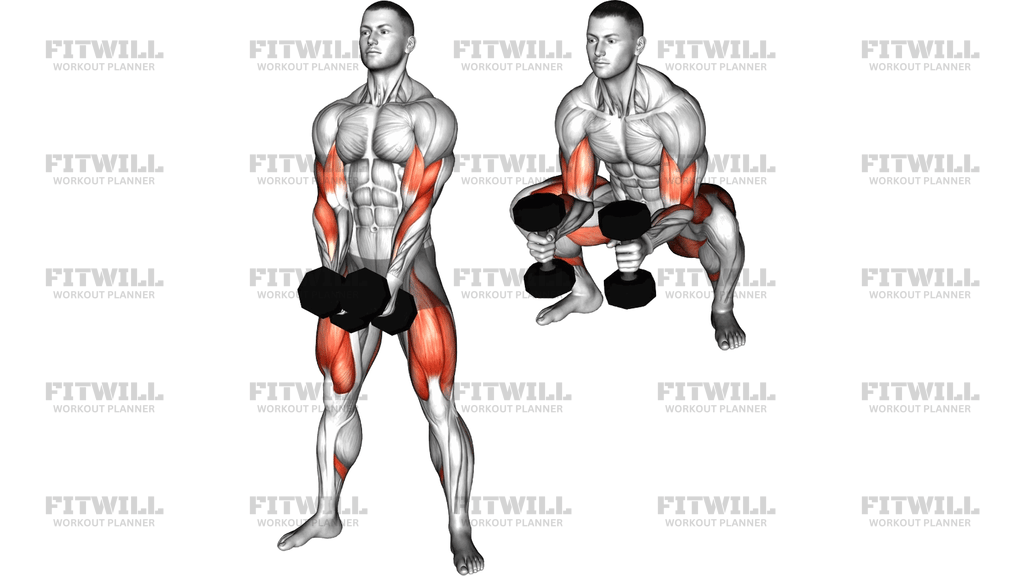
Instructions
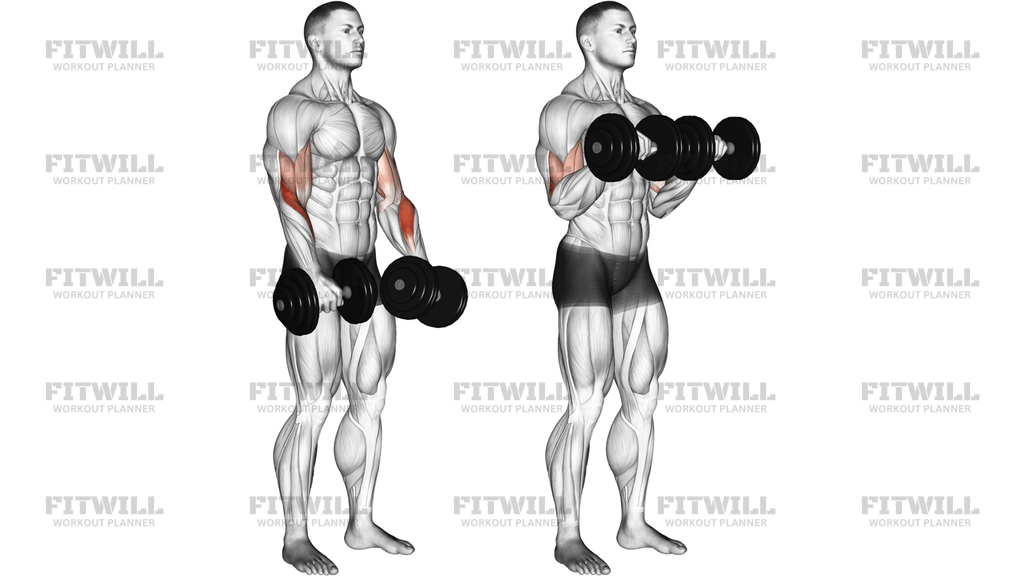
- Stand with your feet shoulder-width apart or slightly wider, toes turned out slightly, holding a dumbbell in each hand with a neutral grip at your sides.
- Draw your shoulders back and down, lift your chest, and set your eyes on a point straight ahead so your spine stays neutral.
- Brace your core as if bracing for a light punch, and shift your weight evenly across your whole foot with heels firmly planted.
- Begin the descent by pushing your hips back and bending your knees, and at the same time curl both dumbbells up toward your shoulders, keeping your elbows fixed against your ribs.
- Lower into the squat until your thighs are at least parallel to the floor or as deep as your mobility allows, with the dumbbells fully curled at the bottom position.
- Pause briefly at the bottom, keeping your chest up and your weight through your midfoot and heels.
- Drive through the floor to stand back up, lowering the dumbbells under control back to the starting position at your sides as your legs extend.
- Exhale as you rise and straighten your arms; inhale at the top before starting the next rep.
- Reset your brace and stance at the top of each rep, making sure your knees finish fully extended but not locked before beginning the next repetition.
Tips & Tricks
- Match the tempo of the curl to the tempo of the squat. If the dumbbells arrive at your shoulders before you reach depth, the arms are doing a separate exercise and the timing benefit is lost.
- Keep your upper arms vertical and elbows tucked to your sides. Letting the elbows drift forward turns the curl into a front raise and shifts tension away from the biceps.
- Choose a dumbbell weight based on your curl strength, not your squat strength. The legs can handle far more than the arms, and an oversized load usually shows up as swinging or a rounded lower back.
- If your heels lift at the bottom, widen your stance slightly or place your heels on a thin, stable surface. Losing heel contact under load is the fastest way to lose balance in this movement.
- Squeeze the biceps hard at the bottom of the squat rather than resting the dumbbells on your thighs, which quietly removes most of the arm work.
- Keep your wrists straight and firm throughout the curl. Bent wrists under load are a common cause of forearm and elbow discomfort in this pattern.
- Control the way down for two to three seconds. The deep squat position is where form tends to collapse, and a slower eccentric keeps your torso upright and your knees tracking over your toes.
- If your grip fails before your legs or biceps, switch to a slightly lighter pair or use dumbbells with a thicker handle grip only as your grip improves, rather than loosening your hold mid-rep.
Frequently Asked Questions
What muscles does the Dumbbell Biceps Curl Squat work?
The primary movers are the biceps during the curl and the quads and glutes during the squat. Your forearms, grip, and core also work to hold the dumbbells and keep your torso stable throughout the rep.
Should I curl on the way down, at the bottom, or on the way up?
Curling as you descend and lowering the dumbbells as you rise keeps the two movements synchronized and spreads the effort across the whole rep. Curling only at the bottom tends to turn into a brief pause exercise and often leads to swinging.
Is the Dumbbell Biceps Curl Squat good for beginners?
Yes, as long as you start light and can already perform a bodyweight squat with a neutral spine. Master the squat pattern and the curl separately first, then combine them with modest dumbbells.
Why do my elbows keep drifting forward when I squat and curl?
Forward-drifting elbows usually mean the weight is too heavy or the cue to keep the upper arms vertical has been lost. Lighten the load and imagine your elbows are glued to your ribs as the dumbbells arc up toward your shoulders.
Can I use this exercise instead of separate squats and curls?
It works well as a time-saver, but the load will always be limited by your biceps, so your legs get less resistance than in a dedicated barbell or heavy dumbbell squat. Use it alongside, not instead of, heavier lower body work if leg strength is a priority.
How deep should I squat while holding the curl at the bottom?
Descend to thighs parallel or as deep as you can go while keeping your chest up, heels down, and back flat. If the curl position pulls you onto your toes at full depth, reduce the depth slightly and work on hip and ankle mobility over time.
What weight should I start with for the Dumbbell Biceps Curl Squat?
Start with a pair you could curl for about 10 to 12 strict reps, which is usually well below what your legs could handle. You can always progress the load once your timing and elbow position stay clean under fatigue.
What can I substitute if I only have one dumbbell?
Hold a single dumbbell horizontally with both hands in front of your chest or at your sides and perform the same synchronized squat and curl. A kettlebell works well for this version too.
Is it safe for my knees and lower back?
When your heels stay down, knees track over your toes, and torso remains upright, the movement is a controlled, joint-friendly pattern. Avoid bouncing out of the bottom and stop at a depth where your form stays solid.