Elbow Planche
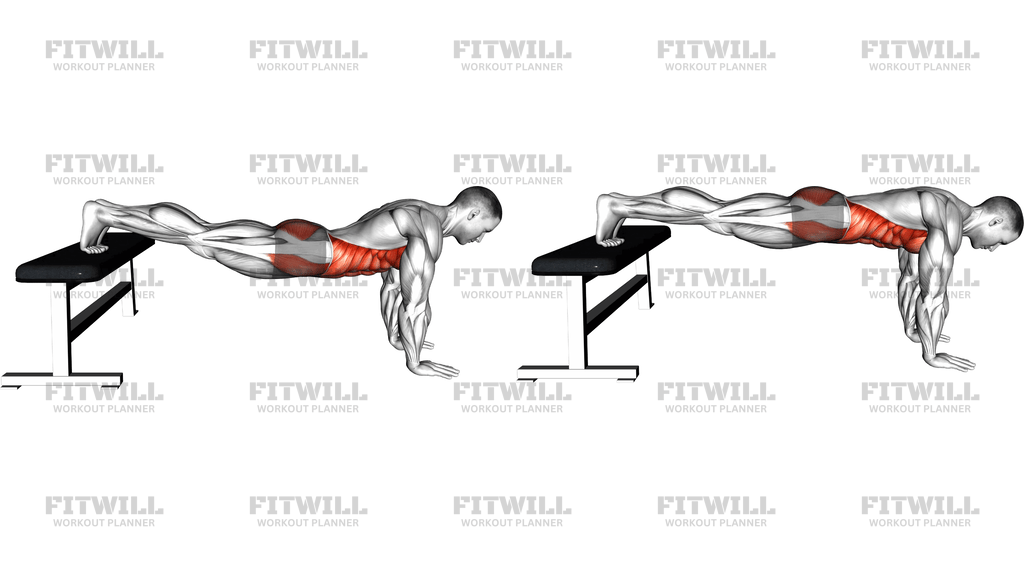
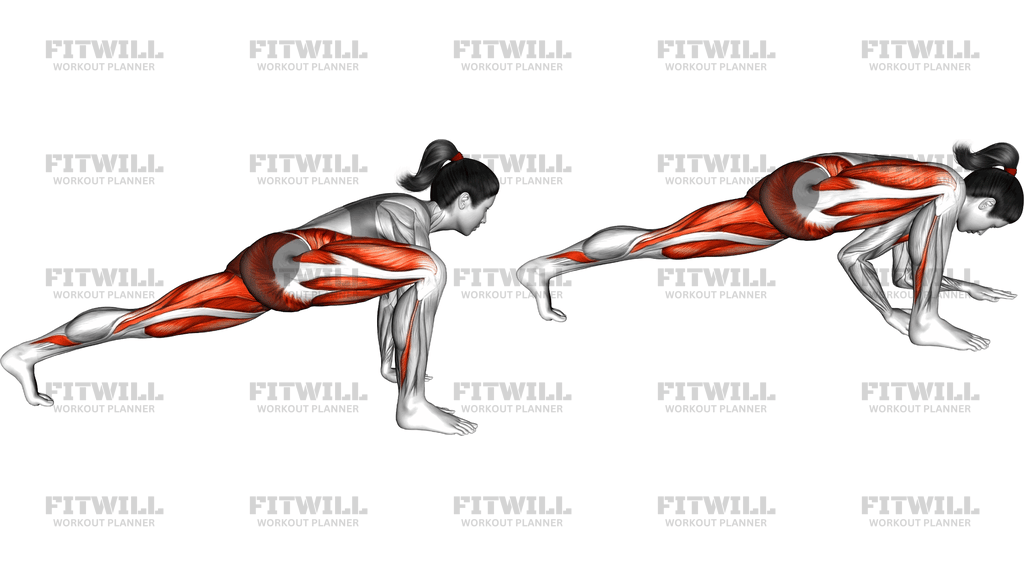
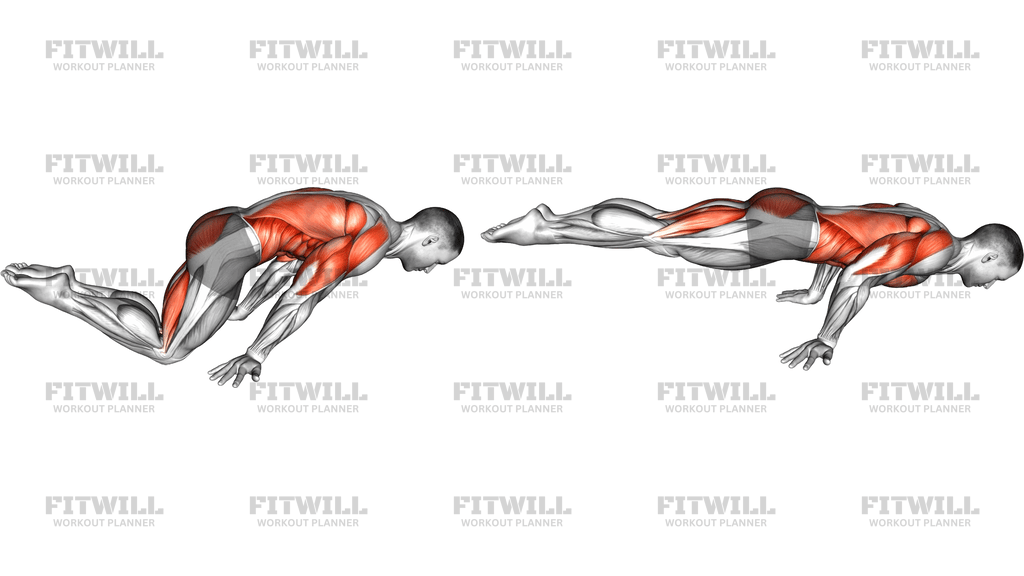
The Elbow Planche, also known as an elbow lever, is a static hold where you support your full body weight on your forearms and hands while holding your body in a straight, horizontal line just above the floor. Unlike a standard plank, your feet stay on the ground only in the easiest variations; in the full version, your legs lift off entirely and your body floats parallel to the floor, balanced over your arms. The image shows both stages clearly: a bent-knee entry position with the hips raised, and the finished hold with the legs extended and the whole body level.
This movement is a staple in calisthenics and gymnastics-style strength training because it bridges the gap between basic planks and advanced planche work. It demands serious straight-arm strength through the shoulders and triceps, strong scapular control, and the ability to brace the trunk hard enough to keep the hips from sagging or the legs from dropping. The highlight areas are the front delts, triceps, and the entire midsection, with the glutes and lower back working to hold the legs in line.
Setup matters more than most people expect. Because your forearms create a narrow base, small changes in hand placement shift your balance point dramatically. Placing the hands slightly wider than the elbows, fingers spread, gives you a stable tripod to press into, and keeping the elbows tucked near the ribs stops you from tipping forward onto your face. The knee-bent version shown on the left is the natural starting point: it teaches the press and the hip position before you remove the feet from the floor.
Execution is about pressing, not just holding. Drive the palms and forearms down into the floor, push the upper back toward the ceiling, squeeze the glutes, and lift the legs until your body forms one straight line from heels to head. Breathing should stay slow and controlled while you brace, and the descent back to the floor should be deliberate rather than a collapse. Most people train this in timed holds of five to fifteen seconds, resting fully between sets.
The Elbow Planche is useful for calisthenics athletes building toward full planche or Maltese positions, grapplers and wrestlers who spend time on their forearms, and anyone who has plateaued on regular planks and needs a harder straight-arm challenge. If you cannot yet hold the full version, the knee-supported variation is a legitimate training position, not a shortcut, and it should make up the bulk of your early practice.
[ Workout Log & Planner ]
Put your next workout in Fitwill
Keep your plan and training log ready when you are.


Instructions
- Kneel on the floor and place your palms flat, roughly shoulder-width apart, with your forearms resting on the ground so your elbows sit just outside your ribs.
- Spread your fingers and grip the floor, then walk your knees back until your hips are elevated and your shoulders are slightly ahead of your elbows.
- Brace your abdominals and squeeze your glutes before any weight shifts forward, so your trunk is already tight when the load arrives.
- Lean your weight over your forearms and press hard into the floor, pushing your upper back up rather than sinking between the shoulders.
- In the knee-assisted version, hold with your knees resting lightly on the ground and hips in line with your shoulders; for the full version, lift both feet off the floor and extend your legs straight back until your body is parallel to the ground.
- Point your toes, keep your neck neutral by looking at the floor slightly ahead of your hands, and hold the line without letting the hips sag or pike.
- Breathe in shallow, steady breaths through the hold instead of holding your breath and straining.
- To finish, lower your feet back to the floor under control in the reverse order, release the press, and sit back to rest.
- Rest fully between holds, then reset your hand position and brace from scratch before the next attempt rather than rushing back up.
Tips & Tricks
- If you keep tipping forward onto your chest, your shoulders have drifted behind your elbows. Shift your weight back slightly so the balance point sits over your forearms.
- Sagging hips are the most common fault in the Elbow Planche. Re-squeeze the glutes and pull the ribs down toward the pelvis before you lift the legs, not after.
- Keep the elbows tucked close to the ribs. Flaring them outward turns the hold into an unstable chest press and puts extra stress on the shoulder joint.
- Press the floor away actively throughout the hold. Letting your torso sink between your shoulder blades is a sign the serratus and front delts have stopped working.
- Master the bent-knee version for weeks before extending the legs. If your knees still carry weight in the full position, the hold does not count and you are reinforcing a weak line.
- Short, frequent holds build straight-arm strength better than one long grind. Stop the set the moment your hips drop, not when your arms give out completely.
- Warm up the wrists and elbows with some presses and circles first, since the straight-arm position loads those joints directly.
- Train on a firm surface. A soft mattress or thick pad makes the forearm base wobble and hides whether your body line is actually straight.
- If wrist discomfort limits you, use push-up handles or parallettes to keep the wrists neutral while your forearms stay on the bars.
Frequently Asked Questions
What muscles does the Elbow Planche work?
The primary work is done by the front delts and triceps as they press and hold the straight-arm position, with the abs, glutes, and lower back keeping the body rigid in a horizontal line. The chest and upper back assist with stabilizing the shoulder girdle.
Is the Elbow Planche suitable for beginners?
The full version is too demanding for most beginners, but the bent-knee version shown alongside it is a safe entry point. Start with short knee-supported holds and only extend the legs once you can hold a clean line for twenty to thirty seconds.
How is the Elbow Planche different from a regular forearm plank?
In a forearm plank your feet stay on the floor and the load angle is mild, while the Elbow Planche lifts the legs off the ground so your entire body weight balances over your forearms. That shifts far more load into the shoulders and triceps and requires much tighter core bracing.
Why do my hips keep dropping during the Elbow Planche?
Dropping hips usually mean the glutes and abs are not engaged, or the hold has simply outlasted your current strength. Squeeze the glutes hard before lifting the legs, and cut the set short rather than letting the line break.
How long should I hold the Elbow Planche?
Aim for quality holds of five to fifteen seconds with full rest between sets, totalling three to five working sets. Long, sloppy holds with sagging hips teach poor positioning and do less for straight-arm strength.
Can I use the Elbow Planche to build toward a full planche?
It is a useful early step because it develops straight-arm pressing strength and body tension, but the full planche also needs significant deltoid and biceps tendon capacity built through lean holds and progressions like the tuck planche. Treat the Elbow Planche as one piece of a longer progression.
Where exactly should my hands and elbows be placed?
Place your palms flat about shoulder-width apart with fingers spread, and let your forearms rest so your elbows sit just outside your ribs. This narrow base keeps your balance point over your forearms instead of dumping weight toward your head.
Are there substitutions if the Elbow Planche is too hard?
The bent-knee elbow lever is the direct substitute, and a regular forearm plank with an active floor press is an easier regression. Raising the hands slightly on parallettes can also help if wrist mobility is the limiting factor.
Is the Elbow Planche safe for the elbows and wrists?
It is generally safe when you build up gradually, keep the elbows tucked, and stop before form breaks down, but the straight-arm position does load the elbow joint directly. Anyone with existing elbow or wrist pain should clear the movement with a professional first and use parallettes if the wrist angle is uncomfortable.