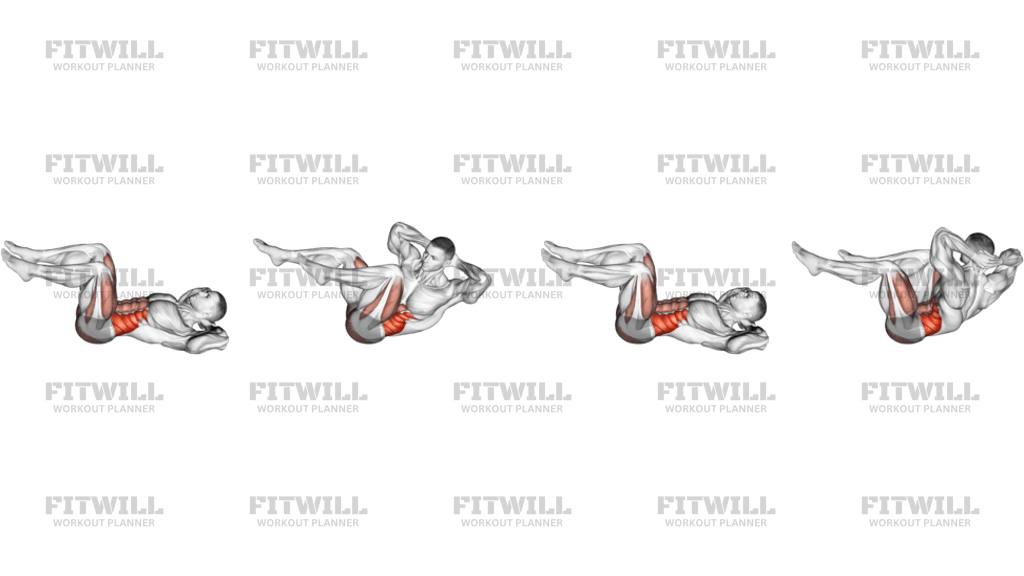
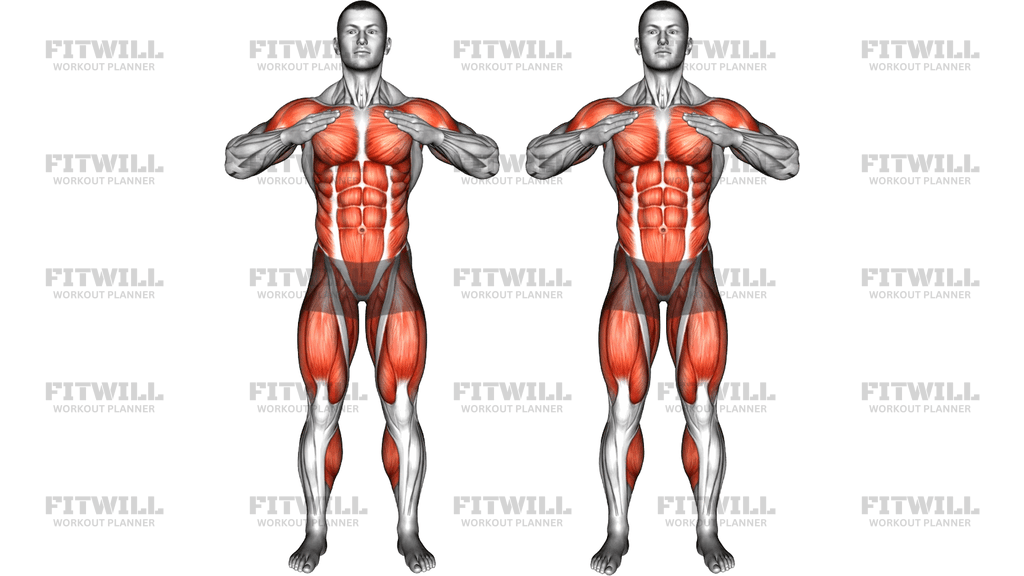
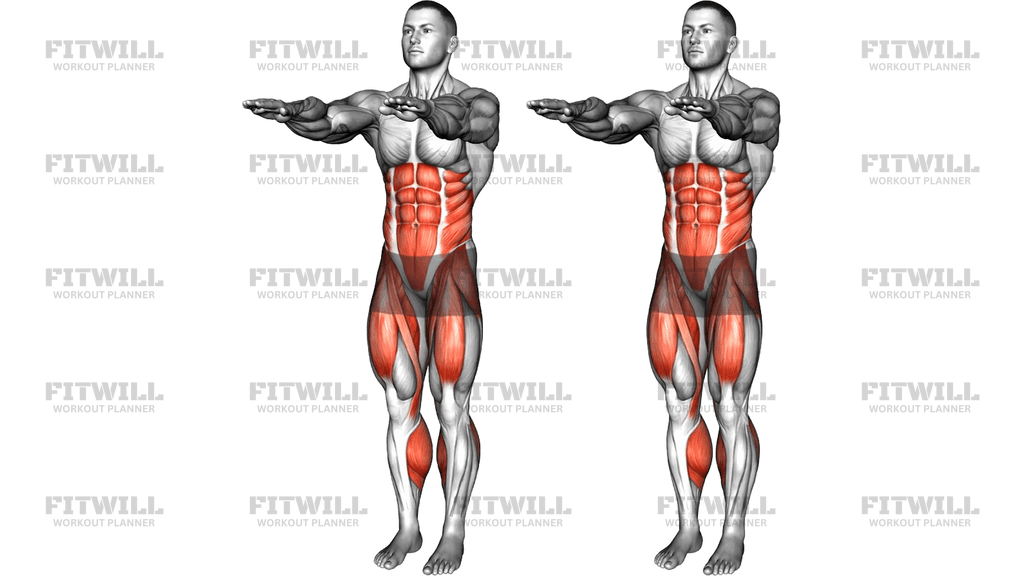
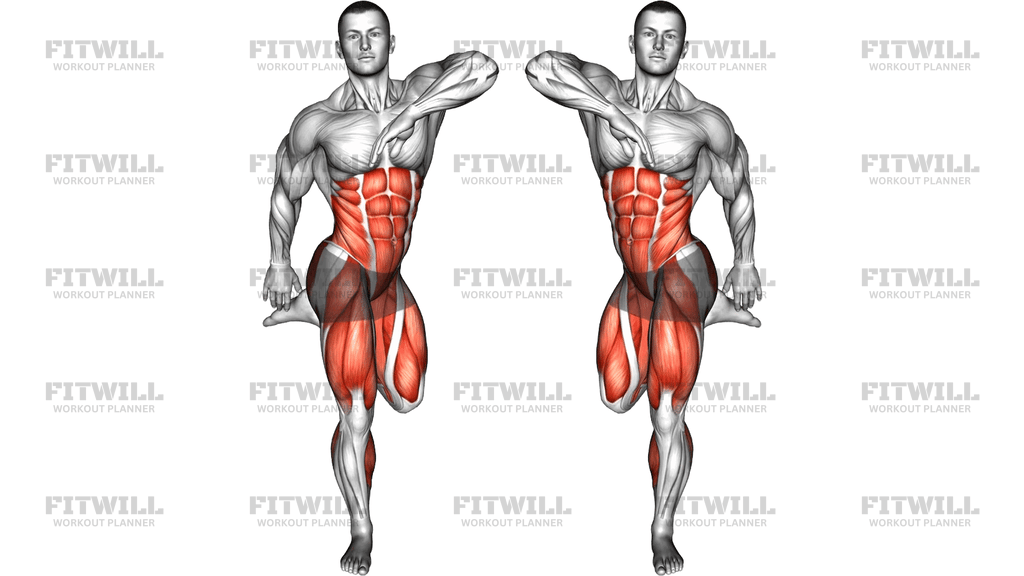
Lying Raised Shoulders Windshield Wiper
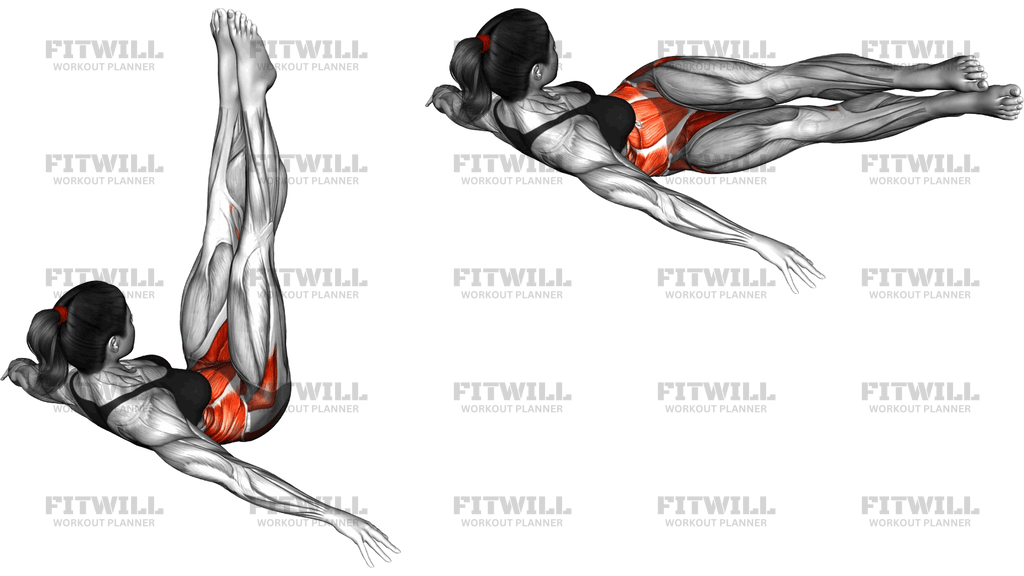
The Lying Raised Shoulders Windshield Wiper is a body weight core rotation drill performed on your back with the legs lifted straight up toward the ceiling and the arms spread wide for support. From that stacked position, you sweep your straight legs from side to side like the blades of a windshield wiper, lowering them toward the floor on each side before pulling them back through vertical. The name comes from the shoulder position: the upper back and shoulders stay raised and actively pressed into the movement rather than relaxing into the floor, which keeps the trunk under constant tension from start to finish.
This exercise is mostly about the obliques. Because the legs act as a long, heavy lever rotating around your spine, the side wall of your core has to work hard to control the descent, stop the rotation, and return the legs to center. The lower abs and deep core muscles work to hold the pelvis steady, while the hip flexors assist as the legs travel through the arc. It is a control exercise before it is a strength exercise — the value comes from slow, deliberate sweeps, not speed.
This version suits people who already find standard lying leg rotations or bent-knee windshield wipers easy and want more challenge without adding load. Because the legs stay straight and the shoulders stay raised, the leverage and stability demands are noticeably higher. It shows up regularly in core circuits for martial arts, golf, tennis, and other rotational sports, and in mid-level to advanced ab workouts.
The setup matters more than most people expect. Your arms out to the sides at roughly shoulder height act as outriggers, and pressing them into the floor is what limits how far your trunk tips as the legs swing. Keep the knees fully straight and the feet together so both sides of the body rotate as one unit. If you let the legs separate or the knees bend, the exercise becomes easier in exactly the ways that make it less useful.
To execute it well, raise the legs to vertical first, lift the shoulders slightly off the floor with the neck relaxed, and brace the midsection as if bracing for a light punch. Sweep the legs to one side under control, let them approach but not slam into the floor, then reverse the arc through vertical to the opposite side. Each pass through center is one controlled phase, not a resting point. Exhale on the sweep away from center and inhale as the legs come back through the middle.
A few practical cautions keep this safe. Keep the lower back from arching sharply when the legs return to center, and skip or modify the exercise if rotation with straight legs bothers your lower back. Elevating the hips on a small range, bending the knees slightly, or reducing how far the legs descend are all legitimate ways to scale the movement down while keeping the rotation pattern intact.
[ Workout Log & Planner ]
Put your next workout in Fitwill
Keep your plan and training log ready when you are.


Instructions
- Lie flat on your back on an exercise mat and extend both arms straight out to your sides at about shoulder height, palms facing down.
- Raise your legs straight up until they are stacked vertically over your hips, knees fully extended and feet together.
- Lift your shoulders and upper back slightly off the mat, keep your neck neutral and eyes toward the ceiling, and press your arms into the floor to anchor your torso.
- Brace your midsection firmly and pull your ribs down so your lower back stays close to the mat before any rotation begins.
- Keeping the knees straight and feet together, sweep both legs to one side in a smooth arc, lowering them toward the floor beside you while your opposite shoulder stays anchored.
- Stop when the legs reach a comfortable end range just above the floor, holding the position for a brief moment without letting the trunk collapse.
- Reverse the arc and pull the legs back up through vertical, then continue directly into a sweep to the opposite side without pausing at center.
- Exhale as the legs sweep away from vertical, and inhale as they travel back through the middle.
- Complete the desired number of alternating sweeps, then lower the legs with control, rest the shoulders back down, and reset your position before the next set.
Tips & Tricks
- The most common mistake is dropping the legs toward the floor too fast and letting momentum swing them back up — the obliques then do almost nothing. Lower the legs as if moving through honey.
- If your trunk starts tipping over with the legs and rolling onto your side, widen your arms slightly and actively drive the opposite hand and shoulder blade into the mat.
- Bent knees make this dramatically easier by shortening the lever. If you cannot keep the knees locked out through the whole sweep, start with a slight bend and straighten them over time.
- Watch the shoulder lift: it should come from active tension in your upper back and core, not from craning your neck forward. Keep the chin tucked and neck relaxed.
- Do not let your lower back arch or your hips lift off the mat as the legs return to vertical — pull the ribs down and slow the last third of the return if the arch appears.
- Both legs must move as one rigid unit. If one leg lags behind the other, the feet are probably drifting apart; squeeze the legs together and recheck knee extension.
- A smaller arc with perfect control beats a full floor-to-floor sweep with slop. Start by descending about halfway to the floor and extend the range only when you can stop the legs at will.
- Because each rep trains both a lowering and a lifting phase, count one sweep to each side as one rep and keep the total volume moderate — high-rep sets tend to degrade into jerky swinging.
- If the floor position feels cramped, place a low cushion under the hips to shorten the arc slightly rather than forcing deeper rotation than your hips allow.
Frequently Asked Questions
Which muscles does the Lying Raised Shoulders Windshield Wiper work the most?
The obliques on the sides of your waist do most of the controlling and rotating. The lower abs and deep core stabilize the pelvis, and the hip flexors assist as the straight legs travel through the arc.
Why are the shoulders raised instead of resting flat on the floor during this exercise?
Keeping the shoulders raised keeps your trunk under constant tension and prevents you from relaxing between sweeps. It also increases the stability demand, since your upper body must stay actively anchored while the legs rotate.
Is the Lying Raised Shoulders Windshield Wiper suitable for beginners?
It is better treated as an intermediate progression. Beginners should start with bent-knee windshield wipers or shorter, half-range sweeps with the shoulders flat, then work up to this straight-leg, raised-shoulder version.
How far should I lower my legs toward the floor?
Lower them only to a depth where you can stop the movement at any moment without your opposite shoulder lifting or your trunk rolling over. As control improves, gradually work the feet closer to the floor.
What is the most common mistake in this movement?
Using momentum — flinging the legs down and letting them bounce back through vertical. The fix is a slower descent, a brief pause at the end range, and a deliberate pull back to center.
Can I do the Lying Raised Shoulders Windshield Wiper if my lower back feels uncomfortable during rotation?
Reduce the range of motion, bend the knees slightly, or elevate the hips on a small cushion to shorten the lever. If rotation with straight legs still bothers your back, choose a gentler core rotation drill instead.
What can I use as a substitution if this exercise is too difficult?
Bent-knee lying windshield wipers, a standard lying leg rotation with the shoulders flat, or a plank with alternating hip dips all train the obliques with less leverage demand.
Should my arms stay flat on the floor the whole time?
Yes — the arms out to the sides act as outriggers, and pressing them into the mat is what keeps your torso from tipping as the legs swing. If your hands lift, the range is probably too deep for your current control.
How should I breathe during the exercise?
Exhale as the legs sweep away from vertical and inhale as they return through the middle. Avoid holding your breath, especially on the side where the legs are lowered and the demand is highest.