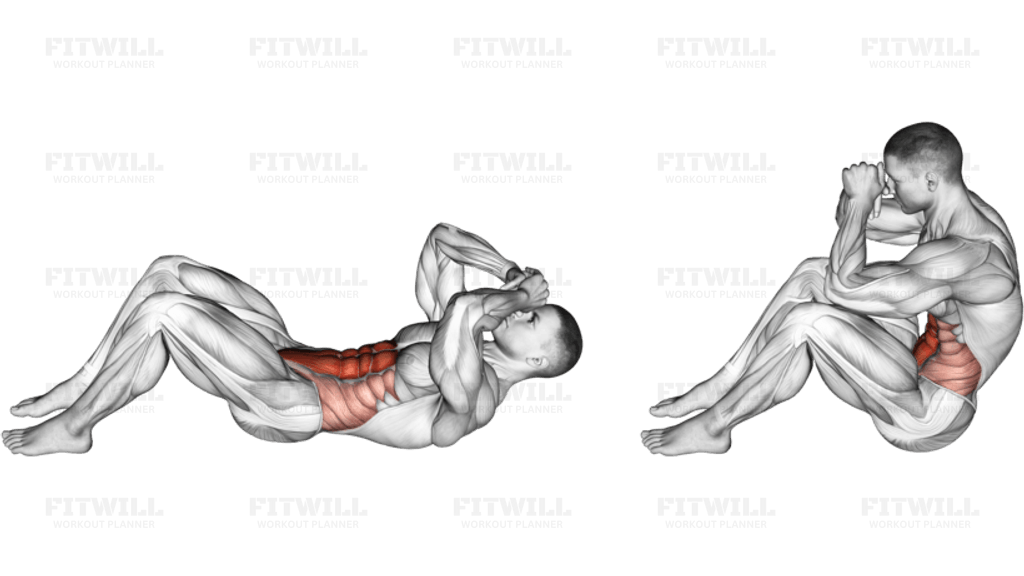
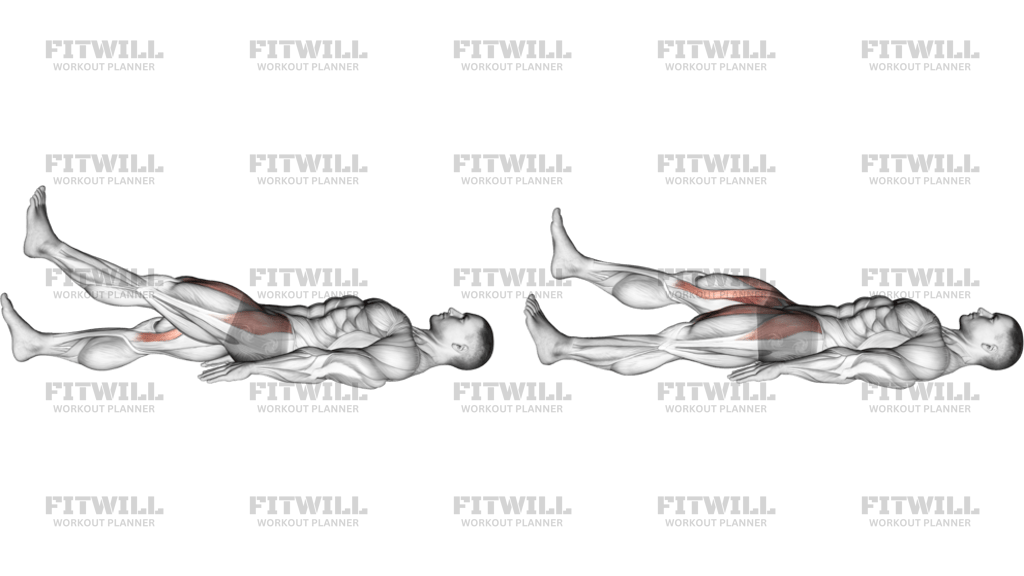
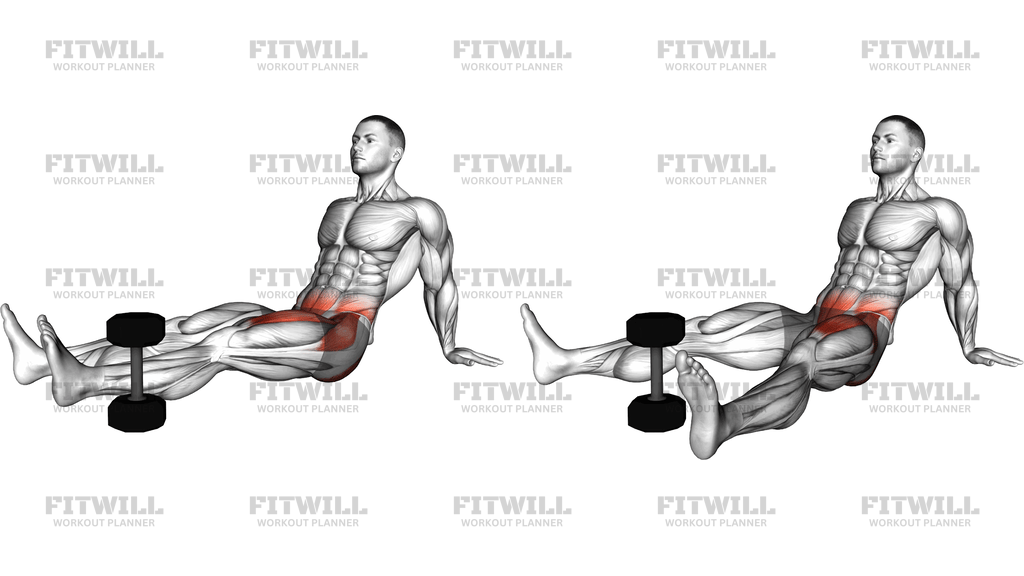
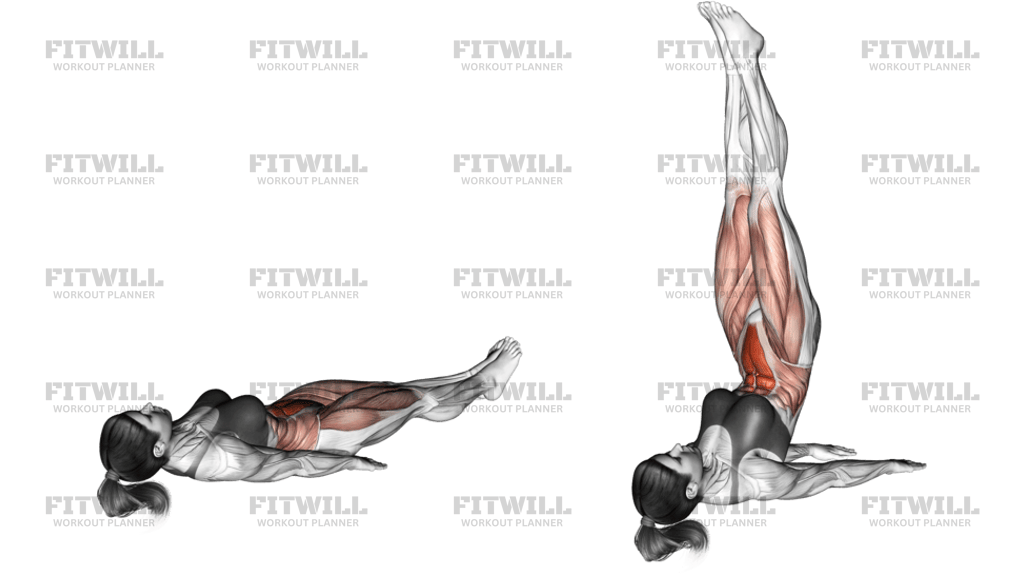
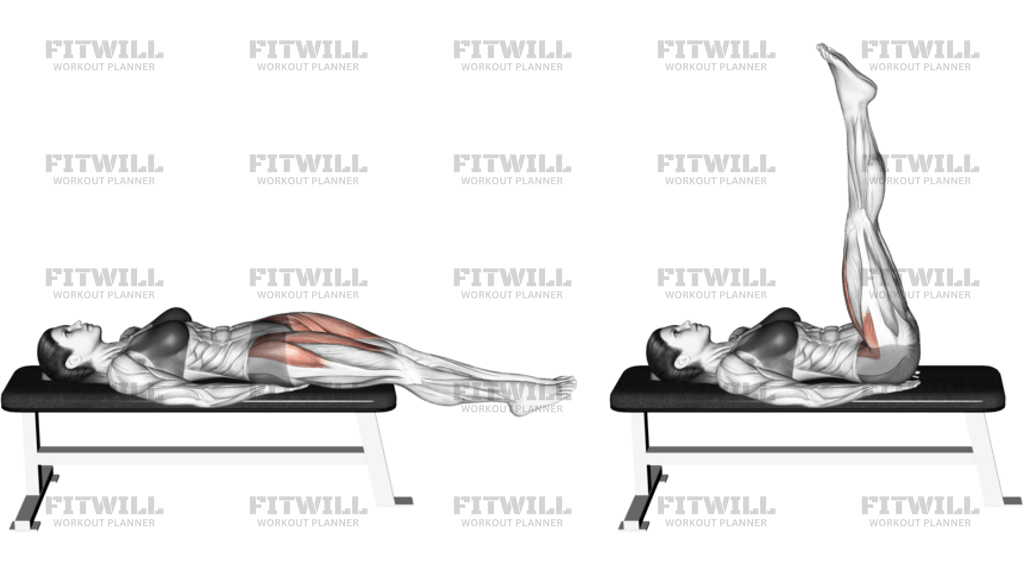
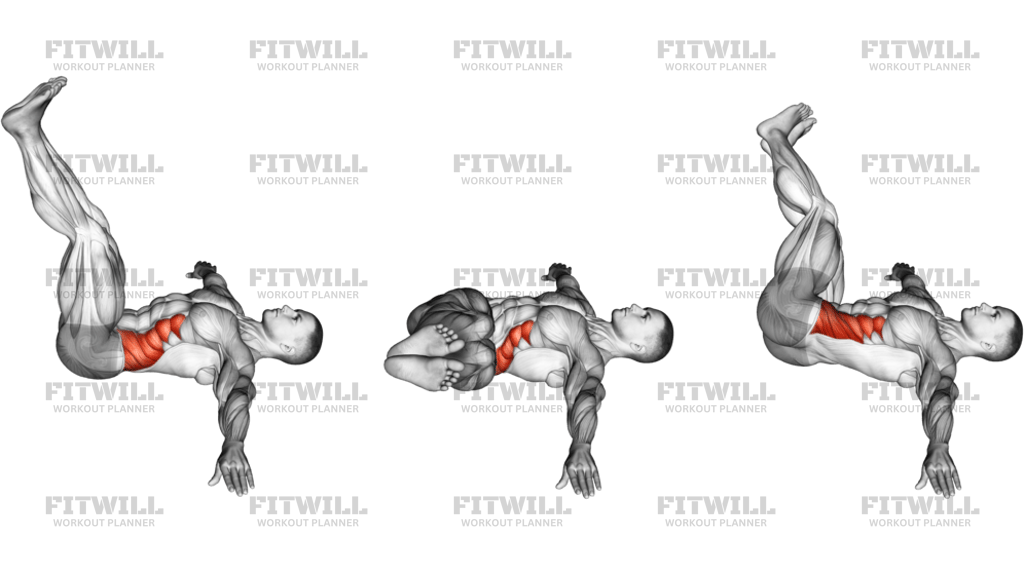
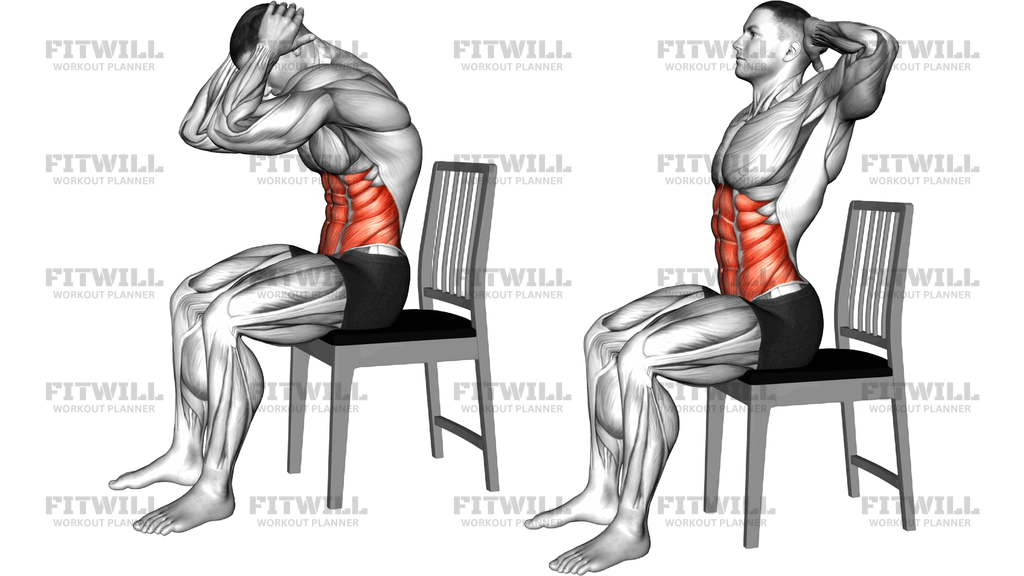
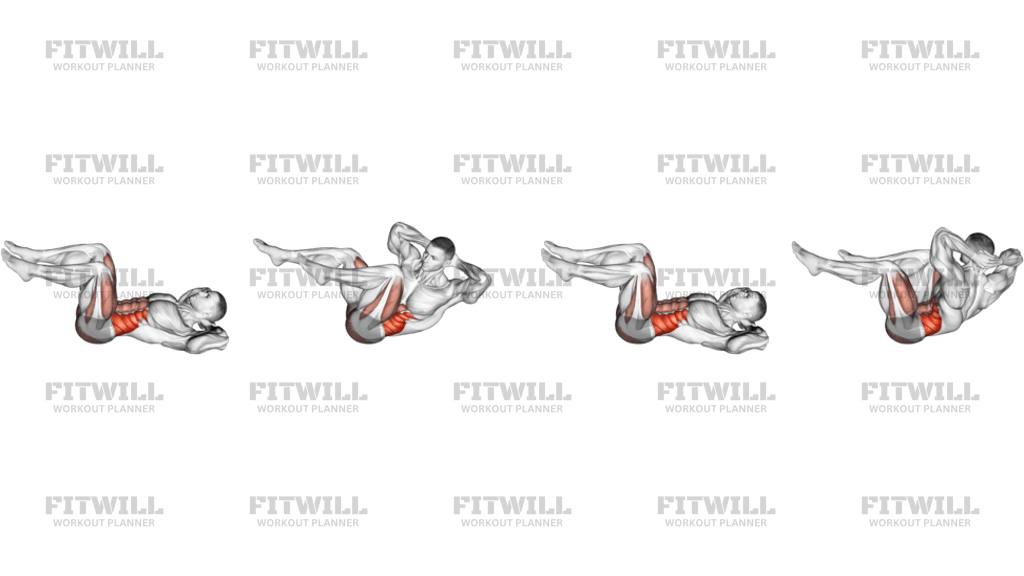
90 To 90 Leg Lift And Kickout
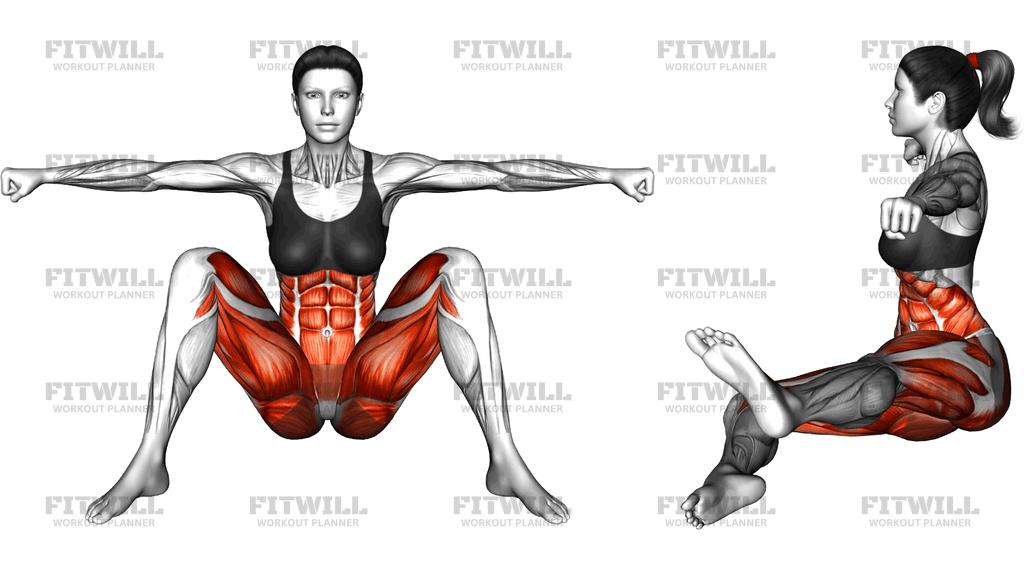
The 90 To 90 Leg Lift And Kickout is a seated body weight core exercise that combines a supported reclined sit with a hip-controlled leg pattern. You sit on the floor, lean your torso back, extend your arms out to the sides for balance, and hold both legs in the characteristic 90/90 position — knees bent at right angles with one shin folded in front of you and the other out to the side. From there you lift or hold the legs off the floor and extend them outward in a controlled kickout before re-folding them back to the start.
What makes this movement different from a standard seated leg lift or V-up is the rotated hip position. Because each femur sits at roughly 90 degrees of flexion and 90 degrees of external or internal rotation, your hip flexors and deep core have to work through a more awkward, less familiar angle. That challenges the lower abs and the stabilizing muscles around the pelvis in a way straight-leg variations do not, and it also asks the inner thighs and outer hips to control the legs as they open and close.
This exercise suits people who already have some core training background and want to progress beyond basic leg raises. It is commonly used in calisthenics and midline-strength programs, in warm-ups for martial arts and squatting movements because of the hip rotation component, and in general strength work for anyone whose lower abs lag behind their upper abs. Because the torso leans back with arms out wide, the leverage is demanding, so expect the trunk to want to collapse as the legs move.
Setup matters here more than in most floor ab exercises. If your torso sits too upright, the movement becomes easy and loses its point; if you slump and round your lower back excessively, you lose bracing and put unnecessary stress on the lumbar spine. Aim for a long, leaned-back spine supported by an engaged trunk, arms reaching straight out to the sides at shoulder height, and shoulders pulled slightly down away from the ears.
Execution should be slow and deliberate. Lift or sweep the legs through the 90/90 position, kick them out to a controlled extension without letting the lower back flatten or the shoulders creep up, pause briefly, and bring the legs back to the folded position with the same control. The return is where most people lose tension, so treat the closing phase as the actual working repetition.
A mat makes the seated position tolerable on the tailbone and sit bones. Start with a small number of repetitions — even five to eight per side is honest work — and stop the set when your torso begins to rock or your lower back takes over. This is a precision movement disguised as a simple one, and quality reps will beat volume every time.
[ Workout Log & Planner ]
Put your next workout in Fitwill
Keep your plan and training log ready when you are.


Instructions
- Sit on an exercise mat with your torso leaned back at roughly 45 degrees, weight balanced behind or slightly over your sit bones.
- Place both legs in the 90/90 position: front knee bent 90 degrees with the shin crossed in front of your body, back knee bent 90 degrees with the shin resting out to the side, feet lifted off or hovering just above the floor.
- Extend both arms straight out to the sides at shoulder height, fists relaxed, and pull your shoulders down away from your ears.
- Brace your trunk as if bracing for a light punch, keeping the ribs stacked over the pelvis rather than flaring upward.
- Keeping the knees at 90 degrees, sweep or lift the legs off the floor, using your hip muscles rather than momentum from the torso.
- From the lifted 90/90 position, kick both legs out to a controlled extension in front and to the side, lengthening the knees without dropping the legs or collapsing the chest.
- Pause for one breath at the extended position, then slowly re-bend the knees and draw the legs back into the folded 90/90 position under control.
- Exhale as the legs extend and inhale as they return, keeping the breathing rhythmic rather than holding your breath.
- Complete all repetitions on one side before switching, or alternate sides if your control allows it, resetting your lean and arm position between reps.
- End the set as soon as your torso rocks, your arms drop, or your lower back starts doing the work instead of your hips and abs.
Tips & Tricks
- If your tailbone aches on the floor, sit on the edge of a folded mat or towel rather than rounding your back to find comfort.
- The most common mistake is rocking the torso to swing the legs through — anchor your shoulders in place and let the hips do the moving.
- Do not let your arms drop as fatigue builds; the wide arm position is part of the balance demand and dropping them makes the exercise easier without you noticing.
- Keep the kickout slow enough that you could stop at any point mid-extension — if the legs fall outward, you are using momentum instead of hip control.
- Watch your neck: because the torso leans back, people tend to jut the chin forward. Keep a long neck and look straight ahead.
- If the 90/90 hip position itself is uncomfortable, reduce the range by keeping the feet closer to the floor rather than forcing the knees wide.
- Your lower back should stay long, not flattened into the floor and not overly arched — think neutral ribs over pelvis throughout.
- Start with fewer reps than you think you need; tension in the lower abs usually fades around rep eight or ten, and sloppy reps past that point teach poor patterns.
- Switch sides even if one side feels stronger, since the rotated hip position usually exposes a left-right difference in hip mobility.
Frequently Asked Questions
What muscles does the 90 To 90 Leg Lift And Kickout work?
The primary work comes from the lower abs and hip flexors, which hold the legs up and control the kickout. The inner thighs and outer hips assist because the 90/90 position requires the legs to open and close through hip rotation, and the trunk stabilizers keep your leaned-back torso from collapsing.
Why is the 90/90 leg position used instead of straight legs?
The bent-knee, rotated-hip position places the hip flexors and abs at a different leverage angle than straight-leg raises, which makes the movement feel harder at lighter effort. It also adds a hip rotation and inner-thigh component you do not get from standard leg lifts.
Is the 90 To 90 Leg Lift And Kickout suitable for beginners?
It is better treated as an intermediate progression. If you cannot yet hold a leaned-back seated position with both feet off the floor for 20 to 30 seconds, build that base with standard seated leg holds or lying leg raises first.
Why do my hip flexors cramp during this exercise?
Cramping usually means the hip flexors are working at a shortened, unfamiliar angle or you are moving too quickly. Slow the tempo, lower the legs closer to the floor, and stop the set before the cramp rather than pushing through it.
How do I keep my balance with my arms extended to the sides?
Keep the arms reaching actively out to shoulder height rather than just resting there, and stack your ribs over your pelvis so your weight stays centered over your sit bones. If you still wobble, temporarily lower your feet to the floor between reps to reset.
What should I do if my 90/90 hip position is restricted?
Do not force the knees wide. Reduce the rotation slightly, keep the feet nearer the floor, and work within the range you can control — hip mobility at this position usually improves with consistent, non-forced practice.
Can I substitute another exercise for the 90 To 90 Leg Lift And Kickout?
Lying leg raises, hollow body holds, and seated L-sit raises all train the lower abs and hip flexors similarly, though none replicates the rotated hip angle. A seated 90/90 hip stretch covers the mobility piece on its own.
How many reps and sets should I do?
Start with 2 to 3 sets of 5 to 8 controlled repetitions per side, resting about a minute between sets. Add reps gradually once you can complete every repetition without your torso rocking or your arms dropping.
Is it safe for my lower back?
For most people, yes, as long as the lumbar spine stays long and braced rather than rounding or arching under load. If you feel lumbar discomfort rather than abdominal work, reduce the range, sit slightly more upright, or regress to an easier leg-raise variation.