Cable Straight Arm Pulldown Version 2
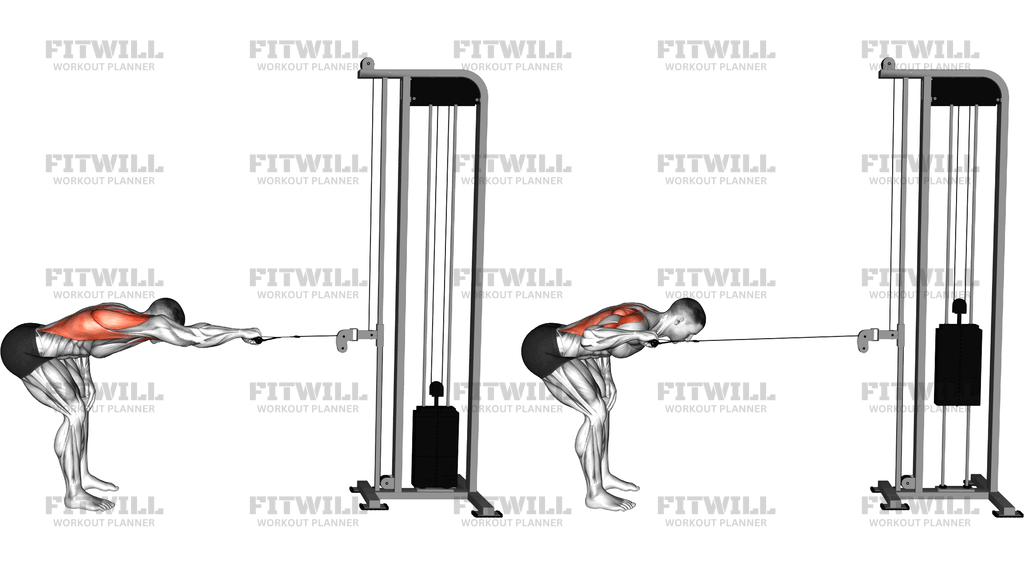
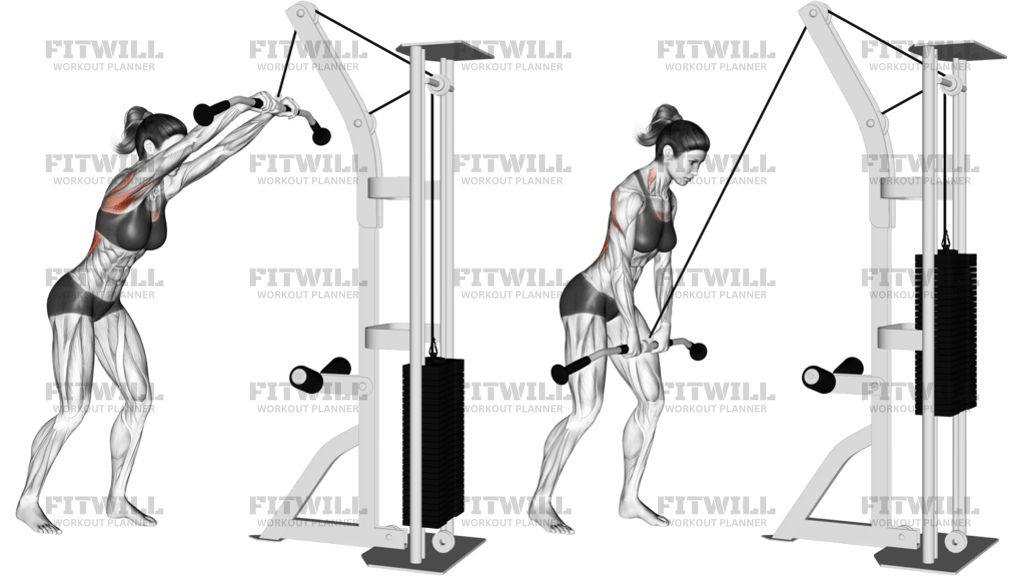
Cable straight-arm pulldown version 2 is a standing cable back exercise that uses a high pulley and a straight-bar handle to train the lats through shoulder extension. The arms stay almost straight, so the movement shifts effort away from elbow bending and toward the muscles that pull the upper arm down and back. That long lever makes the exercise excellent for building lat control, improving the feel of shoulder extension, and adding focused back work without needing a huge load.
The main target is the latissimus dorsi, with help from the upper back, biceps, and forearms to stabilize the handle and keep the line of pull clean. The torso, abs, and glutes also have to stay organized so the cable does not turn the rep into a body-swing. When the setup is right, you should feel tension through the sides of the back and the area under the armpits, not in the lower back or neck.
Set the pulley high, step back far enough to create tension, and hinge slightly at the hips with soft knees. Hold the handle with an overhand grip, keep the elbows only slightly bent, and bring the arms overhead in line with the cable. The chest should stay proud but not flared, ribs stacked over the pelvis, and the shoulders pulled down away from the ears before each rep. Version 2 is best when the body is stable and the cable path is clean, because that lets the lats do the work instead of momentum.
Drive the bar in a smooth arc from overhead to the front of the thighs by pulling the upper arms down while keeping the elbows nearly fixed. Exhale as the handle travels downward, pause briefly at the bottom, and return slowly until the lats are stretched and the arms are back overhead. The return should stay controlled enough that you can stop anywhere without losing position. If you have to lean back, shrug, or bend the elbows hard to finish the rep, the load is too heavy or the pulley line is too far from your setup.
Use this movement as accessory back work, a lat-focused warmup, or a technique drill after heavier pulling. It is especially useful when you want clean lat tension without a lot of spinal loading, but it still rewards honest posture and a deliberate tempo. Keep the range pain-free, keep the neck relaxed, and finish the set before the shoulders or grip start to take over the movement.
[ Workout Log & Planner ]
Put your next workout in Fitwill
Keep your plan and training log ready when you are.


Instructions
- Set the pulley at the top of the cable machine and attach the straight-bar handle.
- Stand facing the stack, take an overhand grip about shoulder-width apart, and walk back until the cable is tight.
- Hinge slightly at the hips with soft knees so your torso leans forward a little and your arms start overhead.
- Pull your shoulders down away from your ears and keep your ribs stacked over your pelvis before you move.
- Keep a small bend in the elbows and hold that angle throughout the rep.
- Drive the bar down in a smooth arc toward the front of your thighs by moving the shoulders, not by turning it into a row.
- Pause for a moment at the bottom with the lats squeezed and the neck relaxed.
- Return the handle slowly to the overhead start until you feel a controlled stretch through the sides of the back.
- Breathe out as the handle comes down and inhale as it travels back up.
- Repeat for the planned reps, then step forward and let the stack settle before releasing the handle.
Tips & Tricks
- Keep the elbow bend small and fixed so the rep stays a shoulder-extension movement, not a triceps press-down.
- Think about pushing your upper arms toward your pockets instead of yanking the handle with your hands.
- Keep your torso angle steady; if you rock back to finish the rep, the load is too heavy.
- Use a grip that lets the wrists stay neutral instead of cocked back toward the forearms.
- Let the bar travel in front of the body on the way down; do not sweep it behind the hips.
- Choose a load that lets you hold the bottom position for a brief squeeze without losing posture.
- If your shoulders shrug up, reset with less weight and a stronger pull-down cue before each rep.
- A slower return usually improves lat tension more than adding extra weight.
- Stop the set when the forearms or lower back start to take over the movement.
Frequently Asked Questions
What muscles does the straight-arm cable pulldown work most?
It mainly targets the lats, with the upper back, biceps, and forearms helping stabilize the pull.
How is this different from a regular lat pulldown?
Your elbows stay almost straight here, so the movement comes from the shoulders instead of from bending the arms.
How much should I bend my elbows?
Only slightly. Keep that angle nearly the same from the top of the rep to the bottom.
Where should I feel this exercise?
You should feel it through the sides of the back and under the armpits, not mainly in the lower back or neck.
How far should I lean forward?
Just enough to keep the cable line smooth and the ribs stacked. A small hip hinge is enough; do not turn it into a big body swing.
Can beginners do this movement safely?
Yes. Start light, keep the elbows nearly fixed, and shorten the range if overhead position feels awkward.
What is the most common mistake?
Leaning back and turning the pulldown into a standing row is the biggest error.
What can I do if my grip fails first?
Lower the weight and use a controlled tempo. If your gym setup allows it, a slightly wider overhand grip can also reduce forearm strain.
Can I substitute a rope attachment?
Yes, but the straight-bar handle usually makes it easier to keep the arms fixed and the path consistent.