Balance Board
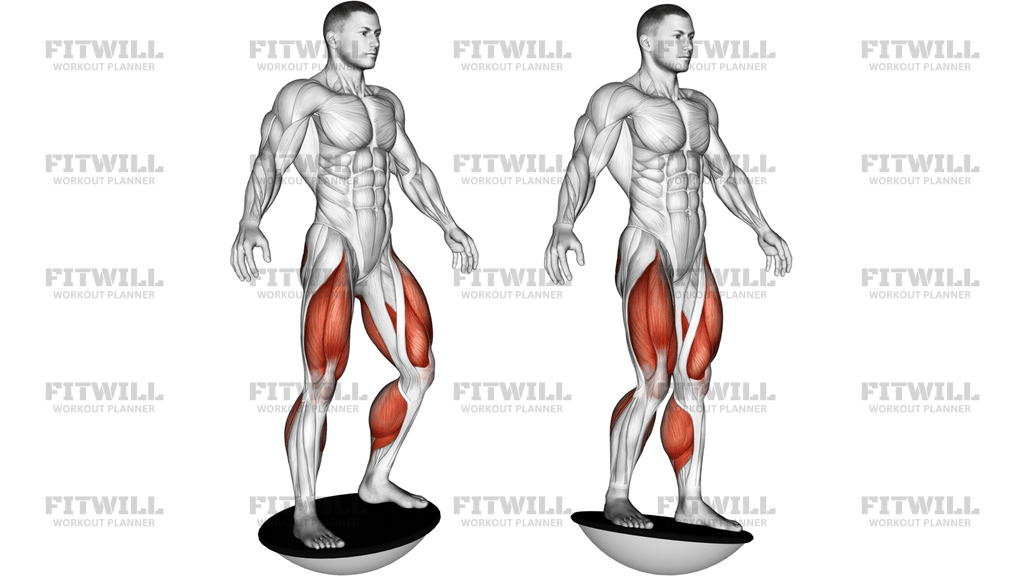
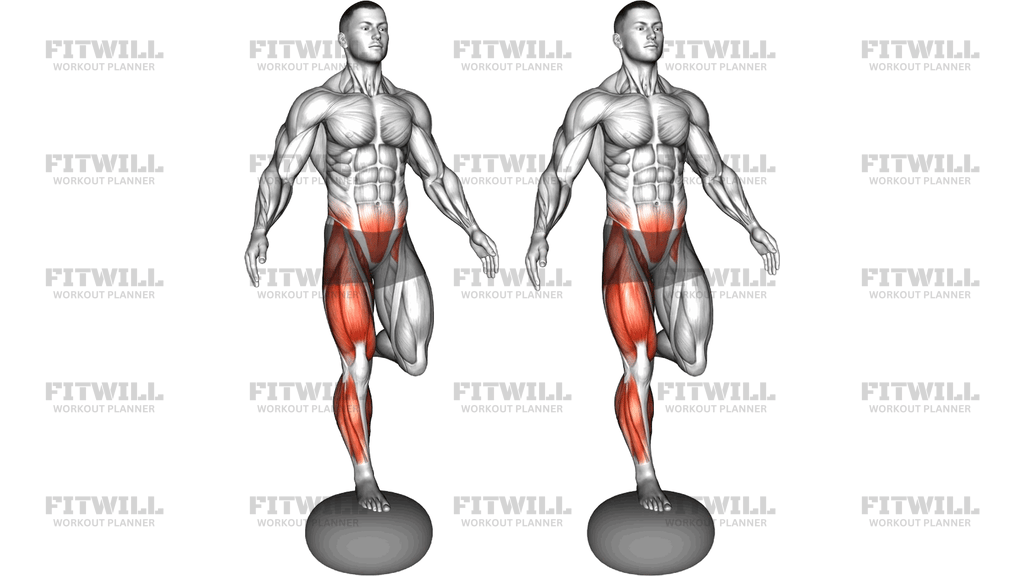
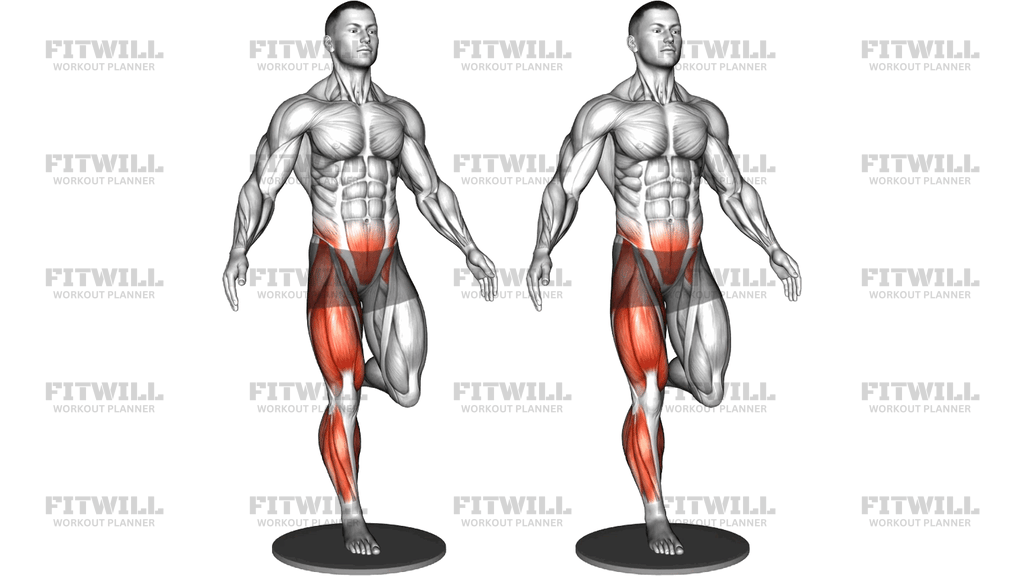
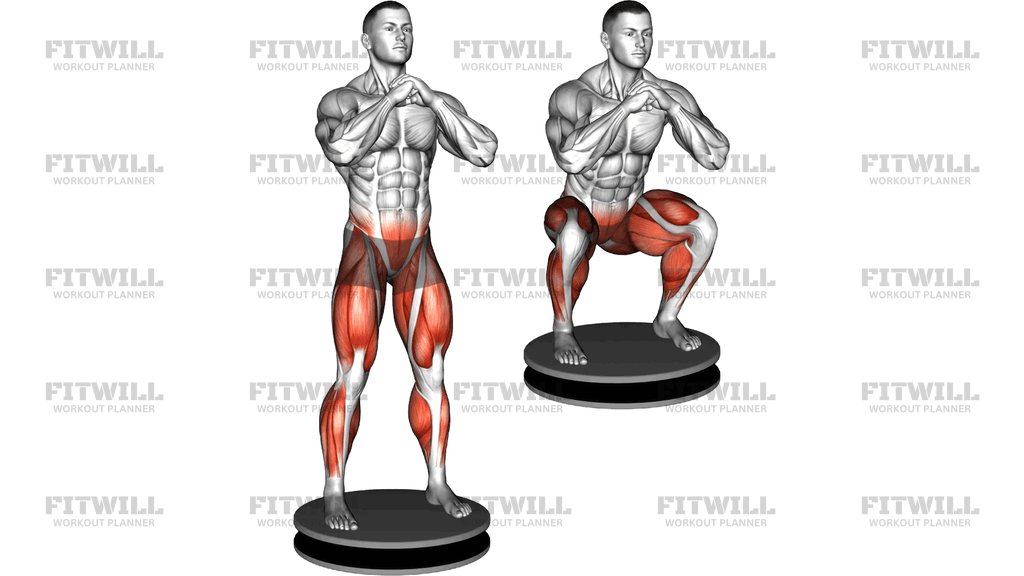
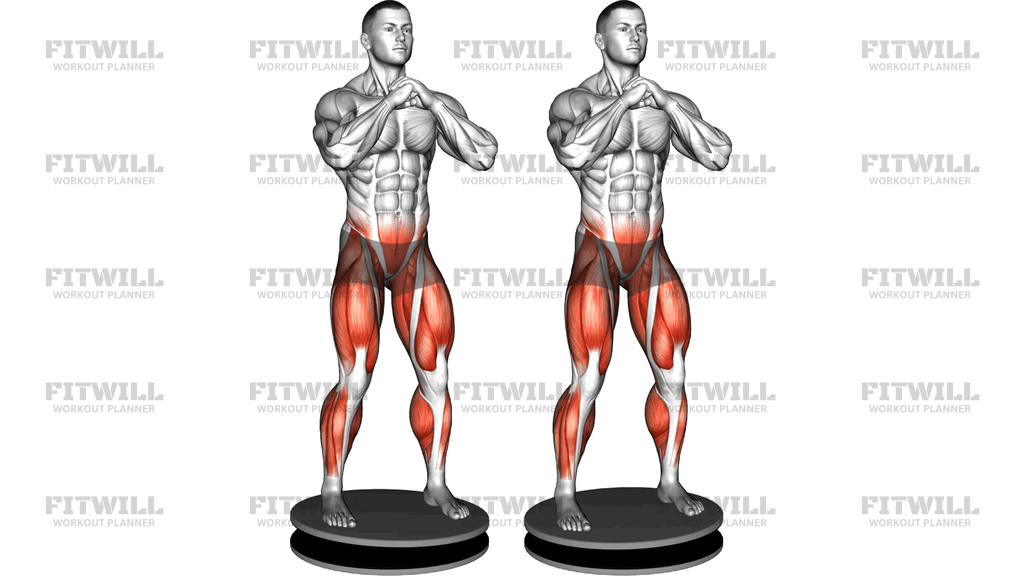
The Balance Board exercise is a standing stability drill performed on a wobble-style board with a domed underside. You place both feet on the flat platform about hip-width apart, keep a soft bend in the knees, and work to keep the board's edges from touching the floor while your body continuously makes small corrections to stay centered. It looks simple, and that is exactly the point: the movement lives in the small, constant adjustments your ankles, knees, and hips make to keep you upright.
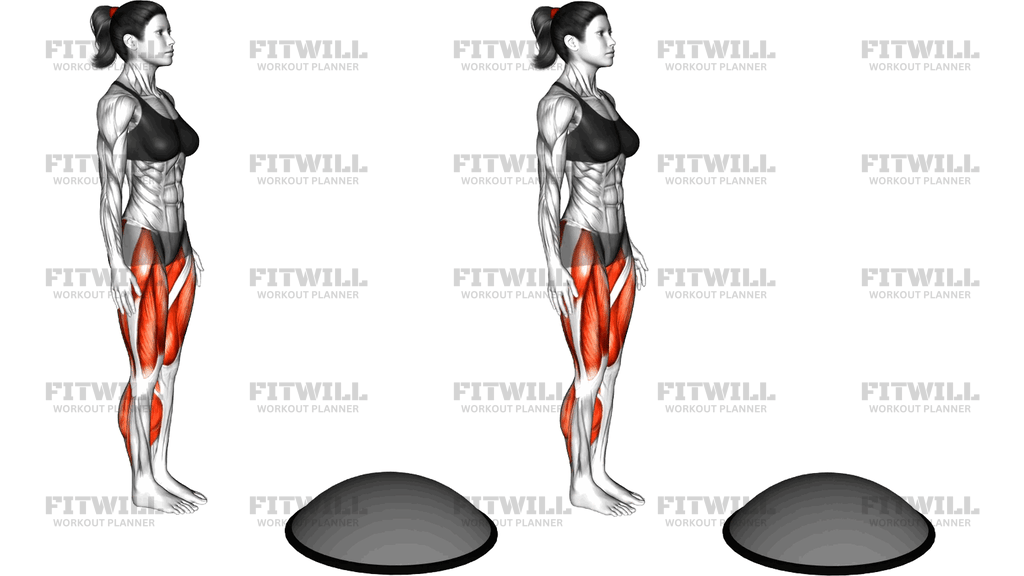
The main work happens in the ankle stabilizers and the muscles around the lower leg, including the calves and the muscles that run along the outside of the shin. Your quadriceps hold a light, steady contraction to keep the knees from locking out, the inner thighs help control side-to-side wobble, and the deep core stays engaged to keep your torso quiet over your hips. Because the whole lower body works as one unit, the board is a good tool for building the kind of coordination that carries over to running, cutting, jumping, and everyday balance on uneven ground.
Setup matters more than most people expect. Stand with your feet centered on the platform and your weight spread evenly across both soles, with your gaze fixed on a still point at eye level rather than looking down at your feet. If your feet sit too far outboard or too close together, the board tips easily and you end up fighting the equipment instead of training controlled stability. Keep your arms relaxed at your sides or held slightly out from your body for balance, and let your shoulders stay down and easy.
To execute the exercise well, tilt the board gently so one edge approaches the floor, then press through your foot to reverse the tilt and send the board the other way without letting the edge touch down. The motion should be smooth and deliberate, almost like stirring the board in slow circles or riding a gentle tilt front to back and side to side. Breathing stays calm and continuous; holding your breath is a common sign that the challenge has exceeded your control. Start with short sets of twenty to thirty seconds and step off carefully rather than jumping off.
This drill fits a wide range of people. Beginners use it to develop basic balance awareness, older adults use it to maintain the ankle and hip control that protects against falls, and athletes in sports like skiing, surfing, skateboarding, and soccer use it as a maintenance tool for reactive footwork. It also works well as a warm-up before leg training or as a low-effort finisher after a lower-body session.
A few practical points will keep it productive and safe. Practice near a wall, counter, or sturdy chair you can touch with a fingertip if you genuinely lose your balance, but avoid leaning on it for the whole set. Clear the floor of anything you could slip on, and stay barefoot or wear flat, flexible shoes so your feet can feel the board and make fine adjustments. If your ankles feel sharp pain rather than a working sensation, step off and reduce the tilt range before trying again.
[ Workout Log & Planner ]
Put your next workout in Fitwill
Keep your plan and training log ready when you are.


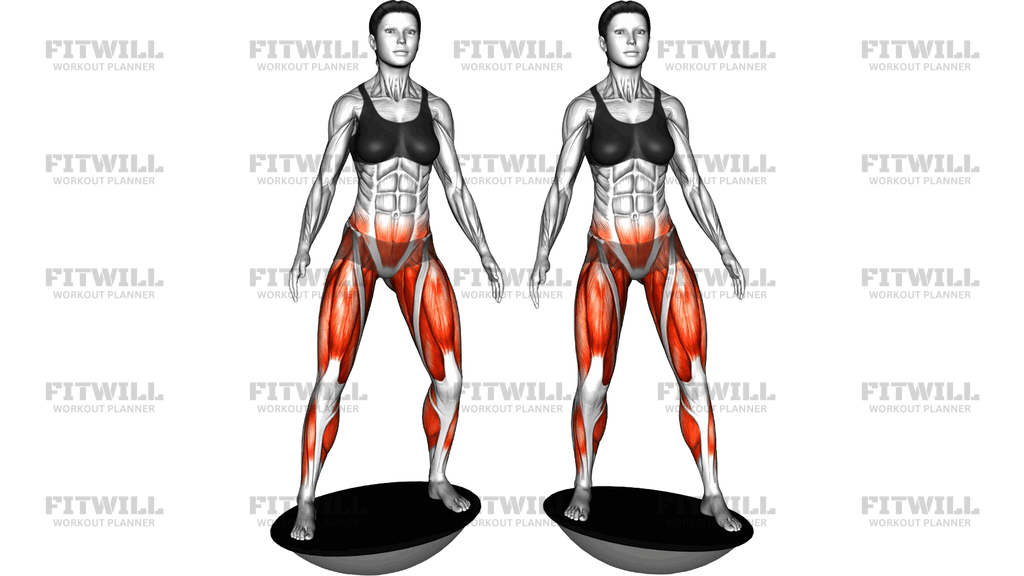
Instructions
- Place the Balance Board on a flat, nonslip floor and stand beside a wall or counter so a support is within fingertip reach if you need it.
- Step onto the platform with one foot on each side of the center point, feet about hip-width apart, and settle your weight evenly across both feet.
- Keep a soft bend in both knees so they are never locked out, and stack your shoulders over your hips over your ankles.
- Pick a fixed spot at eye level in front of you and hold your gaze there instead of watching the board or your feet.
- Let your arms hang relaxed at your sides or extend them slightly outward for balance, keeping your shoulders down away from your ears.
- Tilt the board slowly to one side until the edge nears the floor, then press through that foot and shift your weight to level the board and send the tilt toward the opposite side.
- Keep the board moving through a smooth, controlled tilting rhythm, or trace slow circles with the platform without letting any edge touch down.
- Breathe steadily throughout the set, inhaling and exhaling through your nose at a calm pace rather than holding your breath.
- After your chosen time, bring the board to level, settle both feet flat, and step off backward onto solid ground rather than hopping off.
- Reset your stance and repeat for another set, or finish the session and wipe down the board's surface if needed.
Tips & Tricks
- A common mistake is standing with a rigid, locked-out stance. If your knees are straight, the wobble travels straight into your lower back and the quadriceps do nothing; soften the knees a few degrees and the corrections shift back into the ankles and legs.
- If the board's edge claps against the floor repeatedly, your tilt is too aggressive. Reduce the range so the edge stops a few centimeters short of contact and build up the range over several sessions.
- Looking down at the platform makes the wobble worse because your eyes are part of your balance system. Fix your gaze on one stationary point across the room and let your feet do the reacting.
- Keep your weight in the middle of each foot rather than rocking onto your heels. Riding your heels makes the board drift backward and forces your toes to claw for control.
- Do not let your hips sway dramatically to chase the tilt. The corrections should come mainly from your ankles and knees; excessive hip movement is a sign the tilt is beyond your current control.
- Start each session with a fingertip on your support and progress to hovering the hand near it, then to hands free. Leaning your full weight on the wall removes most of the training effect.
- If you feel your calves burning before your balance gives out, that is normal for early sessions; the lower legs adapt quickly, so keep sets short and frequent rather than long and exhausting.
- Practice barefoot or in thin-soled shoes. Thick, cushioned running soles dull the feedback from your feet and slow your reactions on the board.
- Stop the set the moment your form gets sloppy, such as when you start stomping your feet or flailing your arms. Balanced, controlled practice beats stubbornly hanging on through a noisy rep.
Frequently Asked Questions
What muscles does the Balance Board exercise work?
The primary work comes from the ankle stabilizers and lower legs, including the calves, with steady support from the quadriceps, inner thighs, glutes, and deep core muscles that keep your torso centered over the board.
Is the Balance Board exercise good for beginners?
Yes, and it is one of the best tools for learning balance because the difficulty is self-adjusting: a smaller tilt is easier and a bigger tilt is harder. Beginners should start with a hand on a wall and sets of fifteen to twenty seconds.
Should I use the Balance Board barefoot or in shoes?
Barefoot or in flat, thin-soled shoes is best, because your feet need to feel the platform to make quick corrections. Thick, cushioned soles mute that feedback and make the board harder to control.
How wide should my stance be on the Balance Board?
Place your feet roughly hip-width apart, each foot centered on its half of the platform. A stance that is too narrow makes the board tip sharply side to side, while one that is too wide limits the controlled tilt you are trying to practice.
Why does the edge of the Balance Board keep hitting the floor?
The edge touching down usually means your weight shifts are too large or too late. Slow the rhythm down, reduce the tilt angle so the edge stops just short of the floor, and keep a soft bend in your knees so your legs can react sooner.
How long should I hold a set on the Balance Board?
Twenty to thirty seconds of controlled, continuous tilting is plenty for most people. Balance quality drops quickly once you fatigue, so it is better to do several short, clean sets than one long, sloppy one.
Can the Balance Board help with ankle stability after activity or sports?
It is a popular tool for maintaining ankle control for sports with quick direction changes, and it fits naturally into a warm-up or cool-down. If you are returning from an actual injury, clear the exercise with your physical therapist or doctor first.
What can I use instead of a Balance Board?
Standing on one leg, single-leg balance with slow head turns, or slow lateral weight shifts on a folded towel or an unstable cushion all train similar control, though none give quite the same continuous tilting feedback as the board.
Is it safe to hold a squat position while using the Balance Board?
A slight knee bend is part of the standard setup, but adding a real squat position raises the difficulty considerably. Get comfortable with standing tilts first, then experiment with a shallow quarter squat only when you can keep the board level for a full set without support.