Balance Board Single Leg Balance
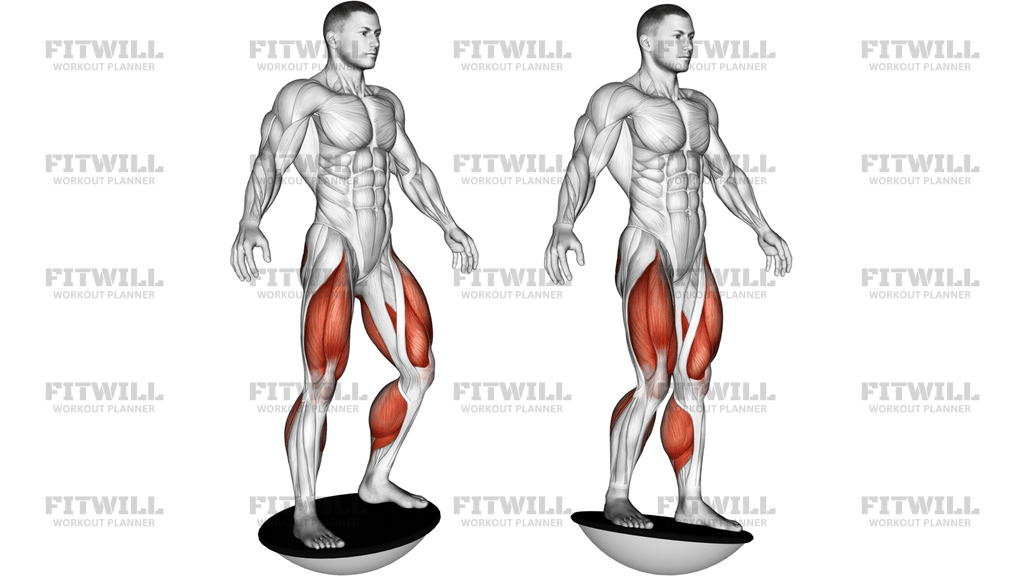
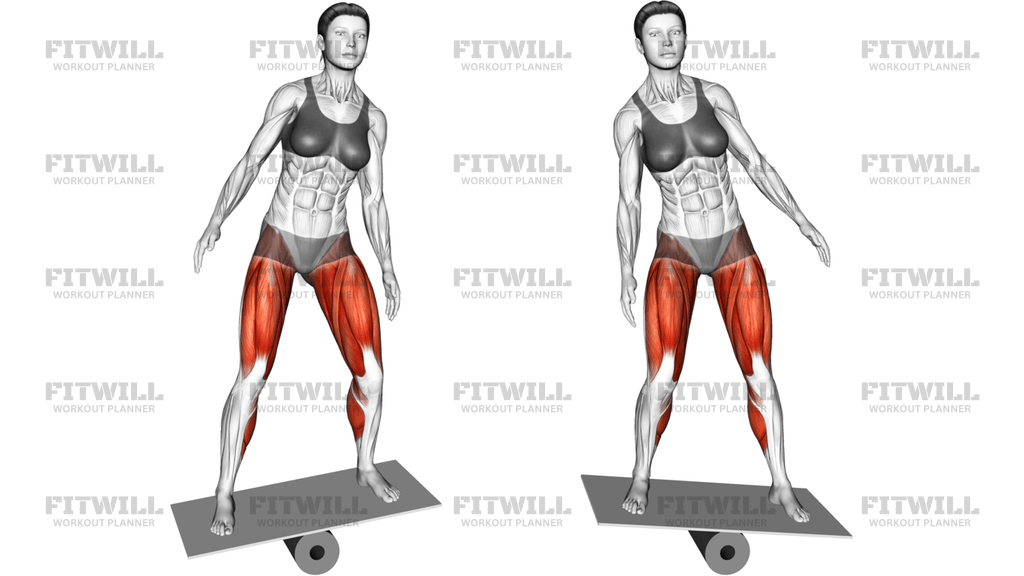
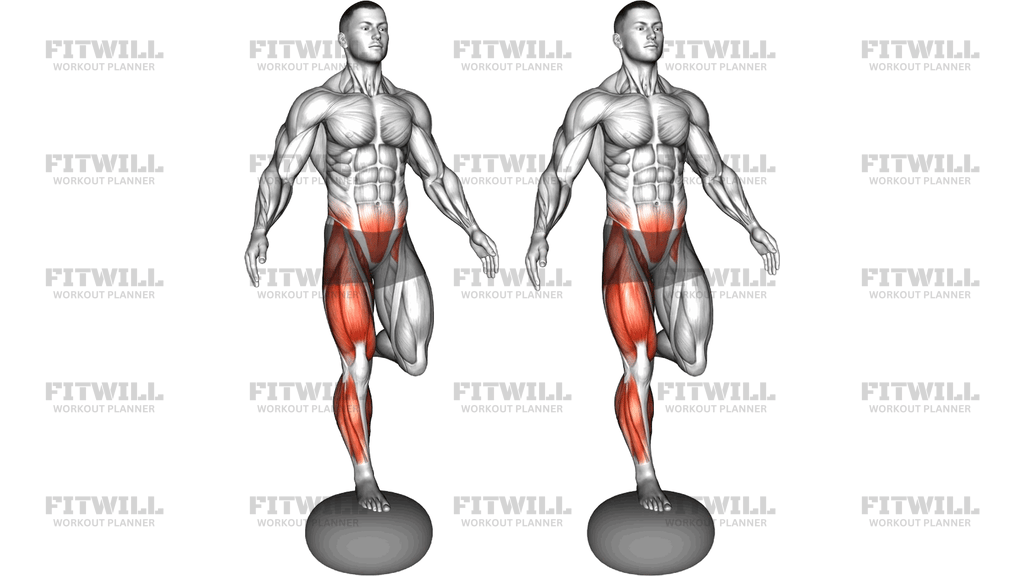
Balance Board Single Leg Balance is a standing stability drill performed on a round wobble board. You place one foot in the center of the board, lift the other foot off completely, and hold yourself upright while the board tilts in every direction underneath you. The opposite leg stays bent behind the body with the arms slightly away from the sides, which is exactly the position shown in the exercise demonstration. There is no rep count here — the goal is to control the board for time while staying tall and still.
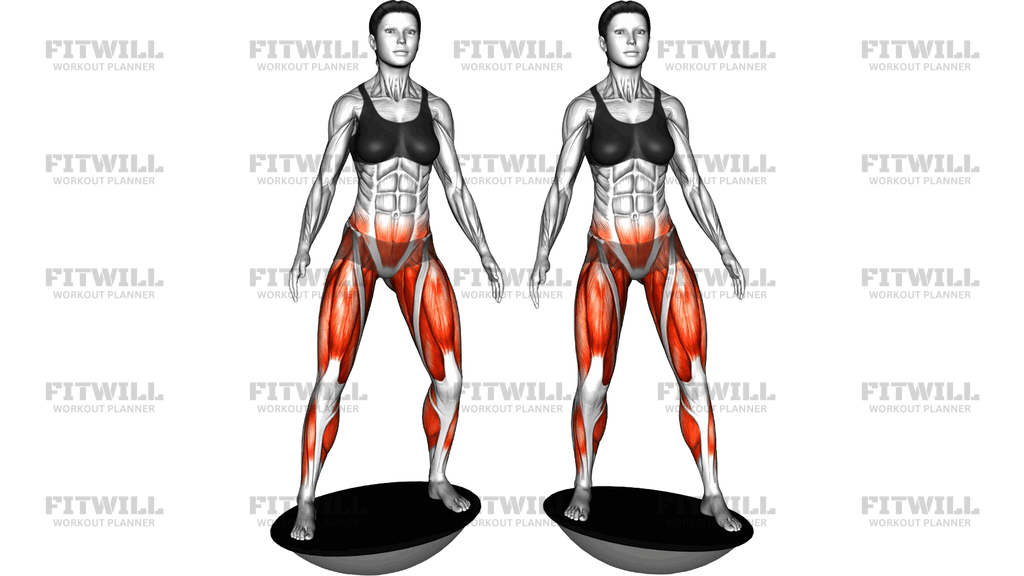
This exercise trains the small stabilizing muscles around the ankle and foot, along with the hip stabilizers and the deep core, all of which work together to keep your center of mass over a moving surface. Because the board can tip forward, backward, and side to side, your nervous system has to make constant small corrections. That demand on reaction and coordination is what separates board work from simply balancing on flat ground.
The single-leg setup matters because it cuts your base of support roughly in half and removes the ability to cheat with the non-working foot. It is useful for runners, field sport athletes, and anyone rehabilitating or protecting against ankle sprains, since single-leg control is exactly what walking, running, and cutting demand. Older adults also benefit, because single-leg balance is strongly tied to everyday stability on stairs and uneven ground.
Execution quality comes down to posture and quiet feet. Stand tall with a soft knee, keep your weight spread across the whole foot rather than collapsing onto the inner edge, and let your arms drift slightly out to help with steering. Fix your eyes on a still point at eye level. Small wobbles are the point — the aim is to slow them down, not to freeze the board through tension elsewhere.
Keep something stable nearby, like a wall or rack, for the first few sessions. Step off with control whenever the tilt becomes too large to recover, and reset rather than fighting a losing battle with the board. Start with holds of 15 to 30 seconds per side and build from there.
[ Workout Log & Planner ]
Put your next workout in Fitwill
Keep your plan and training log ready when you are.


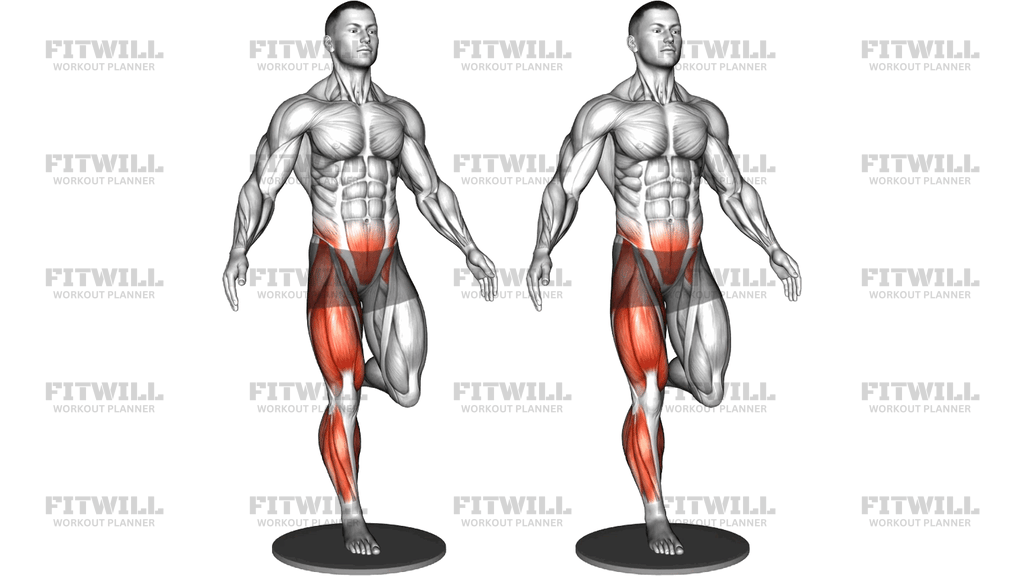
Instructions
- Place the balance board on a flat, non-slip floor and stand next to a wall or rack you can touch if needed.
- Step onto the board with one foot so it sits centered over the pivot, then shift your weight fully onto that leg.
- Bend the free leg behind you so the foot lifts clear of the board, matching the demonstrated position.
- Let your arms drift slightly out to the sides, chest up, and pick a fixed point at eye level to stare at.
- Brace your abdominal muscles lightly and keep a soft bend in the standing knee instead of locking it.
- Hold the position as the board tilts, making small ankle and hip corrections to keep the board's edge from touching down.
- Breathe steadily and quietly through your nose the whole time rather than holding your breath.
- When the tilt grows too large to recover, step the free foot down onto the floor beside the board with control.
- Rest briefly, then repeat the hold on the other leg for the same amount of time.
Tips & Tricks
- A common mistake is gripping the floor with the toes to fight the wobble. Spread your weight across the heel, big toe, and little toe instead so the whole foot shares the work.
- If the board tips toward one edge within seconds, you are probably leaning your torso. Stack your ribs over your hips and imagine a string pulling the crown of your head upward.
- Locking the standing knee straight removes the shock-absorbing action of the leg. Keep a small bend so the quads and calf can make fine adjustments.
- Looking down at the board makes balance harder. Fix your gaze on a still object at eye level; your eyes feed most of the corrections.
- Arms pressed tight to the body leave you nothing to steer with. Let them float slightly out and move them like counterweights when you wobble.
- If your ankle burns out fast but your posture stays fine, that is normal early on — shorten the holds and do more sets rather than pushing to complete failure.
- Hold on with one fingertip on a wall if you must, but reduce the contact over sessions instead of removing it all at once.
- Practice near a wall on a clear floor, and never attempt this barefoot on a slippery surface like tile.
Frequently Asked Questions
What muscles does the Balance Board Single Leg Balance work?
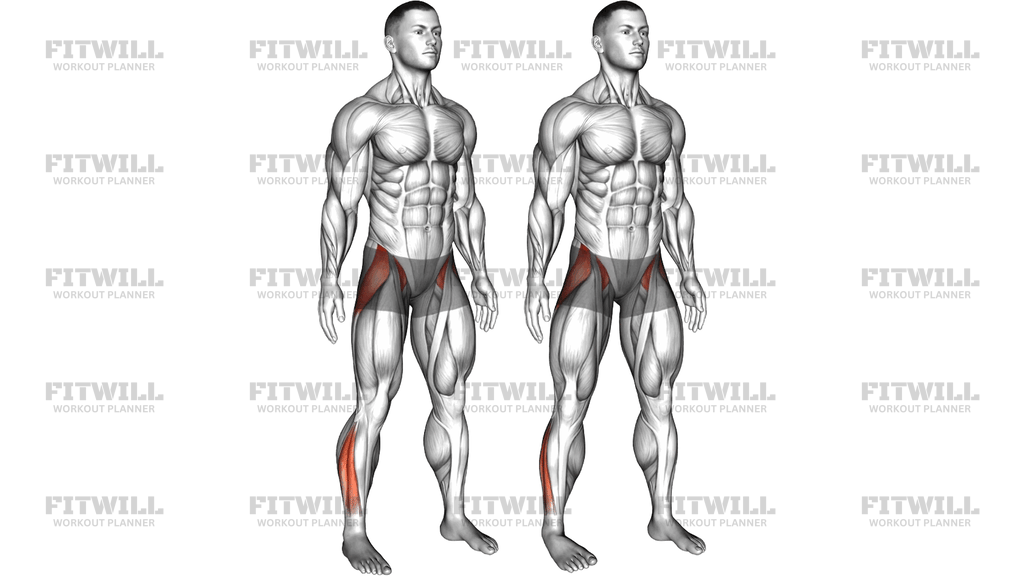
The main work comes from the ankle stabilizers and the small muscles of the foot, with support from the calves, quads, gluteus medius of the standing hip, and the deep core muscles that keep your torso stacked. It trains them for coordination and endurance rather than maximum strength.
Can beginners do the Balance Board Single Leg Balance?
Yes, but most beginners should first master two-leg balance on the board, then hold onto a wall or rack with one hand while progressing to single-leg holds. Short holds of 10 to 15 seconds per side are a fine starting point.
How long should I hold the Balance Board Single Leg Balance?
Aim for 20 to 40 seconds per leg for 2 to 3 sets once you can control the board, resting between sides. Stop the hold as soon as your form breaks down or the board edge starts repeatedly touching the floor.
Should I do this barefoot or in shoes?
Barefoot or in thin, flat footwear works best because your feet can feel the board's tilts and respond faster. Thick, cushioned running shoes blunt that feedback and make the corrections late.
Why does my standing knee want to drift inward during the Balance Board Single Leg Balance?
That inward collapse means the hip stabilizers, especially the gluteus medius, are not holding the leg aligned. Actively press the knee slightly outward over the toes and think of pushing the whole leg down into the board.
How is this different from just standing on one leg on the floor?
The board's moving pivot constantly shifts your base of support in every direction, forcing faster and more varied corrections than a still floor. Flat-floor single-leg balance becomes easy quickly, while the board keeps the challenge high.
Is the Balance Board Single Leg Balance safe after an ankle sprain?
This type of balance work is commonly used in ankle rehab, but you should only add it once your physical therapist or doctor clears you for it. Start with gentle two-leg board work and a nearby support before going single-leg.
Can I use a wall for support on the Balance Board Single Leg Balance?
Yes. A light fingertip touch on a wall or rack is a smart way to learn the drill; reduce the contact gradually over sessions until you no longer need it.
What should I do if the board edge keeps hitting the floor?
That means the tilts are winning. Widen your attention to your posture, slow your corrections down, and shorten the hold — recovering from a big tilt with a jerked-back motion is a habit worth avoiding.
How often should I practice the Balance Board Single Leg Balance?
Because it is a low-load coordination drill, it can be done most days of the week, such as after training sessions or as a short standalone block. Consistency matters far more than volume.