Power Clean Thruster
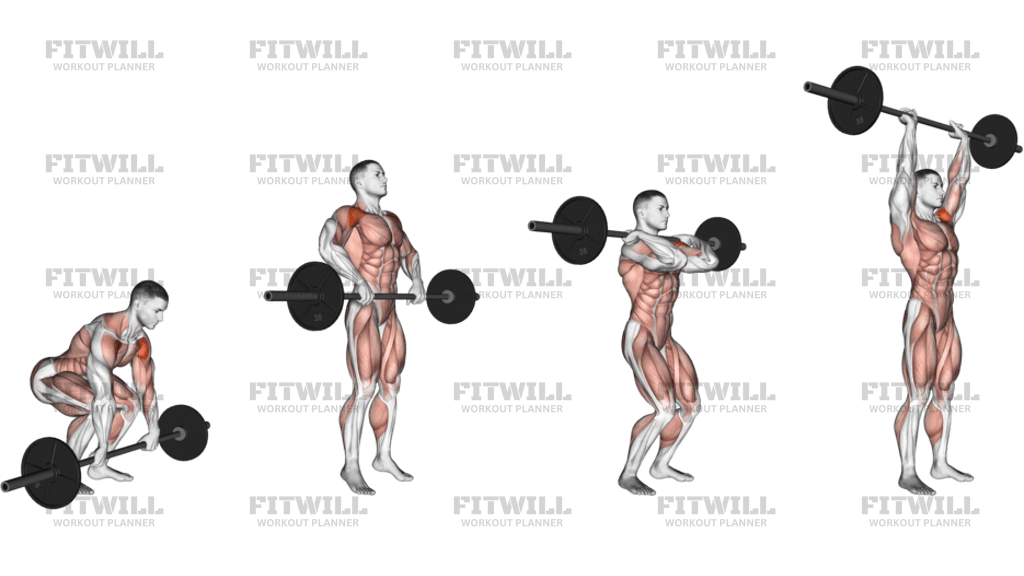
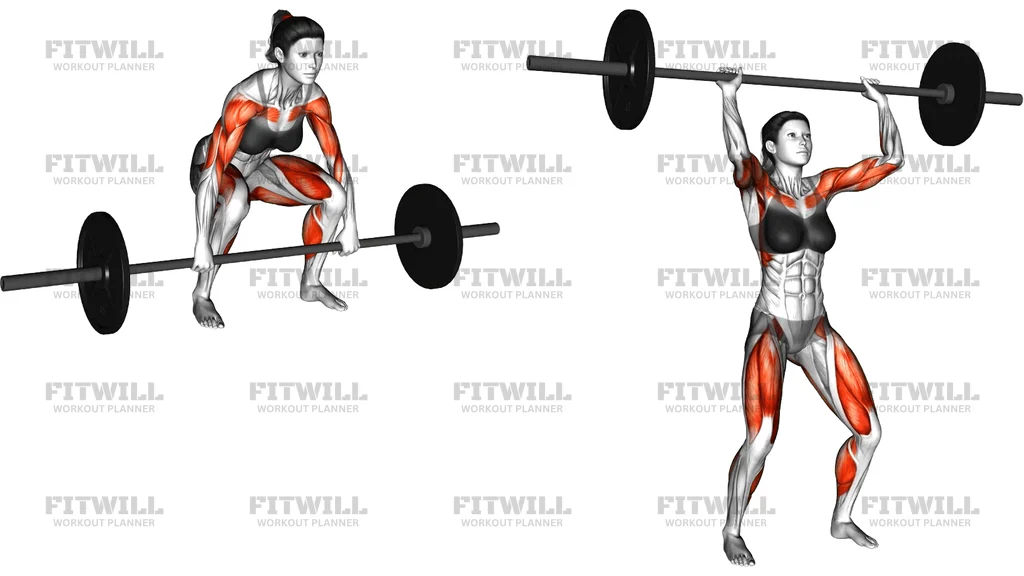
The Power Clean Thruster is a two-part barbell lift that combines an explosive pull from the floor with an overhead drive. You start in a crouched position gripping the bar on the ground, rip it up to your shoulders in one aggressive motion, dip slightly, and then drive the bar straight overhead to a full lockout. Because the clean and the press flow together as one continuous movement, it trains power production and full-body coordination in a way that slow, isolated lifts cannot.
This is a demanding movement that rewards athletic intent. The clean portion builds explosive strength through the quads, glutes, hamstrings, and lower back, while the triple extension of hips, knees, and ankles transfers force upward through the traps and arms. The thruster portion then loads the shoulders, triceps, and core as you punch the bar to lockout. Athletes in field and court sports use it to develop rate of force development, and general lifters use it as an efficient conditioning and strength tool.
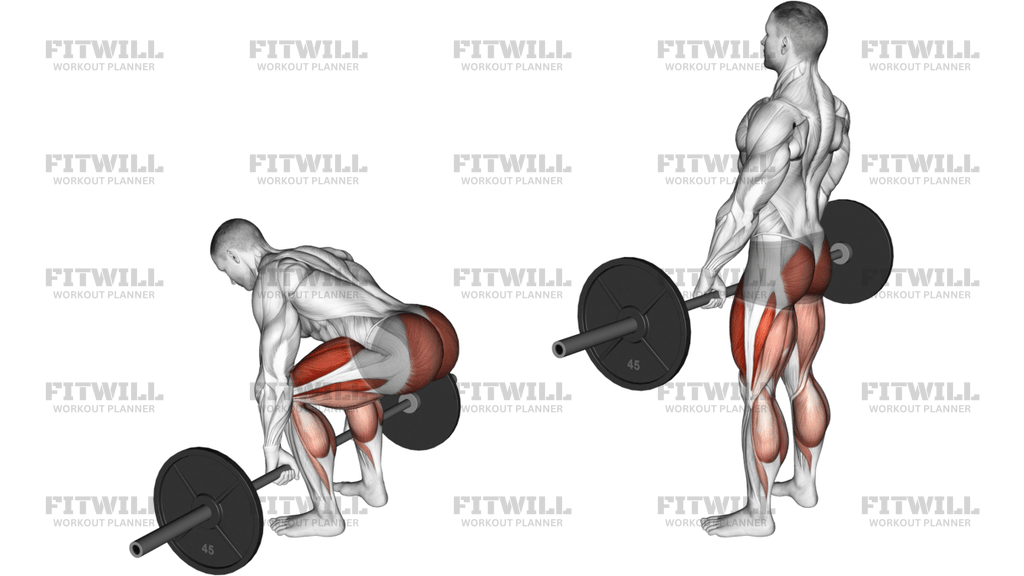
Setup matters more here than in almost any other barbell lift. Your feet should be about hip-width apart with the bar over the midfoot, and your grip roughly shoulder-width or slightly wider, depending on shoulder mobility. A back angle that is too horizontal turns the clean into a stiff-legged row, while a bar that drifts away from the shins wastes the pull before it starts. Brace hard before the first pull and keep the bar close to the body throughout.
Execution comes down to sequencing. The first pull is controlled and leg-driven, the second pull is violent hip extension, and the catch should have you in a partial quarter squat with elbows whipping under the bar. From there, dip a few inches by bending the knees, then drive up through the floor and press the bar overhead in one powerful thrust, finishing with the bar stacked over your midline and arms fully extended.
Because of the technical demand, start with an empty bar or light plates and rehearse the transition points before adding load. Common use cases include conditioning circuits, CrossFit-style workouts, and power blocks in athletic programs. If you are new to weightlifting movements, it is worth practicing the clean and the overhead press separately before linking them together.
[ Workout Log & Planner ]
Put your next workout in Fitwill
Keep your plan and training log ready when you are.


Instructions
- Stand with your feet hip-width apart over a loaded barbell, the bar touching or nearly touching your shins, and bend down to grip it just outside shoulder-width with your palms facing you.
- Drop your hips into a crouch with your back flat and chest tall, shoulders slightly ahead of the bar, and your weight balanced over the middle of your feet.
- Take a deep breath into your belly, brace your core, and pull your shoulder blades back so your spine stays neutral before the bar leaves the floor.
- Begin the first pull by pushing the floor away with your legs, keeping the bar dragging up your shins and your back angle steady until the bar passes your knees.
- At mid-thigh, explode: snap your hips forward, extend your knees and ankles, and shrug hard so the bar floats upward along your body.
- Whip your elbows under the bar quickly and catch it on your front shoulders in a shallow quarter squat, then stand all the way up to full height.
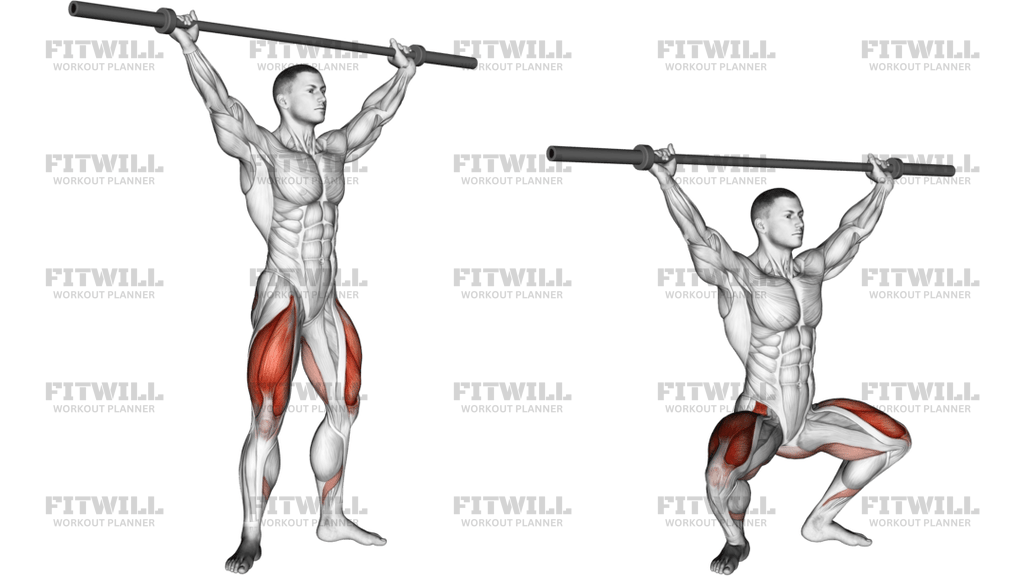
- From standing, dip a few inches by bending your knees with the bar resting on your shoulders, keeping your torso upright.
- Drive up explosively through your legs and press the bar straight overhead, finishing with your arms locked, the bar over the middle of your head, and your legs fully extended.
- Lower the bar in a controlled way back to your shoulders, then either lower it to your hips and down to the floor or drop it to the platform if you are using bumper plates.
- Exhale at the top of the lockout, reset your grip and stance, take a fresh breath, and re-brace before starting the next rep.
Tips & Tricks
- The most common fault is pulling with the arms too early. Your arms should stay long and relaxed until the hips have finished extending; think of them as ropes, not levers.
- If the bar swings away from your body during the second pull, you are likely jumping backward or opening the hips too late. Cue yourself to pull the bar into your hips and finish tall.
- Catching the clean with elbows down and the bar resting on your hands instead of your shoulders makes the thruster much harder. Work on a loose fingertip grip with elbows high so the bar sits in the shelf of your front delts.
- A deep dip before the overhead drive turns the movement into a heavy press. Keep the dip shallow, around four to six inches, and keep your heels glued to the floor.
- Letting the knees cave inward during the catch or the dip is a frequent issue. Drive your knees out over your little toes to keep a stable base.
- Do not round your lower back when setting up over the bar. If you cannot keep a flat back at your current stance, raise the bar on blocks or reduce the load until your position improves.
- Breathe with a pattern: big breath and brace before the pull, hold through the clean and dip, exhale forcefully as you drive the bar overhead.
- Keep repetitions low, around three to five per set, when learning. Power movements degrade quickly with fatigue, and sloppy reps at speed are where most mistakes happen.
- If wrist or shoulder mobility limits your front rack position, spend time on the rack position separately before combining it with the overhead drive.
Frequently Asked Questions
What muscles does the Power Clean Thruster work?
It is a full-body lift. The quads, glutes, and hamstrings generate the pull and the overhead drive, the traps and forearms handle the clean, and the shoulders and triceps finish the press, with the lower back and core stabilizing throughout.
Is the Power Clean Thruster suitable for beginners?
It can be, but only with light weight and patient practice. Most beginners benefit from learning the power clean and the overhead press as separate skills before linking them into one fluid movement.
How wide should my grip be on the Power Clean Thruster?
A grip just outside shoulder-width works for most lifters and keeps the bar path tight during the pull. Go slightly wider only if tight shoulders make the front rack or overhead lockout uncomfortable.
How deep should the dip be before driving the bar overhead?
Keep it shallow, about four to six inches, like a quick knee bend before a jump. A deep, slow dip bleeds off the stretch reflex and turns the thruster into a slow grind press.
Why does my bar swing away from my body during the clean?
This usually happens when you pull with the arms before the hips finish extending, or when you jump backward instead of straight up. Focus on finishing tall with the bar brushing your thighs, and let the arms stay relaxed until the bar is moving.
Can I use dumbbells instead of a barbell for the Power Clean Thruster?
Yes, a dumbbell thruster is a reasonable substitute and is easier on the wrists, though it loads each side independently and is less specific for Olympic lifting technique. Expect to use lighter loads and focus on the same leg-driven timing.
How many reps should I do per set?
Keep technical sets in the three to six rep range with full recovery between sets. The movement is fast and demanding, so higher rep counts are better saved for times when your form is consistent under fatigue.
Is it safe to drop the bar after the overhead lockout?
Only if you are using bumper plates on a platform or rubber flooring. With standard metal plates, lower the bar to your shoulders, then to your hips, and set it down under control to protect the equipment and your lower back.
How is the Power Clean Thruster different from a hang clean and press?
The Power Clean Thruster starts from the floor with a full first pull, while a hang clean starts from a suspended position at or above the knees. The floor start adds a longer pull and more demand on the lower back and hamstrings.