Barbell Deadlift
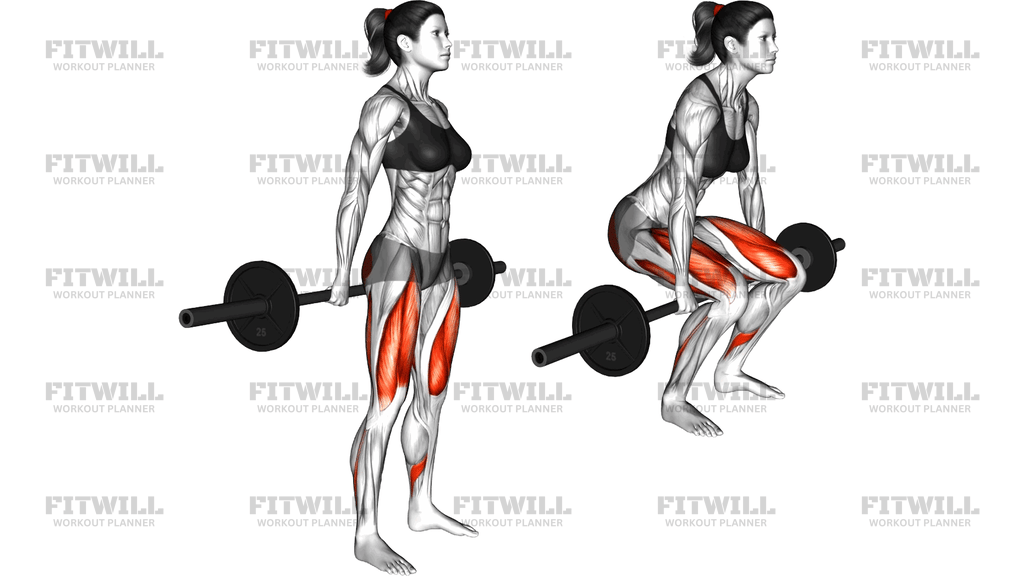
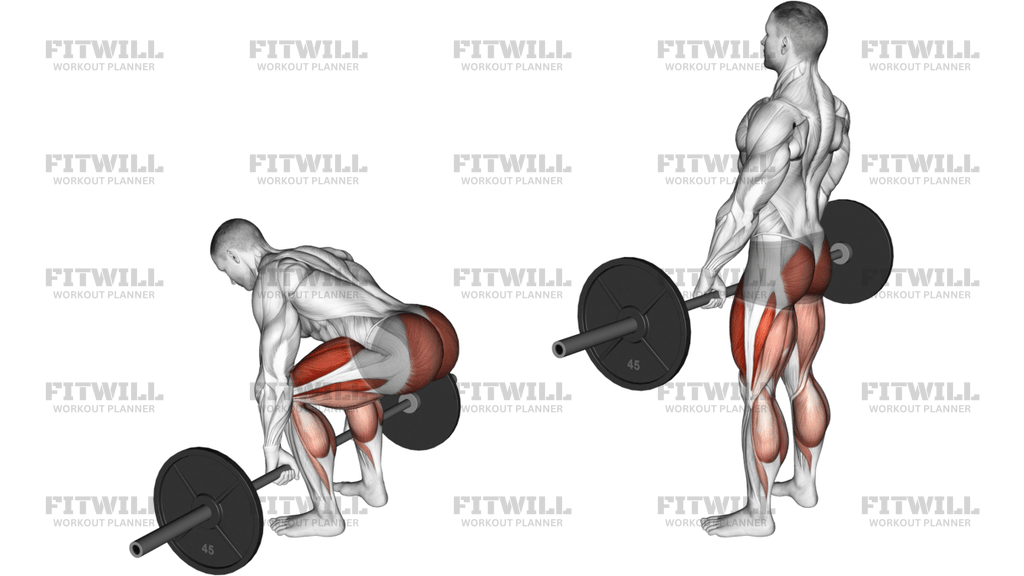
Barbell Deadlift is an exercise for hips, thighs, and back that uses barbell to build useful training quality through controlled movement. The Barbell Deadlift is a full-body strength exercise where you lift a barbell from the floor to a standing position. The main goal is to perform each repetition with enough control that the target area, posture, and breathing stay consistent from the first rep to the last.
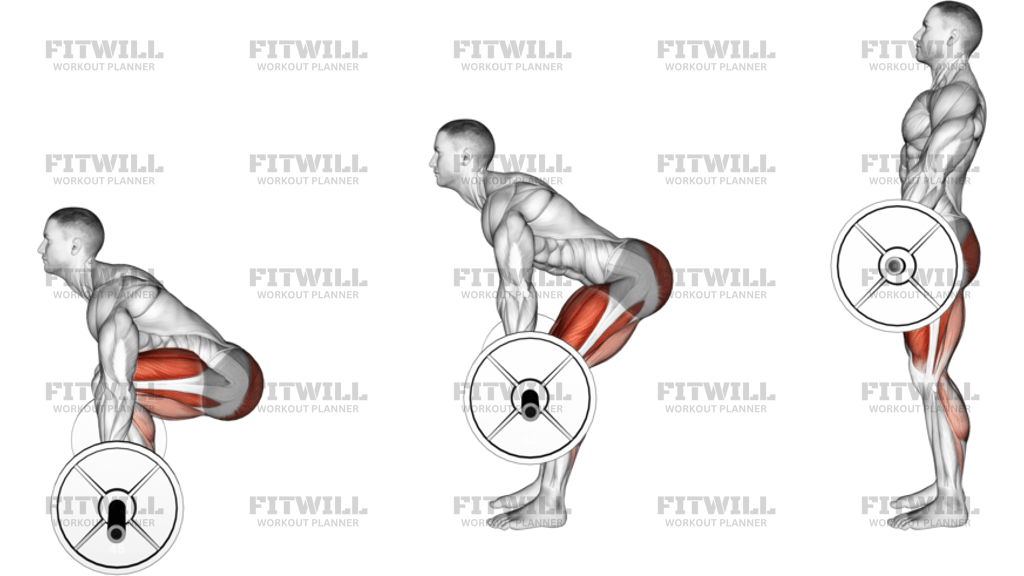
The primary emphasis is glutes, while hamstrings, back, quads, and core assist with stability and clean execution. In anatomy terms, the main work centers on the Gluteus maximus, with help from hamstrings, Erector spinae, Quadriceps femoris, and Rectus abdominis. It primarily trains the glutes and hamstrings, with major support from the back, core, and quads.
A strong set starts with the setup, because the starting position determines whether the rest of the repetition feels stable or rushed. Stand with the barbell over the middle of your feet. Hinge down and grip the bar just outside your legs. Set your back neutral, brace your core, and keep the bar close to your shins. Keep the body organized before you move so the working muscles can guide the exercise instead of momentum taking over.
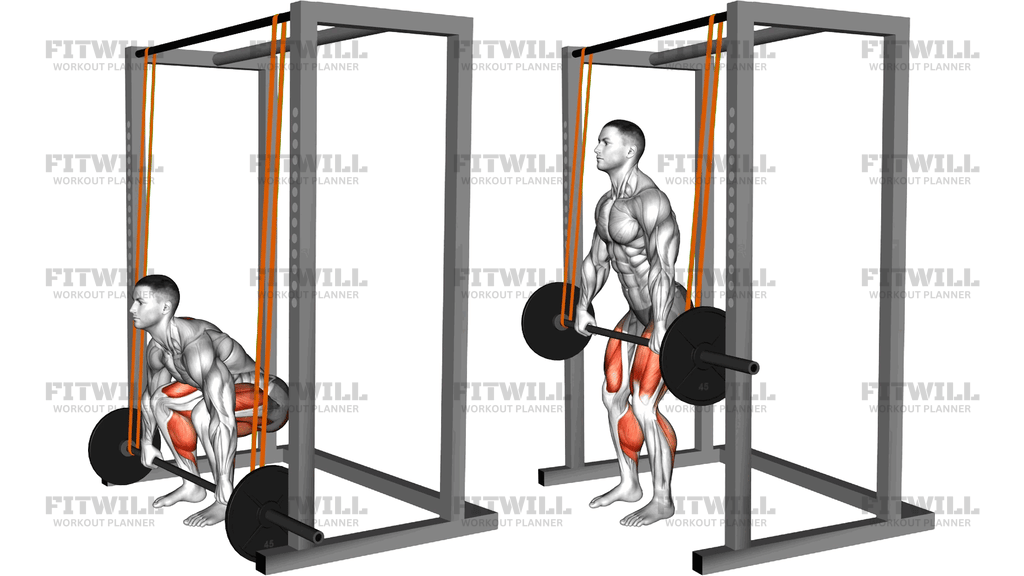
During the repetition, use the instructions as direct coaching cues rather than trying to force a bigger range than you can control. Pull the slack out of the bar before it leaves the floor. Drive through your feet and extend your knees and hips together. Stand tall with the bar close to your thighs. Lower the bar by pushing your hips back first.
The best training effect comes from clean, repeatable reps rather than rushing for a higher count. Keep the bar close to your body throughout the lift. Brace before pulling so your torso stays stable. Do not yank the bar off the floor; build tension first. Keep your back neutral and avoid rounding under load.
Use Barbell Deadlift in the part of the workout where focused technique and controlled tension fit your goal, such as a warmup, accessory block, core session, or targeted strength circuit. Push the floor away instead of only pulling with your arms. Finish tall without leaning back excessively at the top. Yes, but beginners should learn the hip hinge first and start with a manageable load. The bar should stay very close to your legs.
[ Workout Log & Planner ]
Put your next workout in Fitwill
Keep your plan and training log ready when you are.


Instructions
- Stand with the barbell over the middle of your feet.
- Hinge down and grip the bar just outside your legs.
- Set your back neutral, brace your core, and keep the bar close to your shins.
- Pull the slack out of the bar before it leaves the floor.
- Drive through your feet and extend your knees and hips together.
- Stand tall with the bar close to your thighs.
- Lower the bar by pushing your hips back first.
- Bend your knees after the bar passes them and return it to the floor with control.
Tips & Tricks
- Keep the bar close to your body throughout the lift.
- Brace before pulling so your torso stays stable.
- Do not yank the bar off the floor; build tension first.
- Keep your back neutral and avoid rounding under load.
- Push the floor away instead of only pulling with your arms.
- Finish tall without leaning back excessively at the top.
- Reset your position between reps if your form starts to drift.
Frequently Asked Questions
What muscles does the Barbell Deadlift work?
It primarily trains the glutes and hamstrings, with major support from the back, core, and quads.
Is the Deadlift good for beginners?
Yes, but beginners should learn the hip hinge first and start with a manageable load. Technique is more important than weight.
Should the bar touch my legs?
The bar should stay very close to your legs. Light contact is common and helps keep the load balanced over the midfoot.
What are common mistakes in the Barbell Deadlift?
Common mistakes include rounding the back, letting the bar drift forward, jerking the bar from the floor, and leaning back too far at the top.
How often should I Deadlift?
That depends on your program and recovery. Many lifters perform heavy deadlifts once or twice per week.
What can I do instead of a Barbell Deadlift?
Good alternatives include Romanian deadlifts, trap bar deadlifts, dumbbell deadlifts, or kettlebell deadlifts.
Where should the bar start in a Barbell Deadlift?
Start with the bar over the middle of your feet, close to your shins. This keeps the pull close to your body and helps the hips and back stay organized.