Dumbbell Sumo Deadlift High Pull
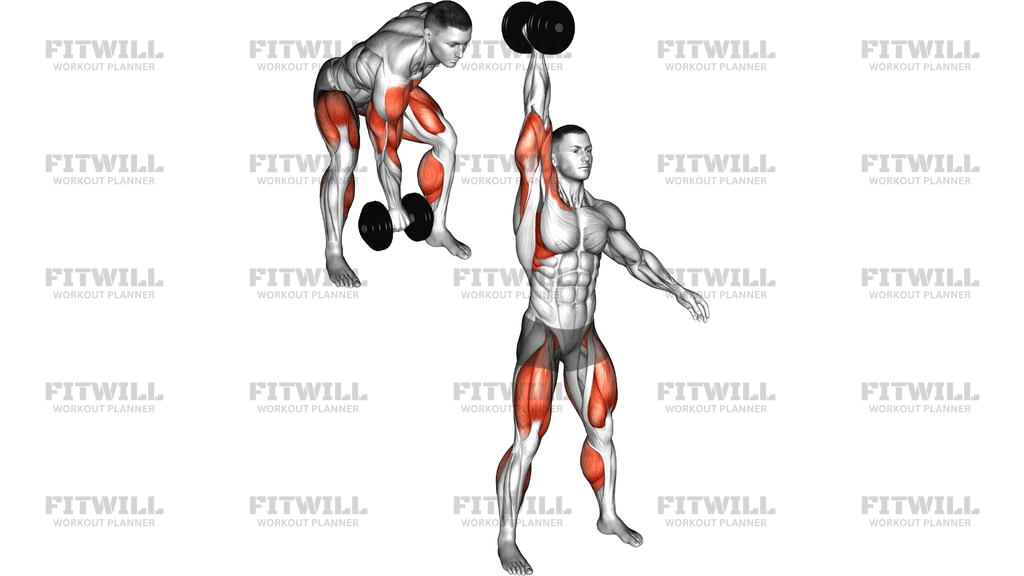
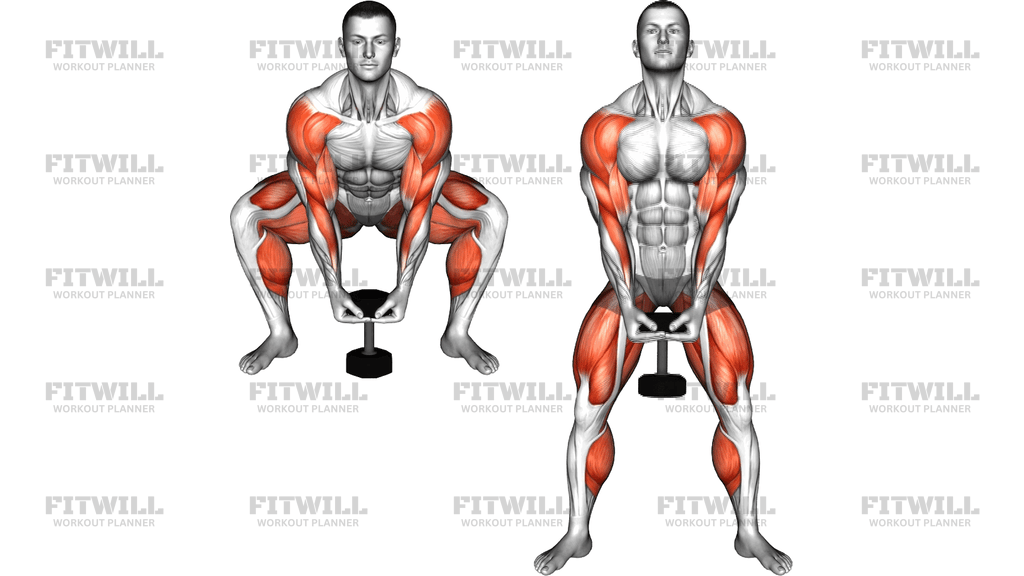
The Dumbbell Sumo Deadlift High Pull is a hybrid lift that blends a wide-stance deadlift with an explosive upright pull. You grip a single dumbbell by the top of the handle with both hands, set up in a wide sumo stance with the weight hanging between your legs, then drive through the floor to stand tall and finish by pulling the dumbbell up along your body to roughly chest or collarbone height with your elbows leading. One dumbbell is all you need, which makes this a very efficient option when equipment is limited.
This movement earns its place in conditioning circuits and strength sessions alike because it chains two big actions together: hip and knee extension from the floor, then a fast upper-body pull. The lower body works hard through the quads, glutes, hamstrings, and inner thighs, while the finish of the pull recruits the traps, shoulders, and upper back. Your grip and forearms stay under constant demand since both hands share one handle, and your core braces to transfer force from legs to arms without your lower back taking over.
The wide sumo stance matters here. With your feet well outside shoulder width and toes angled out, your knees track over your toes and your torso stays more upright than in a conventional pull, which shortens the lever on your lower back. That setup also lets the dumbbell hang vertically between your legs in a natural path, so the bar of the dumbbell doesn't crash into your knees or thighs as you pull.
Execution comes down to sequencing. The lift should feel like a jump that ends in a pull: legs extend first, hips finish driving forward, and only then do your elbows whip up and out, letting the dumbbell rise along your midline. If the arms yank early, the dumbbell stalls and your shoulders do work your hips should have done. Think of your arms as hooks until the moment your legs finish, then pull hard and fast.
This lift suits lifters who want a full-body power movement without a barbell, and it's a staple in metabolic circuits because it moves a lot of muscle in a short window. Because the range and load are self-limiting with a dumbbell, it's also approachable for people transitioning from goblet squats or deadlifts into more dynamic pulling. Start light, own the sequence, and add weight only when the pull looks sharp on every rep.
[ Workout Log & Planner ]
Put your next workout in Fitwill
Keep your plan and training log ready when you are.


Instructions
- Place one dumbbell on the floor between your feet and set your feet roughly one and a half shoulder widths apart, toes turned out about 30 to 45 degrees.
- Grip the top of the dumbbell handle with both hands cupped around it, one hand over the other or fingers interlaced, so the dumbbell hangs vertically between your legs.
- Push your hips back, bend your knees, and lower into a deep sumo squat with your chest up, back flat, and knees pushed out over your toes.
- Take a breath into your belly and brace your core hard, keeping the weight on the middle of your feet rather than your toes.
- Drive the floor away through your whole foot, extending your knees and hips together while the dumbbell travels straight up along your shins and thighs.
- As your hips reach full extension, pull your elbows up and out to the sides, letting the dumbbell rise along your torso to chest or collarbone height with elbows above the hands.
- Lower the dumbbell under control by extending your arms first, then hinging your hips back and bending your knees to return it to the floor between your feet.
- Exhale as you stand and pull, inhale at the top or during the reset, and re-brace before every rep rather than rushing reps with a soft torso.
Tips & Tricks
- If the dumbbell drifts away from your body during the pull, the fix is usually an early arm pull. Finish the hip drive first and let the dumbbell stay glued to your midline.
- Keep your knees pushed out over your toes the entire time. Collapsing them inward in a wide stance shifts stress to the knee joint and shortens your glute contribution.
- Set the dumbbell slightly behind your mid-foot at the start so your shins stay near vertical and your balance sits in the middle of your foot.
- Lead the high pull with your elbows, not your hands. Elbows high and out keeps the dumbbell tracking up your chest; hands first turns it into a front raise.
- Choose a dumbbell you can hold securely with both hands on one handle. If grip fails before your legs do, the load is too heavy for this movement.
- Do not catch the pull hunched over with rounded shoulders. Stand tall through the drive so your traps finish the pull instead of your lower back compensating.
- Control the descent instead of dropping the dumbbell. Lowering it in two or three seconds builds eccentric strength and keeps the rep honest.
- If your hips shoot up before your shoulders at the start, lighten the load. Both should rise together or your lower back inherits the work.
- Wipe the handle or use chalk if your hands sweat. A single shared handle makes grip security the weak link in this lift.
Frequently Asked Questions
What muscles does the Dumbbell Sumo Deadlift High Pull work?
It trains the quads, glutes, and hamstrings through the deadlift portion, then the traps, shoulders, and upper back through the high pull. Inner thighs, forearms, and core work continuously to hold the wide stance and transfer force.
Why use a wide sumo stance instead of a normal stance for this pull?
The wide stance keeps your torso more upright, lets the dumbbell hang in a clear vertical path between your legs, and shifts more work to the quads and inner thighs. It also reduces how far you have to lean over, which is easier on the lower back.
How do I grip a single dumbbell for the Dumbbell Sumo Deadlift High Pull?
Cup both hands around the top end of the handle so the dumbbell hangs vertically, one hand stacked over the other or with fingers interlaced. Keep the grip firm but relaxed enough that your forearms don't fatigue before your legs.
How high should I pull the dumbbell?
Pull it along your midline to roughly chest or collarbone height with your elbows finishing above your hands. Pulling higher usually just means the load is too light or your arms are doing work your hips should produce.
Is the Dumbbell Sumo Deadlift High Pull safe for beginners?
Beginners can learn it with a very light dumbbell, but the explosive pull means technique matters. Practice the deadlift portion first, add the pull only once the sequence of legs-then-elbows feels natural, and stop if your lower back takes over.
What is the most common mistake in this exercise?
Pulling with the arms before the hips finish extending. This kills the power transfer and turns the movement into a strained arm pull. Cue yourself to finish standing tall, then snap the elbows up.
What can I use instead of a dumbbell for the Dumbbell Sumo Deadlift High Pull?
A kettlebell held by the horns, a barbell with a wide grip, or a weighted plate gripped at the sides all allow a similar sumo pull. A kettlebell is the closest match because it hangs naturally between your legs.
Should my lower back feel this movement?
Your lower back works to hold your spine steady, but it shouldn't be the burning center of the lift. If it is, check that your chest stays up, your knees track out, and your hips and shoulders rise together off the floor.
How heavy should the dumbbell be?
Pick a weight you can move explosively while keeping the dumbbell close to your body and your knees tracking out. If reps slow down and the pull becomes a grind, the dumbbell is too heavy for the high pull portion.
Where should the dumbbell sit at the start of the rep?
It should hang vertically between your legs, roughly over the middle of your feet. If it sits toward your toes, you'll rock forward, so shift your hips back and let it settle behind your mid-foot.