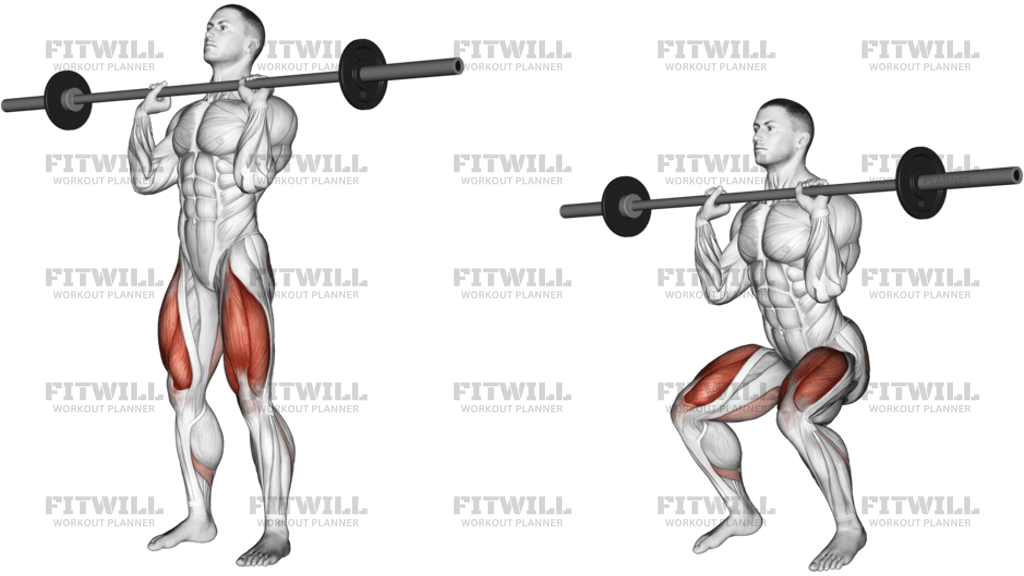
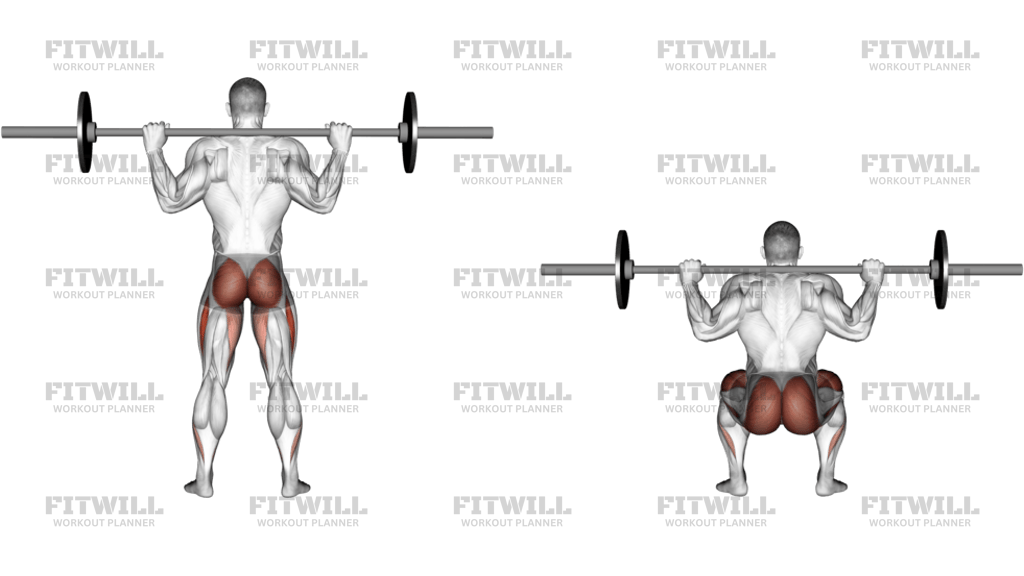
Barbell Full Squat Back POV
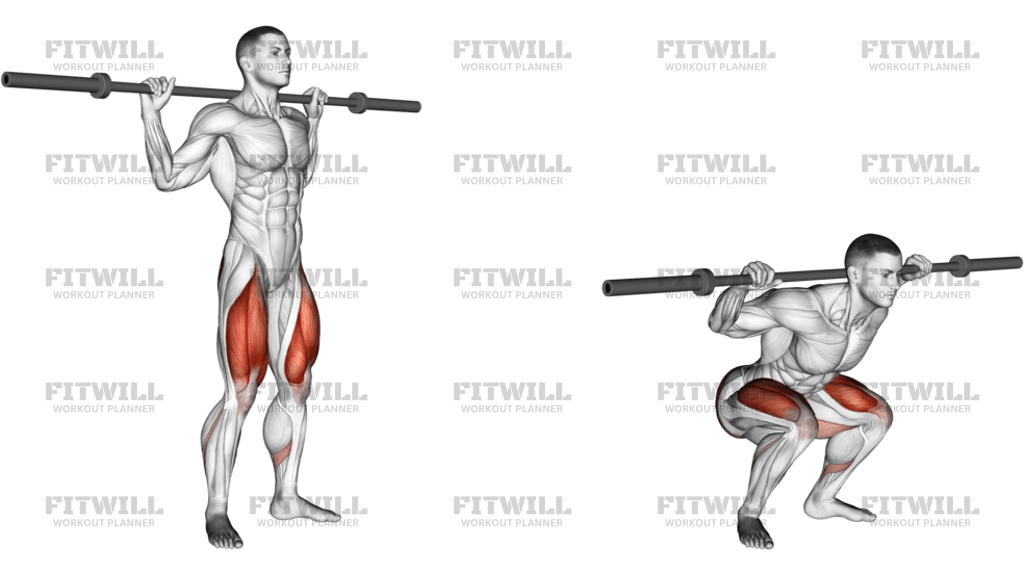
Barbell Full Squat is a foundational lower-body strength movement built around a loaded squat with the bar resting across the upper back. It trains the legs, glutes, and trunk to work together while you descend and stand up under control. Because the bar sits on your back, the setup is not just a starting position; it is what keeps the rep balanced, stable, and repeatable.
This version places the main demand on the glutes and thighs, with the quads driving the climb out of the bottom and the hamstrings, core, and upper back helping keep the torso organized. In anatomy terms, the gluteus maximus, quadriceps, biceps femoris, rectus abdominis, and erector spinae all contribute. The exercise is useful when you want a compound lift that develops lower-body strength, leg size, and bracing skill at the same time.
The best setup starts before the first rep. Set the bar at a height that lets you duck under it without tiptoeing, place it firmly across the rear delts or upper traps, and grip it evenly on both sides. Step back into a stance that lets your knees track over your toes, with enough width to keep your hips open and your heels planted. If the bar drifts, the feet shift, or the chest collapses early, the squat usually turns into a fight for balance instead of a productive leg exercise.
On each repetition, breathe in before you descend, brace the trunk, and sit down between your legs while keeping the bar over the middle of the foot. The knees should bend and travel naturally rather than staying locked back, and the spine should stay long without folding forward. At the bottom, reverse the motion by driving the floor away, then rise with the hips and chest together so the bar path stays smooth instead of shooting forward.
Barbell Full Squat is a staple for strength blocks, lower-body days, and athletic training because it rewards consistent depth, control, and load selection. It can be scaled for beginners with an empty bar or light plates, but it still deserves careful attention to rack height, stance width, and bar position. When those details are right, the movement becomes a dependable way to build stronger legs and a more resilient brace without relying on momentum or shortcuts.
Fitwill
Log Workouts, Track Progress & Build Strength.
Achieve more with Fitwill: explore over 9600 exercises with images and videos, access built-in and custom workouts, perfect for both gym and home sessions, and see real results.
Start your journey. Download today!




Instructions
- Set the bar in a rack at upper-chest height, duck under it, and place it across your rear delts or upper traps with both hands gripping the bar evenly just outside shoulder width.
- Stand up to unrack the bar, take two short steps back, and set your feet about shoulder-width apart with the toes turned slightly out.
- Plant the whole foot, keep the bar centered over the midfoot, and pull your upper back tight so the chest stays proud.
- Take a deep breath into your belly and ribs, then brace your trunk before starting the descent.
- Break at the hips and knees together and sit down between your legs while letting the knees track in line with the toes.
- Lower until your thighs reach at least parallel, or as deep as you can without the lower back tucking or the heels lifting.
- Drive up by pushing the floor away, keeping the bar path steady and the knees from caving inward.
- Exhale through the sticking point, finish tall without leaning back, and then walk the bar forward to re-rack it under control.
Tips & Tricks
- Keep the bar pinned to the shelf made by your rear delts or upper traps; if it rolls, the rep usually turns into a good-morning style squat.
- Use a stance that lets your hips open without forcing your knees inward or making your heels pop up.
- Think about sitting down between your heels, not just reaching your hips straight back.
- If your torso folds early out of the bottom, reduce the load or slightly widen the stance so the chest can stay over the bar longer.
- A brief pause in the bottom can expose whether you are balanced over the midfoot or bouncing off the rebound.
- If the knees collapse, cue them to travel out in line with the toes instead of chasing extra depth.
- Keep the chin neutral and eyes fixed a few feet ahead so the neck does not crank back at the top.
- Stop one or two reps before your brace starts to leak, because the squat gets messy fast once the bar speed drops.
Frequently Asked Questions
What muscles does Barbell Full Squat work most?
The biggest demand is on the glutes and thighs, especially the quads on the way up. Your hamstrings, core, and upper back help keep the bar and torso stable.
Is Barbell Full Squat beginner-friendly?
Yes, if you start with an empty bar, learn the rack setup, and use a depth you can control. Beginners should keep the load light enough to hold position through every rep.
Where should the bar sit for Barbell Full Squat?
It should rest across the rear delts or upper traps, depending on your squat style. The bar should feel locked in place before you step away from the rack.
How deep should I go in Barbell Full Squat?
Go as low as you can while keeping the feet flat, the bar over the midfoot, and the lower back from tucking. For many lifters, that is at least parallel or a little below.
Should my knees go past my toes in Barbell Full Squat?
Yes, they often will, and that is fine as long as the heels stay down and the knees track in line with the toes. Trying to keep the shins vertical usually limits depth and balance.
What is the most common mistake in Barbell Full Squat?
Letting the chest collapse while the hips shoot up out of the bottom is a very common miss. Keep the upper back tight and drive the bar and hips up together.
Can I use a wider stance for Barbell Full Squat?
Yes, a slightly wider stance can help if your hips feel pinched in a narrow setup. The key is still to keep the knees tracking over the toes and the bar balanced over the midfoot.
How do I breathe during Barbell Full Squat?
Take a full breath before each rep, brace before you descend, and hold that pressure through the hardest part of the squat. Exhale near the top, then reset before the next rep.