Weighted Pull Up
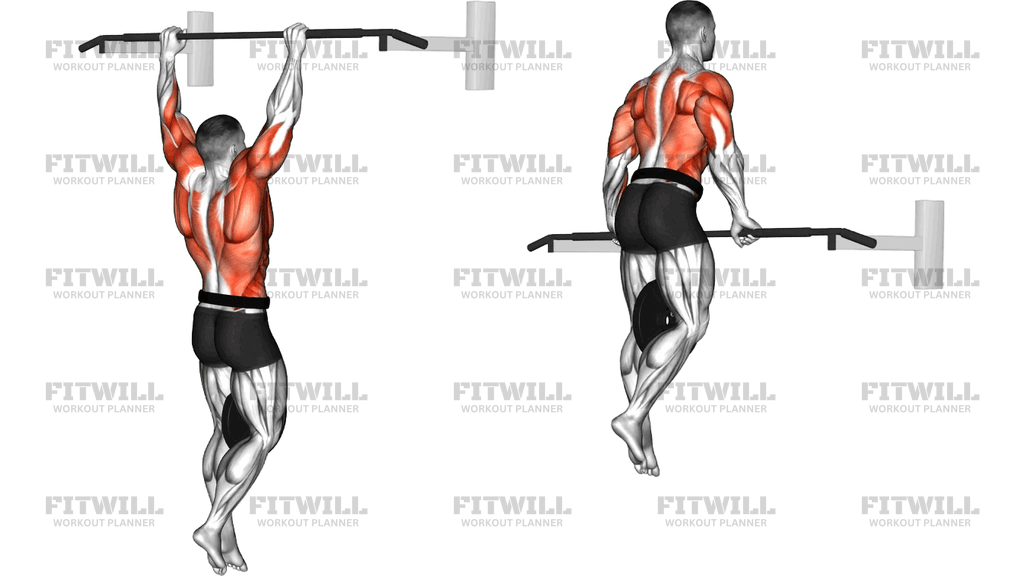
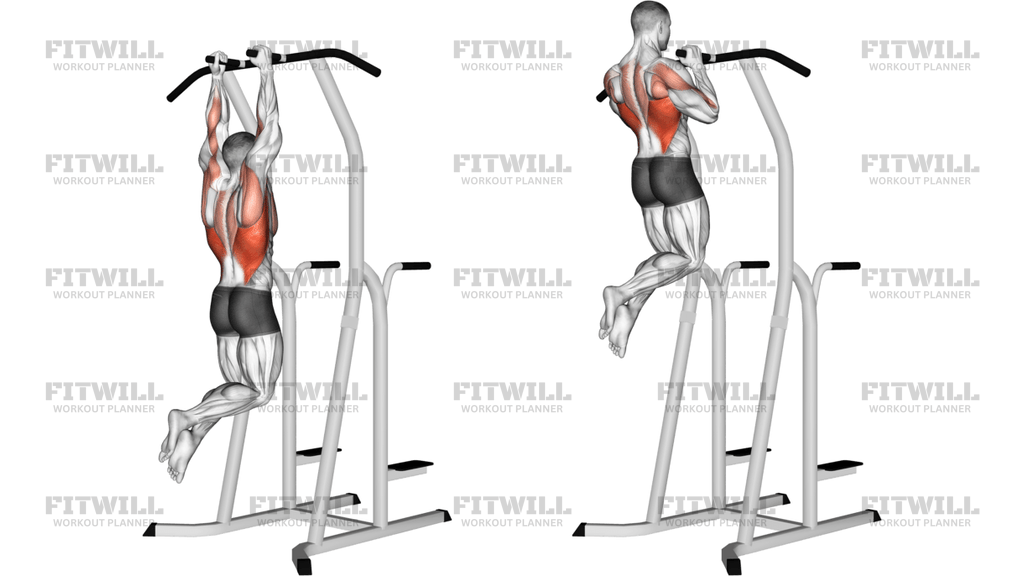
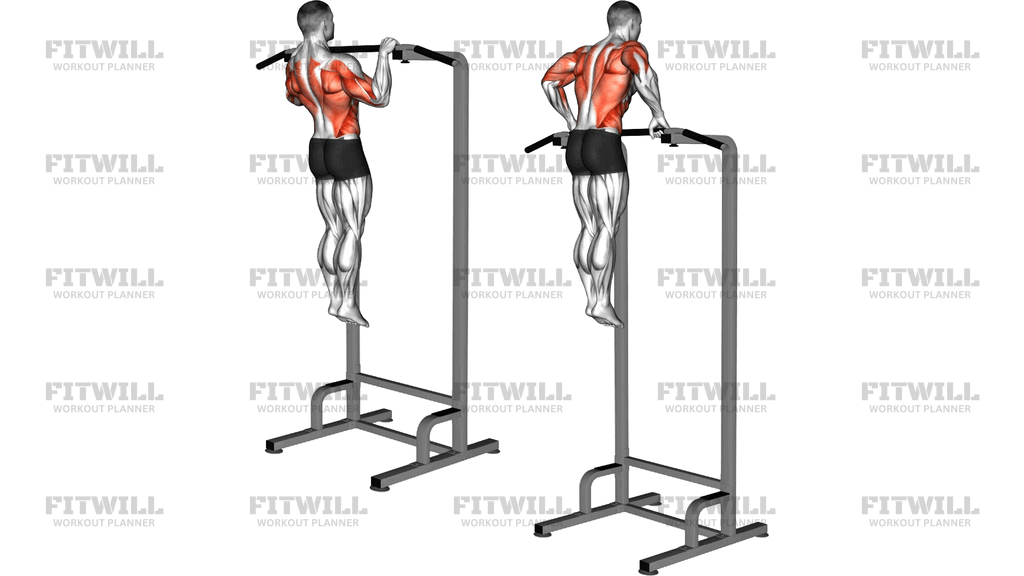
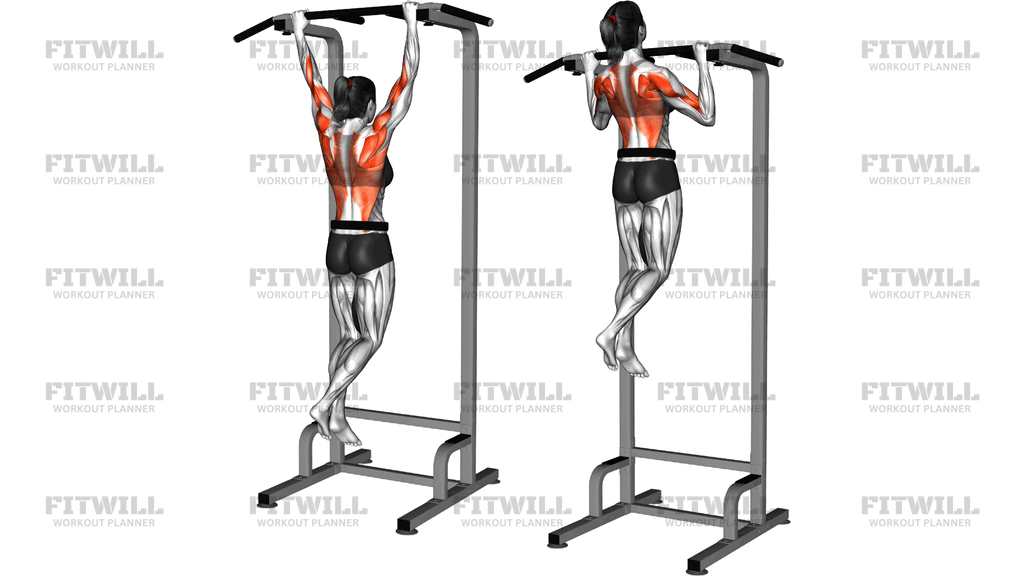
The Weighted Pull Up is a bodyweight pull-up performed with additional load attached to your body, most commonly a dip belt with a plate or dumbbell hanging from it. You grip an overhead pull-up bar with an overhand grip, hang with your feet clear of the floor, and pull your chest up until your chin clears the bar before lowering under control. The version shown here uses a fixed pull-up tower with a weighted belt worn around the waist, legs bent and crossed behind the body to keep the hang stable.
This is a movement for people who have already built solid bodyweight strength. If you can perform several clean, full-range pull-ups in a row, adding external load is the most direct way to keep progressing your upper body pulling power. Climbers, obstacle racers, and strength athletes use it to build pulling strength that carries over to their sport, and it fits well into a structured upper body day as a primary heavy pulling lift.
The primary muscles worked are the lats, which drive the shoulder joint through the pull, with strong assistance from the biceps and forearms as they bend the elbows and hold the bar. The middle and upper traps and rhomboids retract the shoulder blades as you rise, and the rear shoulders help guide the elbows down and back. Because you are hanging from a bar with weight swinging at your hips, your core also works hard to keep your torso from swaying or arching excessively.
Setup matters more here than in a standard pull-up because the added load amplifies every flaw. A belt that sits too low, a plate that swings, or a grip that is uneven will all pull you off the bar path. Take a moment to secure the weight so it hangs close to your body, position your hands slightly wider than shoulder width, and start every rep from a full hang with active shoulders rather than a loose, jerky dead hang.
To execute the movement well, think of driving your elbows down toward your ribs rather than simply pulling with your arms. Pull until your chin clears the bar or your upper chest approaches it, pause briefly, then lower yourself over two to three seconds until your arms are fully extended again. Kicking, swinging, or cutting the descent short all reduce how much work your back actually does.
In practice, the Weighted Pull Up is usually trained in low to moderate rep ranges, somewhere between three and eight reps per set, because heavier loads make higher reps difficult to control. It pairs naturally with pressing movements like dips or overhead presses, and many lifters cycle it as their main vertical pull while using lighter accessory work such as rows and pulldowns for volume.
[ Workout Log & Planner ]
Put your next workout in Fitwill
Keep your plan and training log ready when you are.


Instructions
- Attach a weight plate or dumbbell to a dip belt and secure the belt snugly around your waist so the load hangs in front of your hips with minimal swing.
- Grip the pull-up bar with an overhand grip, hands slightly wider than shoulder width, and step or jump up until your arms are fully extended and your feet are clear of the floor.
- Bend your knees and cross your ankles behind you so your legs stay quiet and the weight hangs close to your body.
- Set your shoulders by pulling your shoulder blades down and together slightly before initiating the pull, and brace your abs to limit lower back arch.
- Pull yourself up by driving your elbows down and back toward your ribs, keeping your chest angled toward the bar.
- Continue until your chin clears the bar, holding that top position for a brief moment without shrugging your shoulders up to your ears.
- Lower yourself under control over two to three seconds until your arms are fully straight and the weight has settled beneath you.
- Exhale as you pull up and inhale as you descend, keeping your breathing steady rather than holding your breath through the rep.
- Pause briefly in the dead hang between reps to reset your grip and shoulder position, then begin the next repetition.
- When finished, step back onto the tower's foot supports or lower to the floor before unclipping the belt so the weight never drops from height.
Tips & Tricks
- If the plate swings forward as you pull, the load is usually hanging too far from your body; shorten the belt's chain or loop so the weight sits closer to your thighs.
- A common failure point is using a half hang at the bottom; if your elbows stay slightly bent between reps, each set gets easier but your lats stop doing the full range of work.
- Chin poking over the bar by craning your neck is not a completed rep; pull until your upper chest is close to the bar instead of stretching your chin toward it.
- If your grip gives out before your back does, use lifting straps for heavy sets or switch to a dumbbell held between your legs, though a belt generally allows heavier loads.
- Shrugging your shoulders up at the top shifts work to your upper traps; keep them pressed down and think chest to bar, not head to bar.
- Legs swinging forward as you descend usually means your core relaxed; keep your knees crossed and your abs braced so the weight hangs straight down.
- Start with a load you can move for about five clean reps; jumping straight to near-maximal singles often produces jerky reps with a shortened range.
- If your lower back feels strained, check how much you are arching in the hang; a slight lean back is fine, but a big arch under load means your abs are not braced.
Frequently Asked Questions
What muscles does the Weighted Pull Up work?
The lats are the primary movers, supported heavily by the biceps and forearms. The middle traps, rhomboids, and rear shoulders assist as your shoulder blades retract, and your core stabilizes your torso while the weight hangs from the belt.
How much weight should I add to my Weighted Pull Up?
Start with a light load, around 5 to 10 percent of your bodyweight, and only add more when you can complete your target reps with a full dead hang and controlled descent. Most lifters train this movement in the 3 to 8 rep range rather than chasing heavy singles early on.
How do I attach weight for a Weighted Pull Up?
A dip belt worn around the waist with a plate or dumbbell clipped to its chain is the standard setup, and it keeps your hands and shoulders free to move normally. Holding a dumbbell between your ankles or feet works as an alternative for lighter loads.
Should my legs hang straight or bend during the Weighted Pull Up?
Bending your knees and crossing your ankles behind you, as shown, keeps the hanging weight close to your body and reduces swinging. Straight legs are acceptable, but any forward drift of the legs during the pull usually signals a relaxed core.
Is the Weighted Pull Up suitable for beginners?
Generally no; it is best saved until you can perform several strict bodyweight pull-ups with a full range of motion. Beginners progress faster with band-assisted or machine-assisted pull-ups and negative-only reps before adding external load.
Why can I only do Weighted Pull Ups with a partial range of motion?
The most common reasons are too much added weight, a swinging load pulling you off the bar path, or stopping short of a full dead hang between reps. Drop the load down, steady the weight against your thighs, and extend your arms completely at the bottom of every rep.
Is a Weighted Pull Up better than a Lat Pulldown?
They serve different purposes: the Weighted Pull Up is a closed-chain movement that builds real-world pulling strength and trains your grip and core harder, while the lat pulldown lets you adjust the load precisely and is easier to learn. If you can do them, weighted pull-ups generally give you more strength per set.
How do I avoid lower back discomfort during Weighted Pull Ups?
Brace your abs lightly and avoid hanging in a deep arch, since the belt load pulls your torso into extension. A slight backward lean of the chest is normal, but if your lower back strains, reduce the weight and tighten your core before pulling.
How often should I train the Weighted Pull Up?
One to three sessions per week works well for most lifters, with at least a day of recovery between heavy sessions because the grip and elbows take a beating. Cycle the load so only some sessions are truly heavy rather than maxing out every week.